
Add ₹999 more to unlock FREE SHIPPING!
Your sacred cart is currently empty.
Shop Photo FramesThere are many temples of Yemai Devi in Maharashtra, Karnataka, and Andhra Pradesh. Among the famous temples of Yemai Devi in Maharashtra, the temple at Aundh is considered the original seat (Moolpeeth) of the Goddess. Apart from this, the ancient and famous temples include Kanhesar (Rajgurunagar), Malegaon Khurd in Nashik district, and the Yemai Devi temple on the Jyotiba hill in Satara. A famous temple in this series is located at Hingangaon (Bu.) in Paranda taluka. Devotees have deep faith that the awakened (Jagrut) Goddess here fulfills their vows.
Based on the Hemadpanti architecture of the temple, the stone masonry, and the sculptures on the pillars, it is said that this temple dates back seven to eight hundred years. Many legends are prevalent regarding Yemai Devi. Some legends state that she is a form of Goddess Tulja Bhavani, while according to others, Yemai Devi is recognized as a form of Goddess Renuka. Some scholars believe that Yemai is a counterpart of Mariai and a deity of death. According to one legend, when the harassment by demons increased in this region, the devotees prayed to Renuka Mata of Mahurgad. Responding to the call of her devotees, Renuka Mata destroyed the demons and established herself here in the form of Yemai to uplift her devotees.
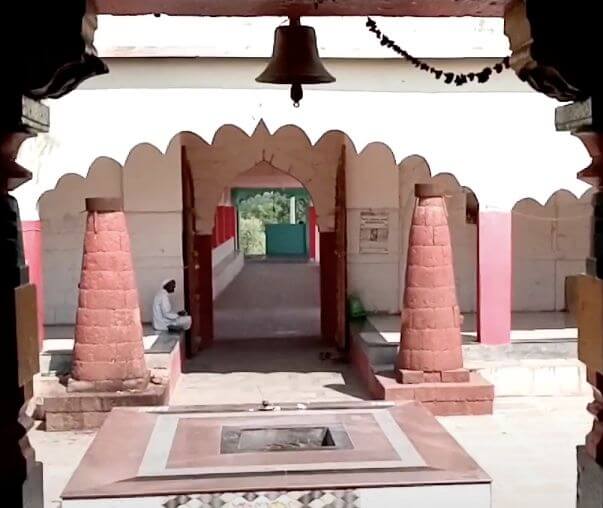
This temple is located at some distance from the village. There are railings on both sides of the path leading from the parking area to the main entrance of the temple, with seats for devotees to rest. In the railings on both sides, there are seven square pillars each, connected to each other by arched gateways. The main entrance is located in the strong fortification surrounding the temple. The entrance features an arched gateway with ornate wooden shutters on both sides, adorned with brass lion sculptures. From here, one enters the temple courtyard. In the courtyard, there are cloisters with high platforms along the fortification. The cloisters have square pillars connected by arched gateways on the front side. These cloisters are used as resting places and pilgrim accommodation for devotees.
In the courtyard, adjacent to the cloisters on both sides of the entrance, there are two platforms with twelve-foot-high lamp towers (Deepmala). At the top of the lamp towers are circular plates for lighting lamps. In the courtyard, in front of the temple, there is a platform with a sacrificial altar (Yajnakunda). On the wall of the second platform to the left of this altar, there is a five-hooded serpent sculpture smeared with vermilion on the left, an idol of Maruti on the right, and ancient memorial stones (Virgal) in the center.
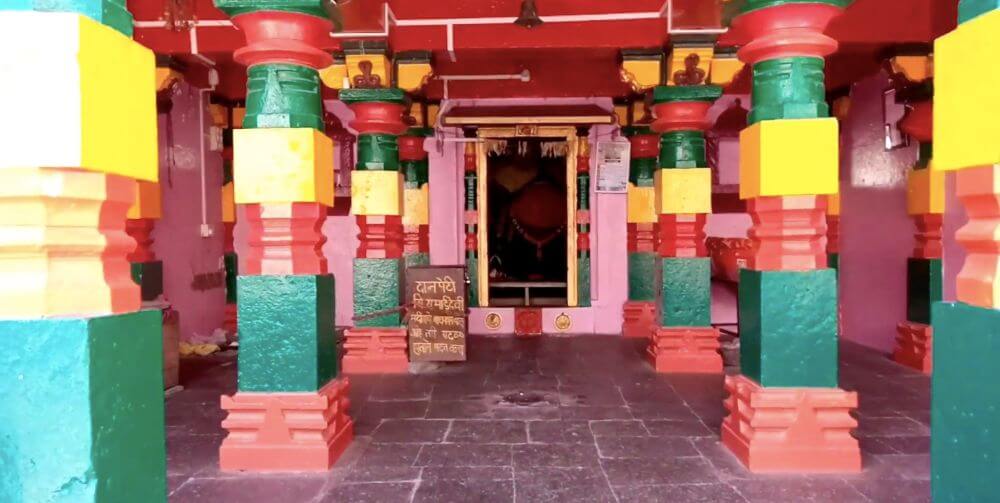
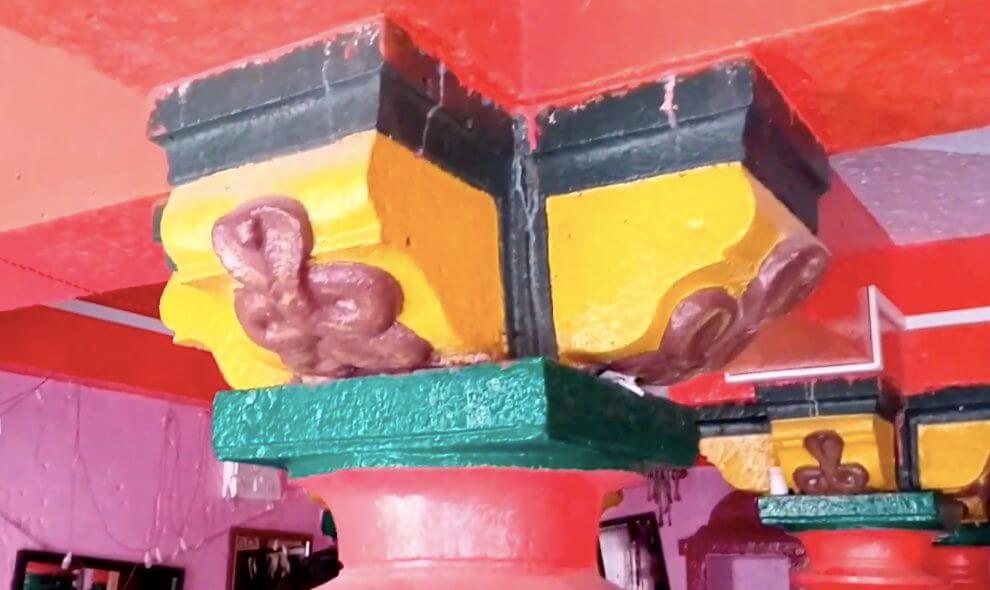
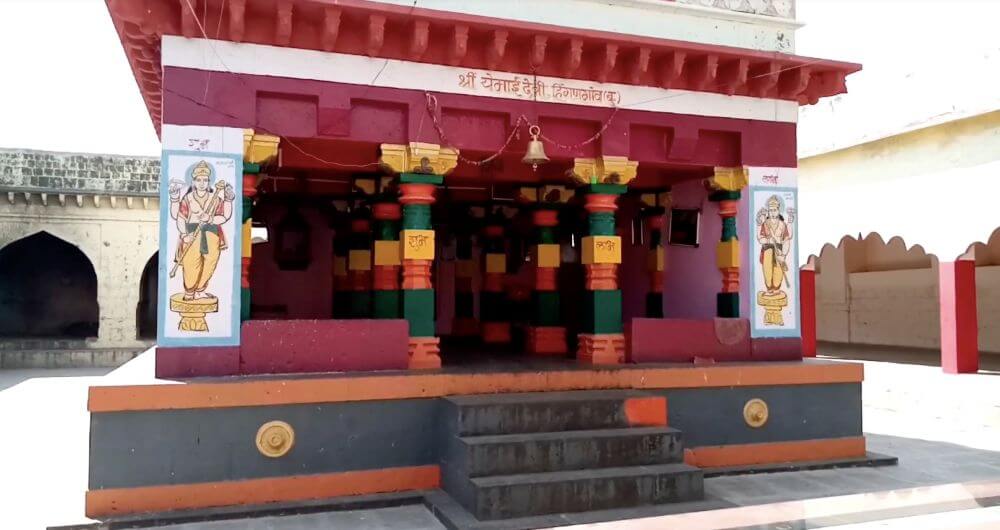
This temple of Yemai Devi stands on a four-foot-high plinth. The structure consists of a Sabha Mandap (assembly hall) and a Garbhagriha (sanctum sanctorum). The Sabha Mandap has a railing on the front side. In front of the entrance, there are five steps built of carved stone. On both sides of the entrance, there are paintings of door guardians (Dwarpal), and an idol of Lord Ganesha is placed at the lintel (Lalatbimba). The enclosed Sabha Mandap has four rows of four ornate pillars each. The pillars near the entrance are in the railing, and the pillars on both sides are embedded in the walls. All pillars stand on square bases. The pillar shafts feature various geometric shapes such as squares, hexagons, octagons, and circles. At the top of the pillars are brackets (Kani) and above them are hands (Hasta). On the hands are hooded serpent sculptures.
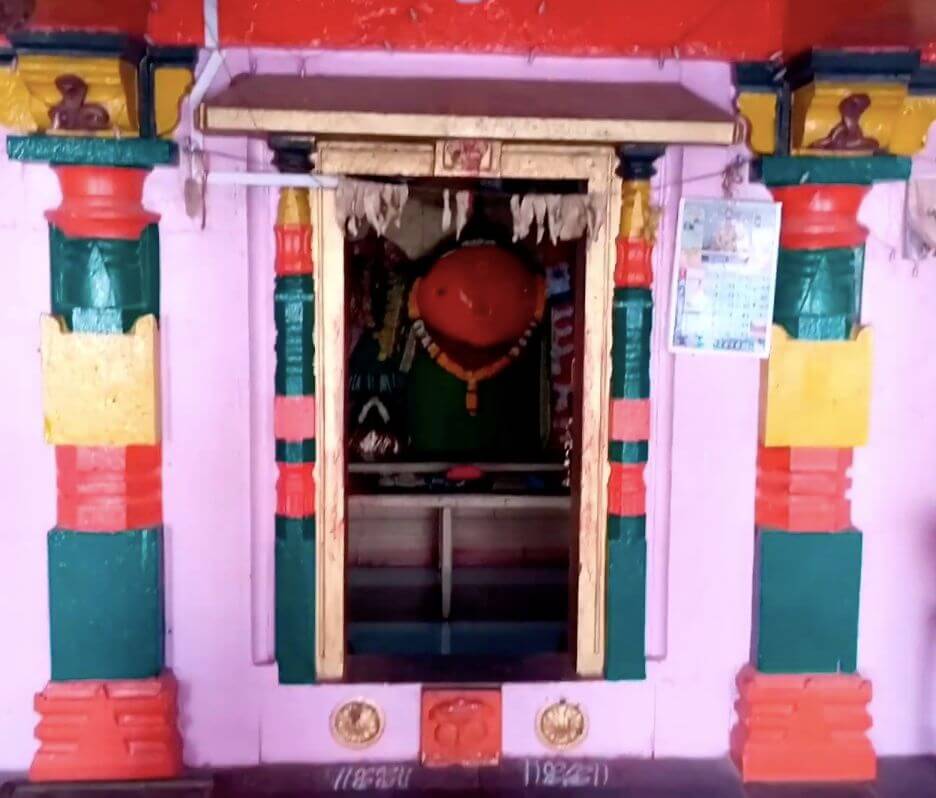
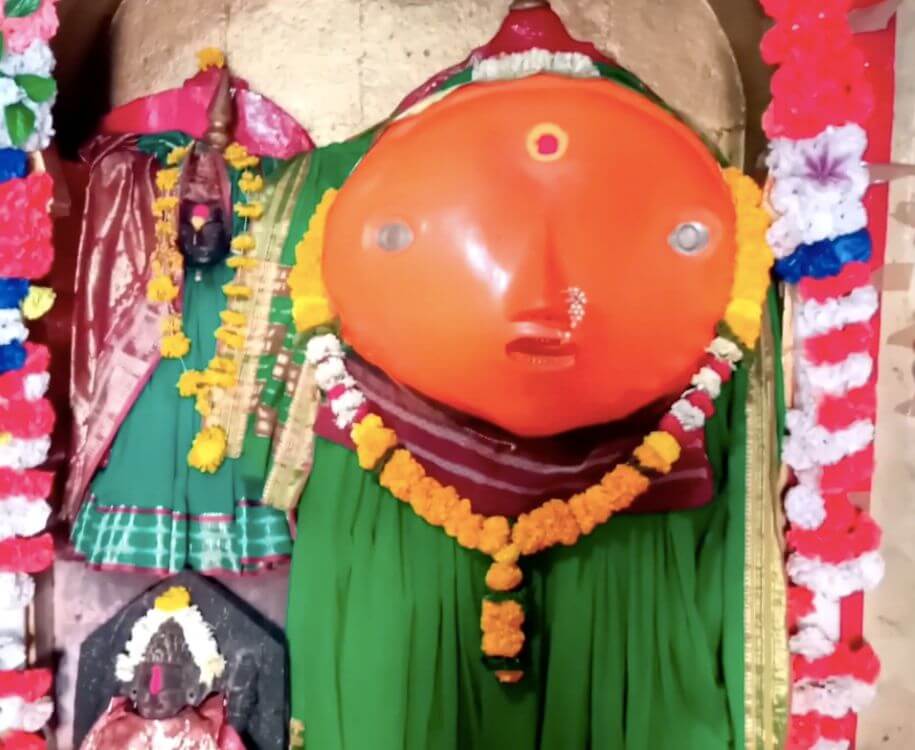
The doorframe of the sanctum sanctorum features pillar carvings, and an idol of Lord Ganesha is placed at the lintel. On the architrave, there is a Kirtimukh and wheel carvings on both sides. In the sanctum, there is an idol of Yemai Devi in the form of a natural stone (Tandala) on a Vajrapitha. The Goddess’s eyes, nose, and the crown on her head are made of silver. To the left of the Goddess is a Shakti idol. On the exterior of the temple, lotus flower carvings are etched on the base (Jagati). There is a safety railing around the roof of the temple. The roof of the sanctum features a five-tiered Shikhara (spire) in the Bhumija style, tapering upwards. In the lower four tiers of the Shikhara, there are niches on all four sides containing idols of various deities. In the fifth tier of the Shikhara, there are eight small spires on the outside, with finials (Kalash) on the Amalakas above them. At the top of the main Shikhara is an Amalaka with a finial.
The main annual fair of the Goddess is celebrated with great enthusiasm on the full moon day of the month of Ashwin. Thousands of devotees from states like Maharashtra, Karnataka, and Andhra Pradesh come to visit the Goddess and fulfill their vows during this three-day festival. An offering of Puran Poli is made to the Goddess, and animal sacrifice is also practiced. During the fair, the Goddess’s palanquin procession is taken around the village. At this time, various shops are set up, giving the area the appearance of a temporary market. Festivals like Chaitra Padwa, Sharadiya Navratri, Dussehra, and Diwali are celebrated in the temple. The number of devotees visiting for darshan is higher on Tuesdays, Fridays, full moon days, new moon days, and the eighth day of the waning moon (Vadya Ashtami).
This sacred temple stands as a testament to deep spiritual devotion, ancient architectural grandeur, and rich local cultural traditions.
The sanctum sanctorum houses the divine idol consecrated according to ancient Vedic traditions, surrounded by serene courtyards and traditional temple architecture.
Navratri, Maha Shivratri, Annual Temple Jatra & Deepotsav
Compare and book flights, secure top-rated local hotels near the temple, hire reliable guides, and rent cars instantly.
Extend your pilgrimage by visiting other highly sacred temples located nearby.


Add ₹999 more to unlock FREE SHIPPING!
Your sacred cart is currently empty.
Shop Photo FramesFill in your delivery details below to place your order.
Add comment