
Add ₹999 more to unlock FREE SHIPPING!
Your sacred cart is currently empty.
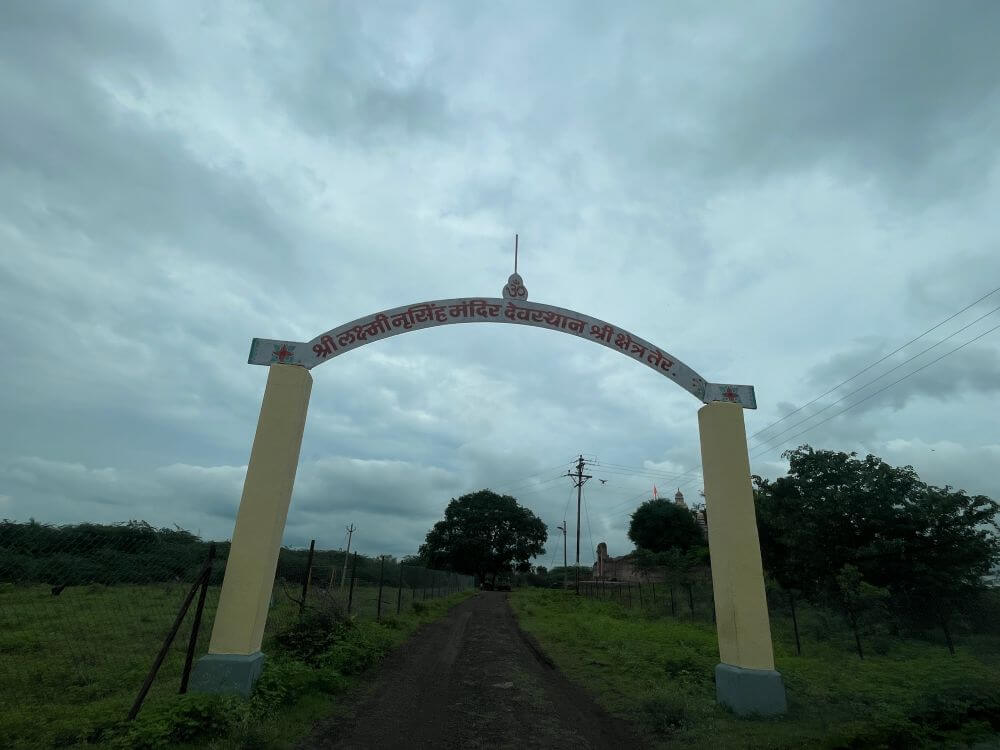
Shop Photo FramesWhen the name Narasimha is mentioned, one immediately envisions a fierce and terrifying countenance—the deity who is half-lion and half-human, who tore open the stomach of Hiranyakashipu with his long, sharp claws and disemboweled him. However, this same Narasimha was the crucial link in mediating the discord between the divine couple, Shiva and Parvati. The fact that the Narasimha Temple, which corroborates this legend, is located in the village of Ter in Dharashiv taluka makes one believe in this story. Devotees hold a deep faith that the awakened Narasimha and Gauri-Har here grant their prayers.
It is said that this temple was built during the Yadava dynasty in approximately the twelfth century. The legend regarding this temple states that once, following a quarrel between Mahadeva and Parvati, Parvati left Mahadeva and went far away. Distraught by the separation from Parvati, Mahadeva requested Vishnu to mediate and reconcile them. Knowing that Parvati would not listen to him in his Vishnu form, Vishnu approached her in the form of Narasimha. Seeing that Vishnu himself had come in the form of a lion to plead, Parvati returned to Mahadeva. The place where Mahadeva and Parvati reconciled is this Narasimha Temple in Ter.
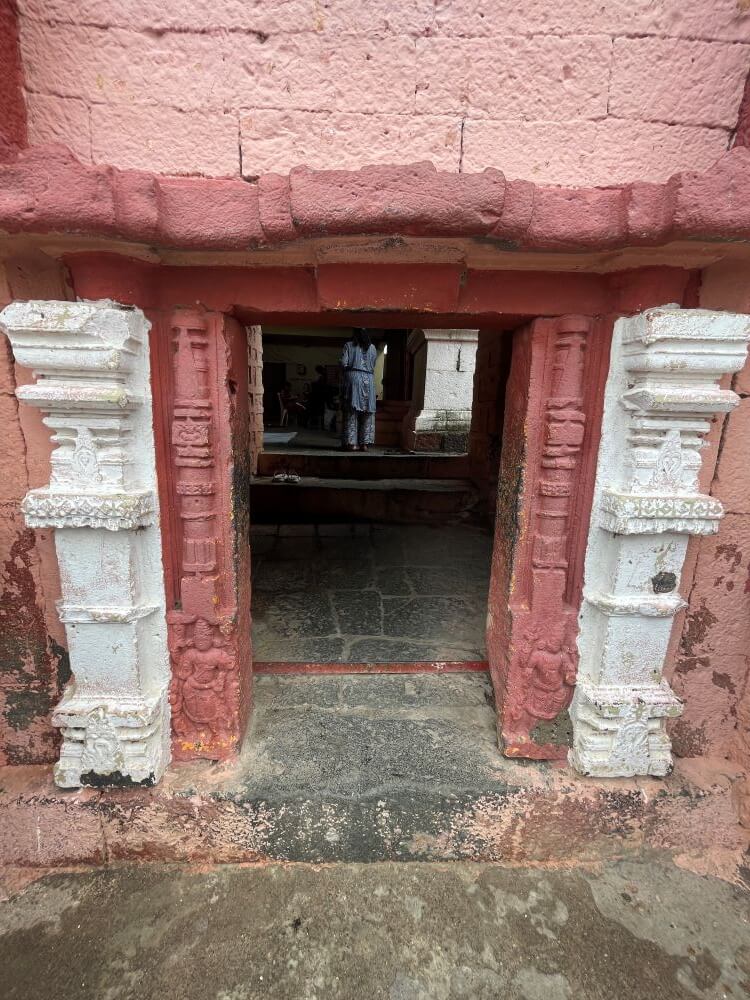
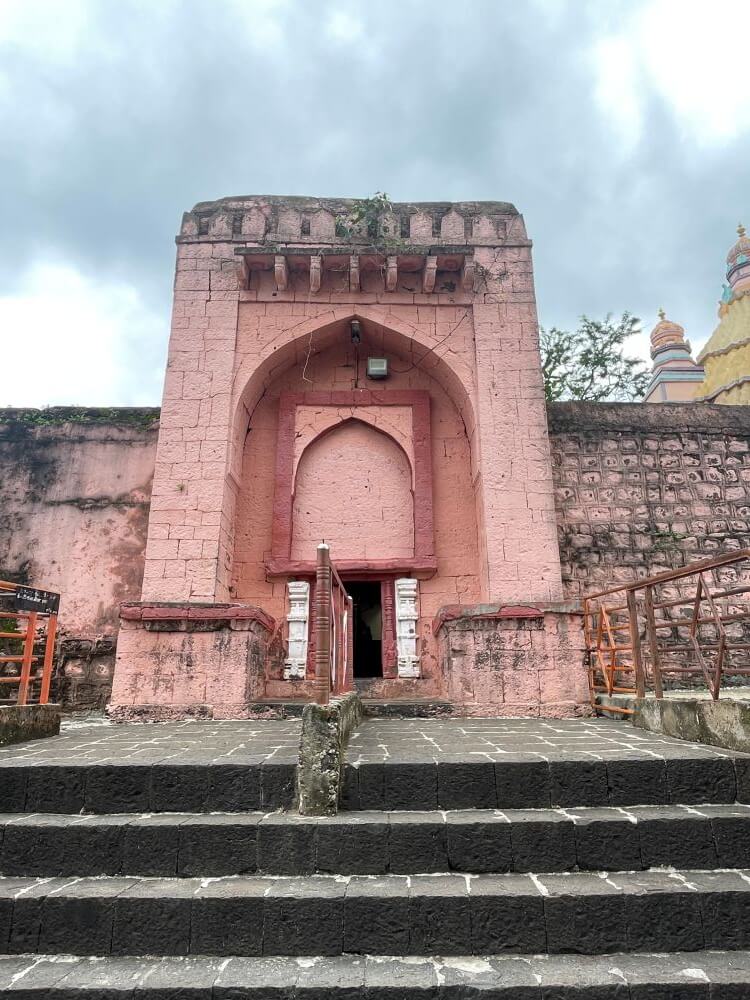
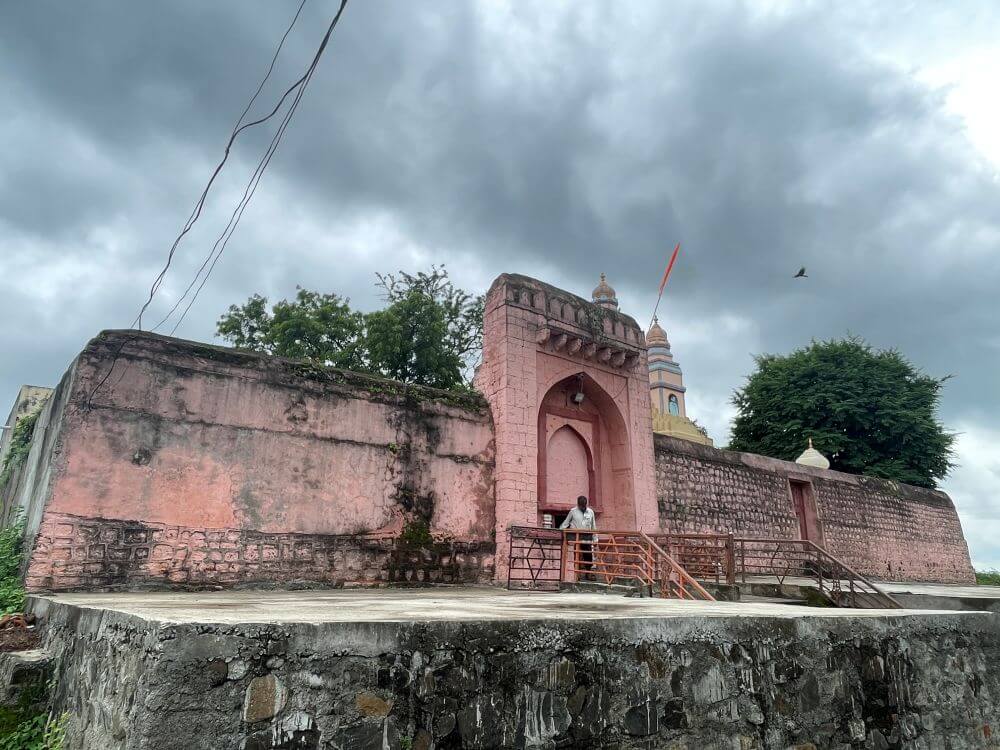
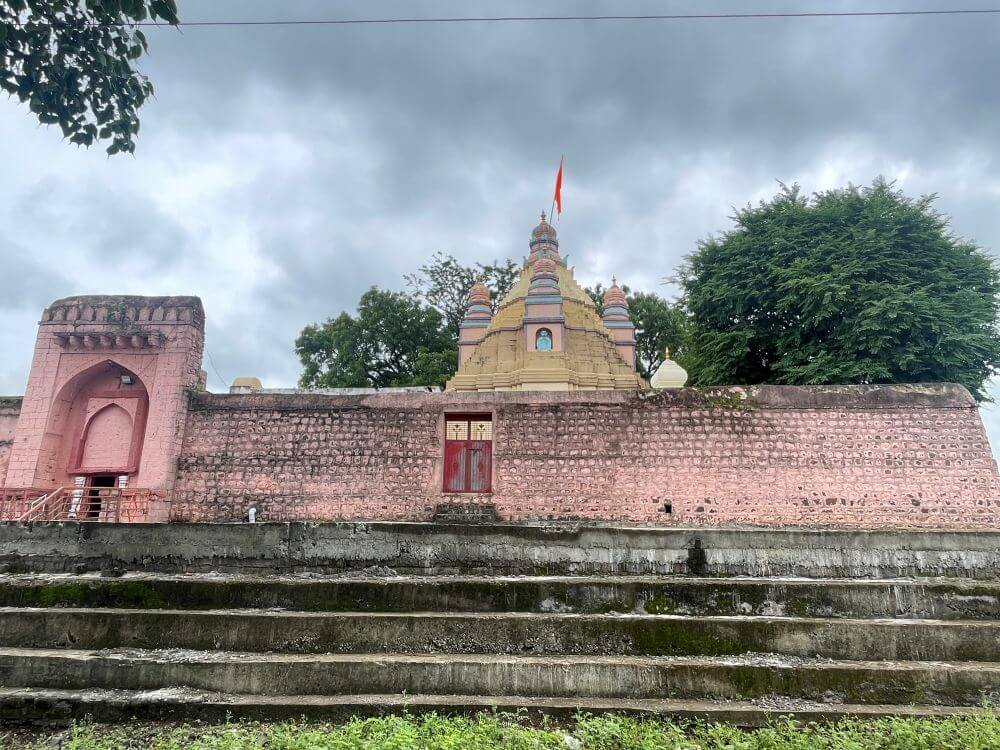
The temple is situated at the confluence of the Terna and Pippalika rivers. There is a spacious parking area in front of the temple. The temple stands on a high plinth and has steps on all four sides. It is surrounded by a sturdy stone fortification wall about fifteen feet high. One enters the temple courtyard through a grand entrance gate after climbing eight steps. There are safety railings on both sides of the steps and platforms on both sides of the entrance. The entrance has two pillar branches; the first branch features sculptures of gatekeepers at the bottom and intricate carvings above, while the second branch displays various decorative motifs. The passage through the grand entrance is narrow and low, requiring one to bow to enter. Inside the entrance, there are guard rooms on both sides.
In the courtyard, in front of the temple, there is a platform with a square, intricately carved Tulsi Vrindavan. Further ahead is a rectangular assembly hall (Sabhamandap) with three entrances. The entrances have iron grilled sliding shutters. Since the assembly hall is elevated above the courtyard, one must climb three steps to enter. The assembly hall has four rows of three square pillars each. All these pillars are connected by semi-circular arches, and there is a dome-shaped ceiling in the center of every four pillars.
Beyond this is the entrance to the Antarala (vestibule). The triple-branched entrance is adorned with vine and floral carvings. There is an image of Ganesha at the center of the lintel, and the architrave is decorated with leaf and creeper motifs. The ceiling features four squares with lotus flower carvings. In the Antarala, there are niches on the right and left sides of the sanctum sanctorum entrance. The right niche contains a vermilion-smeared stone idol of Ganesha, and the left contains a stone idol of Gauri-Har with Nandi. Locals refer to these idols as Vishnu and Lakshmi.
Further ahead is the narrow and low entrance to the sanctum sanctorum (Garbhagriha). The four door-frames are decorated with leaf and floral carvings, with an image of Ganesha on the lintel and lotus motifs on the ceiling. In the sanctum, there is a five-foot-tall sandy stone idol of Lord Narasimha on a diamond pedestal. This idol is coated with a protective layer (Vajralepan). The idol wears a silver crown, garments, and ornaments. There are silver sandals in front of the idol, and the back-halo features a Kirtimukh in the center with Makara-toranas on both sides.
The left side of the idol’s stomach is broken. Regarding this, it is said that once, when the priest was late in bringing the offering (Naivedya), the deity became angry and consumed a part of his own stomach. According to a story in the Padma Purana, when demons abducted Parvati, Lord Narasimha swallowed the demons’ sheep along with Parvati, and while handing Parvati back to Mahadeva, he removed a part of his own stomach.
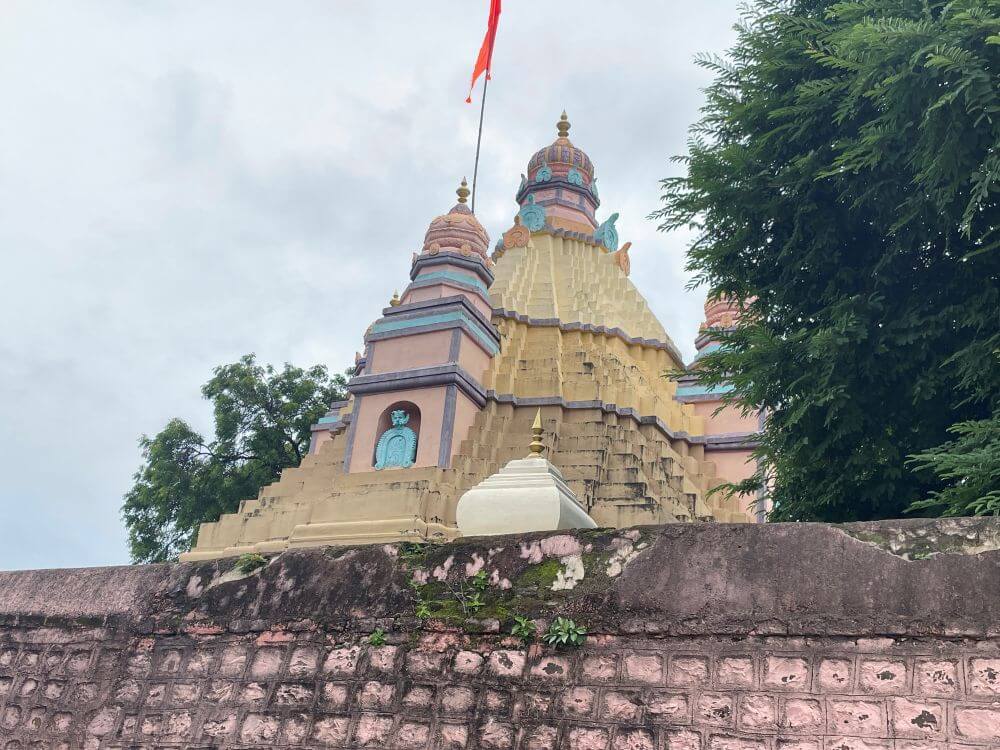
On the roof of the sanctum is a Shikhara of the Urushringi type. The main Shikhara has four sub-shikharas on all sides. Each sub-shikhara contains niches with divine idols. At the top of the sub-shikharas and the main Shikhara are finials (Stupikas) topped with Kalashas. To the left of the temple is a temple of Mahadeva. In front of the entrance to this temple, there is a black stone idol of Nandi on a platform. The entrance to this temple features a gatekeeper sculpture only on the right side. Having a gatekeeper sculpture on only one side of the entrance is a unique feature. Inside the temple, there is a Shiva Linga on the floor. This Mahadeva is known as Pimpaleshwar. The roof of the temple has a square Shikhara with a Kalasha atop its finial.
Narasimha Jayanti is the main annual fair celebrated here with great enthusiasm. The second annual festival in the temple begins on the death anniversary of Saint Goroba, on Chaitra Vadya Dashami, and concludes on the Amavasya with the distribution of Mahaprasad. During both festivals, programs such as Bhajans, Kirtans, and discourses are organized in the temple. Thousands of devotees come for Darshan, to fulfill vows, and to participate in the celebrations. Apart from this, there is a rush of devotees during Dussehra, Diwali, Mahashivratri, and other annual festivals. Devotees can have Darshan here daily from six in the morning until seven in the evening.
This sacred temple stands as a testament to deep spiritual devotion, ancient architectural grandeur, and rich local cultural traditions.
The sanctum sanctorum houses the divine idol consecrated according to ancient Vedic traditions, surrounded by serene courtyards and traditional temple architecture.
Navratri, Maha Shivratri, Annual Temple Jatra & Deepotsav
Compare and book flights, secure top-rated local hotels near the temple, hire reliable guides, and rent cars instantly.
Extend your pilgrimage by visiting other highly sacred temples located nearby.


Add ₹999 more to unlock FREE SHIPPING!
Your sacred cart is currently empty.
Shop Photo FramesFill in your delivery details below to place your order.
Add comment