
Add ₹999 more to unlock FREE SHIPPING!
Your sacred cart is currently empty.
Shop Photo FramesDharashiv district boasts a history dating back to the pre-Christian era. The Dharashiv Caves here are from the third century BCE and represent a rich heritage of Buddhist and Jain cultures. Archaeological excavations at Ter in the district have unearthed traces of human civilization from fifteen to twenty thousand years ago. The forts and temples here bear witness to the district’s prosperous history. In ancient times, this was a thriving region that traded with the world. The ancient and self-manifested Bhimashankar Mahadev Mandir in Kond village of this district is renowned.
This temple is said to be approximately four hundred to five hundred years old. The original Bhimashankar Mandir, one of the twelve Jyotirlingas, is located in Bhimashankar village in Pune district. As the Bhima River originates there, the deity is known as Bhimashankar. Regarding the temple in Kond, the legend goes that a villager from this village was an ardent devotee of the Lord. Once a year, he would walk to Bhimashankar for the Lord’s darshan. Later, due to old age, it became impossible for him to go there. At that time, the Lord said, “I Myself will follow you to your village, but I will establish Myself at the very spot where you stop.” As the devotee walked ahead of the Lord, he grew tired and stopped at this spot. At that very moment, the Lord manifested as a Shivlinga here. Despite many attempts, the villagers could not move the Shivlinga, so they built the Lord’s temple at this very spot.
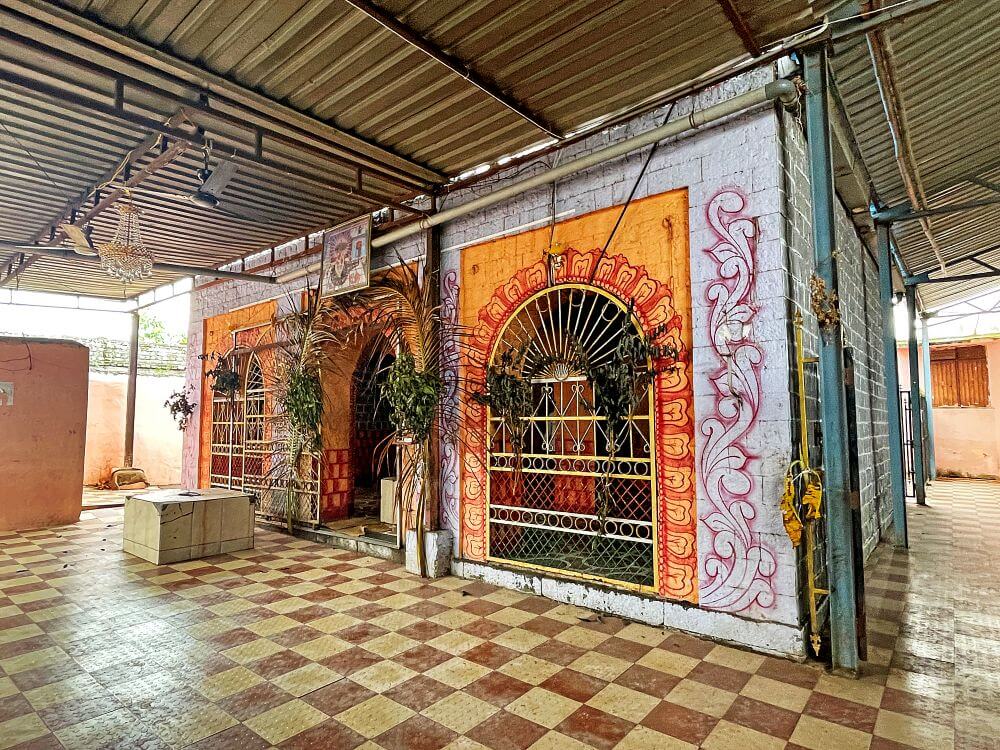
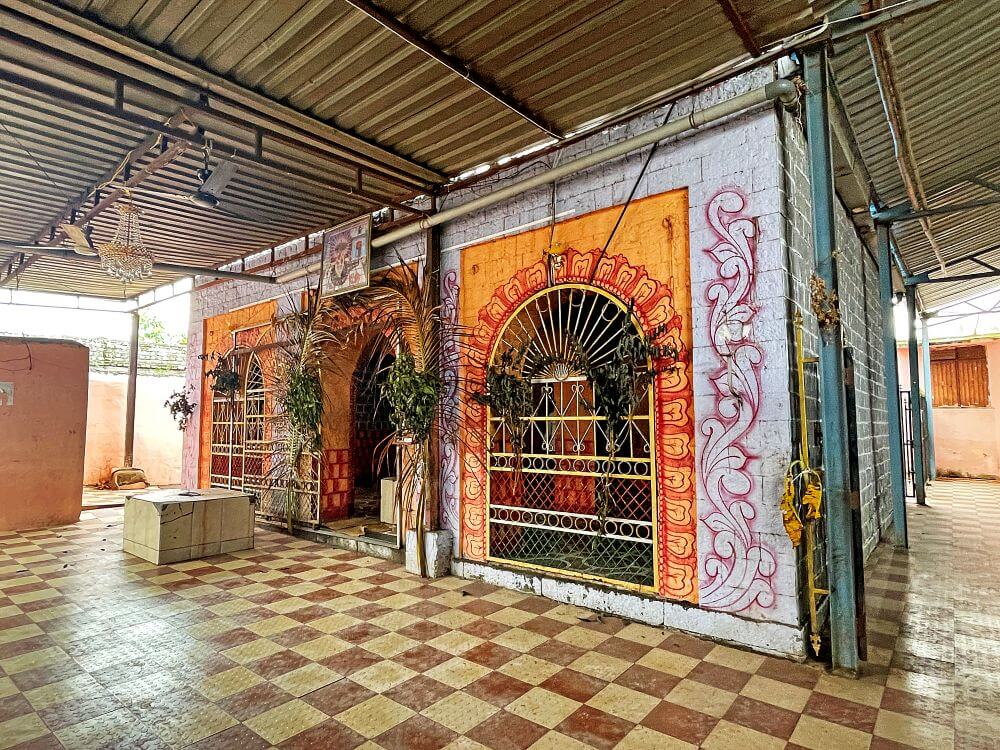
Formerly located outside the village, this temple is now in the central part of the village due to increased settlement. The temple has a sturdy boundary wall. Within this wall is the temple’s two-storied entrance. Being elevated from the road, the entrance has five steps. On the fifth step is a tortoise sculpture. There are platforms on both sides of the stairway. The doorframes of the entrance feature vertical ridge patterns, and there is a Kirtimukha on the Mandaraka and the Lalatabimba. The entrance has decorative wooden shutters and guardrooms on both inner sides. On the upper floor of the entrance is the Nagarkhana (drum house). There are stair-slabs in the fortified wall to access the Nagarkhana.
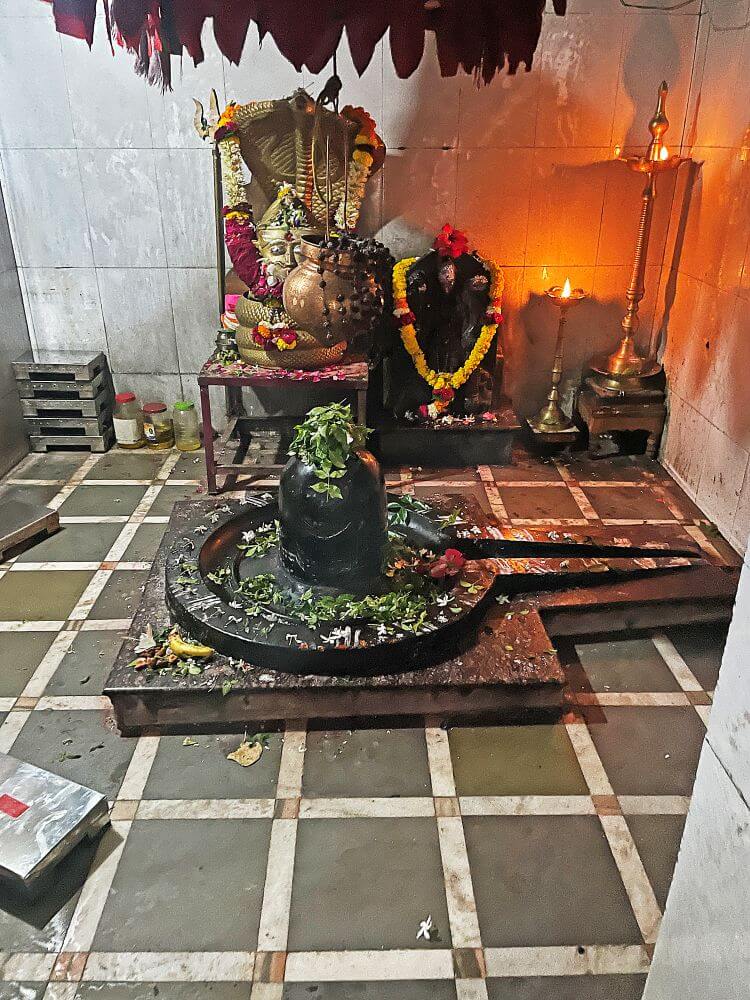
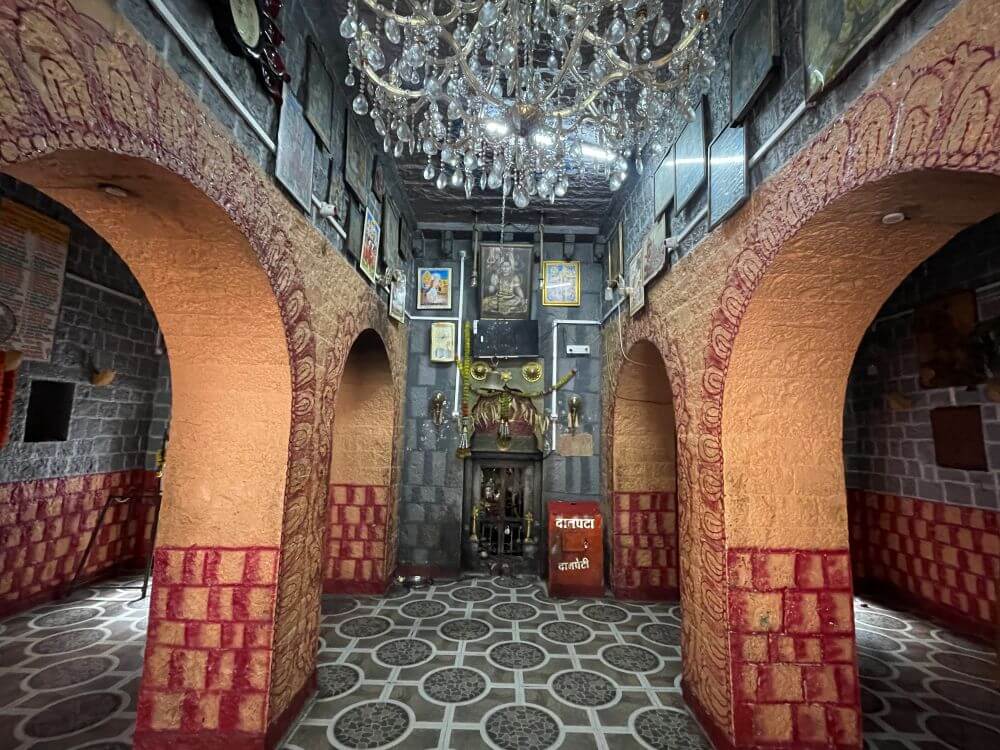
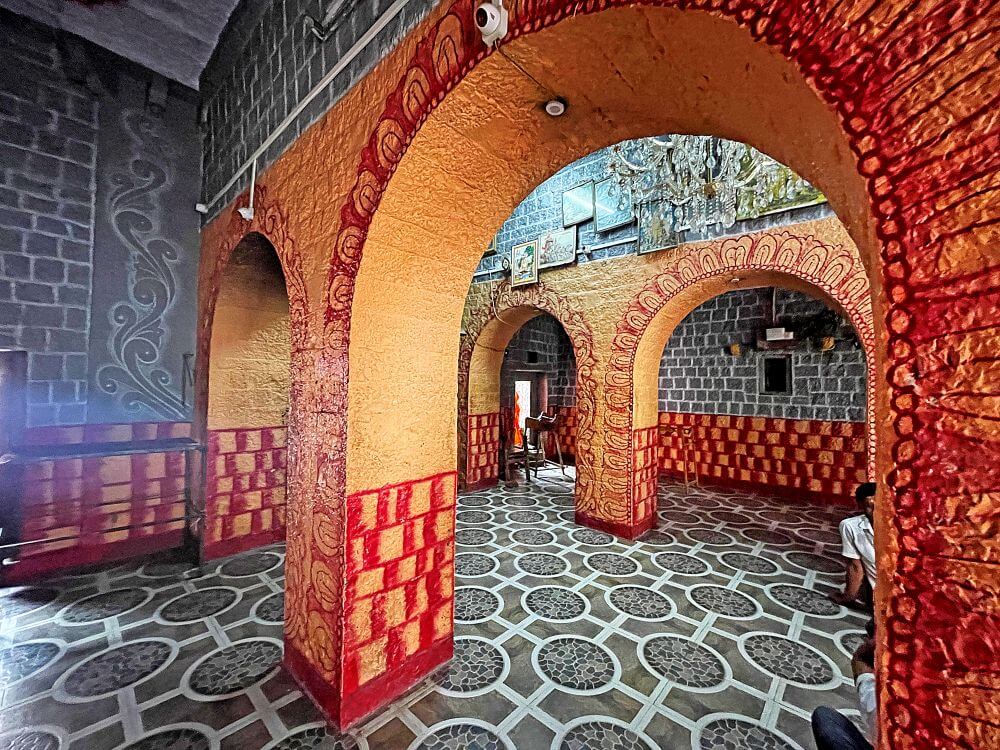
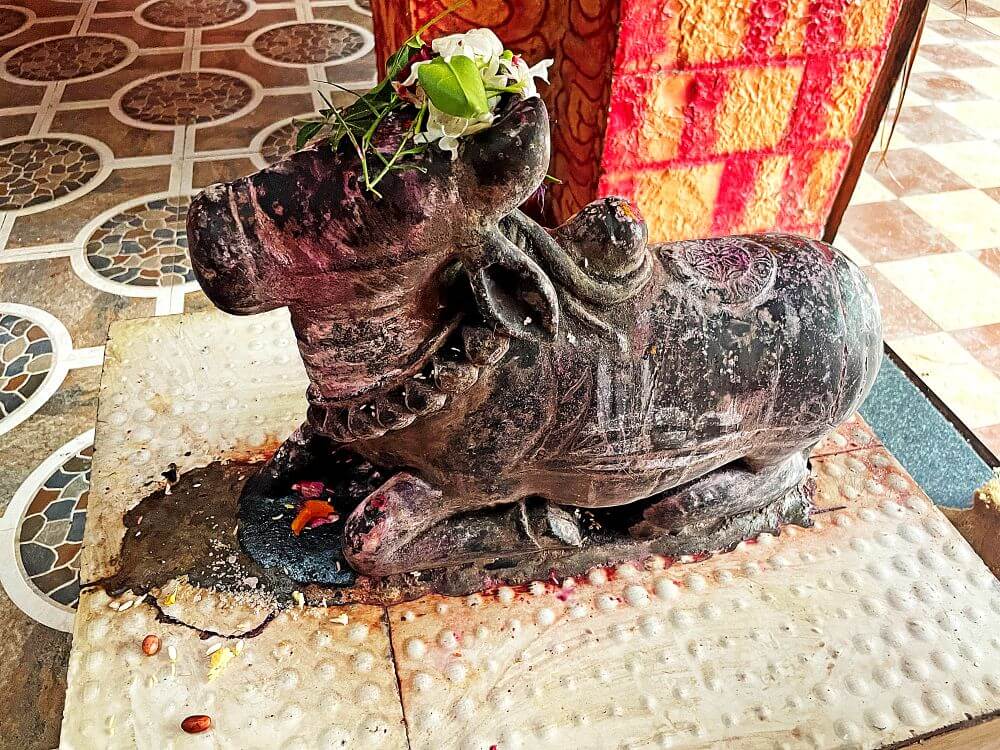
In the paved courtyard of the temple, near the entrance, are Viragal pillars. Further on is a Tulsi Vrindavan and an ancient circular well built of stone. It is said that an underground passage from this well leads to the Nagoba Mandir in the village. The courtyard also houses temples of local deities and Nandi sculptures. This temple, built in the Hemadpanti architectural style, has a structure comprising a Sabhamandapa (assembly hall) and a Garbhagriha (sanctum sanctorum). In the Sabhamandapa, there are four pillars on the front side, supporting three semicircular arches. The central arch serves as the entrance. In front of the entrance, on a platform in the Sabhamandapa, is a black stone idol of Nandi and the Lord’s palanquin used during festivals. In the enclosed Sabhamandapa, there are two rows of four decorative pillars each in the center. The pillars in each row are connected by semicircular arches. Above the arches is a beam, and above the beam is the ceiling. The ceiling features circular patterns. There are windows in the Sabhamandapa to allow for air and sunlight. Further ahead is the entrance to the Garbhagriha. The doorframes of this narrow entrance feature chakra patterns. Above the entrance, in a circle, is a unique design of a six-petaled flower. The visible walls of the Garbhagriha have arched patterns, and on both sides above the arch, there are chakra patterns. Inside the Garbhagriha, in the center of the floor, is the self-manifested Shivlinga, and a copper Abhishekapatra (vessel for ritual bathing) holding a stream of water is suspended from the ceiling. Adjacent to the rear wall, on a Vajrapitha, is a four-armed idol of Parvati. Next to it is a brass mask of Mahadev, surmounted by a five-headed brass serpent holding an umbrella. The roof of the Garbhagriha has a five-tiered, dodecagonal, tall, and tapering shikhara (spire). Each tier of the shikhara has Devakoshtakas (niches for deities) and Kalashas (finials) on top of their Amalakas (ribbed stone discs). At the apex of the shikhara are an Amalaka, a Kalasha, and a flag. In front of the main entrance of the temple is the Bhimashankar Ganesh Mandir. This temple, with its Sabhamandapa and Garbhagriha structure, houses a beautiful and large black idol of Ganesha.
Chaitra Ashtami is the Lord’s main annual Jatrotsava (fair festival), celebrated with great enthusiasm. On this occasion, a Harinam Saptaha (seven-day chanting of Lord’s names) is organized. On the eighth day, the Lord, seated in a palanquin, goes on a Gram Pradakshina (circumambulation of the village). This palanquin procession, which begins at three o’clock in the morning, is bathed in the light of torches, lamps, and oil lamps. Thousands of devotees participate in this palanquin procession, carrying umbrellas, chamaras (whisks), and flags, dancing to the beats of drums and cymbals, and holding Tembe, Kakade, Mashaal, and Panatya (various types of lamps). Special festivals are celebrated in the temple on Mahashivratri and all Mondays of Shravan. At this time, thousands of devotees come for the Lord’s darshan and to fulfill their vows.
This sacred temple stands as a testament to deep spiritual devotion, ancient architectural grandeur, and rich local cultural traditions.
The sanctum sanctorum houses the divine idol consecrated according to ancient Vedic traditions, surrounded by serene courtyards and traditional temple architecture.
Navratri, Maha Shivratri, Annual Temple Jatra & Deepotsav
Compare and book flights, secure top-rated local hotels near the temple, hire reliable guides, and rent cars instantly.
Extend your pilgrimage by visiting other highly sacred temples located nearby.


Add ₹999 more to unlock FREE SHIPPING!
Your sacred cart is currently empty.
Shop Photo FramesFill in your delivery details below to place your order.
Add comment