
Add ₹999 more to unlock FREE SHIPPING!
Your sacred cart is currently empty.
Shop Photo FramesThe history of Ter, a prosperous village from ancient times in the Dharashiv district, dates back directly to the third century BCE. The Archaeological Survey of India has registered this village as a historical site. Excavation campaigns were conducted here five times, in the years 1957, 1966, 1975, 1987, and 1988. These excavations unearthed copper coins, stone grinding slabs and pestles, iron lamps, arrowheads and spearheads, knife blades, beads, bangles, partially charred grains, and even ancient stupas and temples. In this village, which is the home of the twelfth-century Saint Goroba Kumbhar, stands the ancient and famous Uttareshwar Temple, built using baked bricks. Scholars from all over the world visit to witness the unique architecture and sculptural beauty of this temple. Another specialty of these bricks is that they are lightweight and float on water.
Experts express the opinion that this temple dates back to approximately the third century. In the year 1901, the British officer Henry Cousens visited this temple. At that time, he had recorded his opinion regarding this temple, stating, “The strongest evidence of the Uttareshwar Temple being extremely ancient is that no stone was used in its construction.” According to archaeologist and historian Dr. Arvind Jamkhedkar, this temple likely dates back to the Kalachuri dynasty. Some experts express the opinion that it belongs to the Chalukya era. Overall, while there is no consensus regarding the exact period of this temple, experts are unanimous about its antiquity.
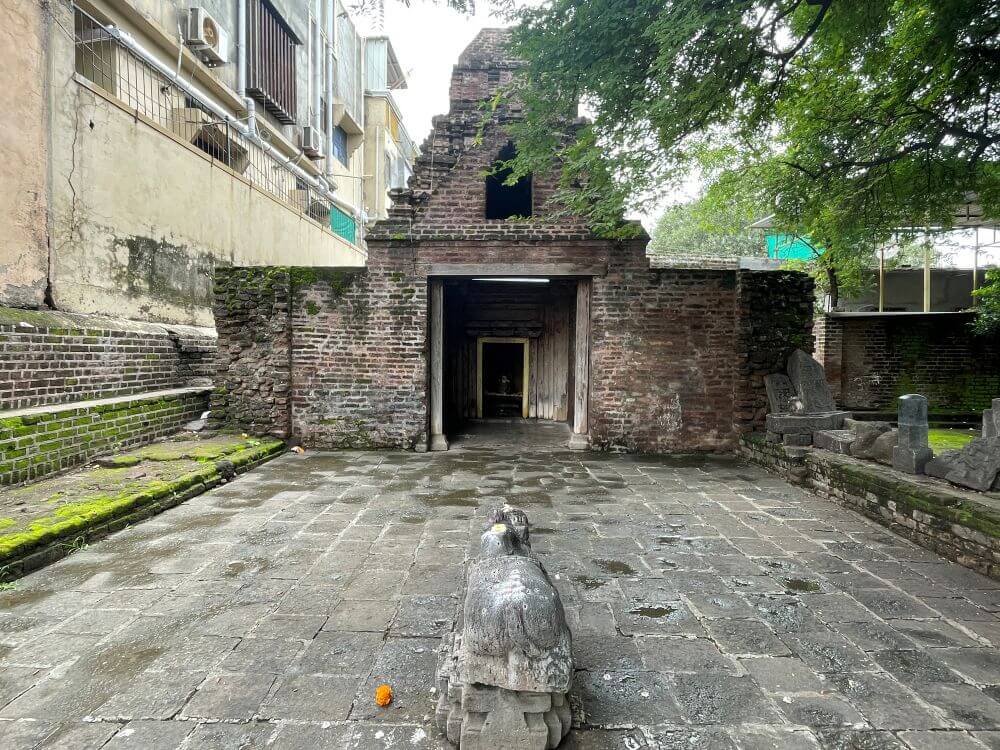
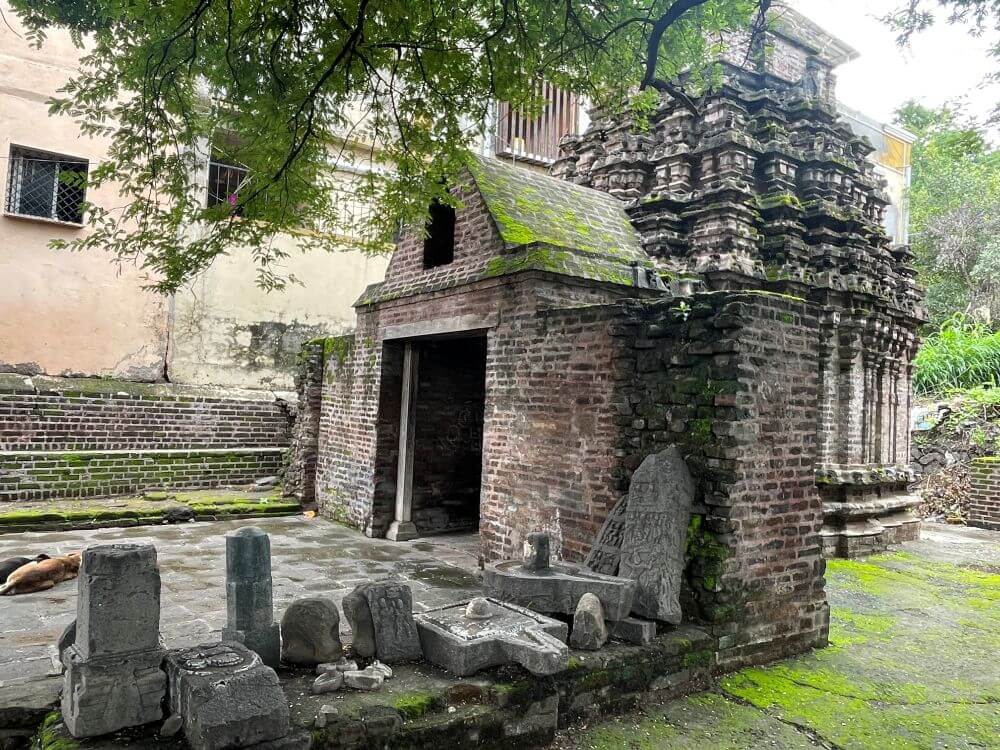
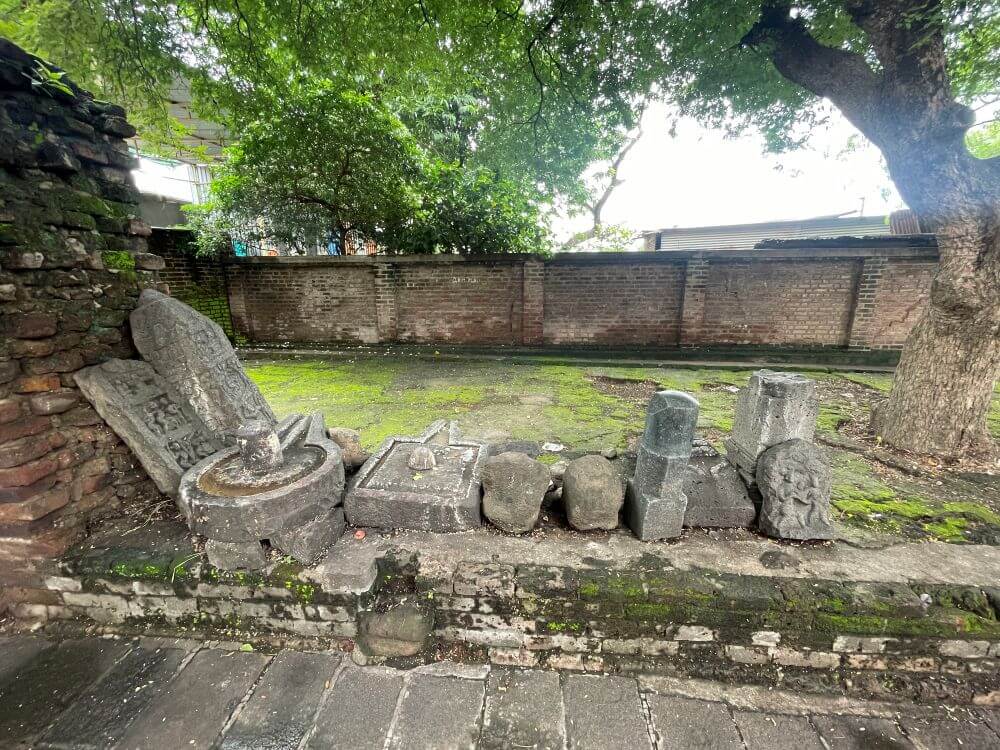
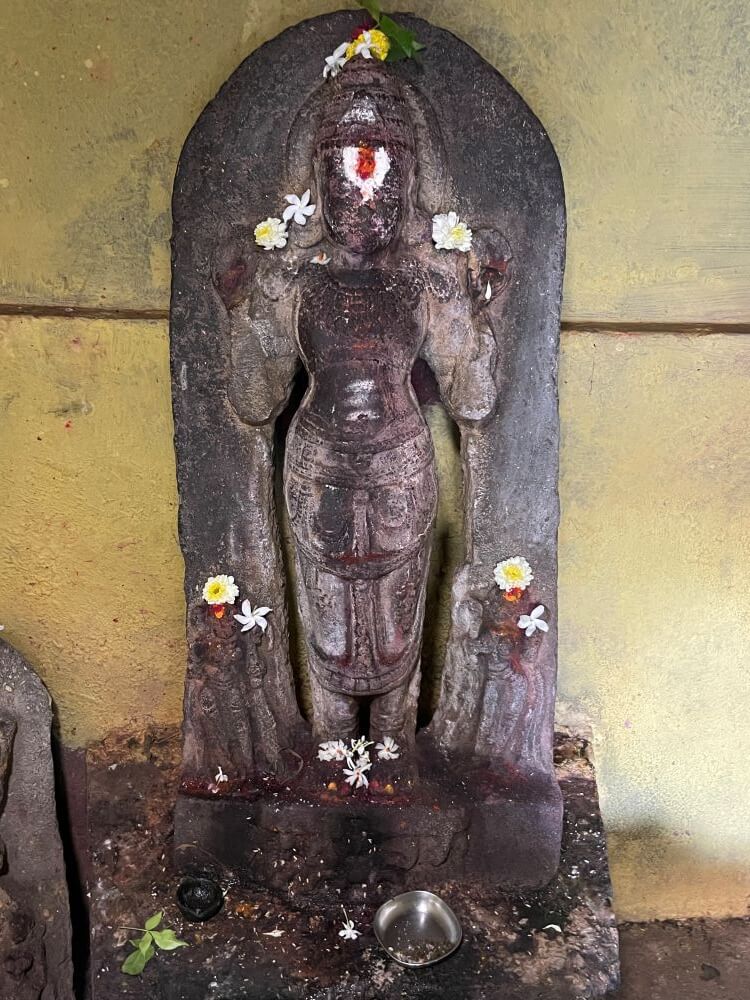
The sturdy fortification of this temple, located along the road, is built using burnt bricks. This ancient fortification has been plastered in recent times. One enters the paved courtyard of the temple through the gateway in the fortification. There are some ancient trees in the courtyard and seats built into the fortification on the right side. This temple is currently under the jurisdiction of the Archaeological Survey of India. In front of the temple, there is a black stone idol of Nandi on a Vajrapitha. Intricate details such as the bell garland, the saddle cloth on the back, the hump, and the tail are carved onto the Nandi idol. Observing the half-walls in front of the temple in the courtyard, it is estimated that there was once a wooden-roofed Sabhamandapa here. Near these partial walls are some ancient Shiva Lingas, memorial stones, and hero stones (Viragals). Along the fortification walls, there are ancient and weathered idols of Vishnu and Mahadeva.
Further ahead is the Antarala (vestibule) of the temple. Previously, the entrance to the Antarala had a wooden frame with five door jambs. It is currently kept in the Ramlingappa Lamture Museum in Ter itself. The architrave above this door jamb features carvings of Yakshas, Kinnaras, and deities showering flowers. The Lalatapatti (lintel) is adorned with carvings of swans, peacocks, and other birds and animals. The frame is intricately carved with floral motifs, foliage, human figures, lions, and mythical creatures.
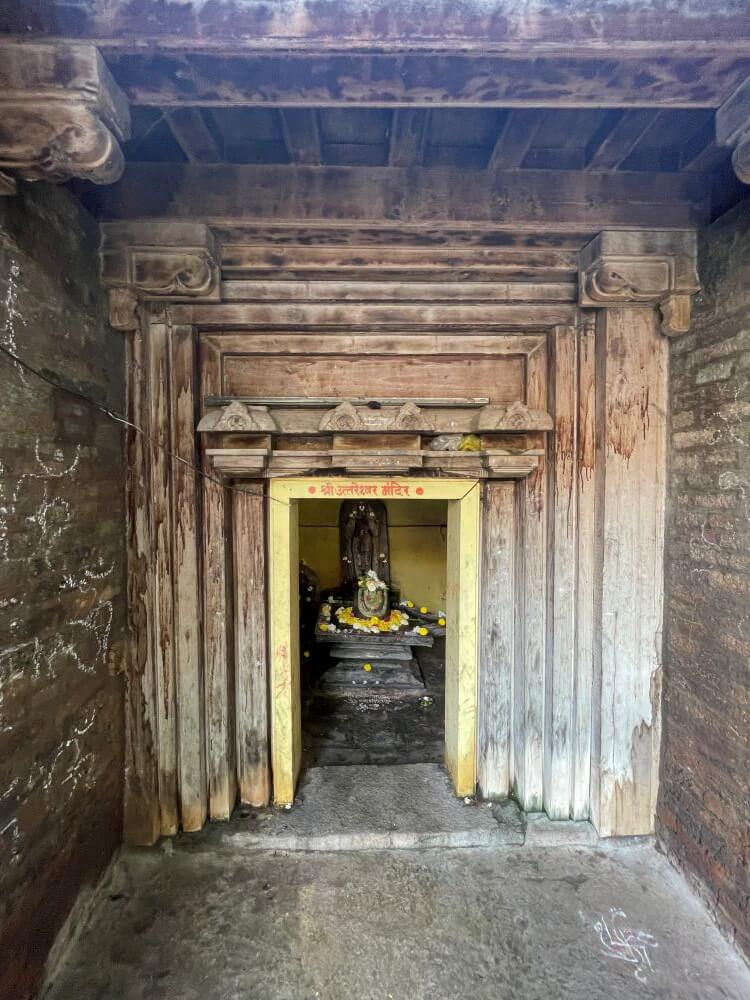
Beyond the Antarala is the wooden entrance to the Garbhagriha (sanctum sanctorum). The door jambs here have modest carvings. In the 8 feet by 8 feet square Garbhagriha, there is a Shiva Linga in the center on the floor. The Shalunka of this Shiva Linga, situated on a high stone pedestal, is square-shaped. In the sanctum sanctorum, against the back wall, are two two-armed idols of the Sun God carved in black stone. In both hands of the idols are lotus flowers, and seven horses are carved near their feet. Crowns on the heads of the idols, various types of necklaces around their necks, waistbands, abdominal bands, girdles, and various garments are intricately carved. On both sides of the idols, near the feet, are two Shakti idols. It is said that they are symbols of day and night.
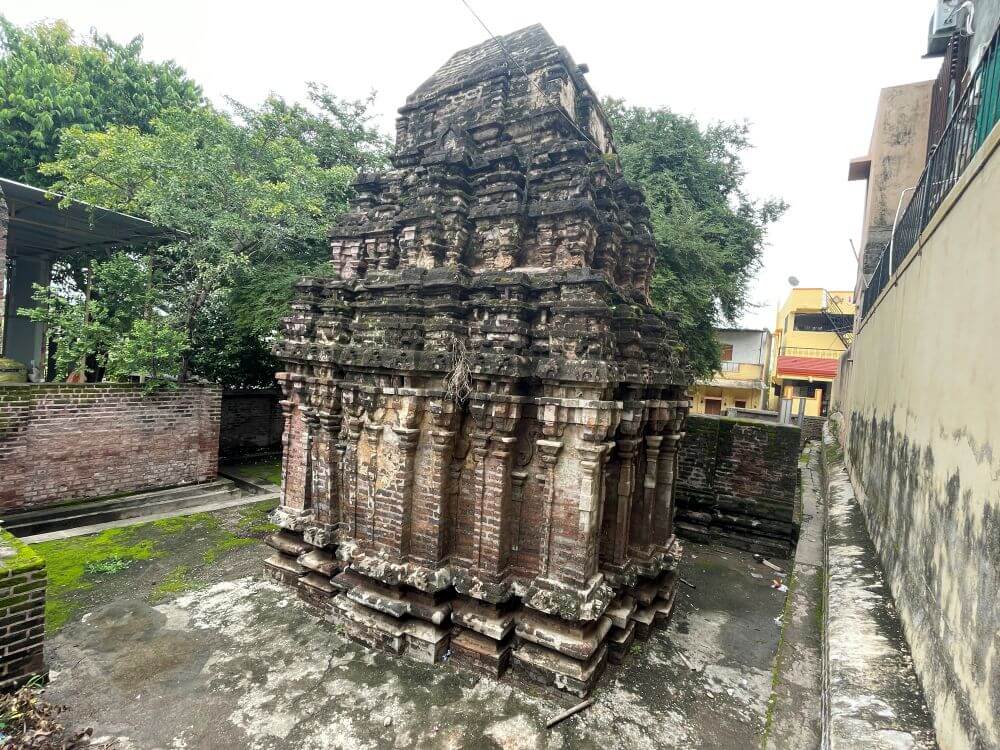
On the Mandovara (outer wall), there are rows of ornate pillars. In the space between two pillars, there is Makartoran (arch) ornamentation. The parts of the pillars, such as the base, shaft, molding, and bracket, are crafted using bricks, making them distinct and unique. The dimensions of the bricks are 16 inches wide, 9 inches high, and 21 inches long. Above the pillars is a cornice, and on the roof is the Shikhara. This Dravidian-style Shikhara tapers as it rises from the roof, becoming point-like near the Kalash.
In this temple, there is a bustle of devotees on days like Mahashivratri, Pradosh, Shravani Mondays, as well as Purnima and Amavasya. Scholars from all over the world visit this temple, which is about seventeen hundred years old, to study its unique beauty and architectural science.
This sacred temple stands as a testament to deep spiritual devotion, ancient architectural grandeur, and rich local cultural traditions.
The sanctum sanctorum houses the divine idol consecrated according to ancient Vedic traditions, surrounded by serene courtyards and traditional temple architecture.
Navratri, Maha Shivratri, Annual Temple Jatra & Deepotsav
Compare and book flights, secure top-rated local hotels near the temple, hire reliable guides, and rent cars instantly.
Extend your pilgrimage by visiting other highly sacred temples located nearby.


Add ₹999 more to unlock FREE SHIPPING!
Your sacred cart is currently empty.
Shop Photo FramesFill in your delivery details below to place your order.
Add comment