
Add ₹999 more to unlock FREE SHIPPING!
Your sacred cart is currently empty.
Shop Photo FramesThe temple of Kapileshwar Mahadev is situated in the village of Kandari, which was known in ancient times as Kardamnagar or Kardani. It is said that this abode of Mahadev is extremely ancient. Sage Kapil himself used to visit this place to seek the darshan of Mahadev, and it is from his name that this Mahadev came to be known as Kapileshwar. Although the Tapi River flows westward in Khandesh, the river’s current flows from north to south in front of the temple. Devotees believe that during specific auspicious periods, Mother Tapi arrives here along this path to serve Mahadev.
‘Kapila’ means ‘one who possesses a radiant, red complexion like fire.’ In the tenth chapter of the Bhagavad Gita, Lord Shri Krishna has stated, ‘Among all the perfected beings, I am the sage Kapila.’ He is the original proponent of the Samkhya philosophy in Hindu scriptures. Sage Kapila, who formulated this philosophy—which is considered anti-Vedic by materialists—is first mentioned in the Shvetashvatara Upanishad (5.2). Of various knowledge It is stated there that through Yoga, the Lord sustains the sage Kapila. In the Bhagavata Purana, twenty-four incarnations of Vishnu are described. It is mentioned therein that the great sage Kapila, born to Devahuti from the sage Kardama, is an incarnation of Vishnu. Sage Kapila imparted the teachings of Samkhya philosophy to Devahuti. According to the legend of the temple at Kandari, it was in this very temple that he imparted these teachings to his mother.
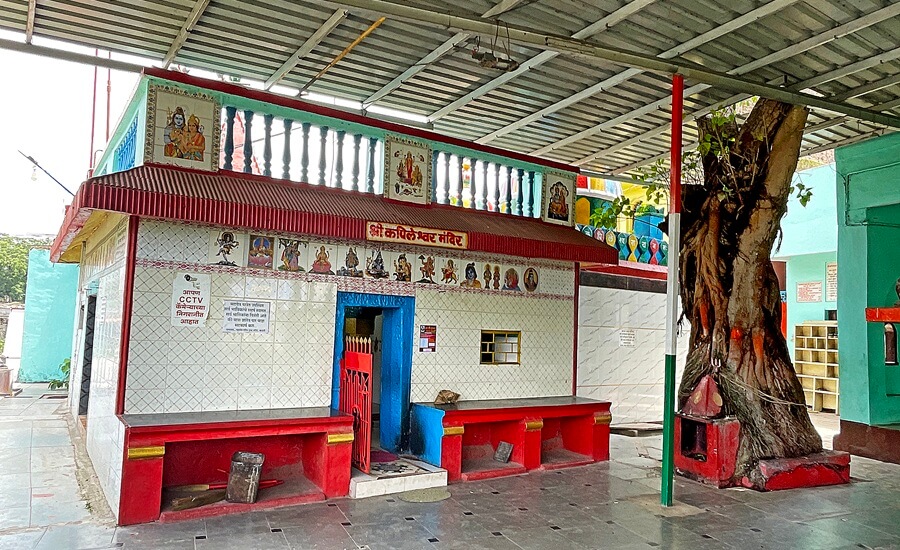
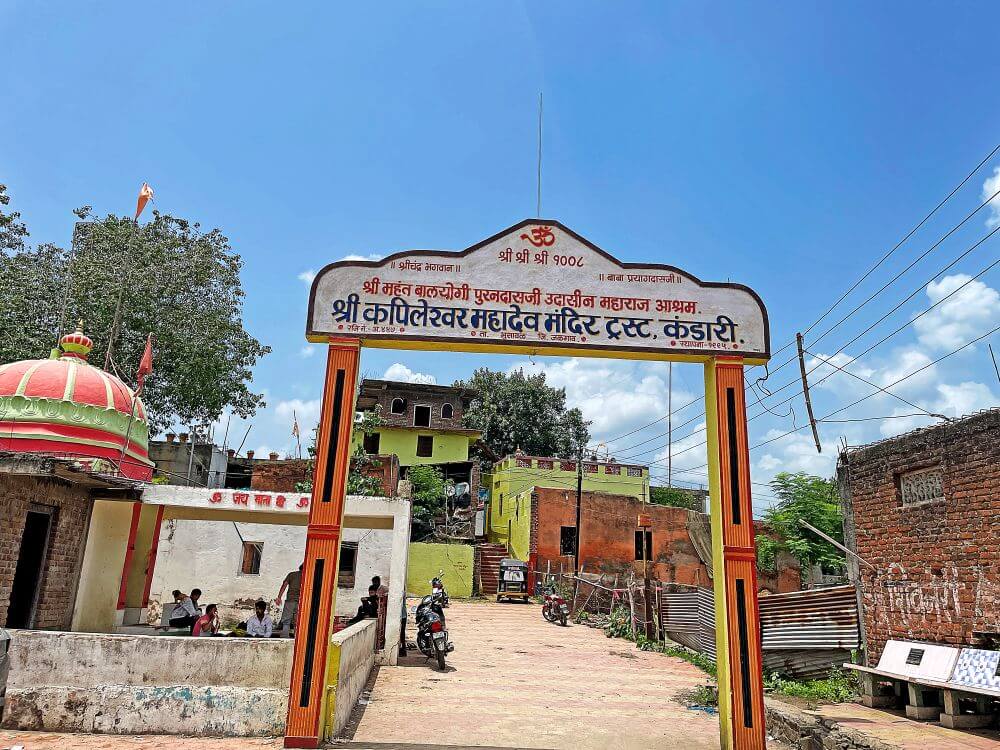
Located on the banks of the Tapti River, the premises of this temple also house the ashram of Mahant Balayogi Purandasji Udasin Maharaj. An archway bearing this mention has been erected on the path leading to the temple. From here, after walking a short distance and climbing the steps, one enters the temple courtyard. It is said that the current Kapileshwar temple was built in the twelfth century. This temple, constructed in the Hemadpanti style, has been recently renovated. In this process, marble tiles have been used extensively in the temple’s construction. As a result, the ancient appearance of the temple has changed. It consists of a Sabhamandap (assembly hall), Antarala (vestibule), and Garbhagriha (sanctum sanctorum). This is the form of this temple.
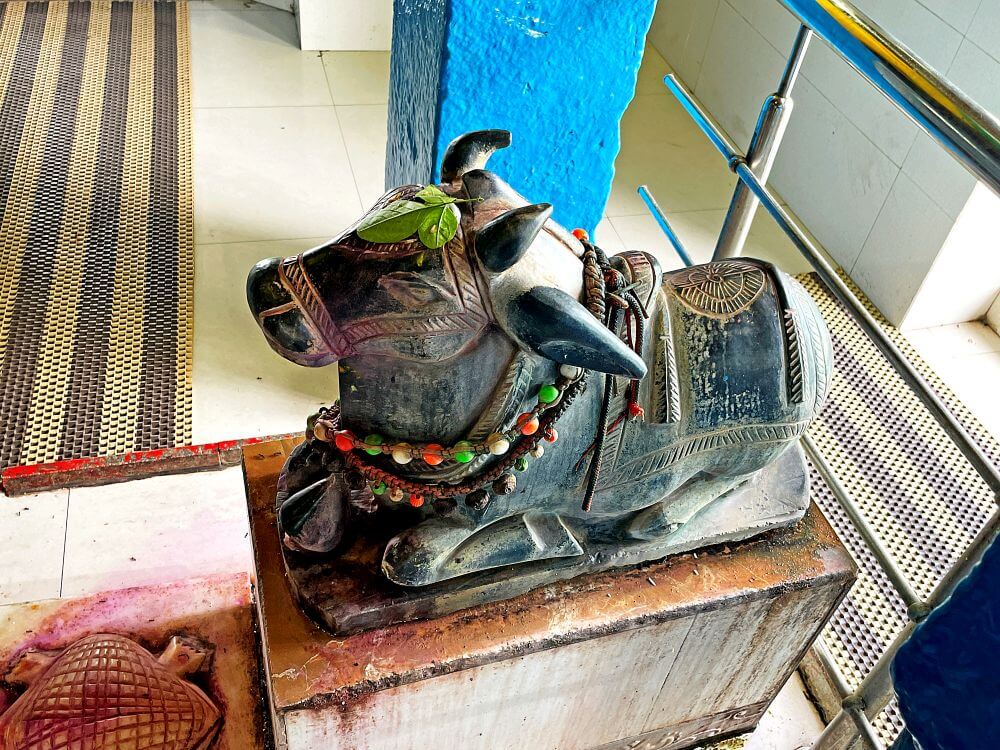
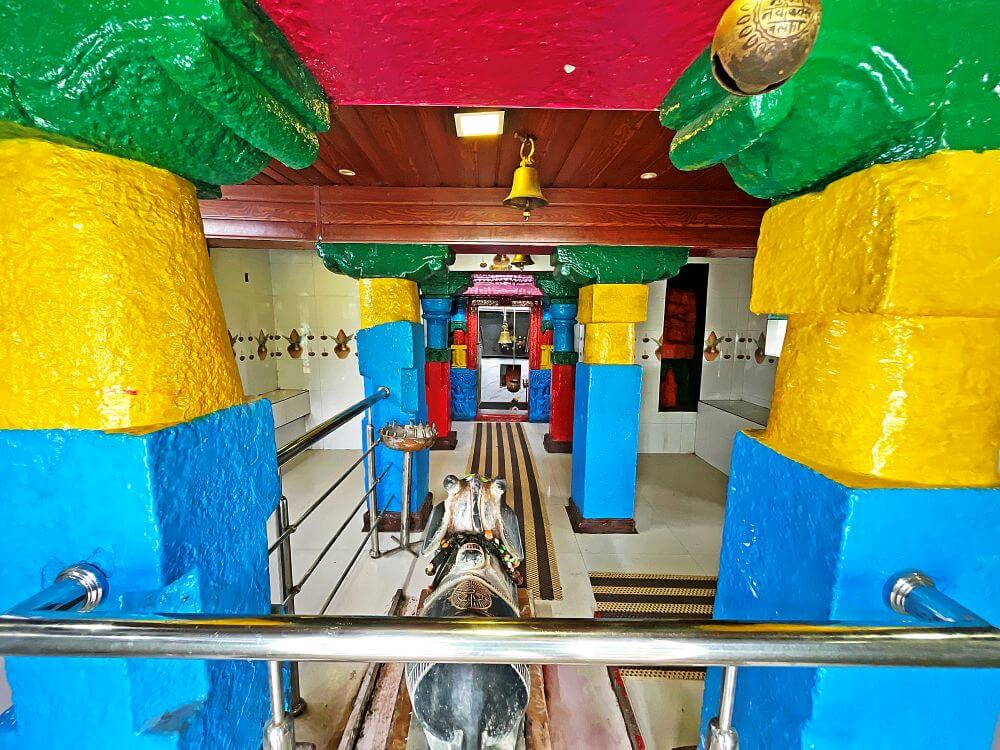
The entrance to the temple’s Sabha Mandapa (main assembly hall) is made of stone. As one enters from here, the antiquity of the temple becomes apparent. Inside, there are several plain, uncarved stone pillars. These pillars are square at the base, circular in the middle, square above that, and topped with bracket capitals (tarangahasta) to support the beams above. In the Sabha Mandapa, there is an elegant stone idol of Nandi placed on a high pedestal. In front of it lies a marble Kurma (tortoise) sculpture. The interior of the Sabha Mandapa is also fitted with marble tiles. In the niches (devakoshtas) of the Antarala (vestibule), there are idols of Lord Ganesha and Lord Hanuman. A distinctive feature of this temple is the stone entrance to the Garbhagriha (sanctum sanctorum). It is adorned with intricate carvings. The door frame features geometric patterns. There are semi-circular door pillars, with sculptures of dwarapalas (gatekeepers) and dwarasevikas (attendants) on both sides at the base. At the lalata-bimba (central position on the lintel) of the door frame, there is an idol of Lord Ganesha. On the uttaranga (upper section) above it, an idol of Lord Shiva is carved in the center, flanked by idols of goddesses on both sides.
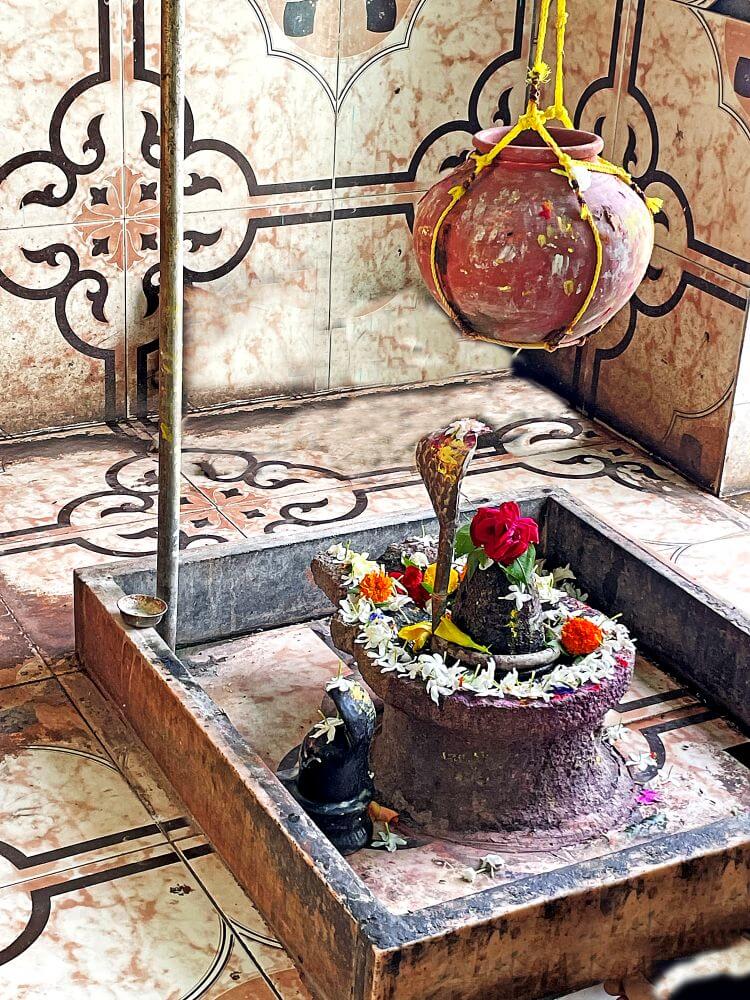
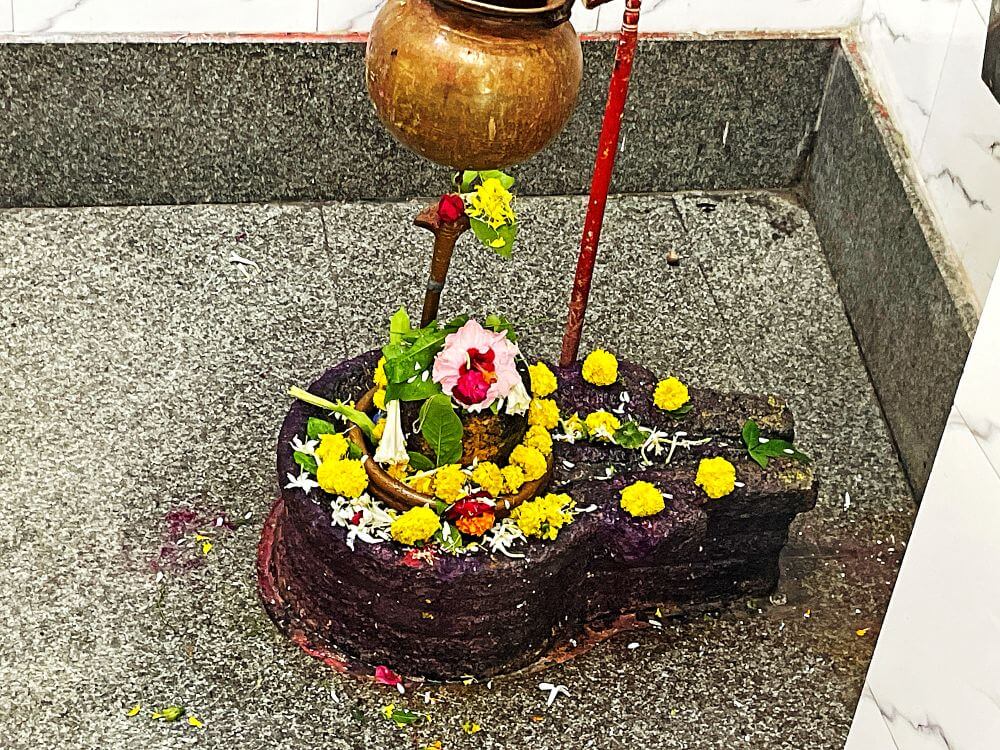
The sanctum sanctorum (Garbhagriha) is small. Inside, there is a Shiva Linga made of black stone. It is said that beneath this Shiva Linga lies a sand Shiva Linga, which was consecrated by Sage Kapila. A metal serpent deity is coiled around this Shiva Linga. One can see the ritual of Jalabhishek (water offering) being performed upon it from a Kalasha (vessel). In a niche on the back wall, there is an idol of Goddess Parvati. On the ceiling of the sanctum, one can see triangular and circular structures. The temple spire (Kalash) is dome-shaped, with four small square minarets on the sides.
In the temple courtyard, there are small shrines dedicated to Mahadev and Hanuman. Another temple here is dedicated to Shivdasan Maharaj. In the small sanctum sanctorum of the temple, there is a beautiful marble idol of Shivdasan Maharaj. Nearby, there are also idols of Vishnu and Lakshmi. In one of the temples here, there is the Samadhi shrine of Purandas Maharaj, which houses a seated idol of the Maharaj. On one side, there is also an idol of Goddess Kali. Throughout the temple, pictures of various deities can be seen. Among these, the pictures of Sulakshani Mata and Shri Chandraji Maharaj are noteworthy. Baba Shri Chandra or Bhagwan Shri Chand was the founder of the Udasi sect of ascetics. He was the son of Guru Nanak, the founder of the Sikh religion. Sulakshani was the name of his mother. He was blessed with a long life of approximately 134 years, from December 8, 1494, to January 13, 1629. He encouraged the worship of deities such as the Sun, Vishnu, Shiva, Ganesha, and Shakti. He is worshipped as an incarnation of Lord Shiva. Three large, ancient portraits depicting his life story can be seen in this temple.
A grand fair is held at this temple on the day of Makar Sankranti. During the holy month of Shravan and on the day of Mahashivratri, the temple sees a large influx of devotees. Rituals such as Kalsarpa Yoga, Tripindi, and Gruhashanti are performed at this temple. Due to water accumulation in the Tapi riverbed near the temple, natural potholes (Ranjankhalge) have been formed. Tourists and researchers visit this place to see them.
This sacred temple stands as a testament to deep spiritual devotion, ancient architectural grandeur, and rich local cultural traditions.
The sanctum sanctorum houses the divine idol consecrated according to ancient Vedic traditions, surrounded by serene courtyards and traditional temple architecture.
Navratri, Maha Shivratri, Annual Temple Jatra & Deepotsav
Compare and book flights, secure top-rated local hotels near the temple, hire reliable guides, and rent cars instantly.
Extend your pilgrimage by visiting other highly sacred temples located nearby.


Add ₹999 more to unlock FREE SHIPPING!
Your sacred cart is currently empty.
Shop Photo FramesFill in your delivery details below to place your order.
Add comment