
Add ₹999 more to unlock FREE SHIPPING!
Your sacred cart is currently empty.
Shop Photo FramesIt is believed that the court of Nanda, the king of the Gavli tribe, used to be held in the city of Nandurbar. Hence, this place has been known as ‘Nand Darbar’ since ancient times. Over time, the name evolved into Nandurbar. Even today, the city of Nandurbar is referred to as ‘Nandbhumi’. It is said that the Kalyan-Ganesh temple in this city was established by King Nanda himself. Consequently, the history of this temple is directly linked to the Dvapara Yuga. Records indicate that the temple was later renovated during the reign of Punyashlok Ahilyabai Holkar.
The word Ganapati is etymologically explained as the lord (pati) of the group (gana) or community. In the Rigveda, the deity Brahmanaspati is addressed with the epithet Ganapati. Furthermore, the internationally renowned Indian orientalist and Indologist V. V. Mirashi held the view that references to Ganapati by the names Tatpurusha, Vakratunda, and Danti are found in the Maitrayani Samhita dating back to the 6th century BCE. Subsequently, a description of Lord Ganapati appears in the Ganapati Atharvashirsha Upanishad. Experts believe this description dates back to the Gupta period. There are millions of temples dedicated to this Gananayaka (leader of the ganas) across the world. Among them, an ancient and famous temple with an open roof is located in the city of Nandurbar. Devotees believe that this vibrant deity, known as Kalyaneshwar Ganesh, is one who grants the wishes of those who pray to Him.
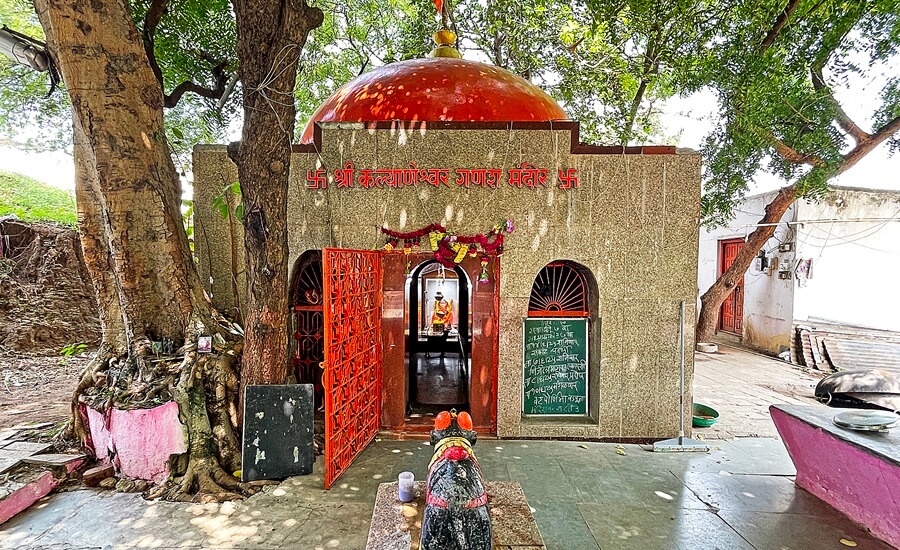
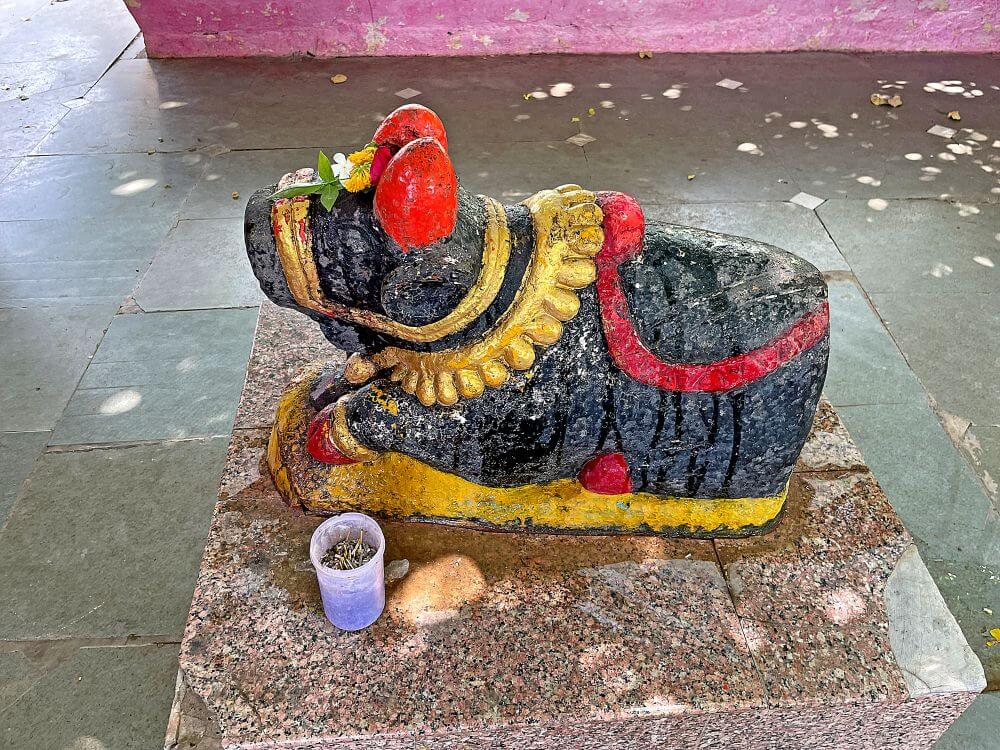
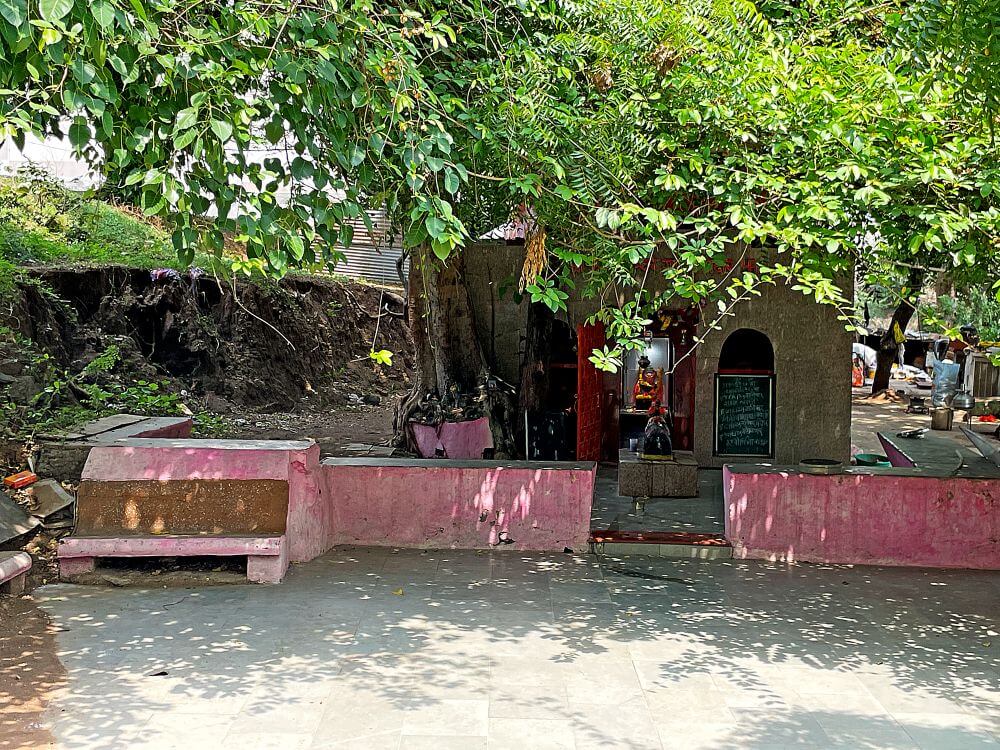
It is said that Chhatrapati Shivaji Maharaj, while on his way to the Surat expedition, had taken darshan of this Ganpati before proceeding further. Nestled in the lap of a mountain, this 13th-century temple had over time become buried under the earth. After some devotees noticed the existence of this temple beneath the mounds of soil in the year 1985, it was excavated and re-established. There is a boundary wall in the temple courtyard. Located at a level lower than the road There are four steps to descend into the courtyard. In this courtyard, there are many trees and seating arrangements for devotees. Under one of the trees here, there is an ancient Shivling and a Nandi idol.
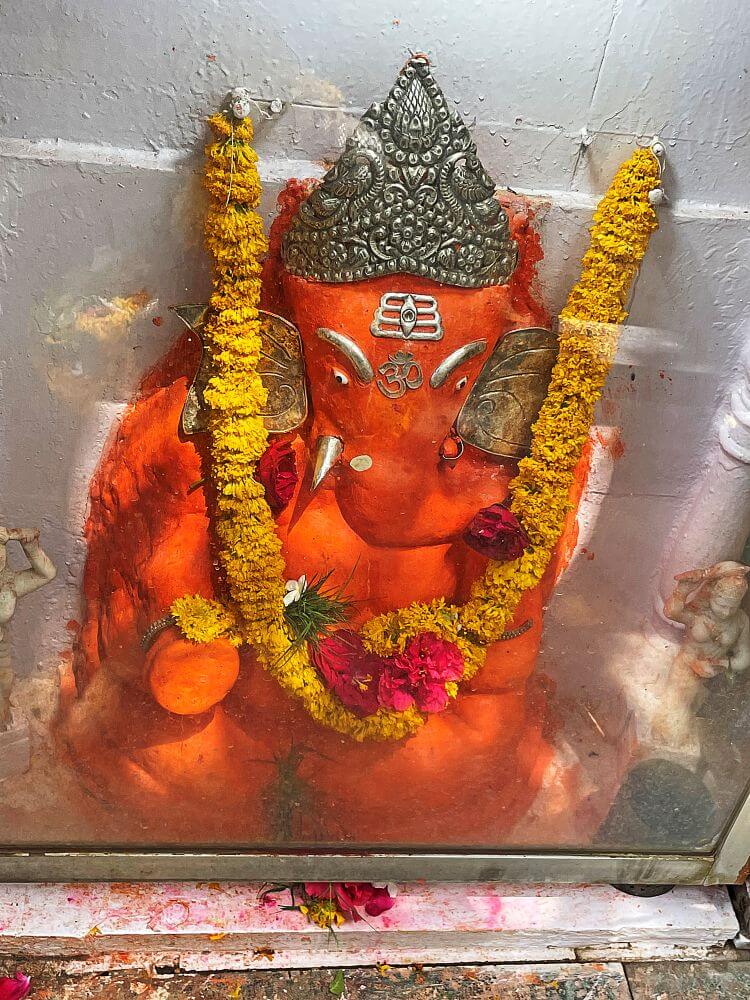
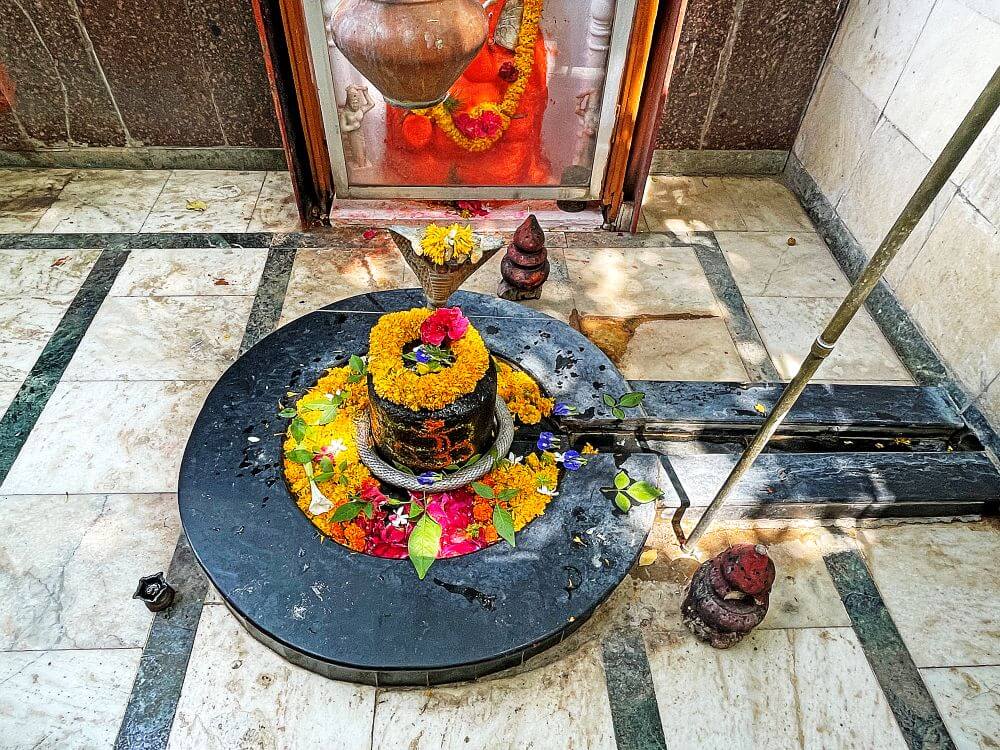
The temple structure consists of an open mandapa, a sabhamandapa, and a roofless garbhagriha (sanctum sanctorum). Near the temple entrance, on the exterior, there is an idol of Nandi placed on a vajrapitha. From here, one enters the sabhamandapa through a semi-circular doorway. On the lalata-bimba (lintel) of the entrance, there is an idol of Ganapati, with windows on both sides. In the sabhamandapa, on the right side, there are two Shiva lingas. Above both lingas, there are five-hooded brass serpents holding a canopy, and silver abhisheka vessels are suspended to drip water onto the lingas. In the sabhamandapa, on the left side, there is an idol of Kartikeya Swami housed within a closed makhar (shrine). From here, one proceeds into the garbhagriha. The garbhagriha is situated at a slightly higher level than the sabhamandapa. In the center of the garbhagriha floor, there is a Shiva linga with a brass serpent holding a canopy over it. In a niche on the rear wall of the garbhagriha, there is a vermilion-smeared stone idol of Ganesha. In the deity’s upper two hands are a pasha (noose) and an ankusha (goad), while one lower hand holds a modaka and the other is in the abhaya mudra. There is a silver crown on the deity’s head. On the left side of the garbhagriha, in a niche, is an idol of Goddess Parvati.
The ceiling of the Sabha Mandapa (assembly hall) features a dome-shaped shikhara topped with a kalasha. As there is no roof over the Garbhagriha (sanctum sanctorum), the deities here receive unobstructed and regular Surya-abhisheka (sunlight anointment) and Jala-abhisheka (rainwater anointment) from Suryadeva and Varunadeva. The main annual festivals celebrated with great enthusiasm at this temple are Ganesha Jayanti, the Ganesha Utsav in the month of Bhadrapada, and Maha Shivaratri. A Panchakundi Yajna is organized on Ganesha Jayanti. During all festivals, programs such as Maha-abhisheka, bhajans, kirtans, and pravachans are conducted in the temple. A large number of devotees visit for darshan on every Sankashti Chaturthi, Vinayaki Chaturthi, Purnima, as well as on Tuesdays and Sundays.
This sacred temple stands as a testament to deep spiritual devotion, ancient architectural grandeur, and rich local cultural traditions.
The sanctum sanctorum houses the divine idol consecrated according to ancient Vedic traditions, surrounded by serene courtyards and traditional temple architecture.
Navratri, Maha Shivratri, Annual Temple Jatra & Deepotsav
Compare and book flights, secure top-rated local hotels near the temple, hire reliable guides, and rent cars instantly.
Extend your pilgrimage by visiting other highly sacred temples located nearby.

Add ₹999 more to unlock FREE SHIPPING!
Your sacred cart is currently empty.
Shop Photo FramesFill in your delivery details below to place your order.
Add comment