
Add ₹999 more to unlock FREE SHIPPING!
Your sacred cart is currently empty.
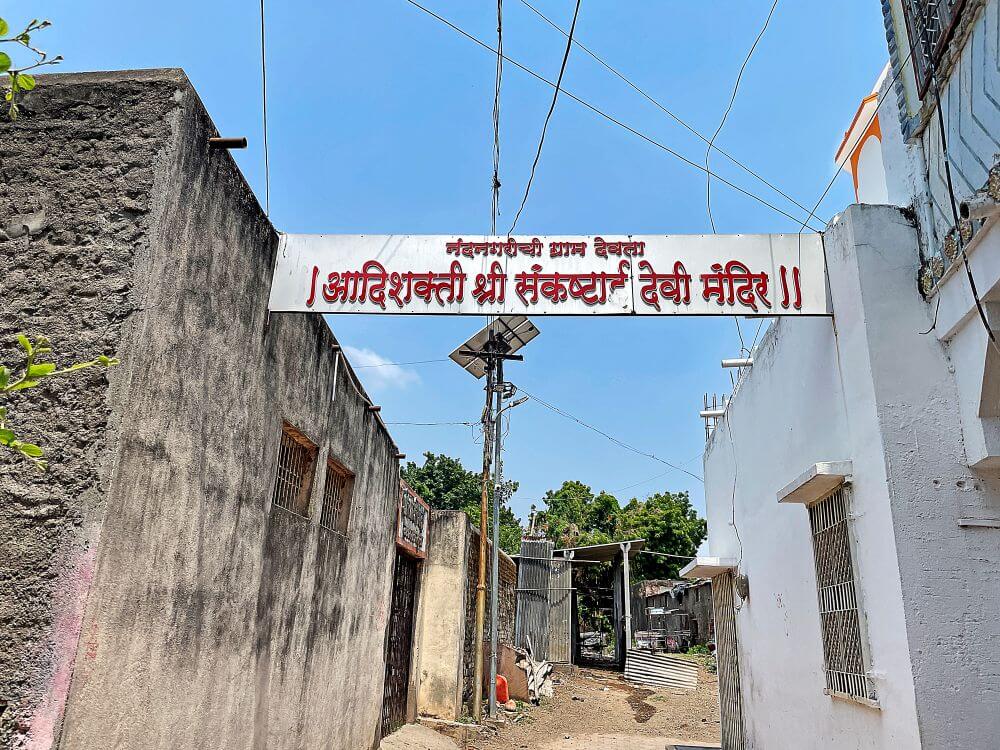
Shop Photo FramesNandurbar district is situated in the basin of the Tapi River, which originates in Madhya Pradesh and flows through the states of Maharashtra and Gujarat. The city of Nandurbar, which serves as the district headquarters, is home to many ancient and famous temples. The pilgrimage site of Prakasha, known as the Kashi of the South and home to १०७ Shiva Lingas and numerous temples, is located near Nandurbar city. Devotees hold a deep faith that the city’s presiding deity, Goddess Sankashtai or Sankashta Devi, is a living presence who grants the wishes of those who pray to her. Many devotees from the states of Maharashtra, Madhya Pradesh, and Gujarat visit this place to seek the blessings of the Goddess.
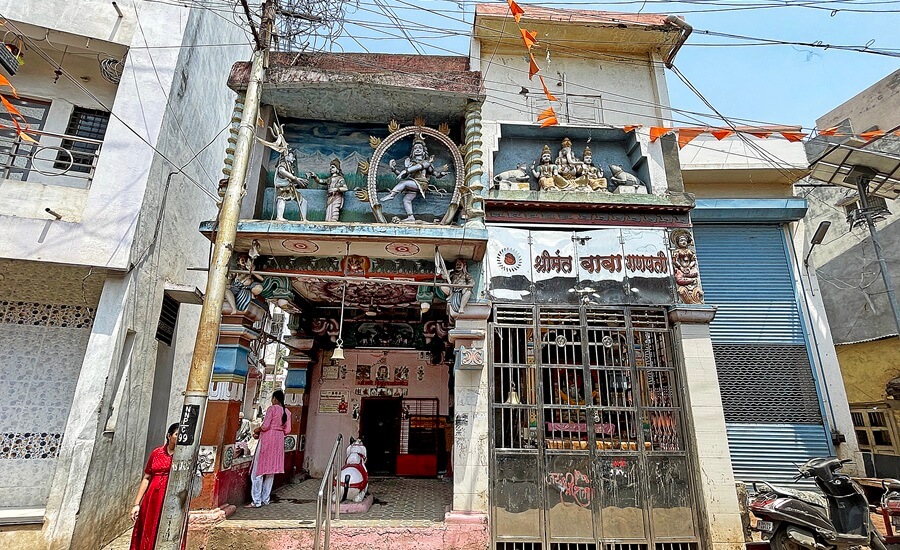
It is said that this temple of the presiding deity of Nandurbar city dates back to approximately the eleventh to twelfth century. In ancient times, Nandurbar was the capital of King Nanda. The Sankashta Devi here was his family deity, and it is said that she was installed by King Nanda himself. For this very reason, this temple is situated right next to the ruins of King Nanda’s fort here. Later, under various regimes, different kings renovated this temple and it continued to receive royal patronage. The priests here state that the temple received financial and political support during the Chalukya, Shilahara, and Yadava dynasties.
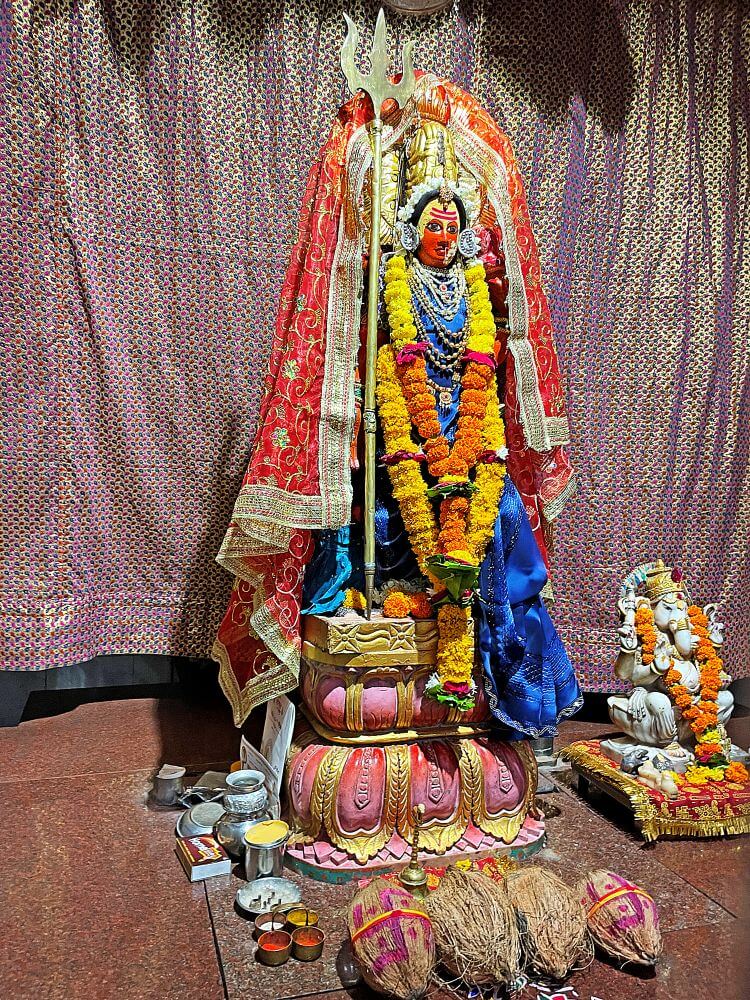
The legend of this Goddess is that about one hundred years ago, on the day of Lalita Panchami, a merchant arrived at this temple carrying a silver mask. He requested the priests here to adorn the Sankashta Devi with that mask. When the priest, following his request, placed the mask on the face of the Goddess and turned back, the merchant was no longer there. The priests and the local villagers became convinced that the Goddess herself had insisted on bringing the mask and having it placed upon the idol. Since then, every year on the day of Lalita Panchami, that silver mask The tradition of applying it to the Goddess is being followed.
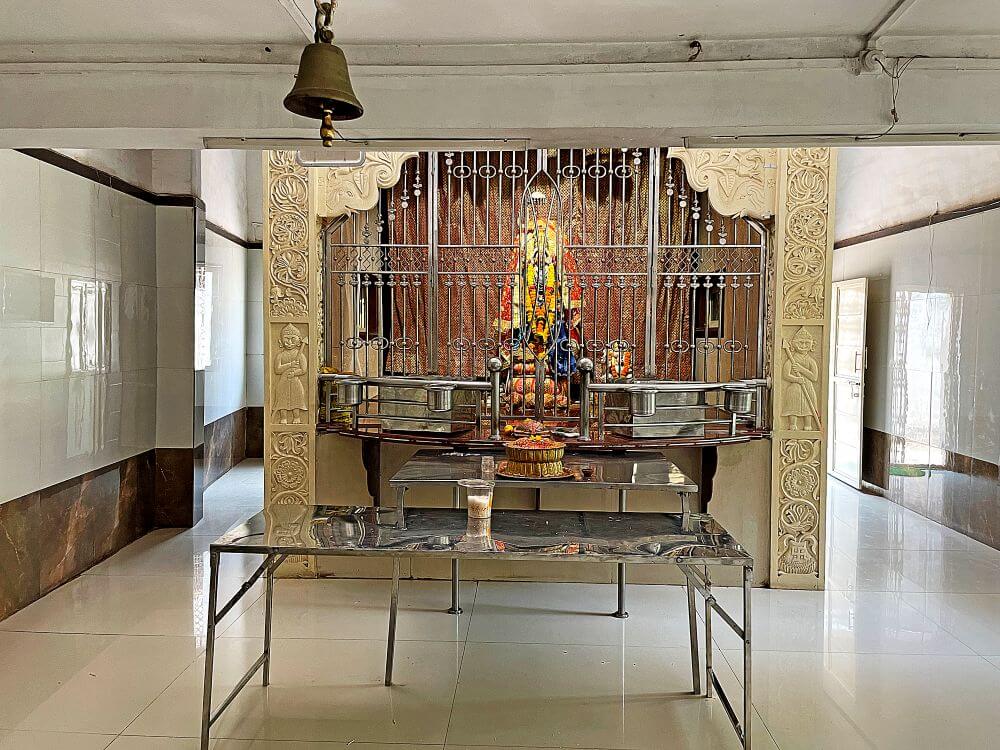
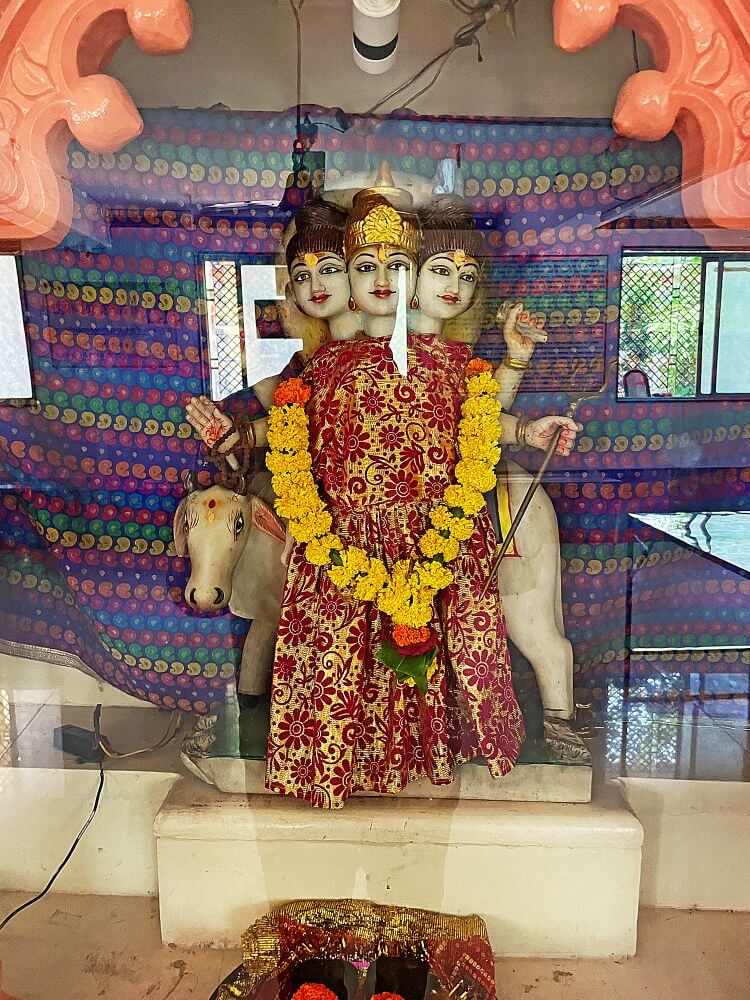
This temple is situated in the midst of a densely populated residential area. The main hall (Sabhamandap) of the temple is enclosed. Along the left wall of the hall, there is a staircase leading to the upper floor. Next to it, in a glass-enclosed shrine, stands a marble idol of Shri Dattatreya. On both sides of the sanctum sanctorum (Garbhagriha) entrance, there are square, intricately carved pillars adorned with floral motifs. These pillars are connected by an arched gateway, featuring a Kirtimukha at the center and floral designs on both sides. Near the entrance of the sanctum, there are silver sculptures of a tortoise and sacred footprints (Padukas) placed on the floor. The enclosed sanctum is provided with small windows for ventilation.
In the sanctum sanctorum, the four-armed stone idol of Goddess Sankashta is seated upon a Vajrapitha. In one hand, the Goddess holds a lotus, in the second a Kamandalu, the third hand is in the Abhaya Mudra, and the fourth hand is in the blessing posture. The Goddess wears a crown on her head and is adorned with garments and ornaments. On both sides of the idol, on two silver pillars, are the sculptures of the Goddess’s Shakti deities. In the silver Prabhavali behind the idol, there is a five-hooded serpent, and on both its sides are elephants with their trunks raised. In the arch above, there is a Kirtimukha, and on both sides, there is a Makartoran. On the outer side of the Prabhavali are images of the conch, discus, flag, sun, and moon. There is a circumambulation path around the sanctum sanctorum.
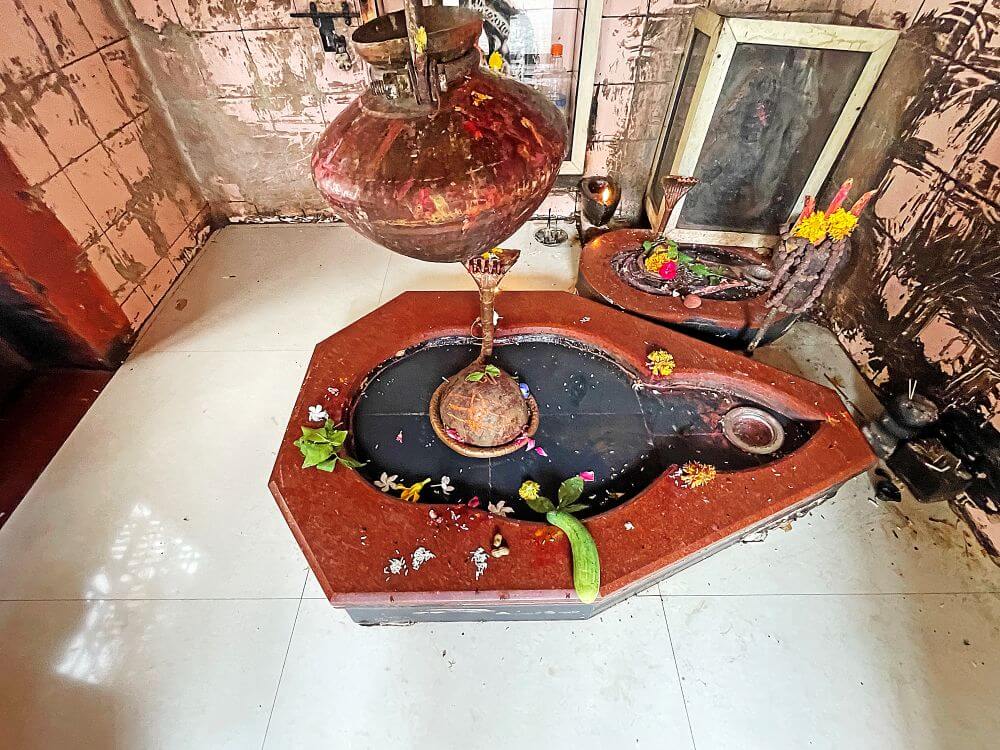
The temple roof features a two-tiered octagonal shikhara. The first tier consists of vertical walls in an octagonal structure, followed by an octagonal design that tapers upwards. At the apex of the shikhara, there is an amalaka topped with a kalasha. Adjacent to this temple are the ancient Kashi Vishwanath Mahadev and Shrimant Baba Ganpati temples.
The ten-day Sharadiya Navratri festival is celebrated in the temple with great enthusiasm. On the first day, Ghatasthapana is performed, followed by the Maha-Abhishek of the Goddess. On the fifth day, the Goddess is adorned with a silver mask. On Ashtami, the Goddess is worshipped in her Vyaghrarudha (tiger-mounted) form, and on Dussehra, she is worshipped in her Mahishasurmardini form. The Navchandi Homa is organized on the day of Ashtami. On the tenth day, after the Simollanghan ritual, gold is offered to the Goddess. Throughout the ten days, programs such as Namajapa, Bhajans, Kirtans, and Jagaran are organized in the temple.
This sacred temple stands as a testament to deep spiritual devotion, ancient architectural grandeur, and rich local cultural traditions.
The sanctum sanctorum houses the divine idol consecrated according to ancient Vedic traditions, surrounded by serene courtyards and traditional temple architecture.
Navratri, Maha Shivratri, Annual Temple Jatra & Deepotsav
Compare and book flights, secure top-rated local hotels near the temple, hire reliable guides, and rent cars instantly.
Extend your pilgrimage by visiting other highly sacred temples located nearby.

Add ₹999 more to unlock FREE SHIPPING!
Your sacred cart is currently empty.
Shop Photo FramesFill in your delivery details below to place your order.
Add comment