
Add ₹999 more to unlock FREE SHIPPING!
Your sacred cart is currently empty.
Shop Photo FramesThere are many temples in Maharashtra that do not have a shikhara (spire). Some of these temples lost their shikharas over time due to collapse or destruction by invaders. In the case of certain deities, a shikhara is deliberately not constructed; it is said that if an attempt is made to build one, it collapses. One such Hanuman temple is located in the village of Shirsala in Bodwad taluka. Formerly known as the Siddheshwar temple, it is now famous as the Jayashree Hanuman Temple. Devotees believe that the Bajrangbali here is ‘Jagrut’ (awakened/manifest). Consequently, a large number of devotees visit the temple every Tuesday and Saturday.
The history of this temple is unknown. However, legend has it that many years ago, a devotee of Hanuman lived in the village of Shirsala. Once, Hanuman appeared to him in a dream and said, “My idol is in the village river. Retrieve it and consecrate it.” Following this, the villagers searched for the idol. Behind the place where the temple is currently situated, The villagers discovered a stone idol of Lord Maruti in the riverbed. However, despite many attempts, it could not be moved from there. Eventually, when an uncle and nephew from the village tried, it was lifted with ease. The uncle and nephew placed the idol under a neem tree. Ritualistic worship of the idol began there. Many have experienced that this Hanuman is ‘Jagrut’ (awakened/manifest), as the vows (navas) made here have been fulfilled.
A devotee named Dwarkadas Agrawal from Bhusawal village had his vow (navas) fulfilled. In gratitude, he expressed his desire to build a Hanuman temple. While the work on the sanctum sanctorum (garbhagriha) of the temple was underway, he suddenly fell ill. Subsequently, when the work of installing the spire (shikhar) on the temple began, it collapsed from its base. Ultimately, it was decided not to install a spire on the temple. Following this, his health improved. After realizing that whenever an attempt is made to build a spire, something unfortunate happens in the village and the spire collapses, the temple has been kept without one.
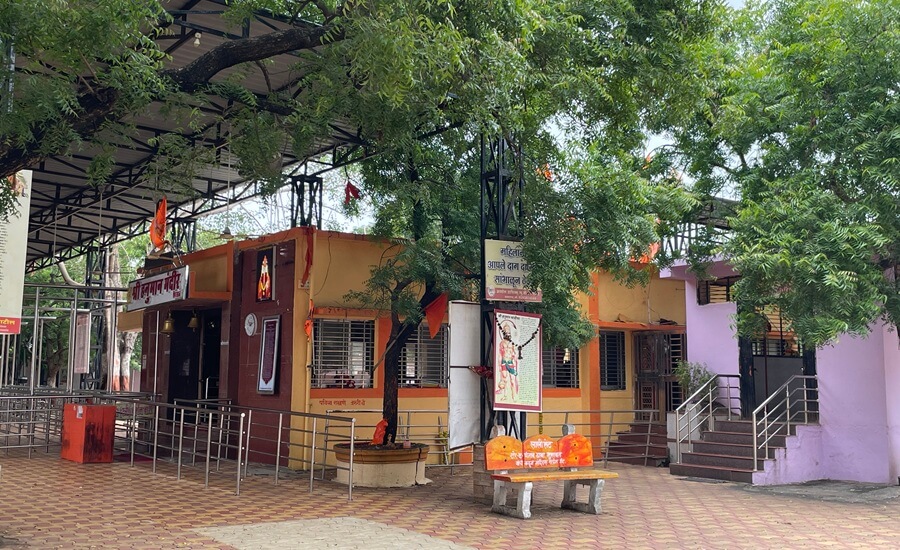
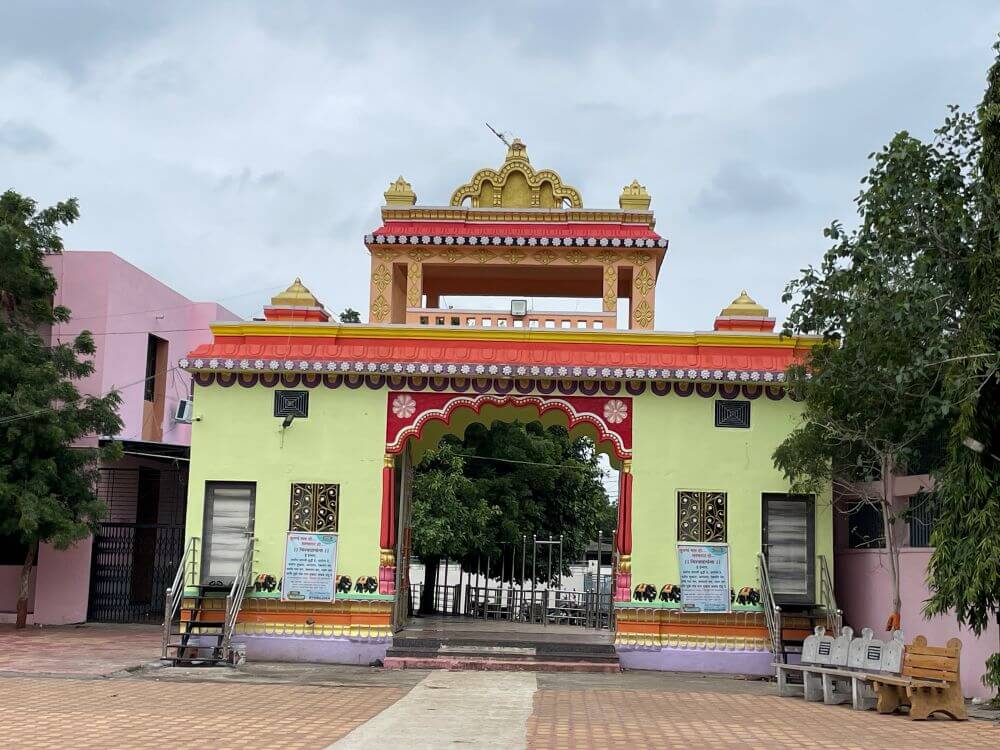
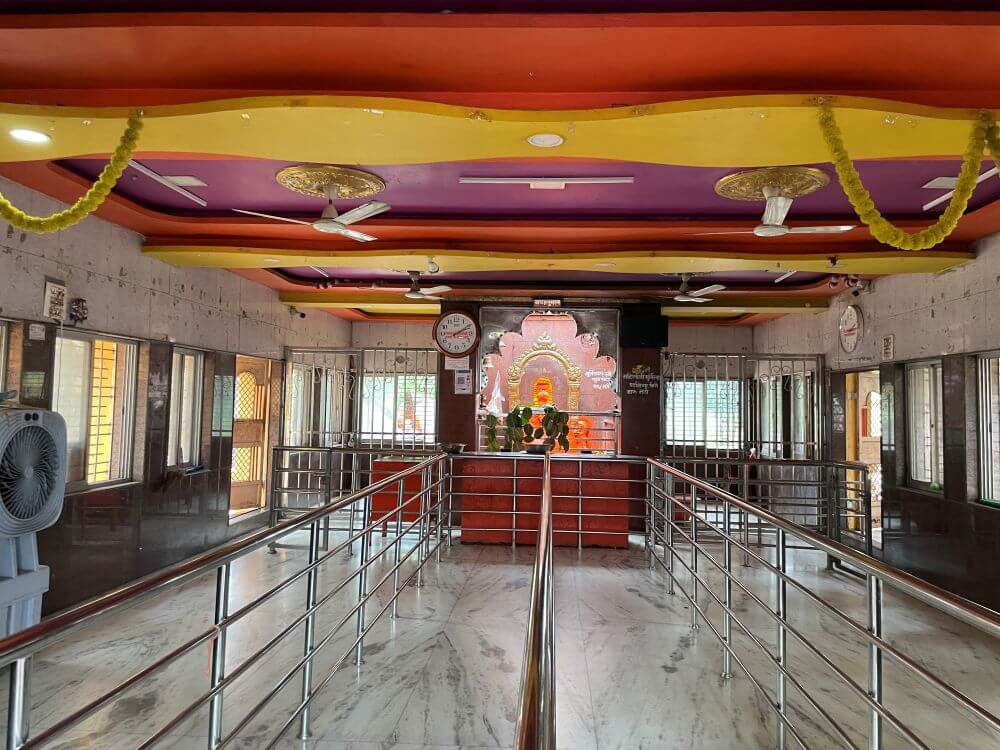
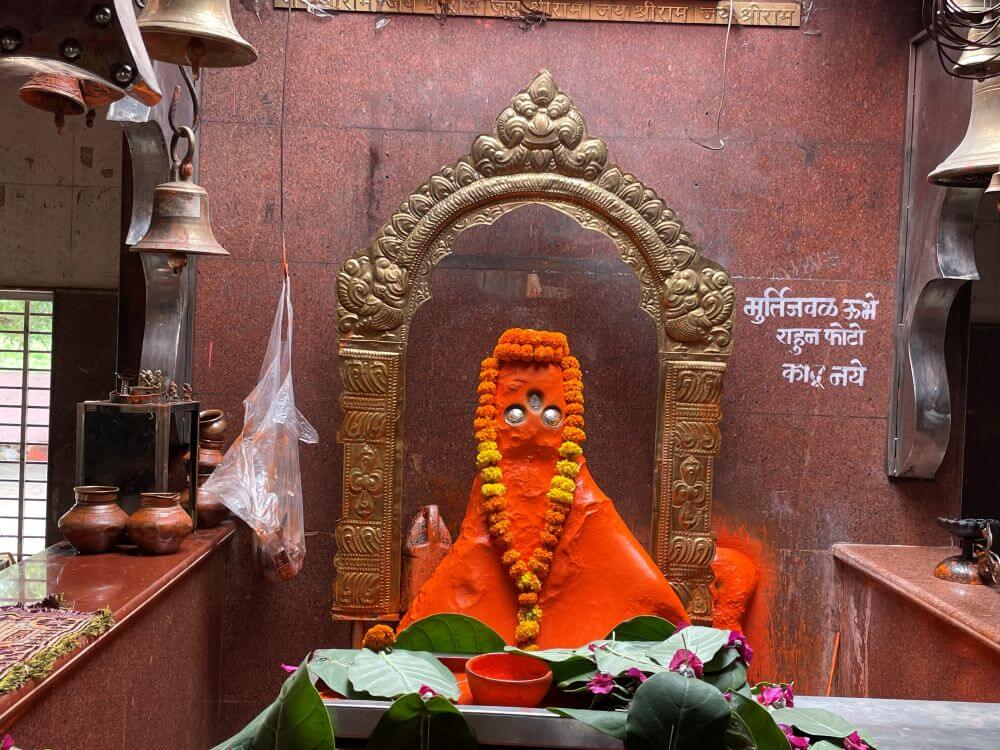
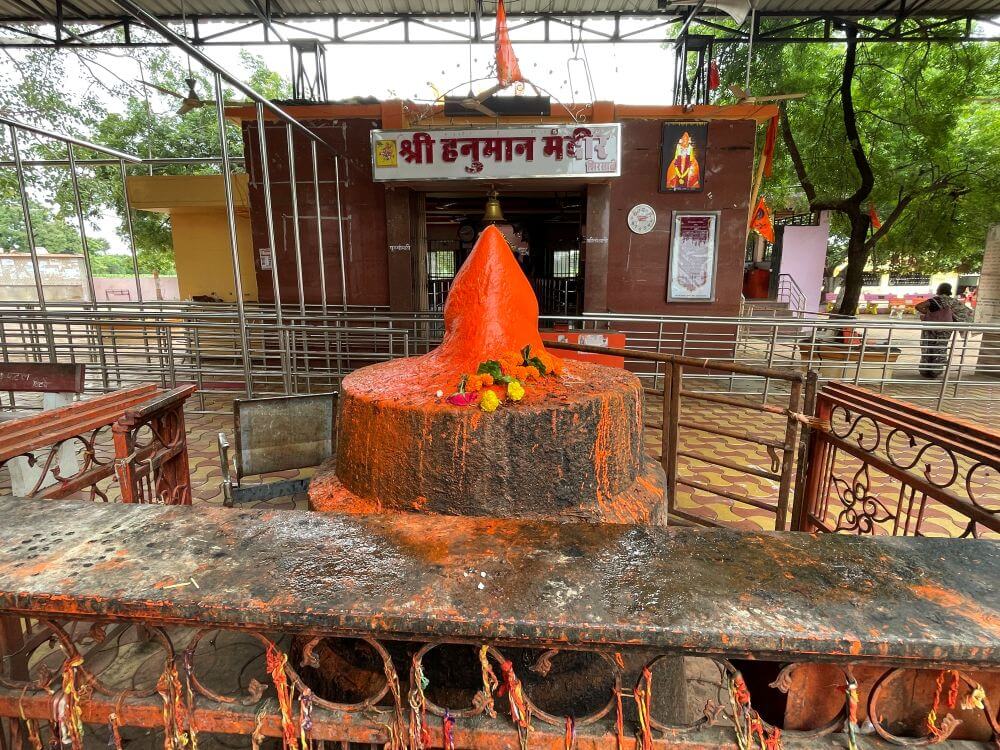
This temple is situated in an extremely vast complex. The premises feature a large main entrance gate (Mahadwar). A short distance from here is a modern temple of Hanuman, with walls adorned with marble tiles. In front of the temple, on a large stone platform, stands a large, vermilion-smeared stone shaped like a Kalash. There are also vermilion-smeared Padukas (footprints) here. Devotees visiting the temple perform Tailabhisheka (oil anointment) here. Entry into the temple is through a queue path lined with steel railings. The temple structure consists of a Sabha Mandap (assembly hall) and a Garbhagriha (sanctum sanctorum). In this spacious assembly hall, which has many large windows, a queue path made of steel pillars has also been set up. The temple’s Garbhagriha is simple. Inside, on a high platform, the stone idol of Hanuman is enshrined. The upper part of this vermilion-smeared stone is tapered. It features two large eyes, and sandalwood paste (Gandha) is inscribed on the forehead. On the wall behind the idol is a Makara Torana (archway) frame. This idol, located in a sanctum without a Shikhara (spire), has stood for years, facing the sun, rain, and wind. This Hanuman is addressed by the names Sankatmochak and Jayashri Hanuman.
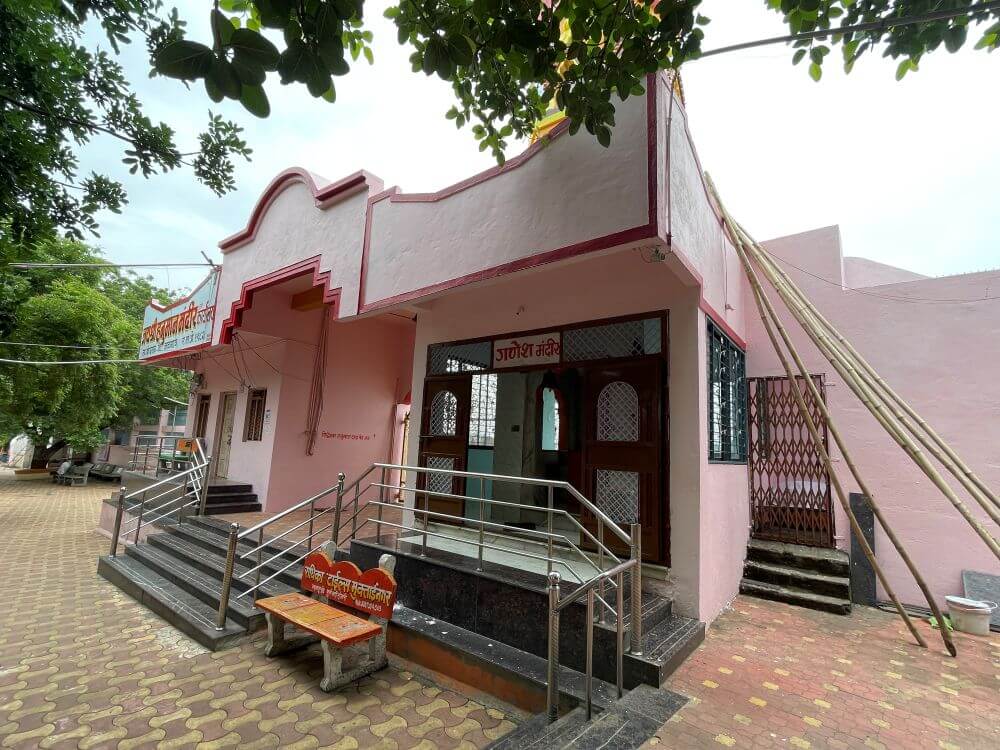
To the left of the Hanuman temple is a temple of Ganesha with a tall shikhara. Beside it is the temple of Shri Rama. This temple has a large sabhamandapa (assembly hall). In the sanctum sanctorum, the idols of Shri Rama, Sita, and Lakshmana are enshrined on a marble altar atop a high pedestal. Within the premises, there is also a temple of Shani. In this temple, built on a high jagati (platform), is the stone slab of Shani, who is referred to as ‘Kaliyug ke Nyayadhish’ (the Judge of the Kali Yuga). Women are not permitted to enter this temple. Near the Shani temple, there is also a temple of Mahadeva. Similarly, behind the Hanuman temple, a Mahadeva Pindi is consecrated a few feet below ground level.
Hanuman Jayanti is celebrated on a grand scale at this temple. On that day, thousands of devotees from the surrounding five-village radius (panchakroshi) come here for darshan. Annadan (offering of food) is also organized here on that occasion. There is a particularly large influx of devotees at this temple on Tuesdays and Saturdays during the months of Shravan and Margashirsha. Similarly, on Shani Amavasya, the entire area takes on the atmosphere of a fair (yatra).
This sacred temple stands as a testament to deep spiritual devotion, ancient architectural grandeur, and rich local cultural traditions.
The sanctum sanctorum houses the divine idol consecrated according to ancient Vedic traditions, surrounded by serene courtyards and traditional temple architecture.
Navratri, Maha Shivratri, Annual Temple Jatra & Deepotsav
Compare and book flights, secure top-rated local hotels near the temple, hire reliable guides, and rent cars instantly.
Extend your pilgrimage by visiting other highly sacred temples located nearby.


Add ₹999 more to unlock FREE SHIPPING!
Your sacred cart is currently empty.
Shop Photo FramesFill in your delivery details below to place your order.
Add comment