
Add ₹999 more to unlock FREE SHIPPING!
Your sacred cart is currently empty.
Shop Photo Frames“One who wears saffron robes but whose mind is not under control, should not be called a saint,” or “One must consume iron chickpeas to dance in the realm of the Divine,” such forthright thoughts were expressed by Saint Muktabai, who holds a place of honor in the saintly tradition of Maharashtra. She was the younger sister of Saint Nivruttinath, Saint Dnyaneshwar, and Saint Sopandev. She attained ‘Swarupakar’ (oneness with the Divine) on the banks of the Tapi River in the taluka that bears her name, Muktainagar. The place where she ‘disappeared’ is believed to be the great city, that is, Mehun. It is at this very site that the magnificent Samadhi temple of Muktabai is located.
Many have described Muktabai as Adishakti, Adimaya, and Brahmachitkala. Just as he was for Dnyandev, Saint Nivruttinath was also the initiating guru for Muktabai. Although she was the youngest among the four siblings, her understanding of the ultimate truth was profound. Distressed by the persecution from orthodox religious fanatics, Dnyandev locked himself in a hut at Siddhabet in Alandi. At that time, the ‘Tatiche Abhang’ (Verses of the Door) composed by Muktabai clearly revealed her great spiritual stature. They said, ‘The yogi is pure of heart, he bears the offenses of the people. The world has become a raging fire, may the saints be the cooling water. Words have become weapons of distress, may the saints accept this as a teaching. The world is a canvas, Brahman is the thread, open the door, O Dnyaneshwar.’ With these words, they persuaded Dnyaneshwar. Professor Sadanand More, a scholar of saint literature, has expressed the opinion that these ‘Tatiche Abhang’ (verses of the door) served as the inspiration for Dnyaneshwar to subsequently write the ‘Dnyaneshwari’.
Her spiritual stature was so exalted that she was worthy of being the Guru to a great Yogi and philosopher like Changdev. Upon the conclusion of the earthly missions of Saint Dnyaneshwar, Saint Sopandev, and Yogi Changdev, Muktabai felt as though the gathering of ascetics had been shattered. These events left the detached Muktabai deeply saddened, and she began to yearn for the conclusion of her own earthly mission. Following the Samadhi of Changdev, she traveled with Saint Nivrittinath to Verul for the darshan of Grishneshwar. From there, she arrived at the banks of the Tapi River. In the Gatha of Saint Namdev, this place is described with the words, “Blessed is the great city, blessed is Someshwar; blessed are the banks of the Tapi, the abode of Yogis.” It was the day of Vaishakh Vadya Dashami. Everyone went to the banks of the Tapi for a holy bath and began a session of devotional singing (bhajan-sankirtan). Midday passed during these proceedings. Suddenly, the atmosphere began to change. Dark clouds gathered, thunder roared, and a storm arose. Saint Namdev recounts, “Lightning of the apocalypse rained down incessantly; a thick darkness enveloped all ten directions.” At that very moment, “When the lightning struck the Absolute, Muktai vanished into the Infinite. A thousand bells rang out in Vaikuntha in unison; Muktai became one with the Divine.” In that storm, lightning struck, and Muktabai disappeared from the mortal realm. This sorrowful event occurred on Shake ১২১৯, Hemalambi Nama Samvatsar, Vaishakh Vadya ১০, May ১৯, ১২৯৯, at ১:১৫ PM.
It is said that this incident took place at Mehun. Regarding this, among scholars There are differences of opinion. According to some, this event took place at Kothali in Muktainagar taluka. As per the information in the Saint Muktabai special edition of the annual journal ‘Ringan’, which traces the socio-cultural history of the saint tradition, Bankat Swami, with the assistance of Varkari Rambhau Topde from Nevasa, clarified that the place of Saint Muktabai’s disappearance is indeed Mahatgram, that is, Mehun. All the landmarks, such as the Hemadpanti temple of Someshwar described by Saint Namdev in his abhangs, the spot where Parashurama shot his arrow, and the Markandeya hill, correspond to this location.
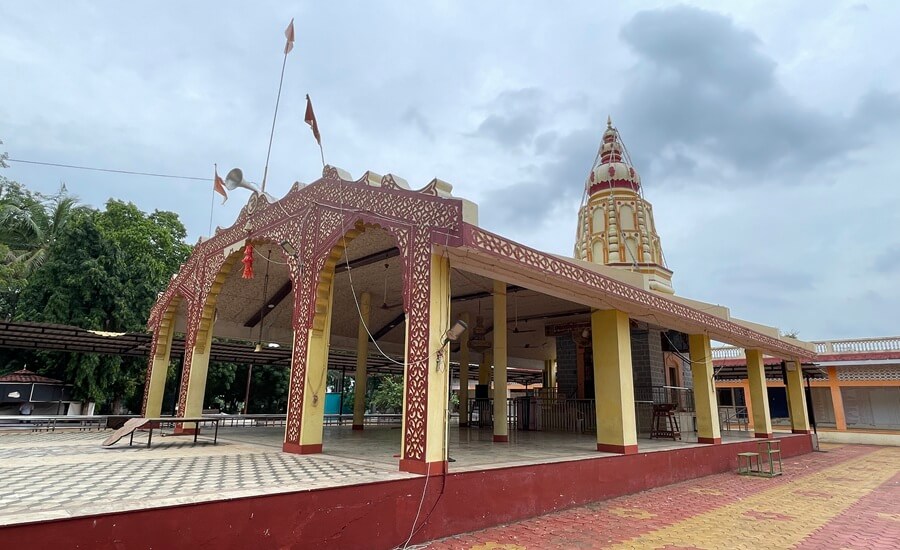
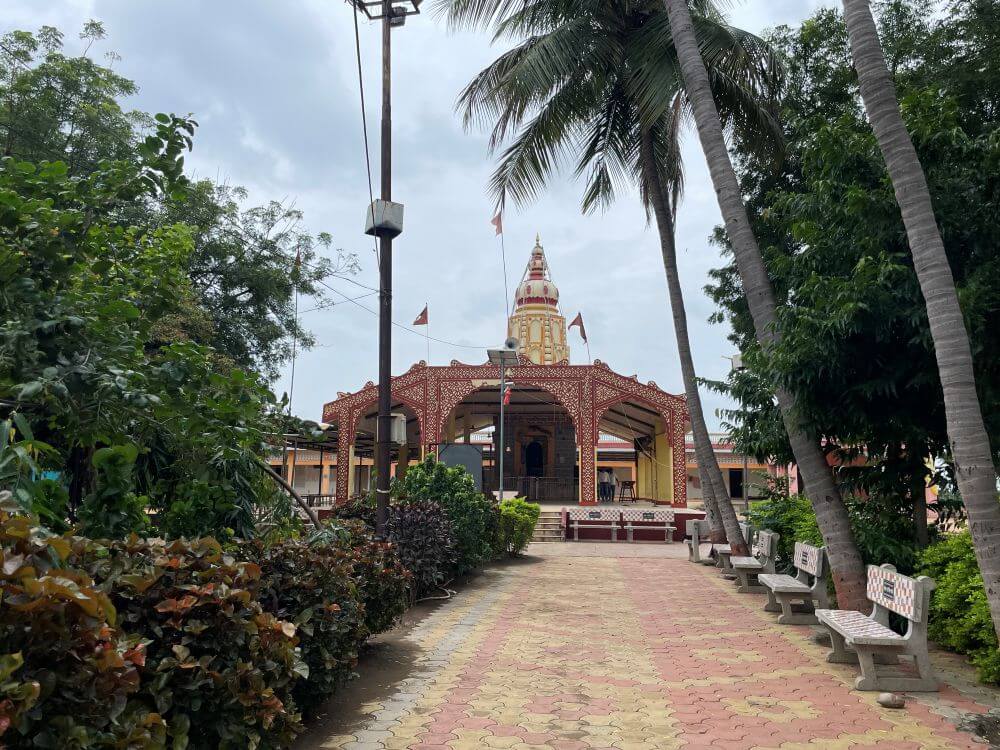
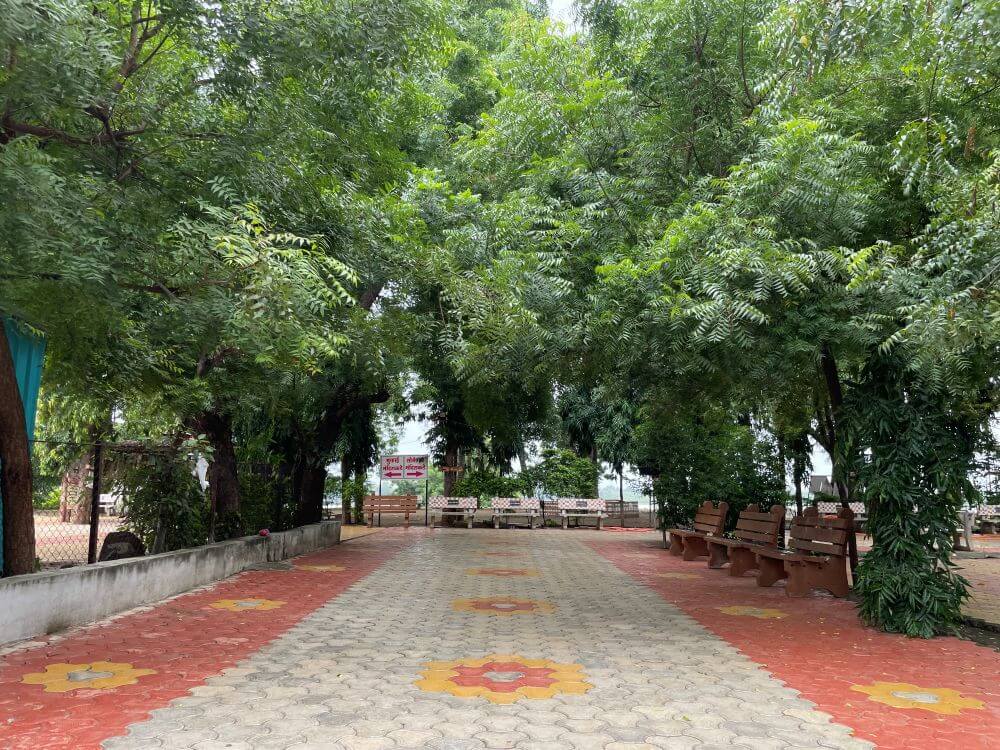
A small temple was built at the place on the banks of the Tapi River where Muktabai attained Samadhi. However, as the village of Mehun and this temple were going to be submerged due to the Hatnur Dam, the government provided land for the temple in Chincholi village, located two to three kilometers away. But since Saint Namdev’s Abhangs consistently mention that Muktai attained Samadhi on the banks of the Tapi, the villagers were determined to build the temple only on the banks of the Tapi, and Finally, in the year 1980, a new temple was constructed in the vast area situated on the upper bank of the Tapi River. On the auspicious occasion of Ashwin Shuddha Pratipada, Shake 1902 (Friday, 10 October 1980), the consecration of the idol was performed in the temple. The scenic premises of the temple have been paved with paver blocks throughout. Benches have been installed under trees at various places for the convenience of the devotees. Here, on one side is the temple of Muktabai, and on the other side is the ancient temple of Someshwar.
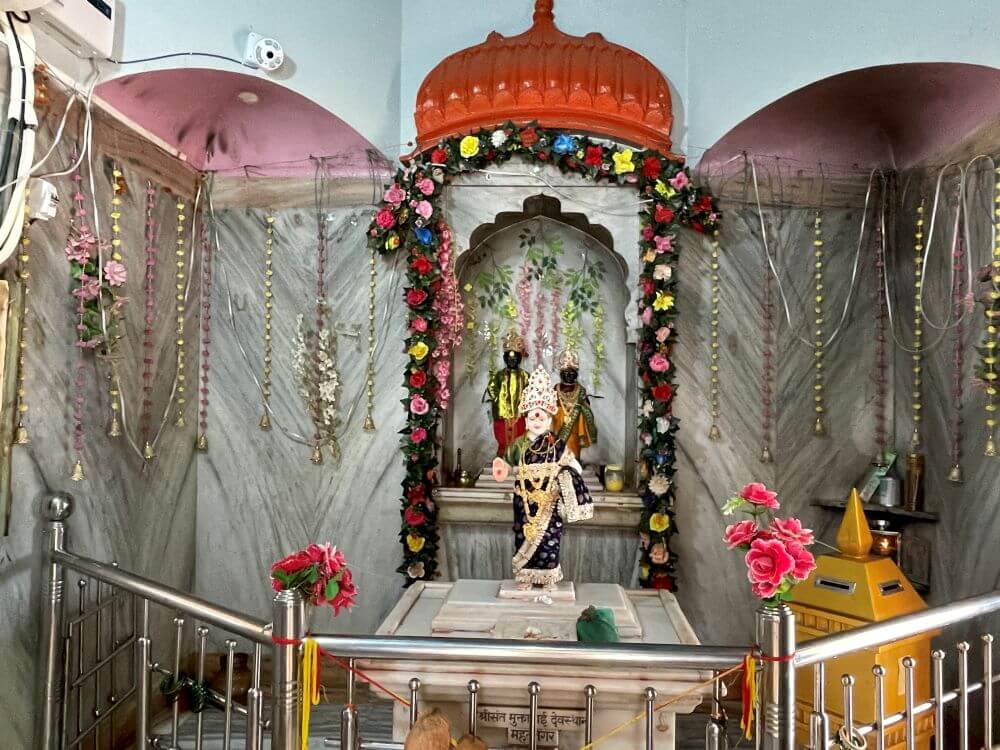
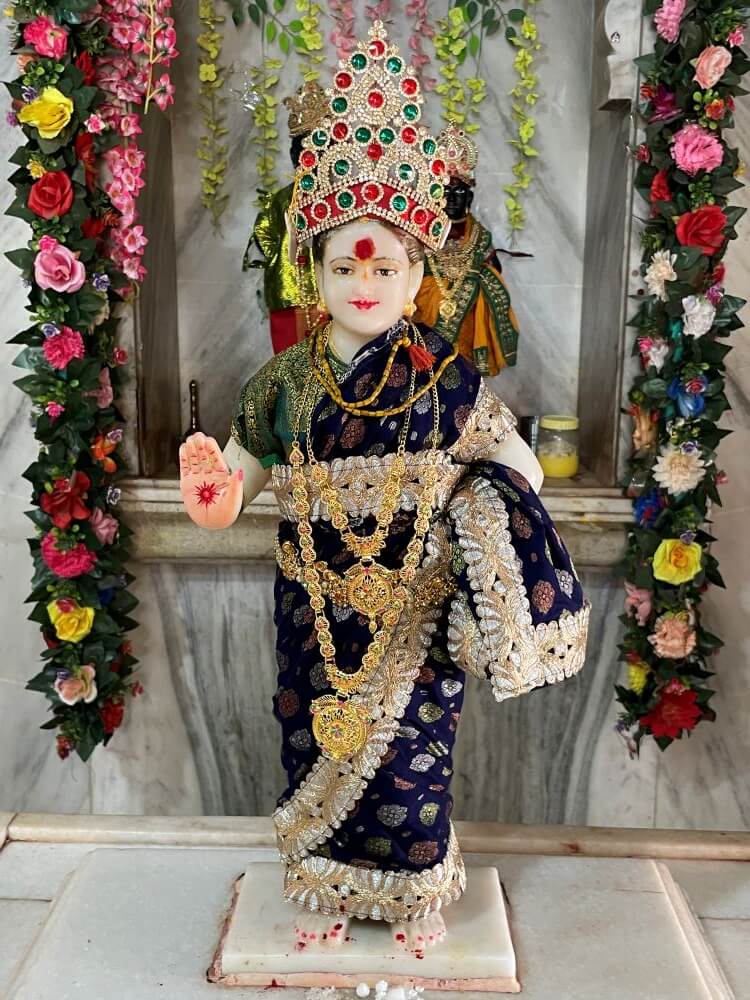
The Muktabai Temple is built upon a plinth several feet high. One enters this plinth by ascending five steps. The temple features a grand, open-style assembly hall. The pillars at the front of the hall are intricately carved and are connected by arched gateways. In the front section lies the stone sanctum sanctorum of the temple. One enters the inner sanctum by climbing four steps. Inside, on a high pedestal, stands the pristine white marble idol of Muktabai, a form rarely seen in Varkari temples. Adorned in a shawl and blouse, wearing a crown on her head and various ornaments around her neck, Muktai’s one hand rests on her waist like Lord Vitthal, while the other is in a gesture of blessing. In front of Muktai’s idol are marble padukas. Behind, in marble niches, are the black stone idols of Vitthal-Rukmini. Above the sanctum rises a tall spire in the Maratha architectural style. The spire is carved with niches on all four sides. Atop it rests a wide amalaka and a three-tiered finial. A short distance from the temple is a path leading towards the banks of the Tapi River. From the grand main gateway located here, steps have been constructed that lead down into the riverbed of the Tapi.
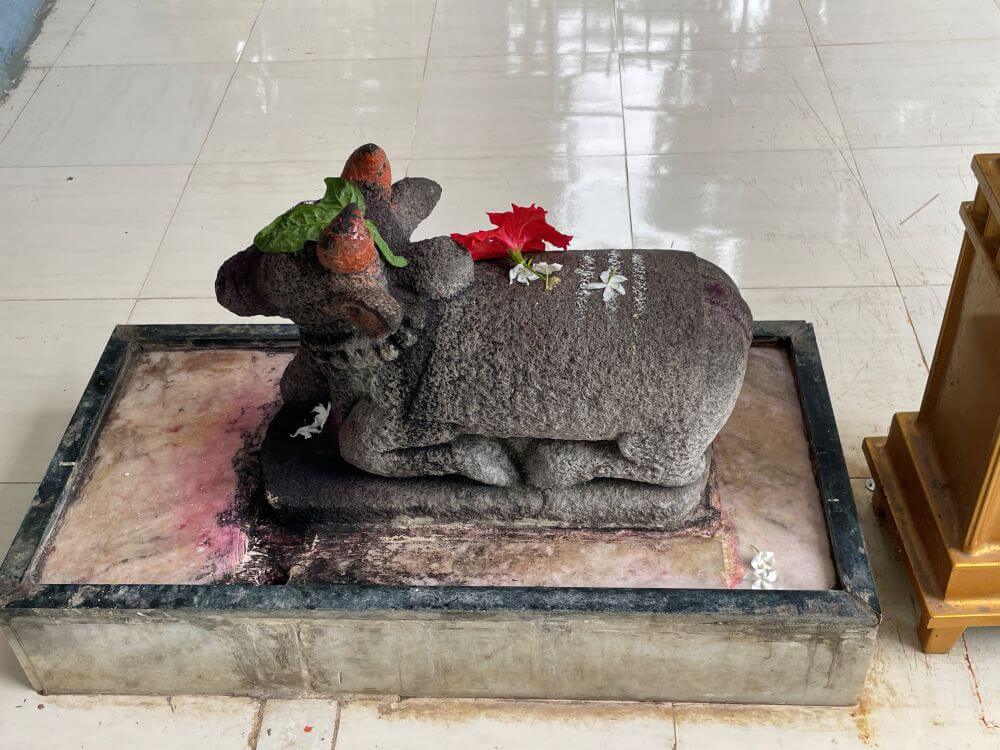
At a short distance from the Muktabai Temple lies the ancient temple of Someshwar. The construction of this temple follows the Hemadpanti style and the Bhumija architectural tradition. One enters the temple courtyard by climbing a few steps. On both sides of these steps Two ancient semi-pillars are installed here. The Someshwara temple is built on a high plinth. The temple features an open-style entrance hall (Mukhamandapa) constructed in recent times. There is an ancient idol of Nandi carved from black stone. The stone entrance to the sanctum sanctorum (Garbhagriha) is five-branched (Panchashakhiya). These door frames are adorned with intricate carvings. At the base of the door frames, figures of gatekeepers (Pratiharies) are carved. On the lintel of the entrance, there is a crescent-shaped stone (Ardha-chandrashila) and Kirtimukhas on both sides, though they have eroded over time. On the door frame, at the center of the lintel (Lalatabimba), is an idol of Lord Ganesha, while six idols of Lord Shiva are carved on the upper architrave (Uttarang). Inside the sanctum sanctorum, the Shivalinga of Someshwara faces the entrance, and behind it, on a small platform, is an idol of Goddess Parvati. Near this temple, there are small shrines dedicated to Lord Ganesha and Lord Hanuman.
Saint Muktabai attained Samadhi on the banks of the Tapi River on the tenth day of the waning moon of the month of Vaishakh. Every year on this auspicious date, the Muktabai Tirobhut Sohala (Samadhi Day Ceremony) is celebrated here on a grand scale . The festival commences on the first day of the waning moon of Vaishakh with the Punyatithi of Bankatswami. On the tenth day, a Kirtan commemorating the Samadhi is held between ten and twelve in the morning. The twelve-day festival concludes with the Kala ceremony on the twelfth day. Three days later, on the first day of the waxing moon of Jyeshtha, the Palkhi (palanquin) of Muktai departs. The chariot of Muktai’s Palkhi is small, and devotees pull it with their own hands. After a journey of approximately thirty-six to thirty-seven days, this Palkhi reaches Pandharpur.
Magh Vadya Ekadashi is the main day of Muktabai’s Magh Wari. Dindis (processions) of devotees arrive here for this pilgrimage. The Dindis that arrive for the Magh Wari proceed to the nearby Changdev Kshetra on Magh Vadya Trayodashi, which marks the day of Changdev’s Samadhi. A large crowd of devotees gathers here at this time.
There are differences of opinion within the Warkari tradition regarding the exact location of Saint Muktabai’s Samadhi. Some Kirtankars and scholars believe she attained Samadhi at Kothali. However, H.B.P. Ramrao Maharaj Mehunkar has refuted this. The verses he wrote regarding this are inscribed on the main gate (Mahadwar) in front of the Muktabai temple under the title ‘Shri Sant Muktabai Guptasthan Satyarth Prakash’. In these verses, he makes an appeal, stating, “A humble request to the devotees of Muktai; what Namdev says is the truth.” He clearly writes, “There is no Tapi Gangamai at Kothali, nor is there Someshwar. There is no great Tapobhumi of Markandeya, nor is it the village of Mahatnagar. It is not the place to the west where Parashurama shot his arrow. Since it is not on the bank, there is no Yogi there; look into the light of Dnyanoday.”
This sacred temple stands as a testament to deep spiritual devotion, ancient architectural grandeur, and rich local cultural traditions.
The sanctum sanctorum houses the divine idol consecrated according to ancient Vedic traditions, surrounded by serene courtyards and traditional temple architecture.
Navratri, Maha Shivratri, Annual Temple Jatra & Deepotsav
Compare and book flights, secure top-rated local hotels near the temple, hire reliable guides, and rent cars instantly.
Extend your pilgrimage by visiting other highly sacred temples located nearby.


Add ₹999 more to unlock FREE SHIPPING!
Your sacred cart is currently empty.
Shop Photo FramesFill in your delivery details below to place your order.
Add comment