
Add ₹999 more to unlock FREE SHIPPING!
Your sacred cart is currently empty.
Shop Photo FramesThe earliest mention of Lord Ganesha is found in the Rigveda as ‘Gaṇānāṃ tvā gaṇapatiṃ havāmahe’. Later, detailed information about Lord Ganesha is documented in the Ganesha Purana and Mudgala Purana dating from the 11th to 14th centuries. It is said that after Adi Shankaracharya further propagated the Ganapatya sect through the Ganapati Gayatri Mantra, Ganesha temples were established in various places. The Ashtavinayak Ganesha temples in Maharashtra are particularly famous. One such ancient and renowned temple is the Dandapaneshwar Ganapati Temple located in Nandurbar city. Devotees firmly believe that the divine presence here is highly vigilant (*Jagrut*) and fulfills the prayers and vows of all believers.
It is said that the idol of Lord Ganesha was consecrated by Chhatrapati Shivaji Maharaj. According to legend, while returning after the expedition to Surat, Chhatrapati Shivaji Maharaj along with his soldiers camped in the forest here. During that stay, Chhatrapati Shivaji Maharaj consecrated a Ganesha idol at this location. Later, the temple underwent several renovations over time. The temple attained its present grand appearance after the renovation carried out in the year 1982.
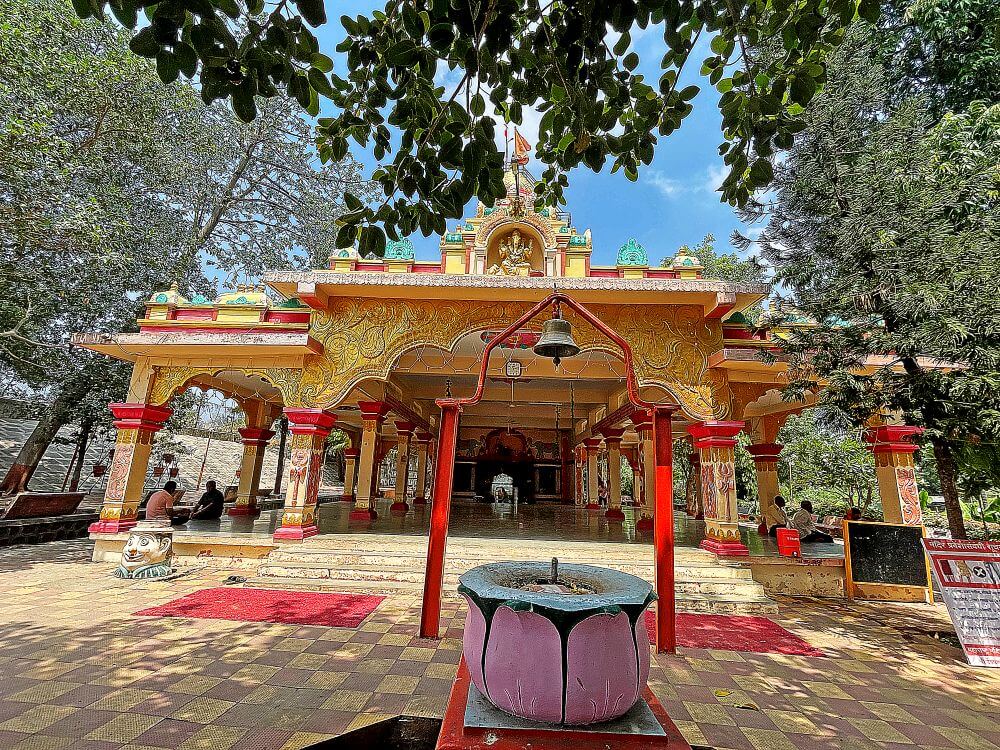
A paved road leads up to the inner courtyard within the temple compound wall. There is a spacious parking area in front of the courtyard. On the walkway leading from the courtyard to the temple, there is a grand welcome arch featuring square pillars on both sides topped with a balcony (*sajja*). Both pillars of the arch are adorned from base to top with carved lotus flower patterns, tribal-style relief artwork, the sacred Chakra, representations of Ganga-Yamuna, and lotus motifs again at the top. On the balcony of the arch, there is a Gajalaxmi relief sculpture featuring Goddess Lakshmi seated on a lotus flower in the center, flanked on both sides by royal elephants holding garlands in their trunks.
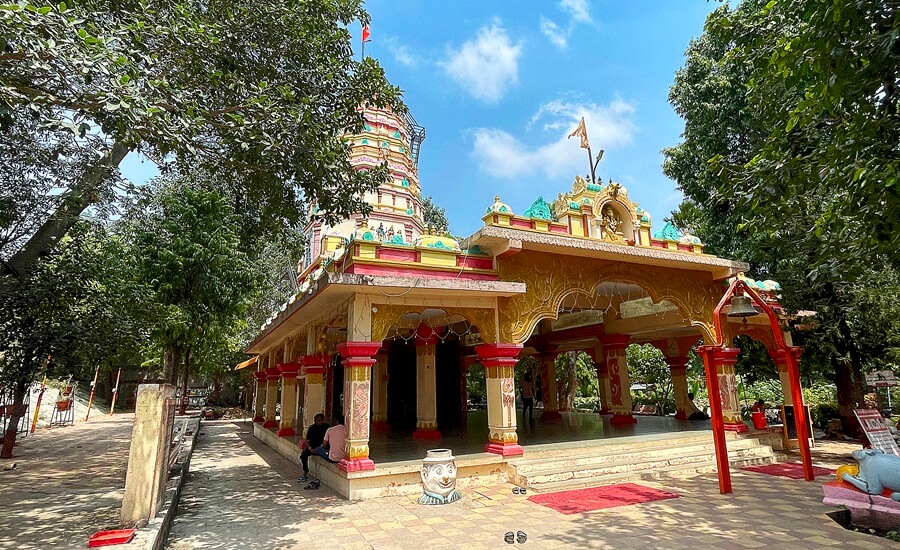
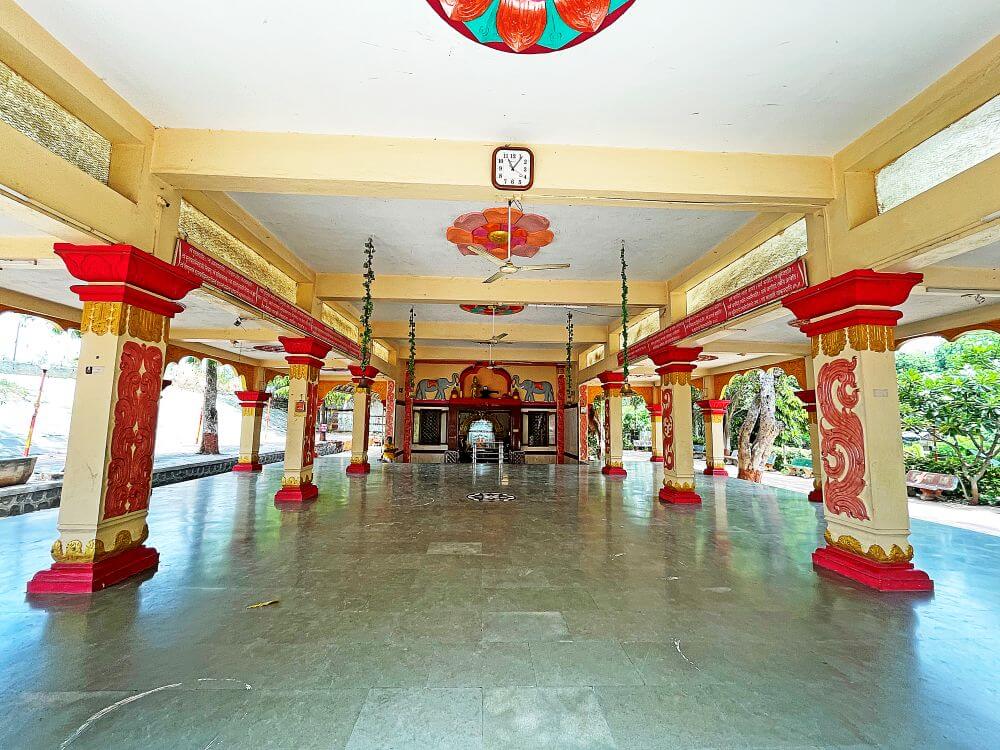
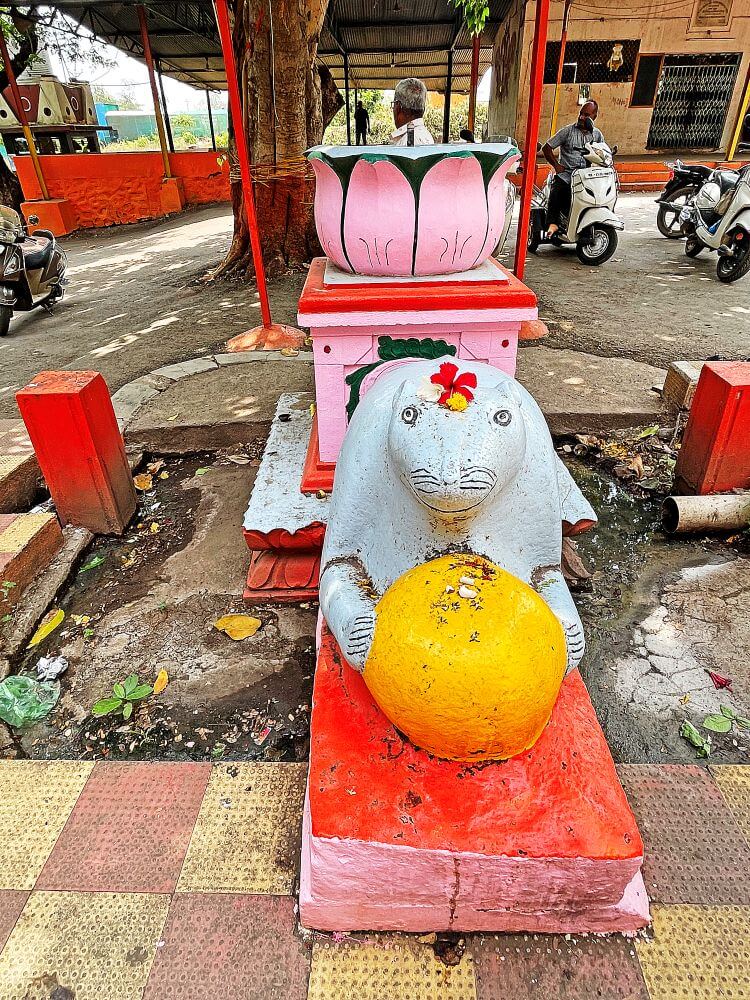
There are railings on both sides of the walkway leading to the temple, with a beautiful garden beyond . Seating arrangements are provided at various places in the courtyard. In front of the temple stands a Tulsi Vrindavan. The top of the square, intricately carved Tulsi Vrindavan features a lotus-shaped pot. In front of the Vrindavan, on a raised pedestal (*Vajrapitha*), is a black stone idol of Nandi. Hanging from an iron arch in front of Nandi is a brass bell. Beyond this lies the open assembly hall (*Sabhamandap*) of the temple. The assembly hall features four rows of five carved square pillars each. The bases of the pillars are square and two-tiered. The lower part of the pillars resembles a square urn (*Kumbha*), adorned with gold-colored floral and leaf patterns. The shafts of the pillars are painted with trident (*Trishula*) and hand-drum (*Damaru*) motifs, along with floral patterns on the upper portion. The capitals (*Kani*) sit atop the pillars, supporting the beams and the roof above. The ceiling displays circular decorative motifs. All outer pillars of the assembly hall are interconnected by cusped arches.
Ahead of the assembly hall, on both sides of the entrance to the vestibule (*Antarala*), there are steps to exit the hall. One enters the vestibule, which is set lower than the assembly hall, by descending five steps. Right in the middle of these steps, on a platform, sits an idol of Nandi. Further ahead is the entrance to the sanctum sanctorum (*Garbhagriha*). Latticed windows (*Vatayana*) are present on either side of the doorway. The balcony above the entrance features sculptures of Bal Ganesha worshiping the Shiva Linga, accompanied by Nandi, sacred kalashas, and royal elephants on both sides. Inside the sanctum sanctorum, a Shiva Linga is enshrined in the center of the floor. Above the Shiva Linga is a copper image of a sacred cobra spreading its hood, with an *Abhisheka Patra* suspended above it to pour a continuous stream of holy water.
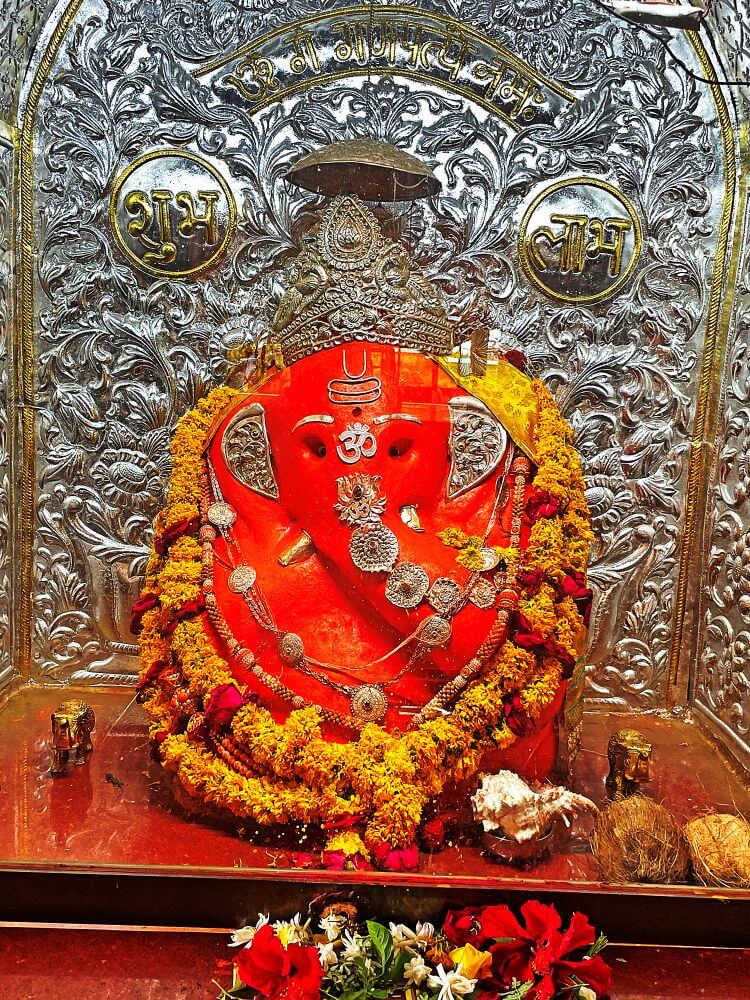
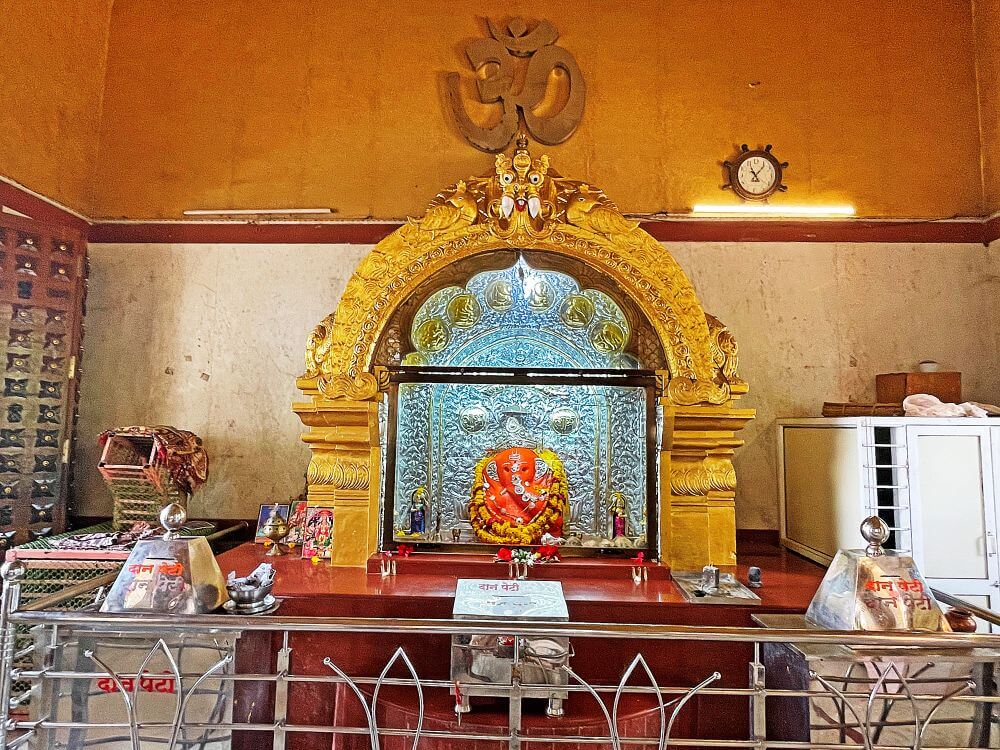
Inside the sanctum sanctorum, on a raised pedestal (*Vajrapitha*) near the back wall, enshrined within a decorative canopy (*Makhar*) supported by short pillars (*Vamana Stambha*) and an arch, is a four-armed, vermilion-smeared (*Sindoor-charchit*) idol of Lord Ganesha. The ears and trunk of Lord Ganesha are adorned with silver plating, and a crown rests upon His head. The silver halo (*Prabhavali*) behind the idol depicts the Ashtavinayak images above and floral motifs below. The carved pillars of the archway feature leaf and flower creepers, with small Ganesha figures on the capitals. The arch above the pillars features a *Kirtimukha* in the center and floral designs on either side.
Surrounding the roof of the assembly hall on all four sides is a decorative parapet (*Bashingi kathada*). In the center of the front facade of this parapet, an idol of Lord Ganesha is enshrined inside a canopy (*Meghadambari*). Above the canopy is a Dravidian-style horizontal spire (*Shikhara*) surmounted by finials (*Kalasha*). Dome-shaped miniature spires with finials are situated at all four corners of the parapet. Above the sanctum sanctorum rises an eleven-tiered hexagonal spire (*Shikhara*). Sculptures of various deities are carved within the niches (*Devakoshta*) on the spire. At the apex of the spire rests a stupi, topped with a finial (*Kalasha*) and a sacred flag (*Dhvajapataka*). The vast premises of the temple also feature a tree grove and a children’s park.
Ganesh Janmotsav as well as the ten-day Ganeshotsav festival during the month of Bhadrapada are celebrated in the temple with great fervor and devotion. During these ten days, religious programs such as bhajans, kirtans, discourses (*pravachan*), and devotional music are organized. Thousands of devotees arrive during this time for darshan and to fulfill their vows (*navas*). In addition, festivals like Chaitra Padwa, Mahashivratri, Dasara, and Diwali are celebrated with great joy. A large number of devotees visit for darshan on Sankashti Chaturthi every month, as well as on every Tuesday, Sunday, and Monday.
This sacred temple stands as a testament to deep spiritual devotion, ancient architectural grandeur, and rich local cultural traditions.
The sanctum sanctorum houses the divine idol consecrated according to ancient Vedic traditions, surrounded by serene courtyards and traditional temple architecture.
Navratri, Maha Shivratri, Annual Temple Jatra & Deepotsav
Compare and book flights, secure top-rated local hotels near the temple, hire reliable guides, and rent cars instantly.
Extend your pilgrimage by visiting other highly sacred temples located nearby.
Add ₹999 more to unlock FREE SHIPPING!
Your sacred cart is currently empty.
Shop Photo FramesFill in your delivery details below to place your order.
Add comment