
Add ₹999 more to unlock FREE SHIPPING!
Your sacred cart is currently empty.
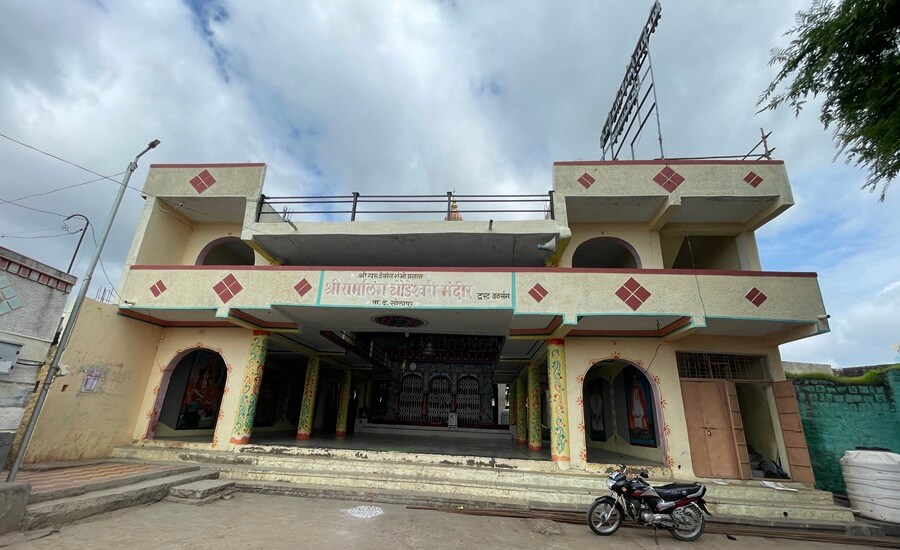
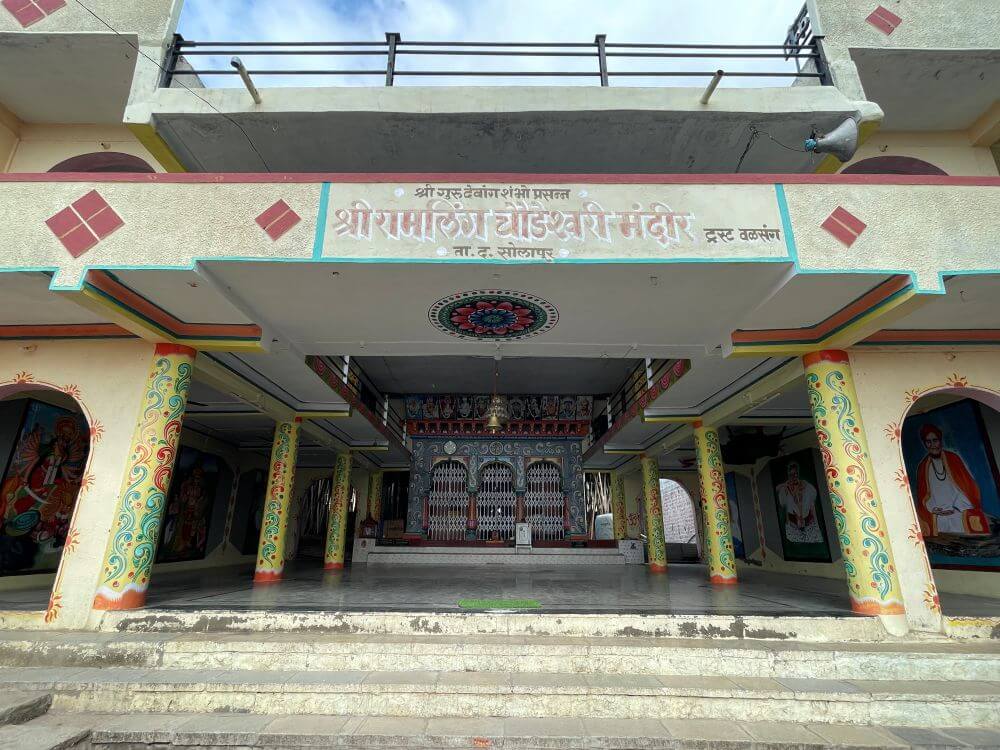
Shop Photo FramesChamunda Devi, one of the Navadurgas, is also known as Chaundeshwari Devi. In North India, she is worshipped as ‘Chamunda’, while in South India, she is worshipped by the names ‘Chaundeshwari’, ‘Chaudeshwari’, or ‘Chamundeshwari’. Chaundeshwari Devi is the village deity of Valsang. The Ramling Chaundeshwari Mata temple is located here. The sanctum sanctorum of this temple also houses the seat of Ramlingeshwar, which is why this temple is known as the Ramling Chaundeshwari Mata temple. The annual fair of this Goddess and the Balbattal ceremony held during it are the special attractions of Valsang. This fair is a symbol of the cultural heritage of Maharashtra, Karnataka, and Telangana.
The story of the origin of Goddess Chaundeshwari is narrated in the seventh chapter of the Devi Mahatmya in the Markandeya Purana. It is as follows: The demons Shumbha and Nishumbha conquered the kingdom of the three worlds from Indra. To slay them, Goddess Ambika emerged from the physical sheath of Mother Parvati. Chanda and Munda were the servants of Shumbha and Nishumbha. They saw Ambika and described her beauty to Shumbha. Shumbha sent a message to Ambika asking her to become his wife. When Ambika rejected the proposal, Shumbha and Nishumbha sent Chanda and Munda to capture her. At that time, Kali, who manifested from the body of Ambika, slew Chanda and Munda. Because of this, Goddess Ambika bestowed the name Chamunda upon Goddess Kali. This very name, Chamunda, evolved through linguistic corruption into Chaundeshwari or Chaundheshwari.
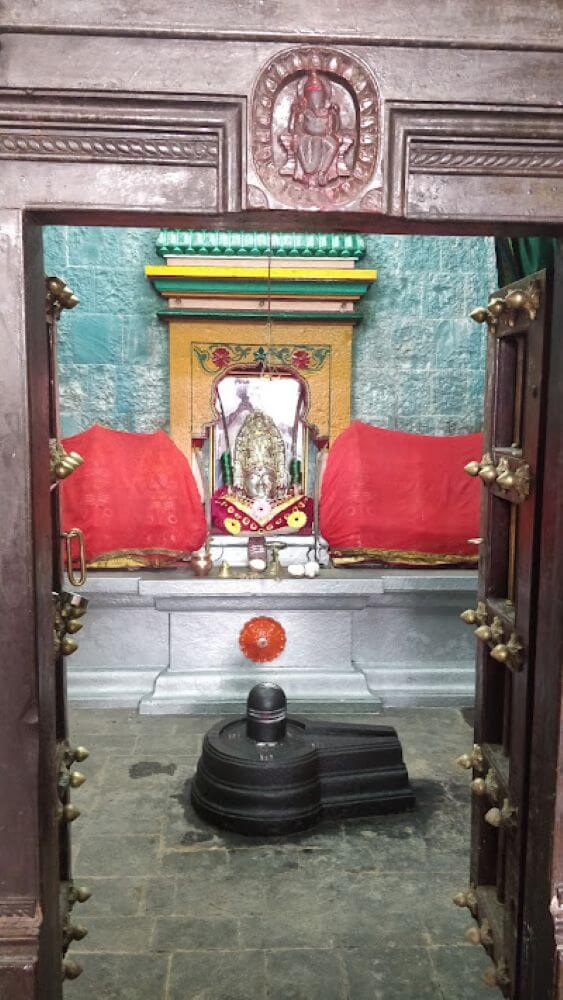
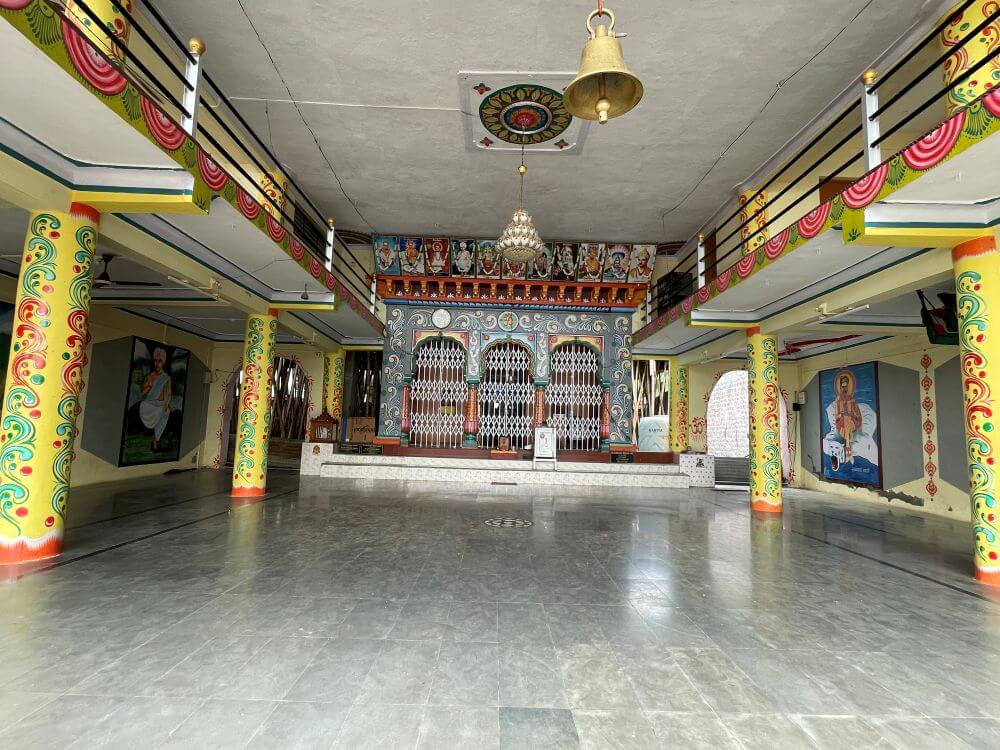
Chaundeshwari, the presiding deity of the Koshti community, is worshipped extensively across states such as Maharashtra, Karnataka, Andhra Pradesh, and Telangana. A few steps away from this temple stands a Deepmal (lamp pillar). There is a pavilion within the two-story structure surrounding the temple. After walking a few steps, one enters the main temple complex. Above the temple entrance, there are images of various gods and goddesses. The temple layout consists of a Sabhamandap (assembly hall), Antarala (vestibule), and Garbhagriha (sanctum sanctorum). At the base of the sanctum doorway, there is a Kirtimukha (a protective face) of a demon. On the Lalatbimba (the central decorative block) of the door frame, there is an idol of Lord Ganesha. In the center of the sanctum, there is a Shiva Linga placed within a large Shalu (base). Behind it, against the wall on a Vajrapitha (pedestal), is the Tandala (aniconic stone form) of Goddess Chaundeshwari in the center. It is adorned with a beautiful silver mask. On the pedestal, on both sides of the Goddess, are the masks of other deities.
The three-day pilgrimage of Goddess Ramling Chaundeshwari begins from the day after Akshaya Tritiya. This pilgrimage has a history of about two hundred and fifty years. The main aspect of this pilgrimage The main attraction is the ‘Balabattal’, which emerges from the Goddess’s temple at १२ midnight on the following day to circumambulate the village. A large number of devotees from Maharashtra, Karnataka, Andhra Pradesh, and Telangana attend the ‘Balabattal’ ceremony during the pilgrimage.
In this context, the legend goes that about two hundred and fifty years ago, a boy named Veer brought a ‘battal’, a silver bowl, from a temple in Mashal, Karnataka. When the villagers of Mashal learned of this, they began to pursue the boy. The child faced countless difficulties along the way. His feet were bloodied by thorns, but he did not stop. To keep the promise he had made to his mother, he reached the outskirts of Valsang village after sunset with the silver bowl. He requested the gatekeeper there to let him in, but as night was falling, the gatekeeper refused to open the gate. Finally, the boy threw the silver bowl through a window into the village and began to run towards Dindur. The people of Mashal were still in pursuit. He reached Dindur Exhausted, Maddi Basavanna stopped on the road. Even today, the samadhi of that child stands at that very spot. Disappointed that he did not have the bowl in his hands, the people of Mashal returned empty-handed. While this incident was a cause of sorrow for the people of Mashal, it was a moment of great joy for the villagers of Valsang. Consequently, they began celebrating this day in Valsang in the form of the Ramling Chaudeshwari Yatra. The villagers here state that this tradition continues to this day. The local citizens believe that the silver bowl is in Valsang and that the people of Mashal may come to take it back. Because of this, the villagers of Valsang keep a vigil throughout the night to protect this bowl. This festival is known as Balbattal. The Hatgar Koshti community leads this yatra. Various other communities are also given honors during the yatra. People of all castes and religions participate in the yatra.
The procession of Balbattal begins with great enthusiasm at twelve midnight on the first day of the pilgrimage (early morning of the second day). It continues until seven o’clock in the morning. A silver lamp is brought from Mashal village in Karnataka. Carrying this lamp, a woman embodying the Goddess circumambulates the village. On this woman’s head are garlands of flowers, and on both her feet are tied anklets weighing 40 kilograms. In one hand, she holds a sharp sword, and in the other, an eternally burning lamp. Devotees offer the Goddess a traditional gift of a sari and coconut, and sit on the ground to receive her blessings. It is the firm belief of the devotees that if one expresses their heartfelt wishes to the Goddess, they are fulfilled. The Goddess circumambulates the village to ensure that no calamity befalls it.
The villagers of Valsang and the devotees of the Goddess remain vigilant to ensure that the Battal, meaning the silver bowl, is not taken away by devotees from other villages. In the past, to protect this silver bowl, devotees would remain prepared with weapons such as sticks, axes, and swords. However, carrying such weapons is currently prohibited. Extensive police security is deployed for the pilgrimage. According to the villagers, there has never been any conflict or dispute among the people during the pilgrimage to date.
This sacred temple stands as a testament to deep spiritual devotion, ancient architectural grandeur, and rich local cultural traditions.
The sanctum sanctorum houses the divine idol consecrated according to ancient Vedic traditions, surrounded by serene courtyards and traditional temple architecture.
Navratri, Maha Shivratri, Annual Temple Jatra & Deepotsav
Compare and book flights, secure top-rated local hotels near the temple, hire reliable guides, and rent cars instantly.
Extend your pilgrimage by visiting other highly sacred temples located nearby.


Add ₹999 more to unlock FREE SHIPPING!
Your sacred cart is currently empty.
Shop Photo FramesFill in your delivery details below to place your order.
Add comment