
Add ₹999 more to unlock FREE SHIPPING!
Your sacred cart is currently empty.
Shop Photo FramesWhenever the word Akkalkot is uttered, the name of Shri Swami Samarth naturally follows. The town of Akkalkot in Solapur district is sanctified by His presence. Among the various places associated with Swami Samarth in Akkalkot, one of the most significant is the Rajerai Math. The uniqueness of this Math lies in the fact that it was established by Swami’s own will, during His lifetime, one year before He attained Mahasamadhi. The vibrant Padukas (footprints) installed by Swami Himself are housed in this Math. Known as ‘Swami’s Resting Place’, this Math is called Rajerai Math because it was built by Shankarrao Rajerai Rayan of the Hyderabad State.
‘Rajerai Rayan’ was an honorary title in the Hyderabad State. Shankarrao Rajerai Rayan was a Jagirdar of this state and held a Jagir worth six lakh gold coins. For many years, he suffered from ailments like leprosy, Brahma-samandha, and tuberculosis. The treatments of physicians and healers were unsuccessful. Finally, he went to Gangapur, where he performed religious rites and fed Brahmins. One day, while visiting the temple there, he saw Swami Samarth sitting in the sanctum sanctorum. At that very moment, he received a divine vision from Shri Dattatreya Maharaj, who said, “I am in Akkalkot in the form of Swami Samarth, come there.”
Upon arriving in Akkalkot, Shankarrao Rajerai realized the greatness of Swami Samarth’s incarnation. To seek relief from his ailments, he vowed to offer ten thousand rupees at the holy feet of the Swami. Swami Samarth instructed Shankarrao to eat neem leaves and black pepper. Within the next ten days, Shankarrao was completely cured of all his ailments. As his health improved, Shankarrao began offering the ten thousand rupees at the Swami’s feet. At that time, Swami said, “Use this money to build a lime-mortar Math near the Shriram temple outside the village and install the Padukas there. That will be my resting place,” He indicated. Accordingly, this Math was completed in the year Shake १८००, i.e., १८७७ CE.
After the construction of the Math, Swami Himself prepared a mold of His feet, and the Padukas were crafted from it. These Padukas are engraved with symbols of the conch, discus, mace, lotus, trident, damaru, kamandalu, begging bowl, bel leaf, sun, and moon. The words ‘Shri Swami Samarth’ are inscribed on the front of these Padukas. In the year १८७७ CE, on the first day of the waning moon of Magh, these Padukas were installed in the Math. It is said that at the time of their installation, a divine light appeared. Looking at it, Maharaj said, “These are my vibrant (Chaitanya) Padukas. Whoever bows their head before these Padukas, I shall fulfill their desires. I shall cure the ailments of those who consume the holy water (Teertha) of these Padukas. If water is offered a second time, I shall resolve their crises. If water is offered a third time, the person shall receive the merit of offering water to Kashi Vishwanath. If a bel leaf or flower is offered on the Padukas, the merit of offering it to Kashi Vishwanath shall be attained.” A year later, in १८७८, on the thirteenth day of the waning moon of Chaitra, Maharaj attained Mahasamadhi.
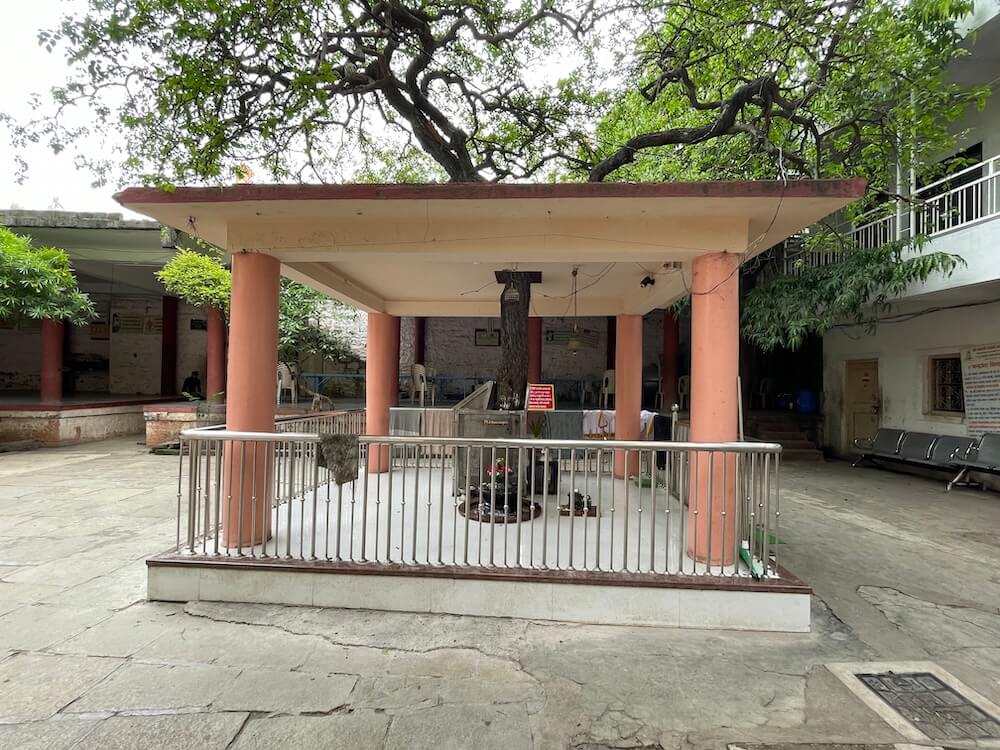
For nearly ७५ years thereafter, the Math remained neglected, and its structure deteriorated over time. In १९५३, on the first day of the waning moon of Magh, a young ascetic (Bal-Sadhu) arrived in Akkalkot via Gangapur. His attire and divine plays were similar to those of Sai Baba. When the villagers brought him to the Rajerai Math, he saw the pathetic condition of the place. The Sadhu Maharaj gathered the village children and began the renovation of the Math. The villagers themselves named this Maharaj ‘Belanath’, and that name became widely known. Over a period of fifty years, Belanath Maharaj ensured that the work envisioned by Swami was completed by the devotees. He preached the glory of chanting the Lord’s name and engaged devotees in the service of constant remembrance. Maharaj installed an eight-armed idol of the Goddess in this Math and also installed a Shiva Linga under a bel tree. In १९९६, on Champa Shashthi, an idol of Swami was installed in the Math. Subsequently, in २००३, on the second day of the waxing moon of Jyeshtha, Belanath Baba attained Samadhi.
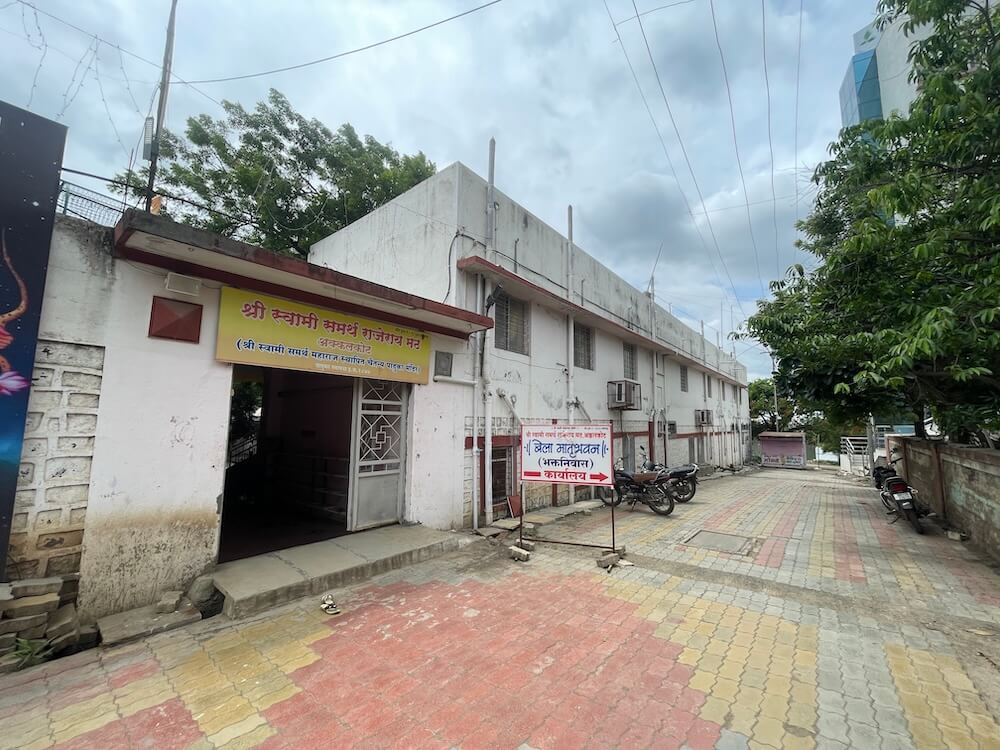
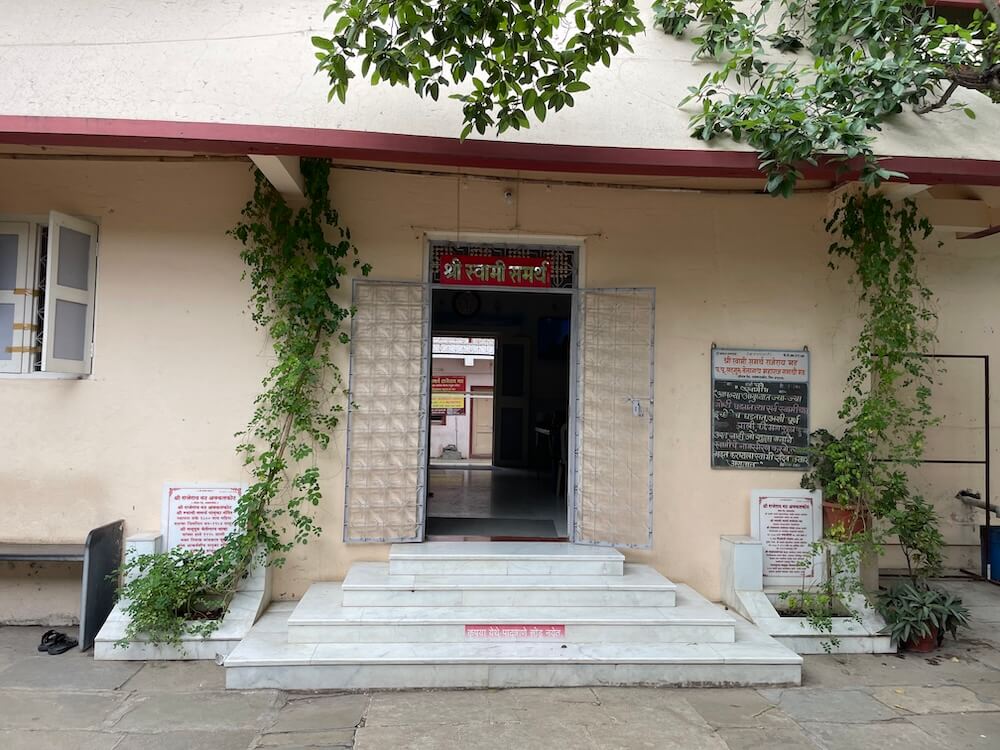
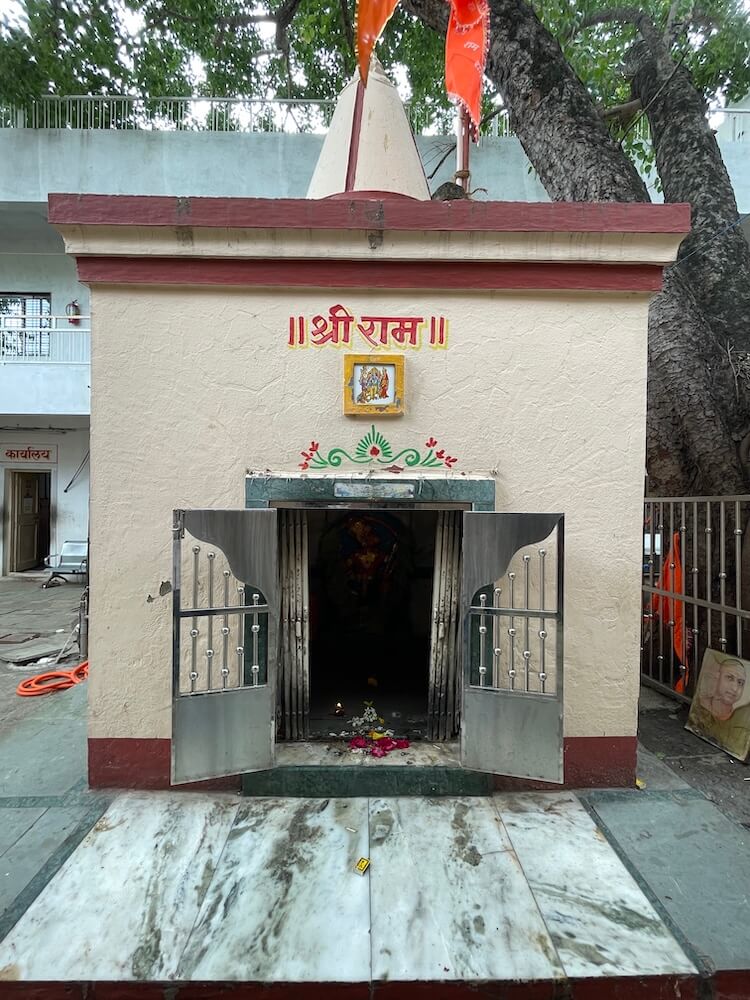
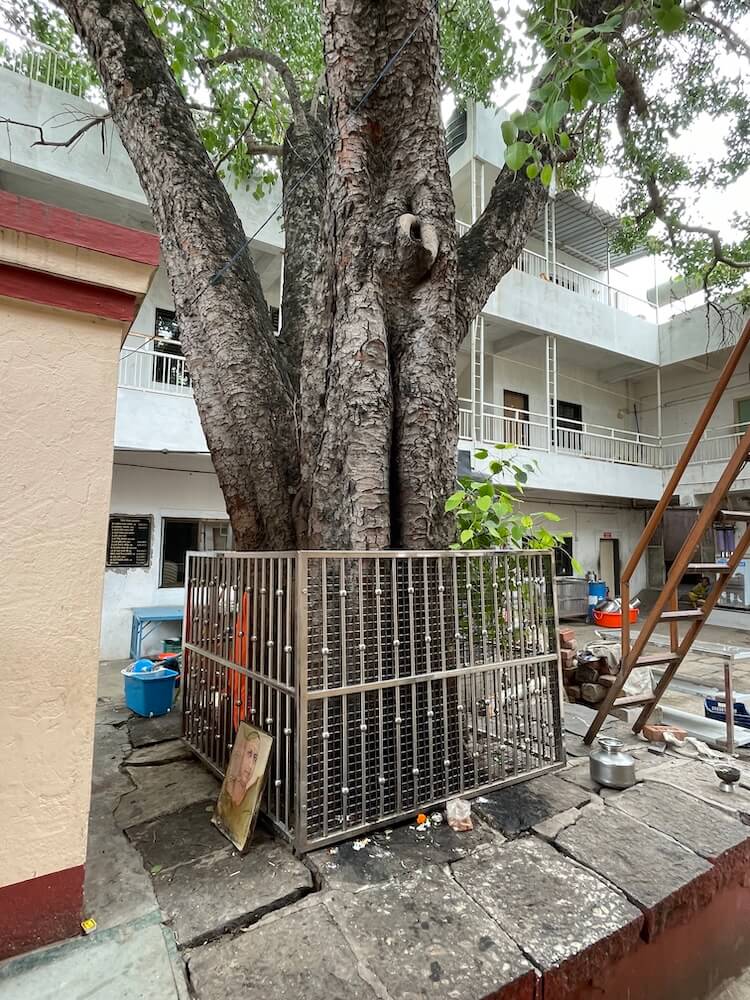
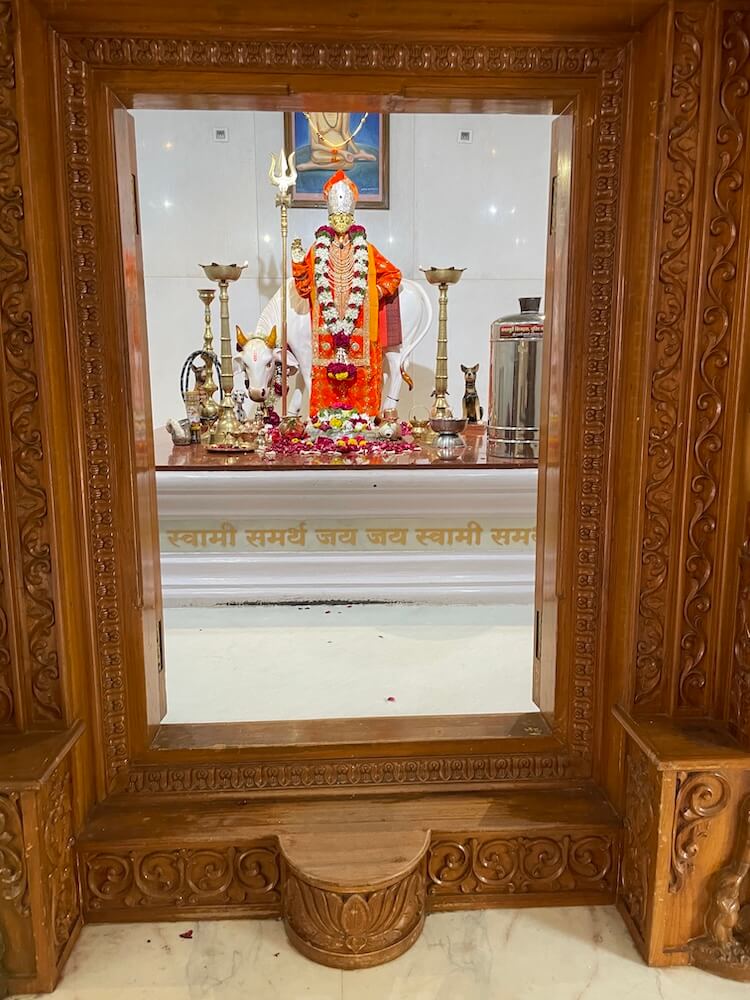
Rajerai Math is situated near the Shriram temple, a short distance from the Swami Samarth Vatavruksha Temple. The premises of the Math are surrounded by boundary walls, and one enters the courtyard through a gateway. The Math is designed with an enclosed assembly hall (Sabhamandap) and a sanctum sanctorum (Garbhagriha). The door frames of the sanctum are adorned with intricate wooden carvings, featuring door guardians at the bottom, Lord Ganapati at the center, and various deities on the lintel. In the sanctum, on a high pedestal, are Swami’s Padukas, and in front of them stands an idol of Swami. The temple complex includes the Samadhi temple of Belanath Baba, a Maruti temple, and an Ashtabhuja Devi temple. A Shiva Linga is installed under a bel tree in the courtyard. The temple premises feature various trees such as Audumbar, Neem, Pipal, Ashvattha, and Bel.
The Punyatithi festival of Swami Samarth Maharaj is celebrated with great enthusiasm on the thirteenth day of the waning moon of Chaitra. This festival lasts for १० days and includes various programs such as continuous chanting, bhajans, discourses, and kirtans. On the final day, a community Abhisheka and Mahaprasad are held. A palanquin procession is taken through the village, and the festival concludes with Gopal Kala. Following this, the Punyatithi festival of Sadguru Belanath Maharaj is held on the second day of the waxing moon of Jyeshtha. This festival is also celebrated for eight days with discourses and kirtans. The palanquin and chariot processions are the highlights of this festival. The Guru Purnima festival begins eight days before the full moon. During the Navratri festival, devotees can witness the various forms of the Ashtabhuja Goddess for १० days. Additionally, festivals like Kojagiri Purnima, Dattajayanti, Janmashtami, and Mahashivratri are also celebrated here.
The Math provides accommodation facilities for devotees. Meals are served to devotees at १२:०० PM and ७:०० PM. The doors of the Math are open daily from ४:३० AM until the last devotee has completed their darshan at night.
This sacred temple stands as a testament to deep spiritual devotion, ancient architectural grandeur, and rich local cultural traditions.
The sanctum sanctorum houses the divine idol consecrated according to ancient Vedic traditions, surrounded by serene courtyards and traditional temple architecture.
Navratri, Maha Shivratri, Annual Temple Jatra & Deepotsav
Compare and book flights, secure top-rated local hotels near the temple, hire reliable guides, and rent cars instantly.
Extend your pilgrimage by visiting other highly sacred temples located nearby.


Add ₹999 more to unlock FREE SHIPPING!
Your sacred cart is currently empty.
Shop Photo FramesFill in your delivery details below to place your order.
Add comment