
Add ₹999 more to unlock FREE SHIPPING!
Your sacred cart is currently empty.
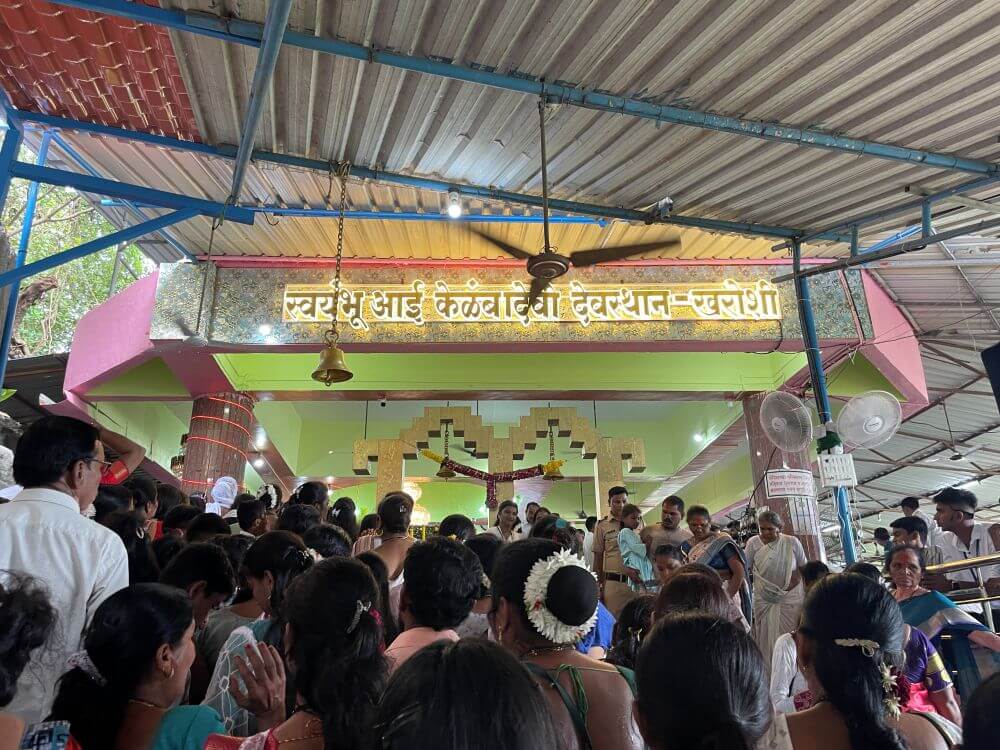
Shop Photo FramesNestled in the lap of hills and valleys on the banks of the Balganga River, the Swayambhu (self-manifested) shrine of Kelambadevi in Kharoshi is a place of faith for millions of devotees. The Goddess was named Kelambadevi because she manifested from a banana tree. Devotees believe that this is a powerful (Jagrut) Goddess who fulfills vows and rushes to the aid of those who call upon her. A grand fair is held here during the nine days of Navratri. It is famous as the largest fair in the Pen taluka. It is said that approximately five lakh devotees visit to seek the blessings of the Goddess during this fair period.
The legend of the Goddess’s shrine is that long ago, there was a banana grove in the forest on the border of Kharoshi village. A villager had come to this banana grove, located at the site where the temple now stands, to collect banana leaves for an auspicious ceremony at his home. While he was cutting the leaves, his sickle accidentally struck the trunk, and suddenly, blood began to flow from it. Seeing this, the villager was terrified and rushed to the village to inform the other villagers about this described the incident. When some villagers went there to verify, blood was gushing out from that tree, and the stone at the base of the tree was slowly rising. The villagers narrated this entire incident to a Sadhu at that time. That Sadhu stated that this sacred place was the abode of the Adishakti. Since she manifested from a banana tree (Keli), the Goddess came to be known as Kelambadevi. Thereafter, the villagers built a temple around this very spot and began the worship and rituals of the Goddess.
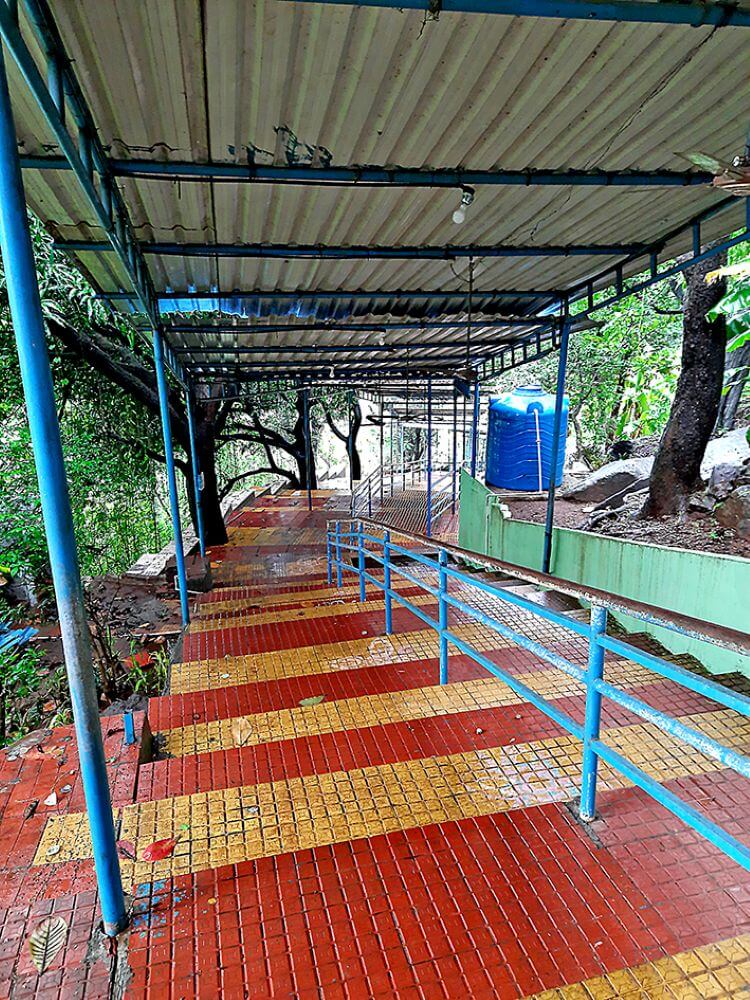
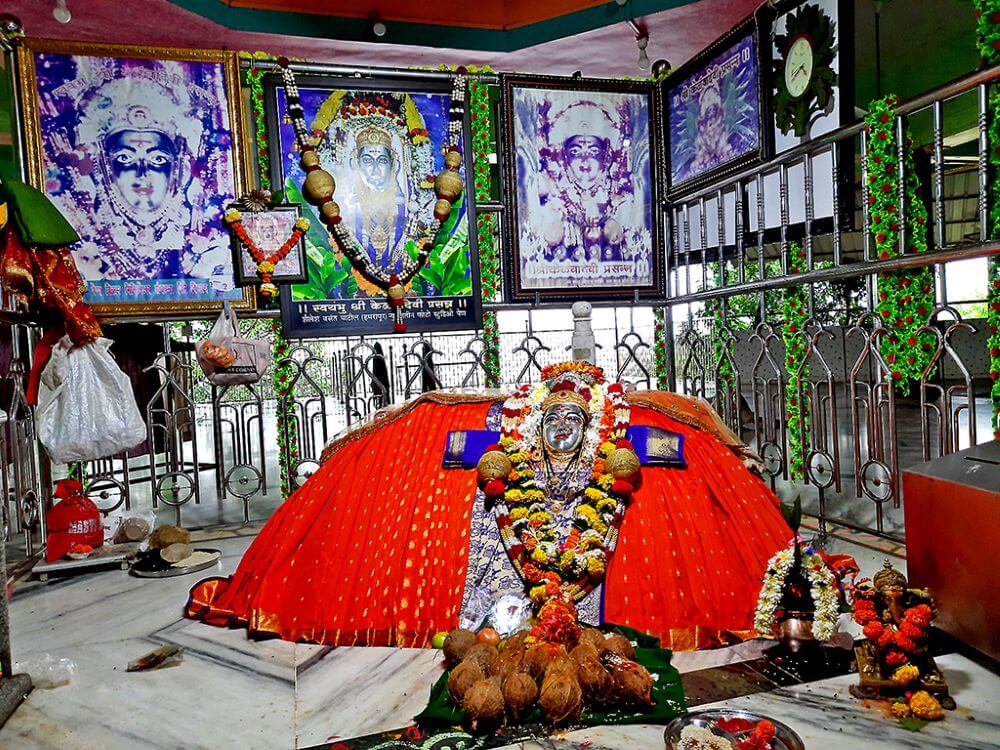
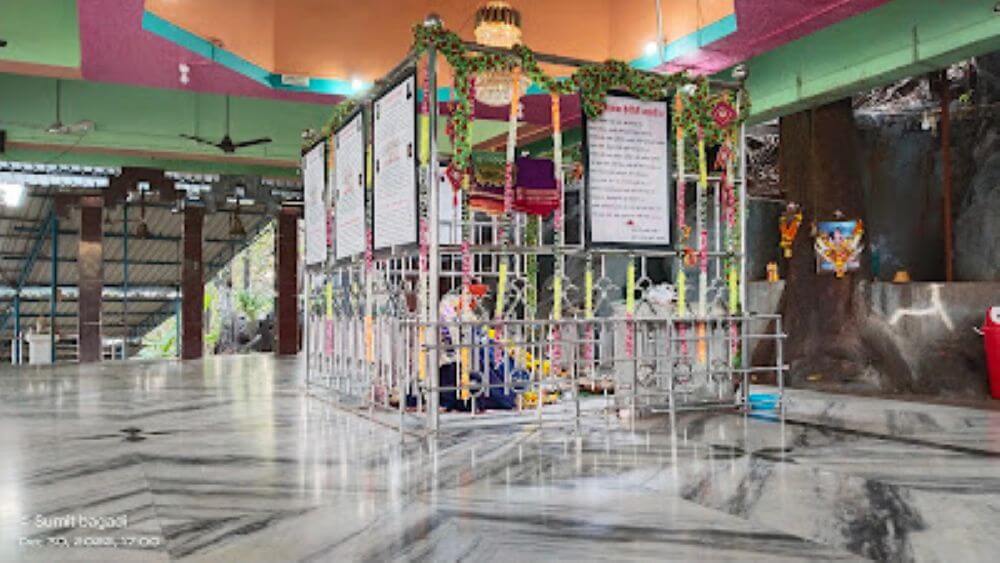
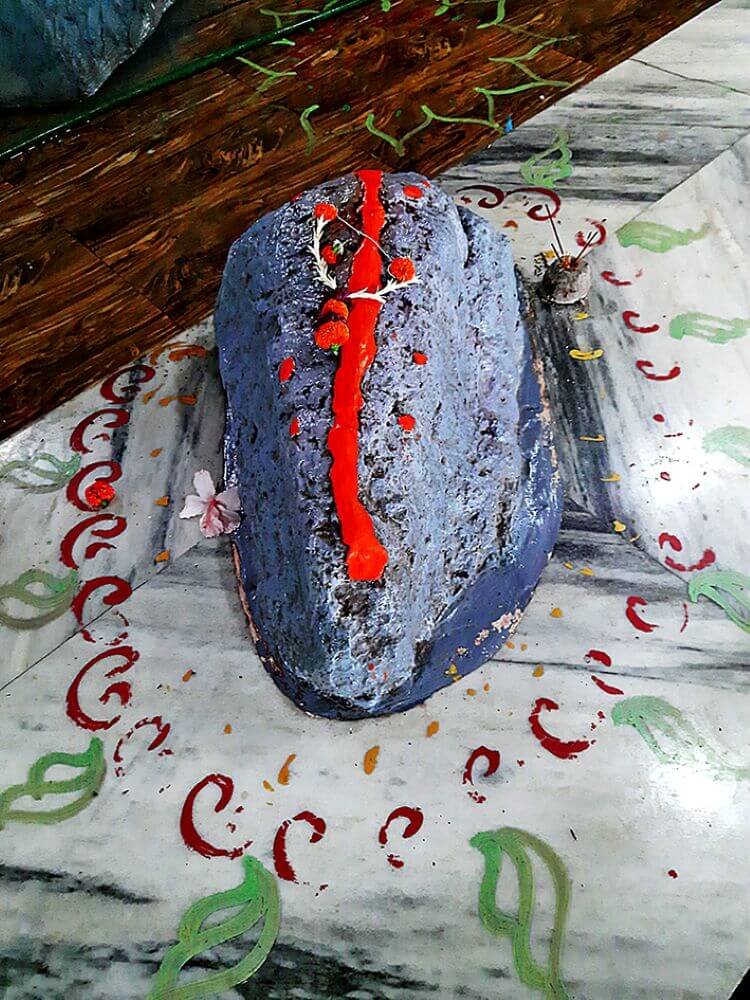
The Kelambadevi Temple is situated on a hill in Kharoshi, near Jite village, close to the Mumbai-Goa highway. It is said that the first temple was built here in the year 1607 A.D. Thereafter, some After the renovation and restoration of this dilapidated temple a year ago, the temple has attained its current form. There are about 150 steps to reach the temple from the base. The architecture of this temple is unique. This multi-storied temple rests on only four pillars. The assembly hall (sabhamandap) here is open-style. In the center of this assembly hall lies the long and wide swayambhu (self-manifested) stone of the Goddess. There is no separate sanctum sanctorum (gabhara) here. The nose and eyes of the Goddess can be seen imprinted on the stone. Devotees believe that the height of this stone increases every year. During festivals, a silver mask of the Goddess with a loving expression is placed on this stone. Another stone can be seen nearby, which has the shape of Lord Ganpati’s face. A unique feature here is that this multi-storied temple is surrounded by many banana trees and rare bael trees. Being situated at a height, one can get a panoramic view of the Balganga River bed and its surrounding area from the assembly hall of this temple.
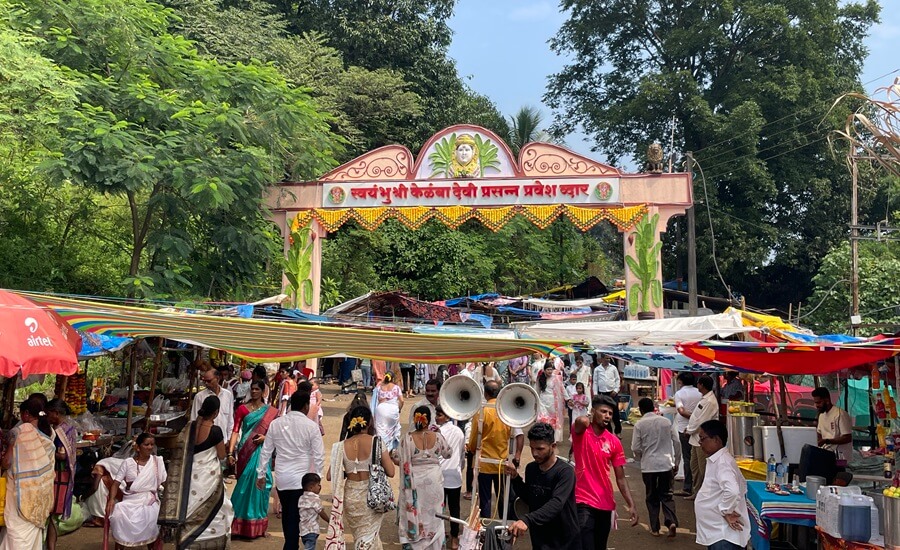
The Navaratri festival of Kelambadevi is celebrated every year with great enthusiasm. A grand fair (yatra) is held here during these nine days. As it is a Swayambhu (self-manifested) and Jagrut (spiritually awakened) shrine, lakhs of devotees visit during this period to fulfill their vows and seek the blessings of the Goddess. This includes countless devotees from Pen, as well as Panvel, Uran, Alibaug, Thane, and Mumbai. During this festival period, queues of vehicles stretch for about two kilometers from the temple. Additionally, hundreds of stalls selling various items are set up. On the day of Ghatasthapana, the Goddess’s Palkhi (palanquin) is brought to the temple with great pomp and musical accompaniment. The Palkhi remains in the temple for these nine days. On the ninth day, the Palkhi leaves the temple and is brought into the village in a procession amidst the rhythmic beats of Taal and Mridang, with devotees showering gulal and bukka. Many devotees stay at the temple for all nine days of Navaratri to fulfill their vows. Apart from the Navaratri festival, thousands of devotees visit for the Goddess’s darshan every Tuesday.
This sacred temple stands as a testament to deep spiritual devotion, ancient architectural grandeur, and rich local cultural traditions.
The sanctum sanctorum houses the divine idol consecrated according to ancient Vedic traditions, surrounded by serene courtyards and traditional temple architecture.
Navratri, Maha Shivratri, Annual Temple Jatra & Deepotsav
Compare and book flights, secure top-rated local hotels near the temple, hire reliable guides, and rent cars instantly.
Extend your pilgrimage by visiting other highly sacred temples located nearby.


Add ₹999 more to unlock FREE SHIPPING!
Your sacred cart is currently empty.
Shop Photo FramesFill in your delivery details below to place your order.
Add comment