
Add ₹999 more to unlock FREE SHIPPING!
Your sacred cart is currently empty.
Shop Photo FramesThe scripture named Dasbodh. A dialogue between Guru and disciple.
Herein is explained clearly, the path of devotion.
Although Samarth Ramdas Swami states this at the very beginning of the Dasbodh, this scripture does not merely teach the path of devotion. It teaches us how to live, and also provides lessons on how one should not live. Shivtharghal in Kumbheshivthar, located in the Mahad taluka, is revered as the birthplace of this great scripture. Samarth Ramdas Swami resided here for a full 11 years, from 1649 to 1660. Blessed by the presence of Samarth and the touch of Chhatrapati Shivaji Maharaj’s feet, this site is a place of faith for millions of devotees.
The Ganges flows from the mountain peak; it descends with force. The streams fall with a roar; the water strikes with a thunderous sound.
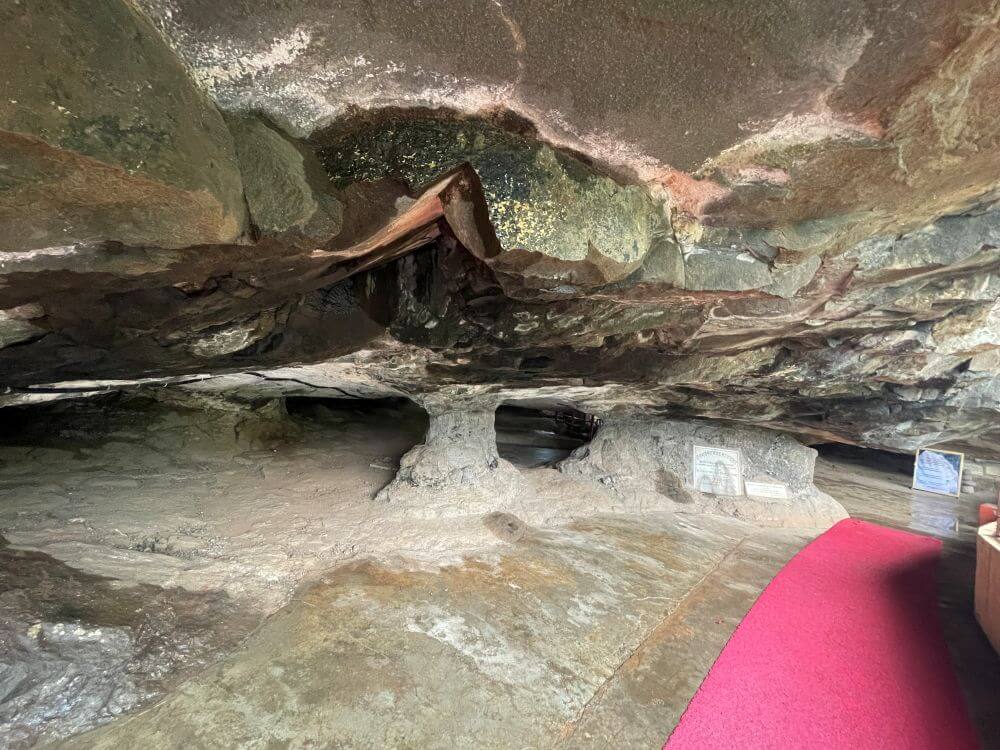
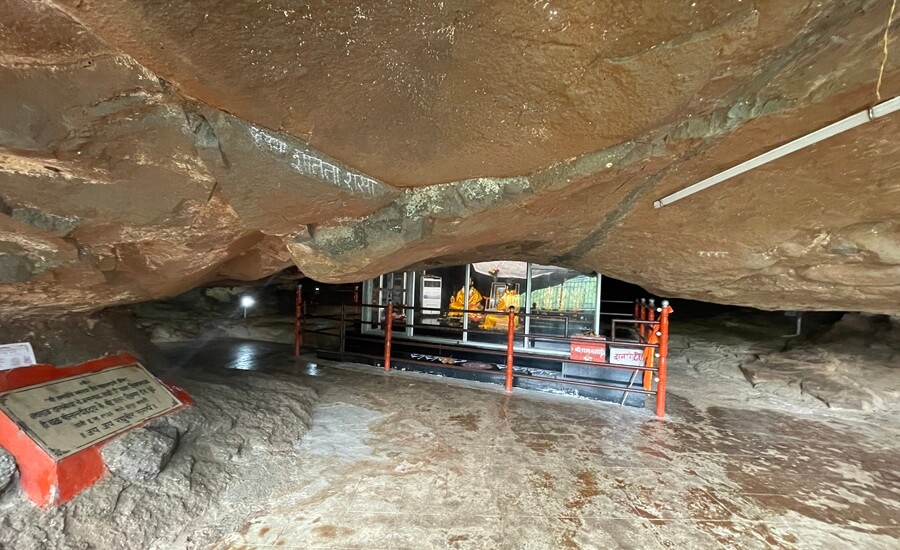
Samarth described this cave with such beauty. It is for this reason that he gave this place the epithet ‘Sundarmath’. Nestled in the lap of the mountains on the border of Raigad and Satara districts, Shivtharghal is a place of natural beauty. This naturally formed cave is situated in a narrow valley between two towering mountains. For about 250 years after Samarth, this cave remained hidden from the public eye. The locals here referred to it as the cave of Ramdas Gosavi. However, in 1930, the Samarth devotee Shri Shankar Dev from Dhule discovered it by referencing various scriptures. Because of this, the cave is accessible to the common public today.
Kumbheshivthar and the surrounding area were part of Chandrarao More’s Javli estate. He was a Deshmukh and a vassal of the Bijapur court. It is said that to establish harmony with Chandrarao More, Samarth organized a Ganesh Utsav in this cave. At that time, Shivaji Maharaj came here for darshan with his entourage, and it was then that he met Chandrarao More. Furthermore, historical records indicate that before departing for his southern expedition, the Maharaj came here to seek the blessings of Samarth. In the year 1648, Shivray brought this area under his control. The ruins of Chandrarao More’s palace can still be seen on the mountain above the cave. From there, Rajgad, Raigad, Torna, and Pratapgad are at approximately equal distances.
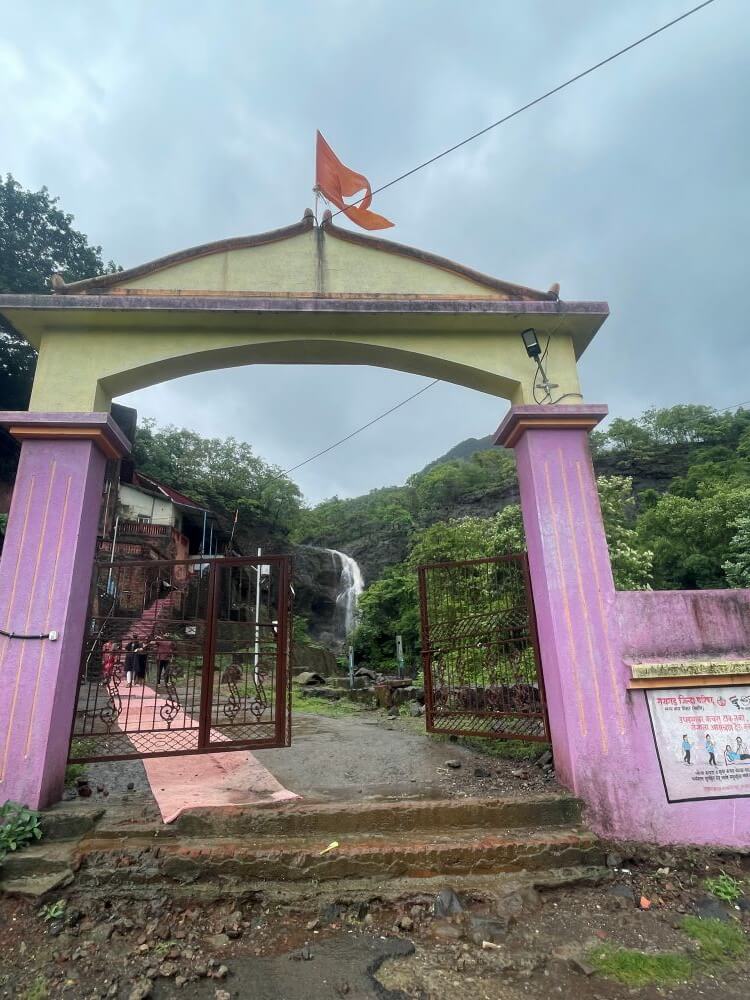
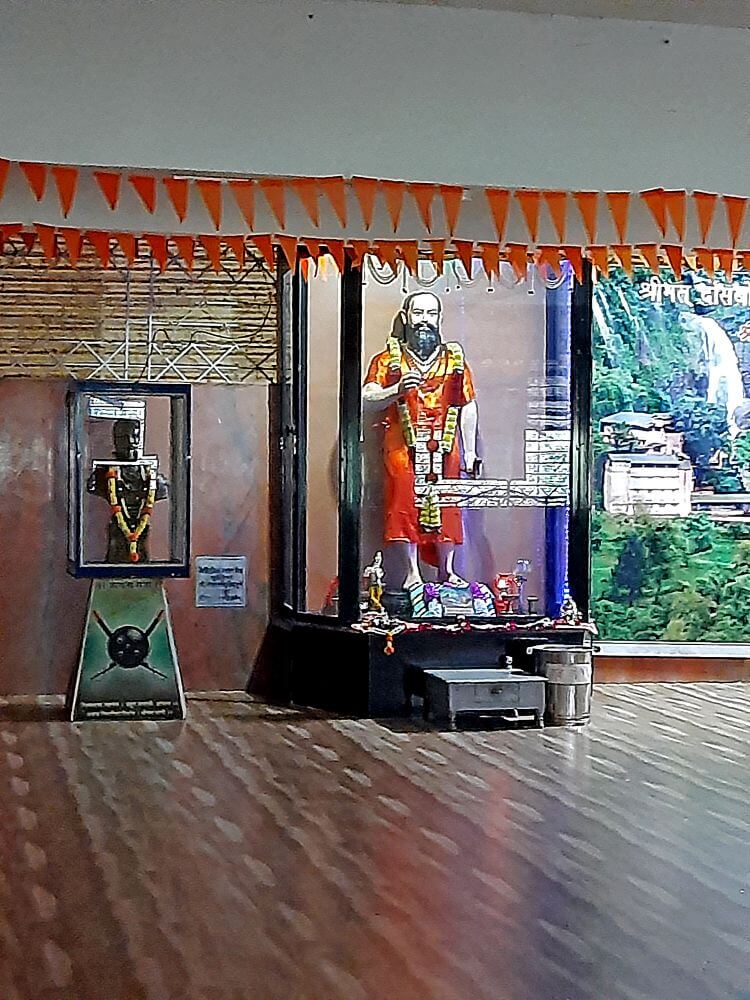
One must walk from the parking lot at the base of the cave. Entry to the courtyard of the cave and temple complex is through an arch located on the riverbank. From here, one climbs 40 steps to reach the building housing the offices of the Shri Samarth Seva Mandal and the Sundarmath Seva Samiti. This building provides facilities such as a Bhaktaniwas (pilgrim lodging), a dining hall, and an auditorium. It is said that this entire area was previously owned by the landlord of Shivthar, Shriman Pandurangrao Paranjape. He donated this land for the cause of Samarth. In the assembly hall located here, there is a large, approximately six-foot-tall statue of Samarth.
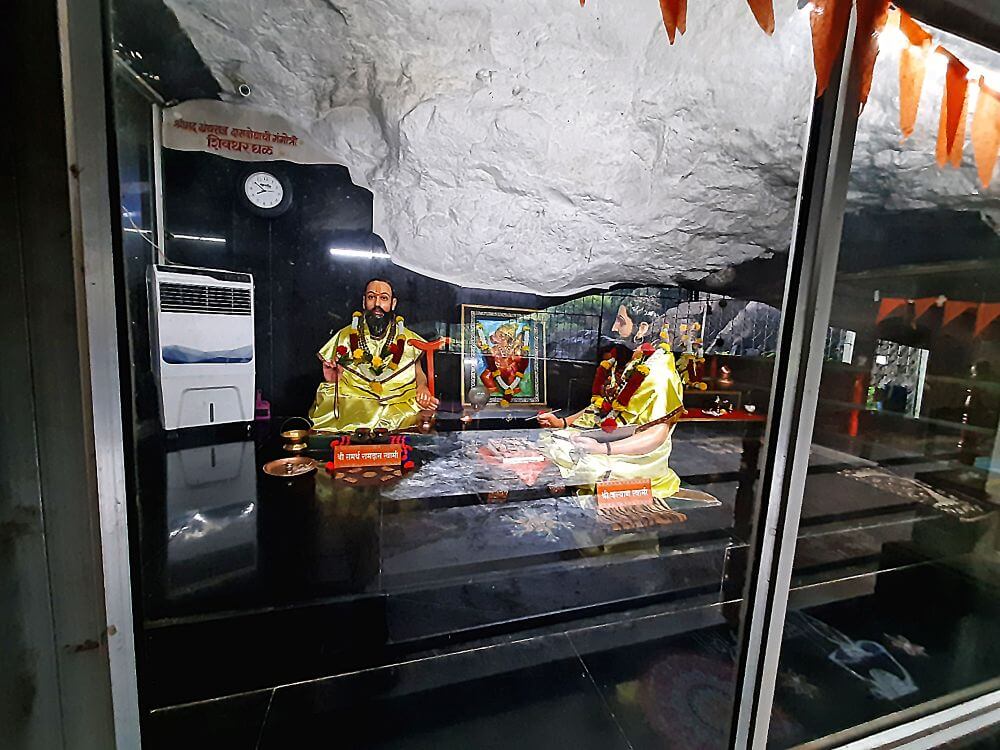
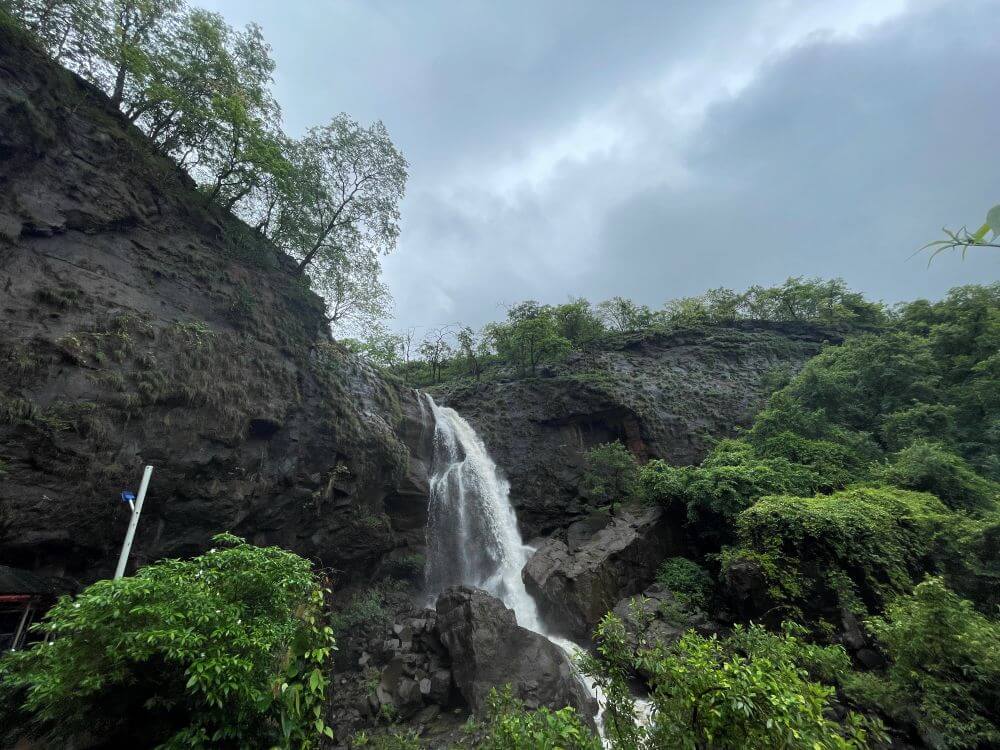
From here, there is a path leading to the cave. A shed has been erected for the convenience of devotees along this 100-meter path. After passing through this shed, one gets the darshan of Shivtharghal. Situated at an altitude of about 3,000 feet above sea level, this naturally formed cave is approximately 38 meters long, 27 meters wide, and tall enough for a man to stand. There is an idol of Maruti in this cave. Additionally, there are beautiful statues depicting Kalyan Swami writing down the verses as dictated by Ramdas Swami. These statues, crafted by Shri B. D. Thatte in 1959, were consecrated in 1960 by the hands of Shridhar Swami. Behind the statue of Samarth are the idols of Shri Ram, Lakshman, and Sita. These idols were donated in 1961 by the learned Pandit Govindshastri Khare of Gokarna. For eight months of the year, a pristine white waterfall cascades from above this cave. Its intensity is greater during the monsoon. With the abundance of nature and the waterfall falling from a height of 100 feet, this place always attracts tourists.
Prayers are held here daily at 5:30 AM and 6:30 PM. The ‘Dasbodh Jayanti Utsav’ is celebrated here from Magh Shuddha Pratipada to Magh Shuddha Navami. Besides this, spiritual activities such as yoga camps, children’s camps, adult camps, and Vanaprastha camps are also conducted. Every day from 12:00 PM to 1:30 PM, the committee provides free prasad consisting of khichdi-bhat and shira to visiting devotees. There is also a well-equipped Bhaktaniwas for devotees.
This sacred temple stands as a testament to deep spiritual devotion, ancient architectural grandeur, and rich local cultural traditions.
The sanctum sanctorum houses the divine idol consecrated according to ancient Vedic traditions, surrounded by serene courtyards and traditional temple architecture.
Navratri, Maha Shivratri, Annual Temple Jatra & Deepotsav
Compare and book flights, secure top-rated local hotels near the temple, hire reliable guides, and rent cars instantly.
Extend your pilgrimage by visiting other highly sacred temples located nearby.


Add ₹999 more to unlock FREE SHIPPING!
Your sacred cart is currently empty.
Shop Photo FramesFill in your delivery details below to place your order.
Add comment