
Add ₹999 more to unlock FREE SHIPPING!
Your sacred cart is currently empty.
Shop Photo FramesKapilsiddha Mallikarjun is the deity whom Shivayogi Siddharameshwar, the presiding deity of Solapur, worshipped and revered. The famous temple of Mallikarjun, a manifestation of Shri Shaila Mallikarjun, is situated in the Bali Ves area of Solapur. The original temple of Mallikarjun, which was a beautiful specimen of craftsmanship, intricate carvings, and architectural skill, was previously located within the Bhuikot Fort here. It was relocated to this site along with the Shiva Linga from the original temple. In this Shiva Linga, Shiva and Shakti reside in a unified form.
The legend of Mallikarjuna is narrated in the 15th chapter of the Kotirudra Samhita of the Shiva Purana. It is said that once, Shiva and Parvati asked their sons, Ganesha and Kartikeya, to circumambulate the Earth. While returning from his circumambulation, Kartikeya met Narada on the way. Narada told Kartikeya that while his parents had sent him on the circumambulation, they had arranged the marriage of his younger brother back home. Hearing this, Kartikeya became enraged. He came to Mount Kailash, argued with his parents, and left for Mount Krauncha. When Shiva and Parvati went there to persuade him, Kartikeya moved elsewhere. Saddened by this, Shiva and Parvati assumed a luminous form and remained there. That sacred Linga came to be known by the combined names of Mallika (Parvati) and Arjuna (Shiva).
There are many temples of Mallikarjuna in the country. One of them is this renowned temple in Solapur. According to the records in the ‘Gazetteer of Bombay Presidency, Volume 20, Solapur’, the Bhuikot Fort here was built during the fourteenth century in the era of the Bahmani Sultanate. The Central Government has declared this fort a nationally protected monument of Maharashtra. According to the gazetteer, the remains of the Hemadpanti temple found in this fort are even older, dating back to the twelfth or thirteenth century. This is the ancient temple of Mallikarjuna. The biography of Siddharama is described in the epic ‘Siddharama Purana’, written by the famous Veerashaiva Kannada poet Raghavanka, who lived in the thirteenth century. It mentions that this temple was built by Siddharama.
The legend of this temple states that although the Kalachuri dynasty ruled here in the twelfth century, the sovereignty of Sonnalgi (Solapur) rested with King Nannappa and Queen Chamaladevi. Upon returning from Shrishail Mallikarjun, the child-yogi Siddharama conceived the idea of building a temple dedicated to Mallikarjuna in Sonnalgi. He expressed this desire, and the very next day, Queen Chamaladevi arrived at his ashram. She stated that Guru Revansiddha had appeared to her in a vision and commanded her to grant him as much land as he required. In this way After receiving the land in this manner, Siddharama resolved to build a magnificent temple there. Once this news spread throughout Sonnalagi and the surrounding areas, many people contributed wealth and physical labor, and through this, the temple was erected. The Shiva Linga in this temple had been buried in a certain spot. Because it was discovered due to a Kapila cow, it was named Kapilasiddha Mallikarjuna.
The city of Solapur and the Bhuikot Fort came under the control of the Peshwas in the year 1758. Shrimant Nanasaheb Peshwa established contact with the fort commander of Solapur, Khaliluddin, granted him a territory worth 25,000 rupees, and acquired this fort. For half a century, this fort and the city remained with the Marathas. Later, in the final Maratha war, the British General Munro laid siege to this fort for four days and conquered it on 14 May 1818. Following this, common devotees were prohibited from entering the temple within the fort. Subsequently, during excavations conducted at this site, some pillars of the temple were discovered. At that time, the saints and social leaders of the era used these pillars and other materials at Balives to The grand temple of Mallikarjuna was built.
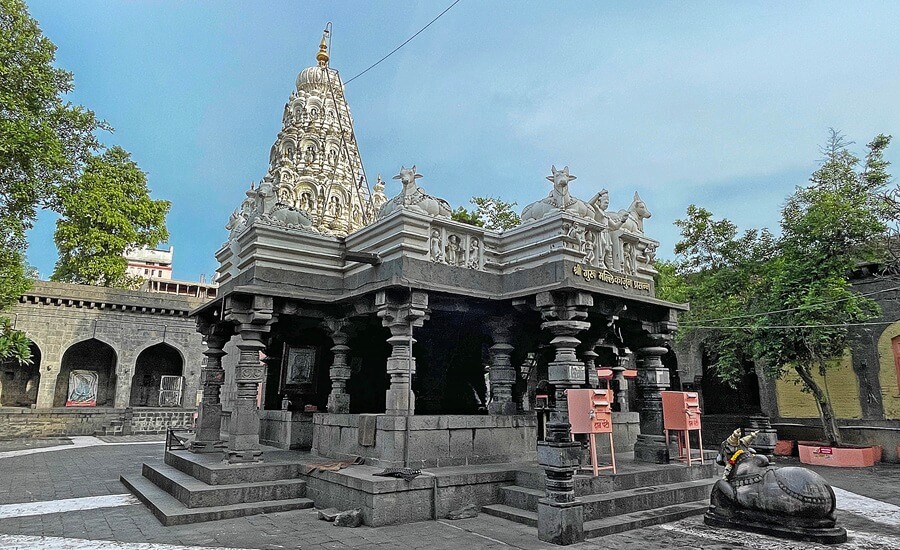
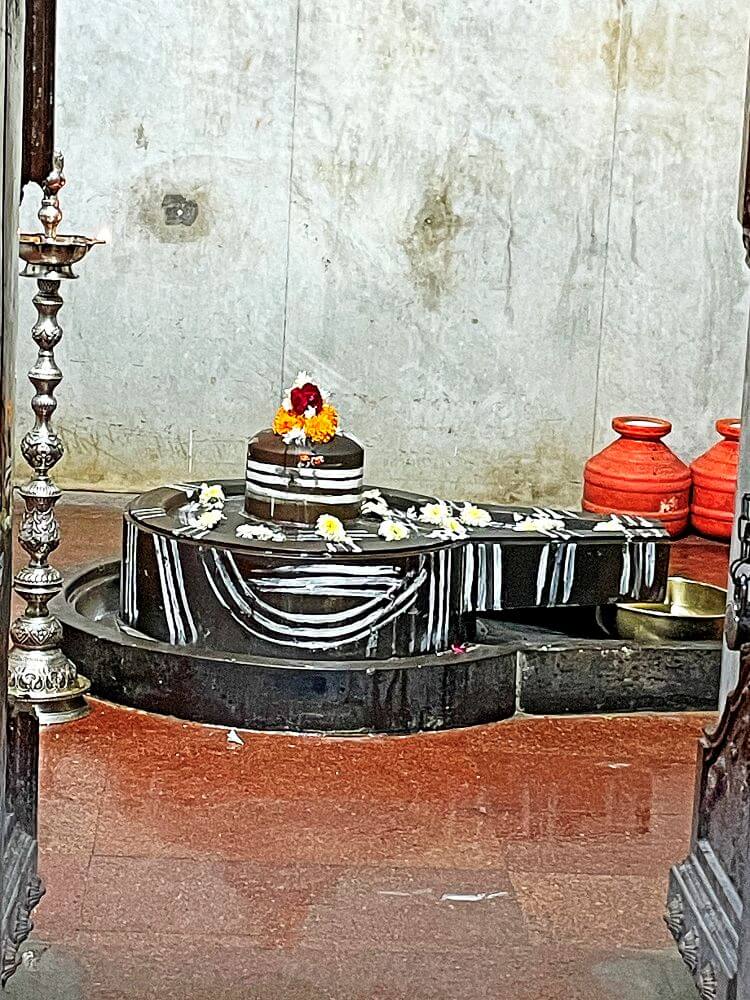
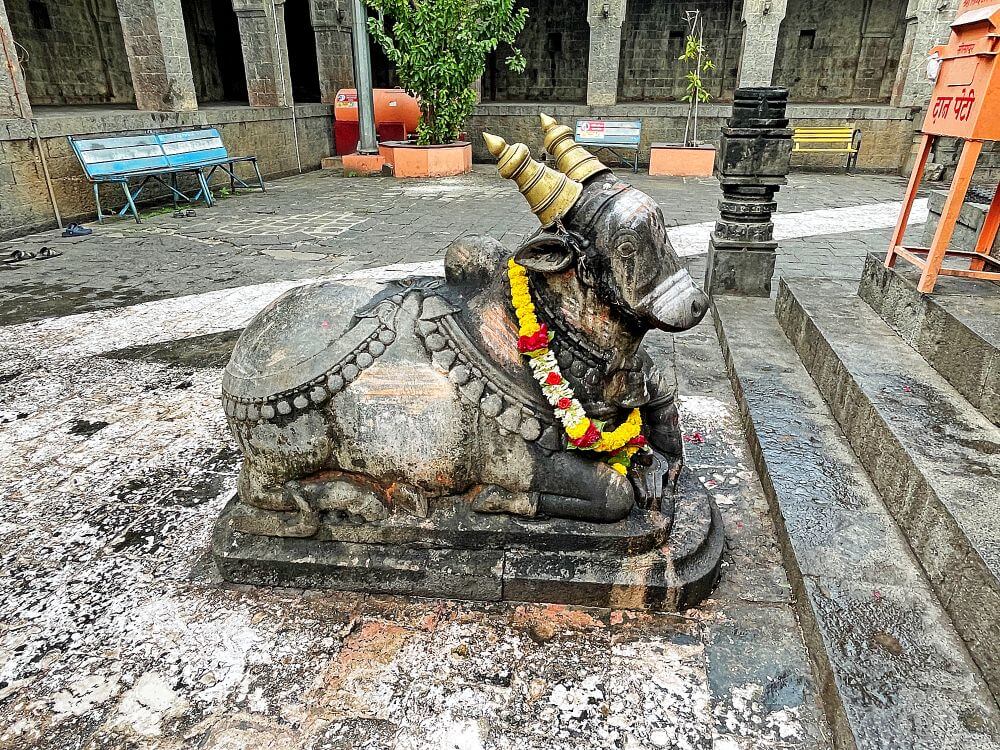
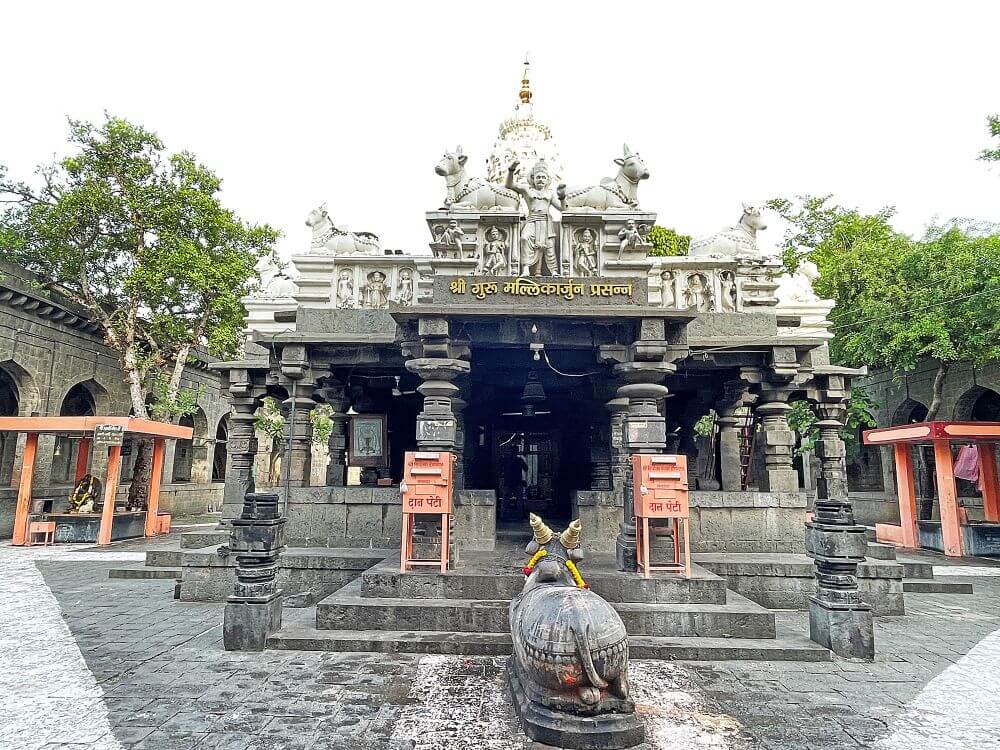
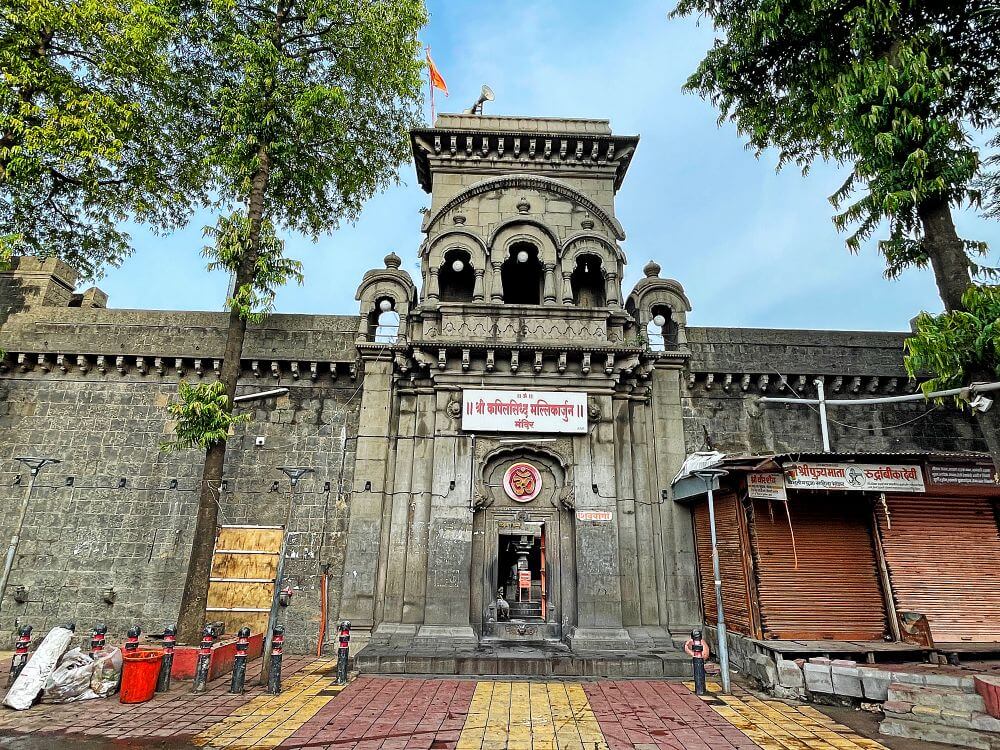
The Kapilsiddha Mallikarjuna Temple is located in the heart of the city. The temple is surrounded by a stone fortification approximately 20 feet high. One enters the temple courtyard through a two-story gateway within this fortification. There is a Nagarkhana (drum house) on the upper floor of the gateway. The temple structure consists of three Darshan Mandapas (viewing halls), a Sabha Mandapa (assembly hall), an Antarala (vestibule), and a Garbhagriha (sanctum sanctorum). In front of the main Darshan Mandapa stands a Nandi carved from a single monolithic stone. The horns of this massive Nandi are covered with brass casings. A Shiva Linga is situated between the front legs of this Nandi. To reach the Mukha Mandapa (main entrance hall) of the temple, which stands on a high plinth, one must climb three steps. The Mukha Mandapa and Sabha Mandapa are semi-open in nature and feature stone benches for devotees to sit. The Sabha Mandapa can be accessed from all three sides. There are a total of 22 intricately carved stone pillars in the Sabha Mandapa. On the ceiling of the Sabha Mandapa, there are lotus flowers carved out of stone. The door frames of the Garbhagriha are covered with brass sheets. On the Lalatabimba (lintel) here, there is an image of Lord Ganesha, and on the Mandoraka (architrave), there is a Kirtimukha. It is said that among the 68 Lingas established by Siddharameshwar, the 65th Linga is that of Mallikarjuna. This Shiva Linga is large in size, and during festivals, a metal mask is placed upon it.
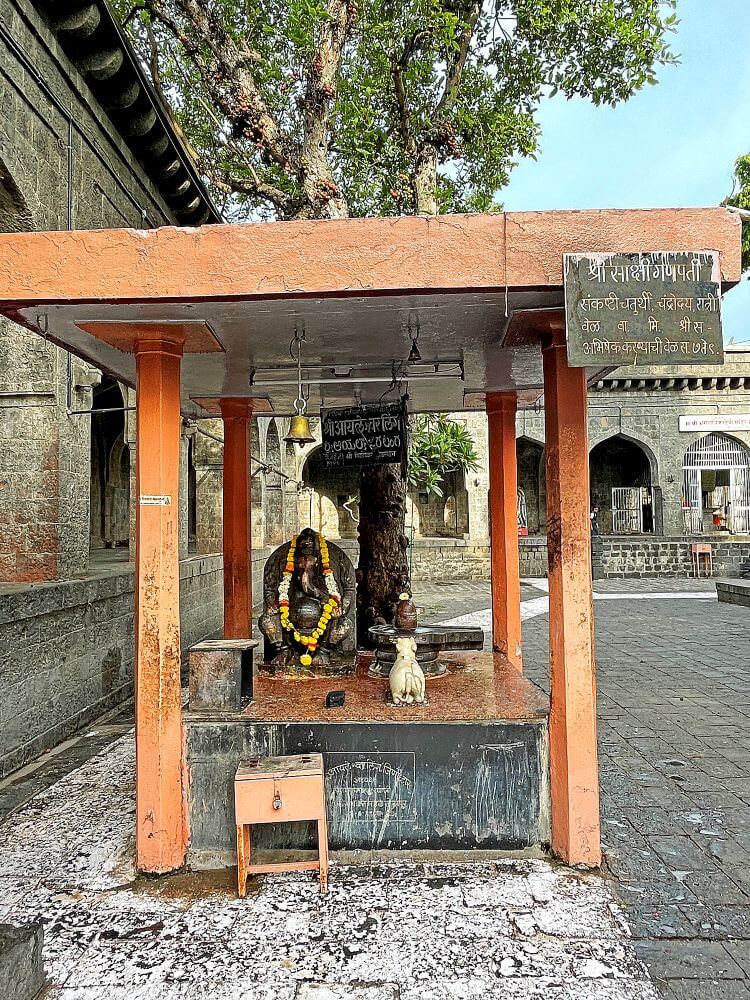
On the portion of the Sabhamandapa facing the Shikhara, there are sculptures of Vanaras, Dvarapalas, Sage Bhrigu, Nandi, and Surasundaris. Among these, the sculptures of Nandi are particularly unique. A sculpture of Nandi with two bodies and one head is placed at each corner of the roof. The main Shikhara is situated above the Garbhagriha of the temple. In the Devakoshtas (niches) upon it, there are idols of various deities. At the apex of the Shikhara is a large Amalaka, topped with a Kalasha. Behind the temple is the shrine of Goddess Bhramarambika, which houses a beautiful stone idol of the Goddess. Along with this, there are shrines dedicated to the Nagadevata and the Navagrahas within the premises. The fortification wall surrounding the temple features a series of arched cells (ovaris).
This sacred temple stands as a testament to deep spiritual devotion, ancient architectural grandeur, and rich local cultural traditions.
The sanctum sanctorum houses the divine idol consecrated according to ancient Vedic traditions, surrounded by serene courtyards and traditional temple architecture.
Navratri, Maha Shivratri, Annual Temple Jatra & Deepotsav
Compare and book flights, secure top-rated local hotels near the temple, hire reliable guides, and rent cars instantly.
Extend your pilgrimage by visiting other highly sacred temples located nearby.


Add ₹999 more to unlock FREE SHIPPING!
Your sacred cart is currently empty.
Shop Photo FramesFill in your delivery details below to place your order.
Add comment