
Add ₹999 more to unlock FREE SHIPPING!
Your sacred cart is currently empty.
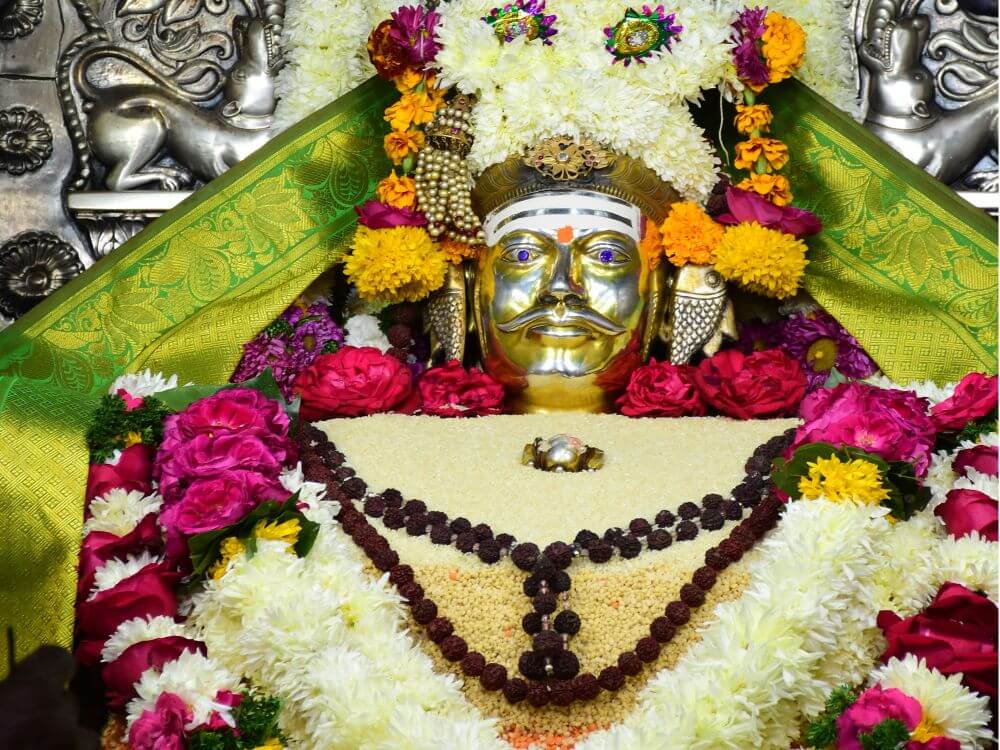
Shop Photo FramesThe temple of Shivayogi Siddharama, who is revered as the presiding deity of Solapur and is one of the six principal saints of the Veerashaiva/Lingayat community, is a major religious landmark of Solapur. The Samadhi of Siddharameshwar is also located within this temple. This temple is unique not only from a religious perspective but also from an architectural standpoint. One of its distinctive features is that, much like the Golden Temple in Amritsar, it is surrounded by a lake on all four sides. Notably, this lake was constructed by Siddharameshwar himself with the intention of resolving the water crisis faced by the people of Solapur. This temple serves as a place of faith for devotees from all communities, just as it does for the Lingayats.
Sonnalgi is the ancient name of Solapur. In the twelfth century, Siddharameshwar was born in this village. Regarding his birth, it is said that an elderly couple named Muddugouda and Suggaladevi lived in Sonnalgi. Muddugouda was the village headman. He was one of the Panchamahasiddhas in the Veerashaiva tradition. Revanasiddha, who was present there, once came to this village. He would reside in the scenic and tranquil surroundings of the Motibag located here. He had blessed Muddagouda and Suggaladevi that they would be blessed with a son. He had instructed that this son would be a manifestation of Lord Shiva, a Siddhayogi, and should be named Siddharama. According to that blessing, Siddharama was born. It is also said that at this time, he was given the name Dhulimahankal. Rudramuni, the disciple of Revanasiddha, imparted education to Siddharama during his childhood.
Siddharama was a devotee of Shri Shaila Mallikarjuna. Even as a young child, he insistently traveled to Shri Shaila to have the darshan of Mallikarjuna. It was here that Lord Mallikarjuna himself bestowed initiation upon him. Upon his return to Sonnalgi from this place, there was a remarkable transformation in his conduct, behavior, and thoughts. People began to call him Balayogi. He harbored a desire to construct a temple for Mallikarjuna at Sonnalgi. Although the Kalachuri dynasty ruled the region during that period, the sovereignty of Sonnalgi was held by King Nannappa and Queen Chamaladevi. Siddharama expressed his intention to build a temple. The very next day, Queen Chamaladevi visited his ashram and donated a land area of five kos to him. On this land, Siddharameshwar, with the voluntary labor of the villagers, constructed a vast lake similar to the Mallikarjuna temple. Throughout his lifetime, Siddharama performed many works for the welfare of the people. During times of famine, he operated a food shelter in the temple for the hungry. He facilitated the marriages of sons and daughters of many poor parents. He initiated the tradition of mass marriage ceremonies. Along with this, he guided many onto the path of righteousness. In Sonnalgi, he installed sixty-eight Shiva Lingas as well as the Ashtavinayakas. It is said that after meeting Allamaprabhu, he was influenced by the Veerashaiva philosophy. He also met Mahatma Basaveshwara at Basavakalyan, the center of the Veerashaiva revolution. He held the position of the third president of the Anubhava Mantapa established by Basaveshwara. He was a great Vachanakara. His Vachana literature is immense. It is said that he composed sixty-eight thousand Vachanas. Upon becoming aware of the conclusion of his life’s incarnation, he attained Samadhi at Sonnalgi itself.
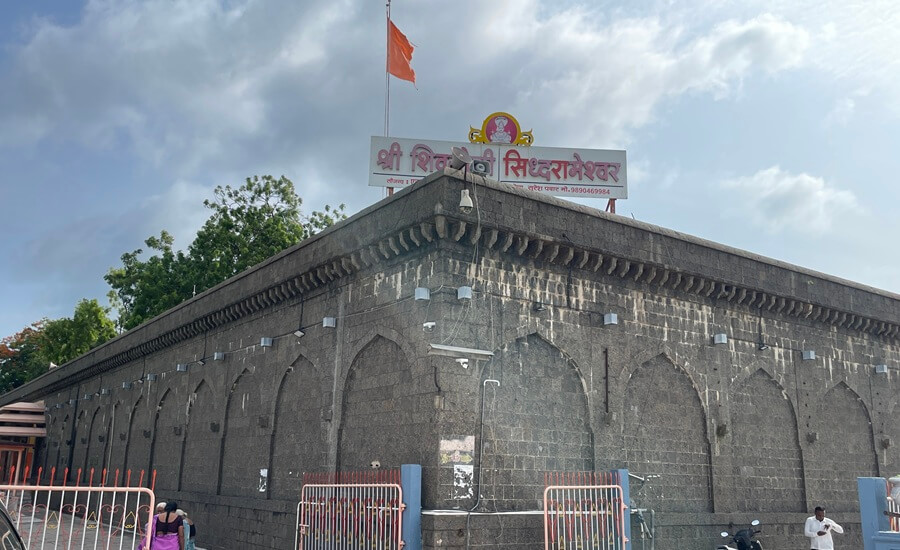
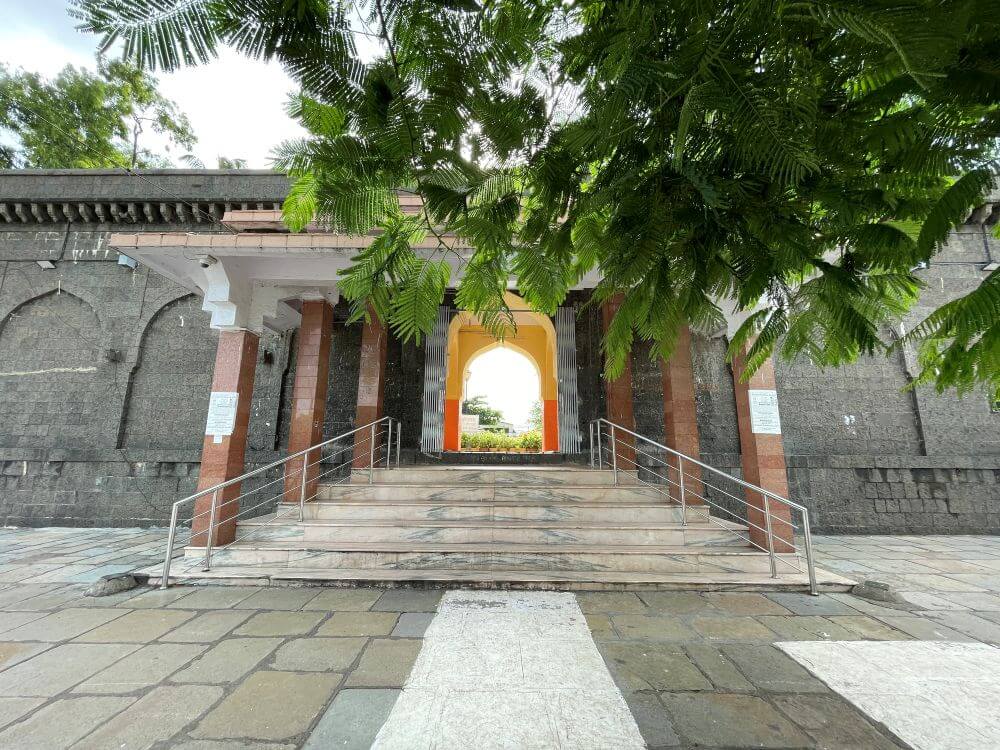
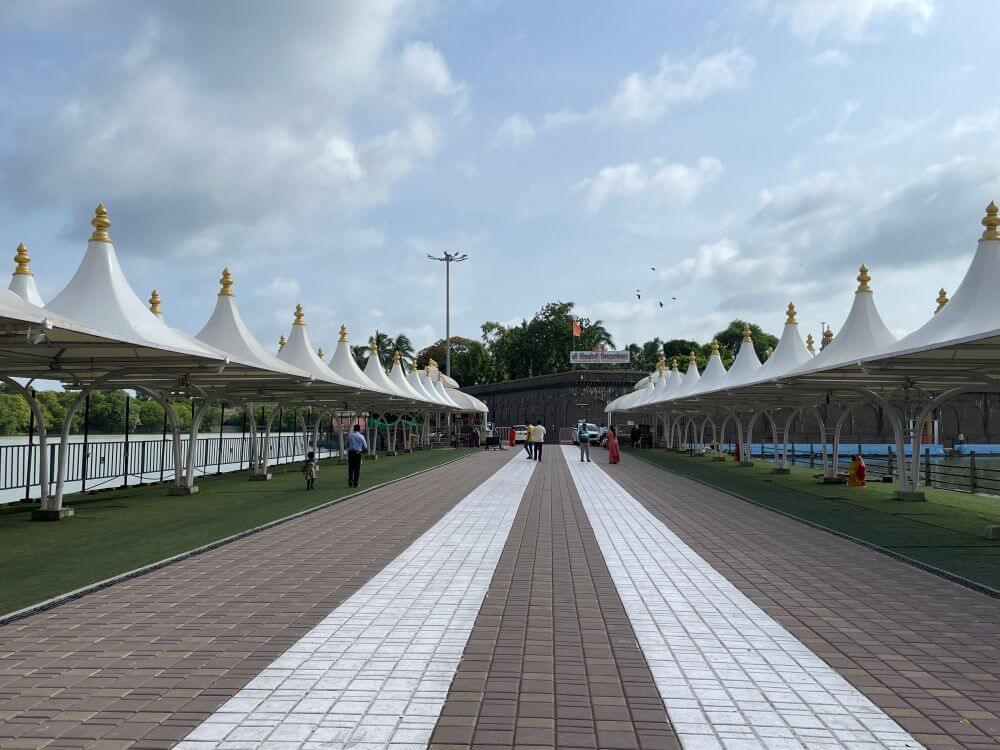
The Siddharameshwar Temple is situated in the middle of a lake, which makes the temple premises appear beautiful. The main entrance of the temple is located near a spacious parking area. One enters the temple courtyard through this entrance. A unique roof has been constructed on both sides of the path leading from the entrance to the temple for the convenience of the devotees. On this path, one first encounters the Samadhi of Shiva Siddharameshwar. This Samadhi site is on a marble platform, and there is a circumambulation path around it. Before having Darshan in the main temple, devotees pay their respects at this Samadhi.
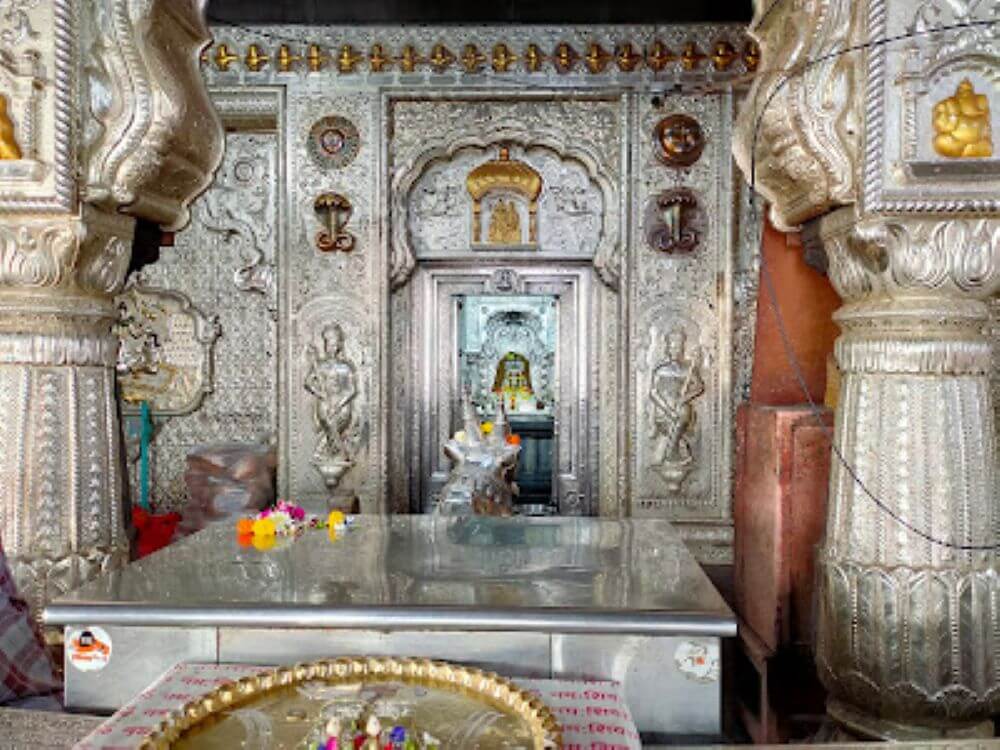
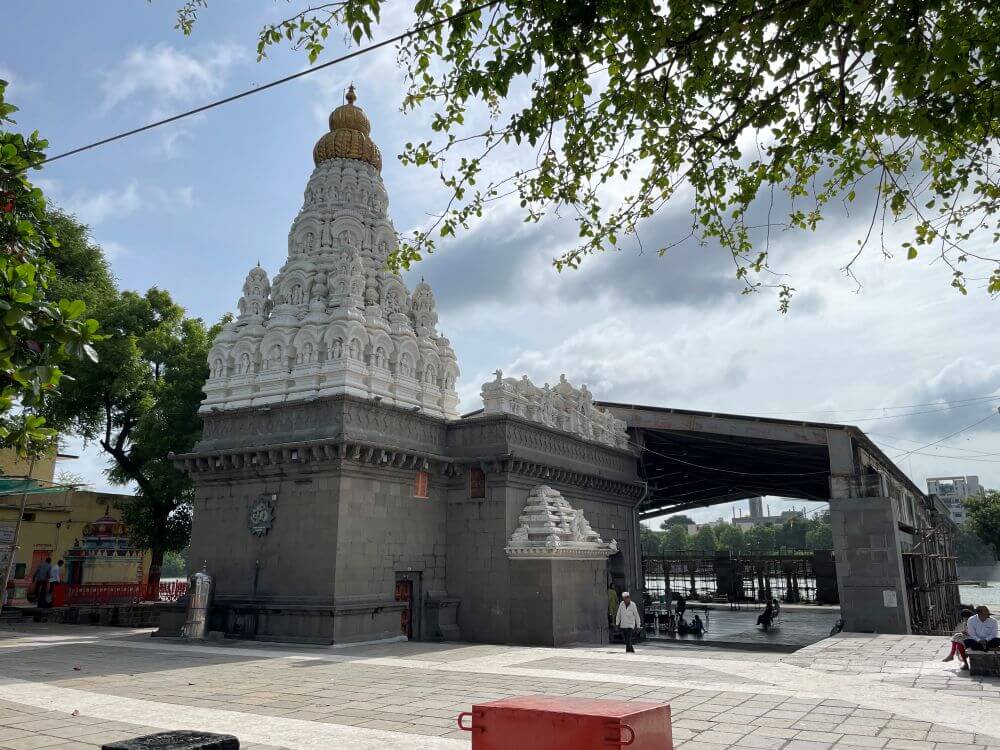
The Siddheshwar Temple, constructed during the Peshwa era, is a spacious stone structure. The temple’s architecture consists of an open mandapa, a sabha mandapa, an antarala, and a garbhagriha. Situated on a high plinth above the ground, the temple is entered through the open mandapa. The temple entrance features three arched doorways. One enters the sabha mandapa through the central doorway. This entire The pillars, walls, and ceiling of the assembly hall are adorned with metal sheets. A massive chandelier is suspended from the ceiling of the assembly hall. From this assembly hall, devotees take darshan of the Samadhi of Siddharameshwar located in the sanctum sanctorum. At the entrance of the sanctum sanctorum, there are guardian deities on both sides and an idol of Lord Ganesha on the lintel. Directly in front of this entrance stands a large silver idol of Nandi. The seat of Siddharameshwar Maharaj is situated on a high Vajra-pitha within the sanctum sanctorum. The main spire above the sanctum sanctorum features idols of various deities. At the apex of the spire, there are two Amalakas topped by a Kalasha. It is said that there are 68 Shiva Lingas in this temple complex, which were established by Siddheshwar Maharaj.
At the Siddheshwar Temple, devotees can have darshan daily from seven in the morning until eight in the evening. Aarti is performed here at seven-thirty in the morning and seven-thirty in the evening. The most famous festival at this temple is the ‘Gadda’ Yatra, which takes place during Makar Sankranti. This pilgrimage lasts for fifteen days. During this Yatra, a highly unique and symbolic wedding ritual is performed. The legend regarding this is that Saint Siddharameshwar was a great ascetic celibate. Once, a potter’s daughter expressed her desire to marry him. Then, Siddharam said, ‘I am a Lingangi. I am performing my spiritual practice with the sentiment that Mallikarjun is my husband and I am his sati. So, how can one woman marry another woman?’ Upon this, the potter’s daughter pleaded with him earnestly. Then, he told her to marry his yoga staff. Siddharameshwar himself was present at this symbolic wedding ceremony. Believing that she had attained spiritual liberation after this, the potter’s daughter jumped into the sacrificial fire and became a sati.
During the pilgrimage, the ‘Nandidhwaja’ here is considered the symbolic groom. Special rituals are performed during the wedding ceremony over three days: Bhogi, Sankrant, and Kinkrant. During this period, rituals such as the procession of the ceremonial staffs (Kathis), Homa, and Akshata Puja are conducted. Sankrant is the main day of the pilgrimage. At this time, thousands of devotees from Solapur and various other districts arrive here. On this occasion, Mahaprasad is served to all the devotees.
This sacred temple stands as a testament to deep spiritual devotion, ancient architectural grandeur, and rich local cultural traditions.
The sanctum sanctorum houses the divine idol consecrated according to ancient Vedic traditions, surrounded by serene courtyards and traditional temple architecture.
Navratri, Maha Shivratri, Annual Temple Jatra & Deepotsav
Compare and book flights, secure top-rated local hotels near the temple, hire reliable guides, and rent cars instantly.
Extend your pilgrimage by visiting other highly sacred temples located nearby.


Add ₹999 more to unlock FREE SHIPPING!
Your sacred cart is currently empty.
Shop Photo FramesFill in your delivery details below to place your order.
Add comment