
Add ₹999 more to unlock FREE SHIPPING!
Your sacred cart is currently empty.
Shop Photo FramesMatheran is famous as a hill station. For the British officers of that era, who were troubled by the heat, Matheran was nothing short of heaven. In the year 1850, Hugh Poyntz Malet, the Collector of Thane, discovered Matheran. Lord Elphinstone, the then Governor of Mumbai, developed Matheran between the years 1855 and 1858. The Neral to Matheran railway line was constructed in the year 1907. Of course, a folk culture that lived in harmony with nature existed here even before the British, which is proven by the presence of ancient temples here. Among these, the Pisharnath Temple, an important temple and the presiding deity of Matheran, is famous. Devotees believe that the Swayambhu Mahadev here grants their wishes.
The legend of this temple is that a milch cow belonging to a cowherd from a nearby settlement of the Gavli community had stopped giving milk. Therefore, to find the reason, he kept a close watch on the cow. Then, that cow He saw the cow releasing her milk under a healthy Pisha tree. Pisha is a tree similar to Jamun, and according to Ayurveda, its leaves are known to be virility-enhancing. Upon clearing the fallen leaves under this tree, the cowherd discovered a Shiva Linga there. The cowherd shared this incident
informed the villagers. Some time later, all the villagers together built a small temple at this place. As the divine grace of this deity began to be experienced, many devotees started coming here for darshan. Because He manifested under a Pisa tree, this deity came to be known as ‘Pisarnath’.
According to the Kolaba Gazetteer published in the year 1883, there were originally only three Hindu temples here. One of them was dedicated to Maruti, which was built in the year 1874 through public contributions. The second was a Shiva temple, which was erected in the year 1870, and the third was the temple of Pisarnath. This was originally the deity of the Dhangar community. It is from this that the forest in Matheran is known as the Pisarnath forest. It has been named thus. This deity fulfills vows, and to fulfill their vows, people offer bells to him. The gazetteer states that there is not a single spot left in the temple where bells have not been tied. In the book ‘Hill of Beauty, Matheran Centenary: 1850-1950: A Guide Book and History’ by Dinu S. Bastavala, a legend of the temple is mentioned, stating that Chhatrapati Shivaji Maharaj and his commander Netaji Palkar used to visit this temple for darshan. During the time of Shivaji Maharaj, a saint named Pashunath or Pisharnath or Pisarnath lived here. The Marathi edition of the Raigad Gazetteer states that the temple might have been named Pisarnath after him. The esteemed Jagannath, also known as Nana Shankarshet of Mumbai, had deep faith in this village deity of Matheran.
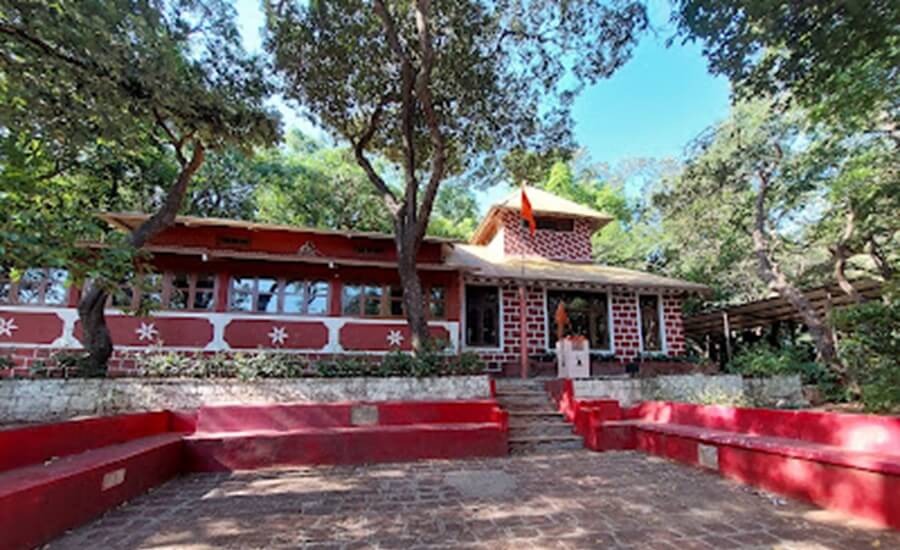
The first welcome arch of the temple is located on the road leading from Matheran market towards Charlotte Lake. The structure of the welcome arch consists of square pillars on both sides with a replica of the temple placed centrally on the horizontal beams above them. The temple is situated about two kilometers from this point. There are many food stalls along the path to the temple. As this site is at a high elevation, one must climb some steps to enter the temple courtyard. It is said that this sacred place dates back about four hundred to five hundred years. According to records in the gazetteer, there was only a simple platform at the site of the Pisarnath temple until the year 1929. In that year, devotees built a temple here. The temple attained its current form after renovations carried out in recent years.
The temple has a sturdy perimeter wall and a second welcome arch within it. A marble inscription on the pillars of the arch states that it was built on 1 November 1943. In the paved courtyard of the temple, there are seating arrangements for devotees all around. In the courtyard Due to the large trees everywhere, there is shade here throughout the day.
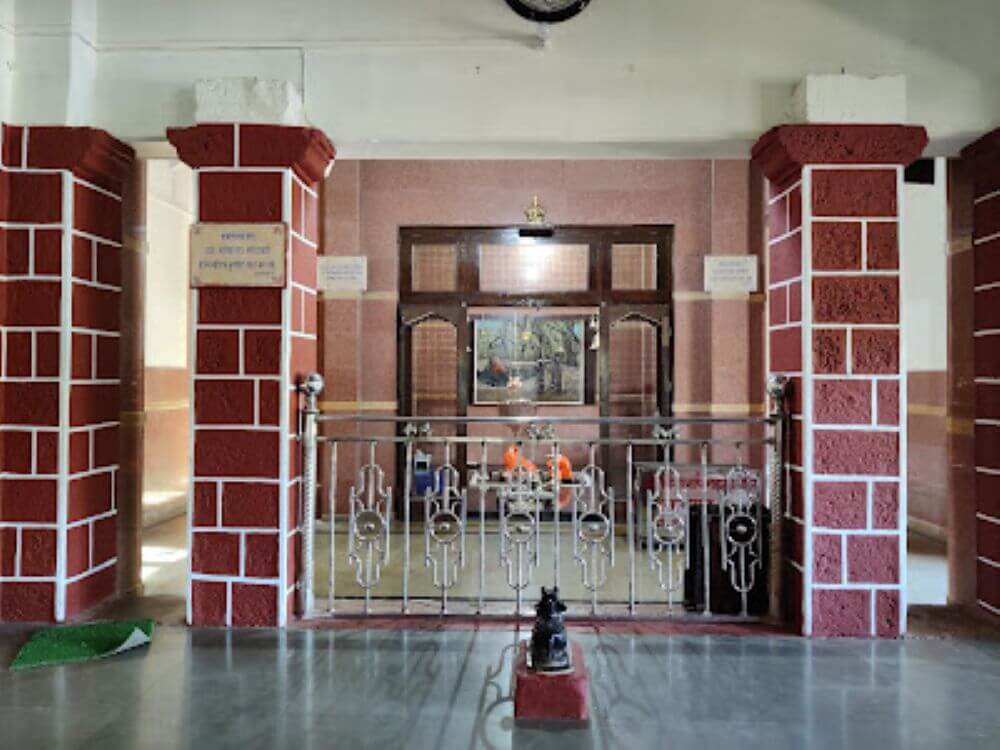
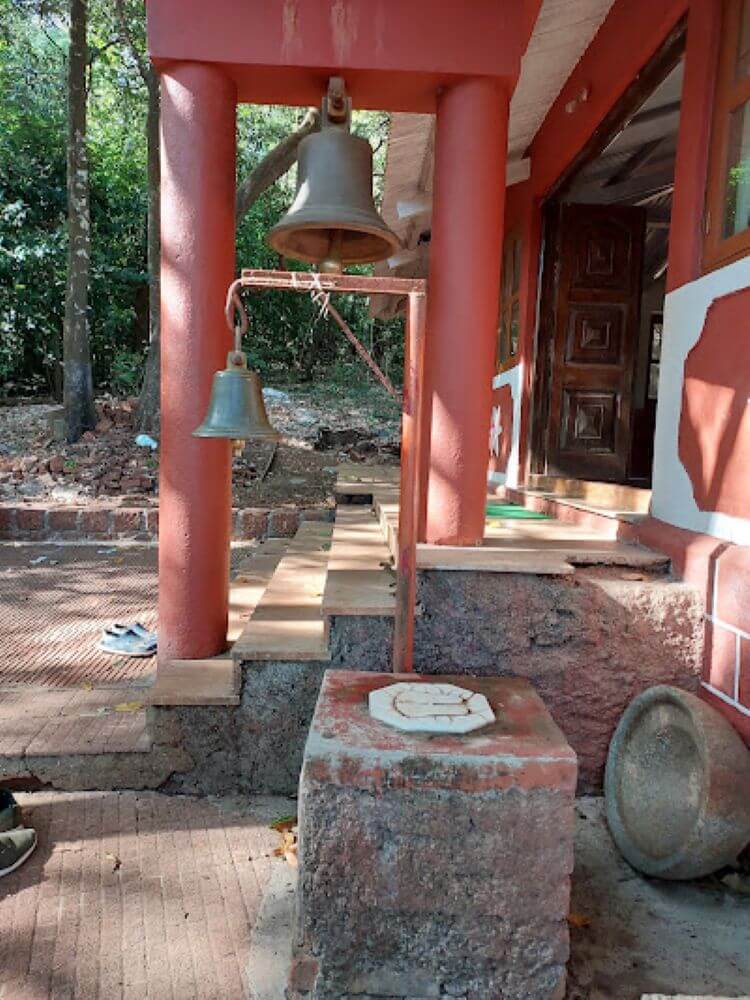
The structure of this temple consists of an Ardhamandapa (entrance porch), a Sabhamandapa (main assembly hall), an Antarala (vestibule), and a Garbhagriha (sanctum sanctorum). The temple is situated on a high Jagati (platform) and is accessed by five steps. The Ardhamandapa is designed with four circular pillars supporting a flat ceiling. A large brass bell is suspended from the ceiling; when rung, its sound carries to a great distance, and its resonance lingers within the temple for a long time. Further ahead lies the spacious entrance to the Sabhamandapa.
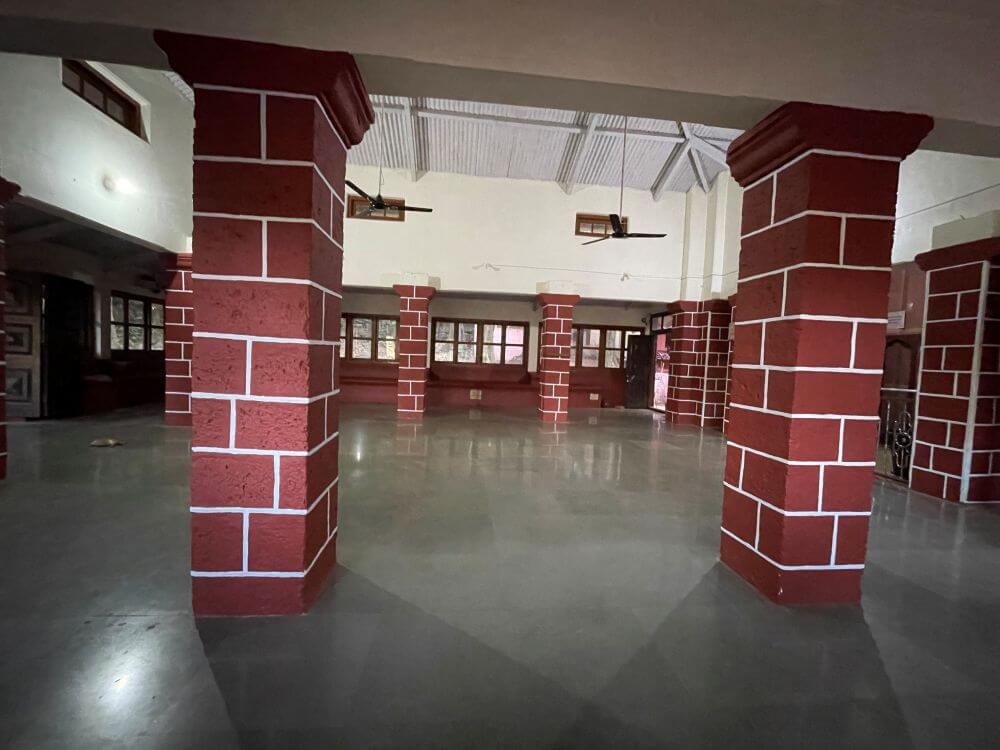
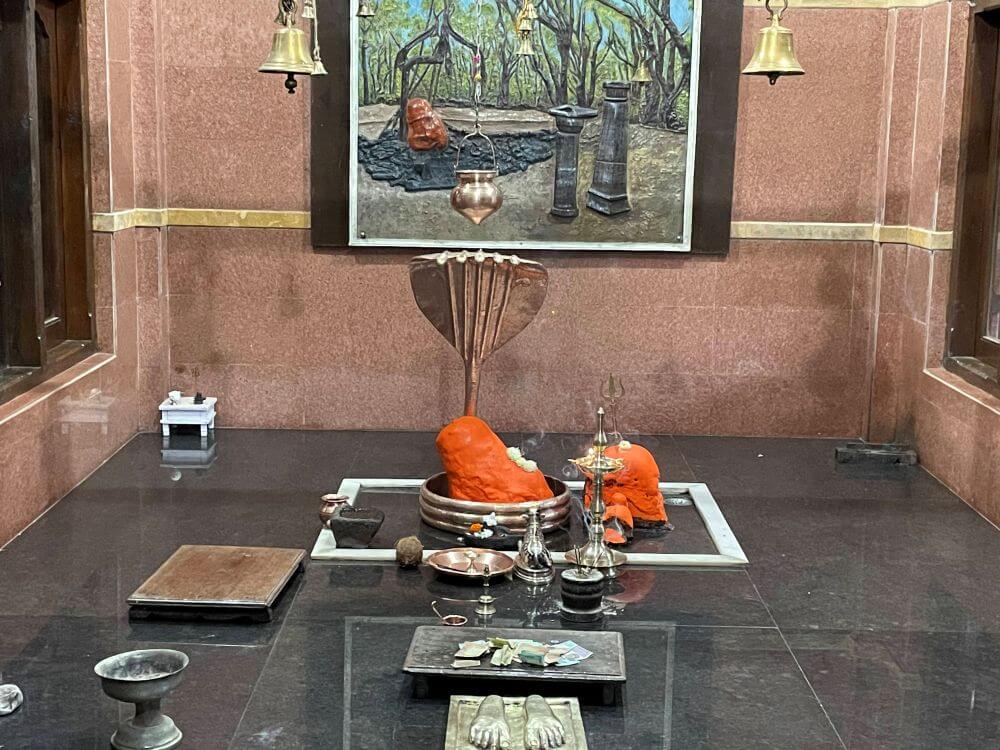
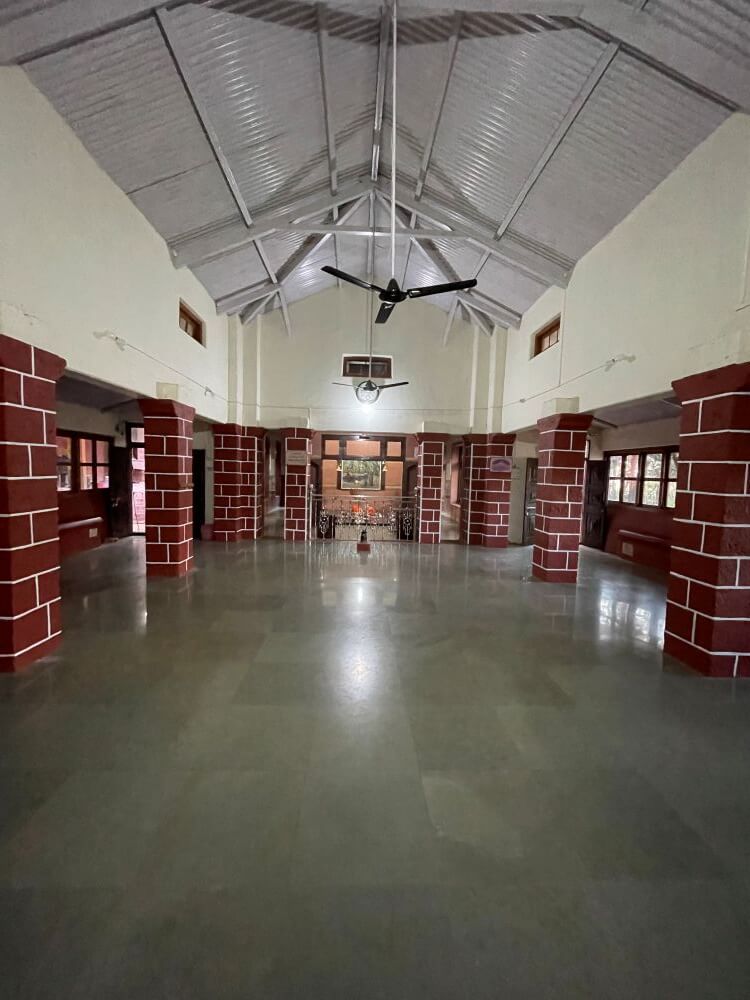
The enclosed assembly hall features half-walls topped with wooden windows fitted with transparent glass. The assembly hall is supported by eight square pillars. The ceilings of both the assembly hall and the inner sanctum are divided into upper and lower sections. On the floor of the assembly hall, there is a tortoise sculpture, and a statue of Nandi is placed on a pedestal facing the inner sanctum. Further ahead lies the wooden entrance to the sanctum sanctorum. Because the shutters of the entrance and the windows are fitted with transparent glass, one can have darshan of Pisarnath Mahadev within the sanctum even through the closed doors and windows. Inside the sanctum, there are two self-manifested stones on the floor and a Shivling in the shape of the English letter ‘L’. A brass serpent encircles the Shivling, with its hood spread over the linga like a canopy.
It is mandatory to wear a traditional silk garment (sovale) to enter the sanctum sanctorum for darshan. Before entering the sanctum sanctorum, devotees must leave all leather items they are carrying outside. There is a circumambulation path (pradakshina marg) on the outer side of the sanctum sanctorum. The roof of the sanctum sanctorum features a four-sided sloping roof topped with a pinnacle (kalash). The influence of British architectural style is evident in the construction of the temples. The dense greenery surrounding the temples on all four sides and the adjacent vast Charlotte Lake create a beautiful blend of spiritual peace and natural beauty here.
Maha Shivaratri is the main annual fair celebrated here with great enthusiasm. At that time, thousands of devotees come for the darshan of the deity and to fulfill their vows. On the occasion of Maha Shivaratri and during the month of Shravan, programs such as Laghurudra, Mahabhishek, Bhajans, Kirtans, and Pravachans are organized here. Mahaprasad is distributed to the devotees. Many tourists visiting Matheran make it a point to come for the darshan of this village deity. The number of devotees visiting here is significant every Monday, as well as on Purnima, Amavasya, Pradosh, and other auspicious days.
This sacred temple stands as a testament to deep spiritual devotion, ancient architectural grandeur, and rich local cultural traditions.
The sanctum sanctorum houses the divine idol consecrated according to ancient Vedic traditions, surrounded by serene courtyards and traditional temple architecture.
Navratri, Maha Shivratri, Annual Temple Jatra & Deepotsav
Compare and book flights, secure top-rated local hotels near the temple, hire reliable guides, and rent cars instantly.
Extend your pilgrimage by visiting other highly sacred temples located nearby.


Add ₹999 more to unlock FREE SHIPPING!
Your sacred cart is currently empty.
Shop Photo FramesFill in your delivery details below to place your order.
Add comment