
Add ₹999 more to unlock FREE SHIPPING!
Your sacred cart is currently empty.
Shop Photo FramesNestled in the Sahyadri ranges and at the foothills of Matheran in Panvel taluka stands the ancient Gadheshwar Temple dedicated to Lord Shiva. According to legend associated with this sacred place, the cursed King Gandharvasena performed rigorous penance here in the form of a donkey. Pleased with his devotion, Lord Shiva Himself manifested before him and liberated the king from his curse, which is why this Shivling came to be known as ‘Gadheshwar’. The nearby Gadhi River and Gadheshwar Dam also derive their names from this mythological legend. Built of stone, this temple serves as a cultural center for the Agri-Koli community, and a grand fair is held here on Mahashivratri. Due to its natural beauty and spiritual serenity, this place has become a major destination for tourists and nature lovers.
The story of the Gadheshwar Temple goes that King Gandharvasena of Ujjain was cursed due to a mistake in the court of Lord Indra (Indrasabha). Consequently, he was condemned to be born on Earth in the form of a donkey. According to this curse, Gandharvasena had to take the form of a donkey during the day, while at night he could return to his original human form. Seeking redemption from this plight, he wandered through many places and eventually arrived at this dense forest area near Panvel, nestled within the Sahyadri mountain ranges. Finding solace in the lap of nature and peace at this place, and realizing that his liberation from the curse could only be attained through the grace of Lord Shiva, he resolved to undertake arduous penance.
While residing in this region, Gandharvasena offered unswerving devotion to Lord Mahadev, bearing the body of a donkey on one hand and the heart of a king on the other. Despite being in the form of a donkey, he continued his intense devotion and spiritual practice uninterrupted. Moved by his rigorous penance, Lord Shiva was pleased and granted His divine vision to Gandharvasena, liberating him eternally from the curse. A Shivling was consecrated at the very spot where the king reclaimed his glorious human form and where Lord Mahadev Himself manifested. As this event was associated with the donkey form and the king’s redemption, this Shivling earned the name ‘Gadheshwar’. The river on whose banks the king performed his spiritual austerities also came to be named the ‘Gadhi’ River, after Gandharvasena’s donkey form.
According to Puranic traditions, this region of the Sahyadri is considered the sacred land of Lord Parshuram, where numerous sages and ascetics performed penance. Gadheshwar is a manifestation of Lord Shiva Himself, and popular belief holds that the Shivling here is Swayambhu (self-manifested). The divine sanctity of this place is further enhanced as the Gadhi River, originating in the hills of Matheran, flows close to the temple. Although there is no concrete historical evidence regarding the exact age of the temple, local villagers believe that this sacred place has existed here for at least four generations. Panvel city is over 300 years old and served as a prominent market town and a major center for rice trade in the Konkan region during the Maratha Empire. The Gadheshwar Dam located adjacent to the temple is actually a weir built during the British era to regulate river water and supply irrigation for agriculture.
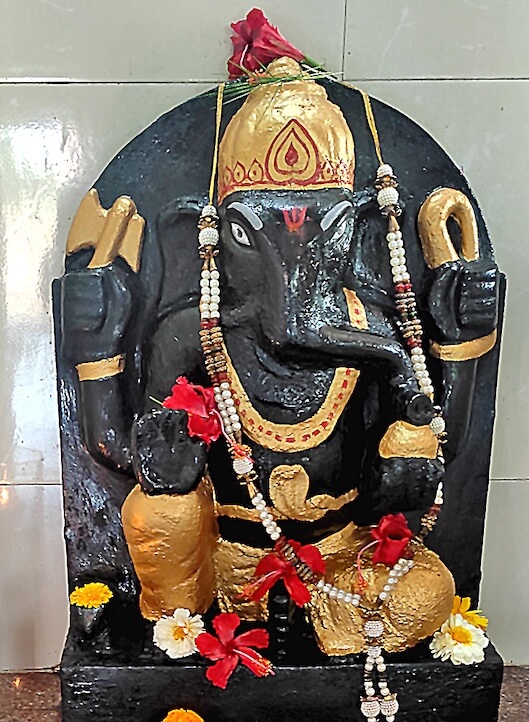
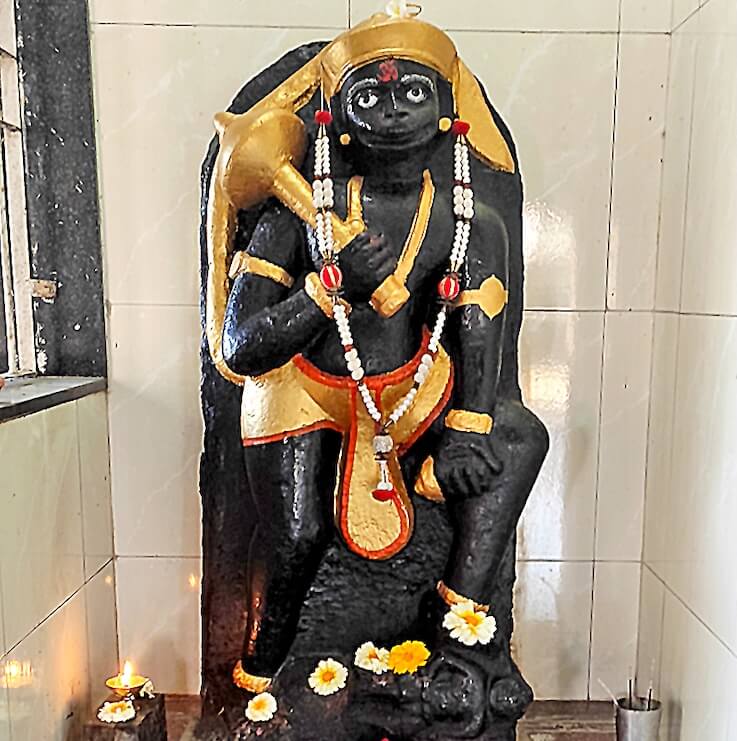
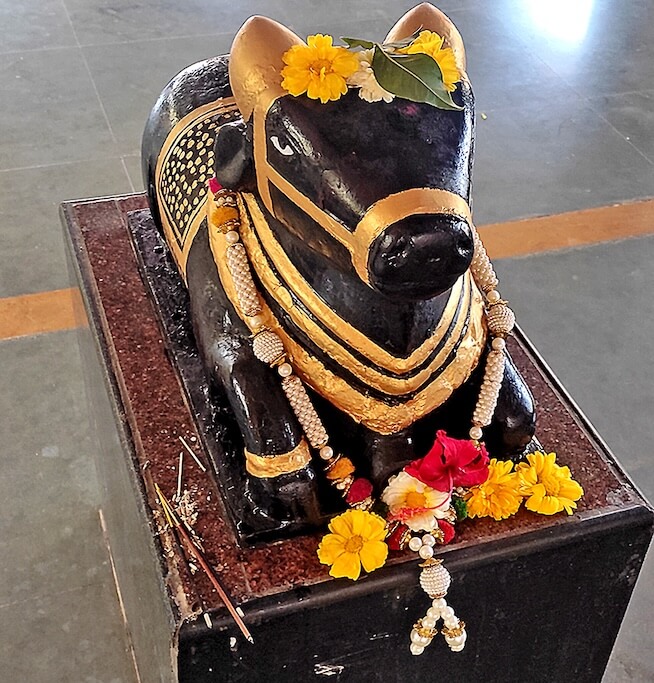
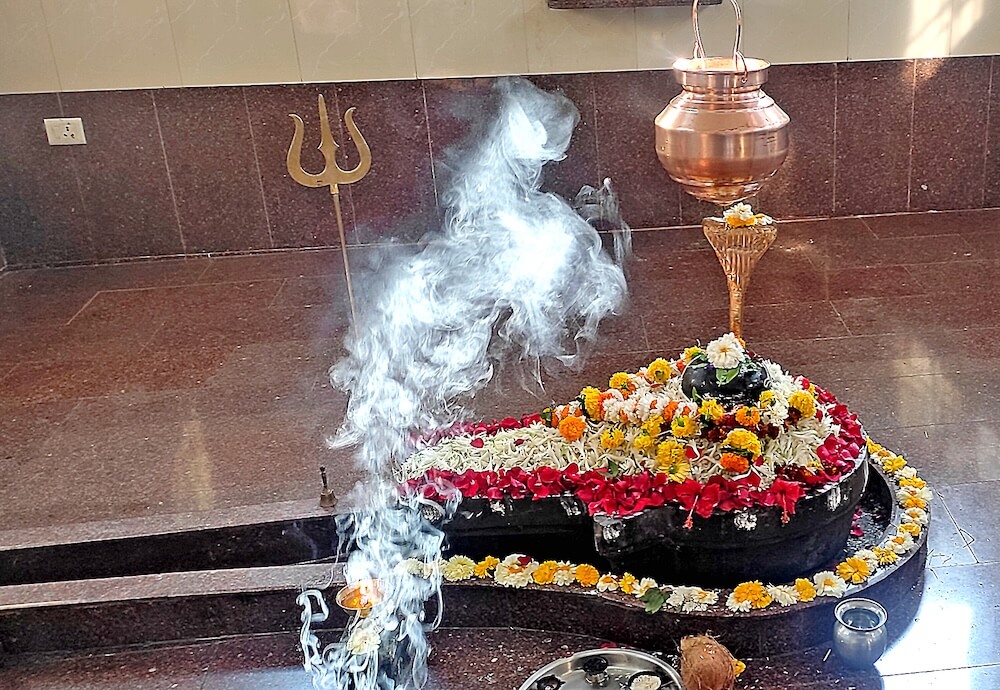
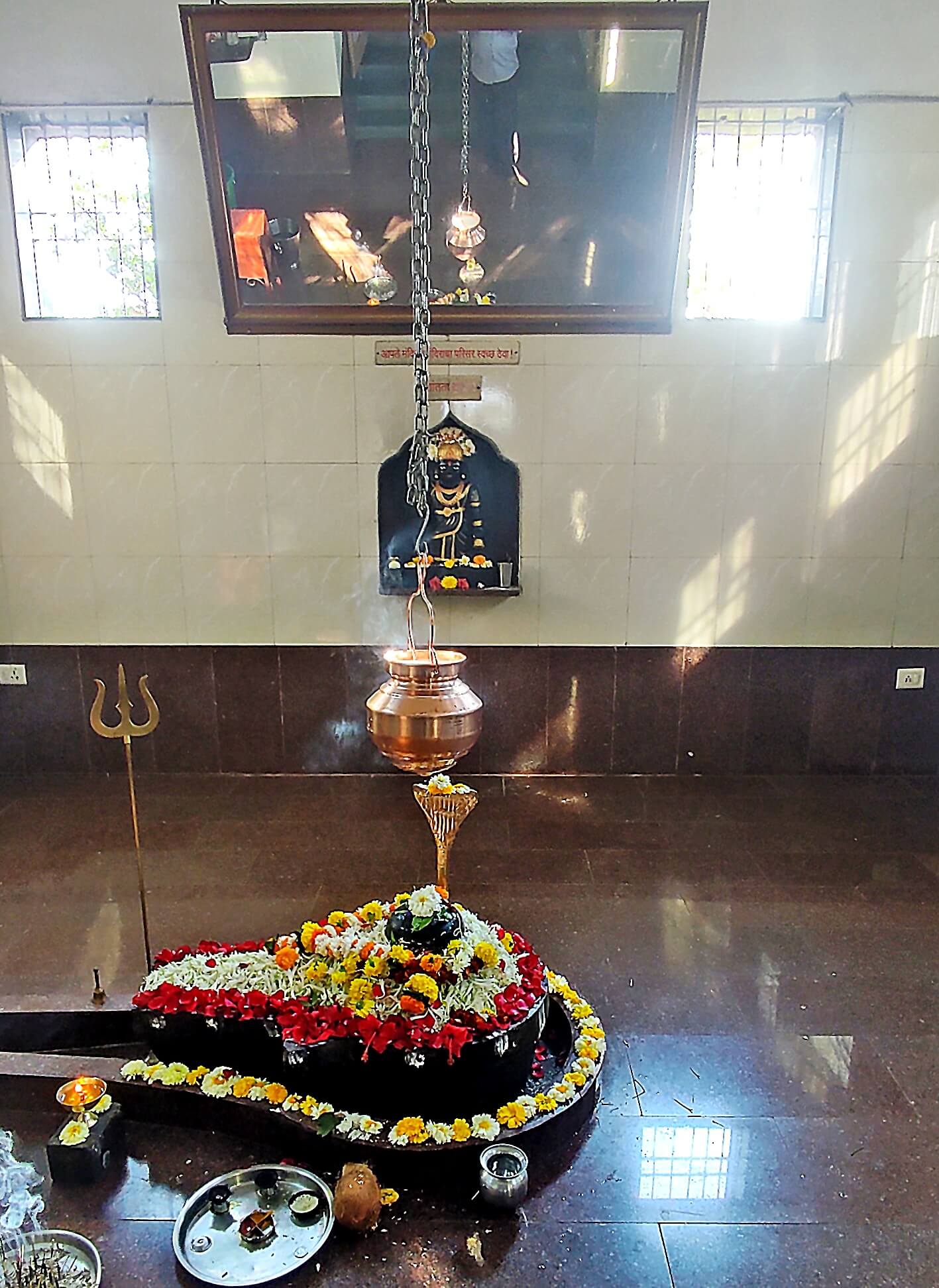
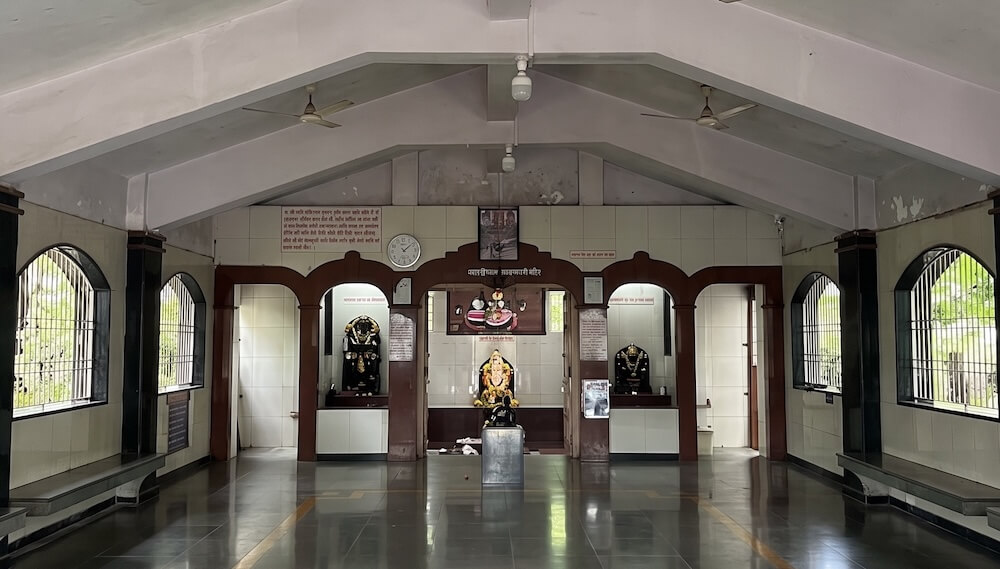
The temple is situated directly on the main route, about six kilometers from Nere village on the Panvel-Matheran road. Entering through a grand archway leads into the temple’s spacious courtyard. The temple received its present form following a renovation in the year 2012. The temple architecture comprises a Sabhamandap (assembly hall) and a Garbhagriha (sanctum sanctorum). In the Sabhamandap, built-in seating arrangements are provided for devotees. Near the entrance of the hall lies a sculpture of a tortoise, and near the entrance of the sanctum sanctorum stands an idol of Nandi on a raised pedestal. The niches on the front wall of the sanctum house idols of Lord Ganesha and Lord Hanuman. At the center of the Garbhagriha, the sacred Lingam of Gadheshwar Mahadev is enshrined. As the original Lingam was damaged, this new Lingam was consecrated here a few years ago. The original Shivling has been carefully preserved within the temple premises. Additionally, several ancient sculptures carved out of single stone blocks can be seen here.
Various religious festivals and social events are celebrated enthusiastically throughout the year at the temple. Mahashivratri is the grandest festival here, attracting thousands of devotees for darshan. On this occasion, special Abhishekam and pujas are performed at the temple starting from early dawn, accompanied by a grand fair. The holy month of Shravan also sees a large influx of devotees, with collective Aarti ceremonies organized especially on Shravani Mondays. There is an age-old tradition of celebrating Deepotsav on Tripura Purnima, during which the entire temple complex illuminates with the light of oil lamps. The cultural identity of the local Agri-Koli community shines prominently during these festivals. During the monsoon season, when the area surrounding Gadheshwar Dam turns lush green, tourists arrive in large numbers to spend time amidst nature and invariably seek blessings at the temple. Devotees can take darshan of Gadheshwar Mahadev every day from 6:00 AM to 1:00 PM and from 4:00 PM to 9:30 PM.
This sacred temple stands as a testament to deep spiritual devotion, ancient architectural grandeur, and rich local cultural traditions.
The sanctum sanctorum houses the divine idol consecrated according to ancient Vedic traditions, surrounded by serene courtyards and traditional temple architecture.
Navratri, Maha Shivratri, Annual Temple Jatra & Deepotsav
Compare and book flights, secure top-rated local hotels near the temple, hire reliable guides, and rent cars instantly.
Extend your pilgrimage by visiting other highly sacred temples located nearby.


Add ₹999 more to unlock FREE SHIPPING!
Your sacred cart is currently empty.
Shop Photo FramesFill in your delivery details below to place your order.
Add comment