
Add ₹999 more to unlock FREE SHIPPING!
Your sacred cart is currently empty.
Shop Photo FramesDiveagar is not only a tourist destination but is also famous for its ancient temples. Temples dating back hundreds of years still stand here in all their glory. Among these, the temples of Rupnarayan and Sundar Narayan, dating back to approximately the ninth century, are subjects of curiosity for both devotees and scholars due to their unique features. According to local records, Peshwa Madhavrao and his wife Ramabai visited this temple in the year 1772. Since the Peshwa era, this temple had been receiving an annual grant for performing rituals. Records indicate that the temple was renovated in the year 1960.
The village of Diveagar has an ancient history. From the year 825 to 1265, this region was under the rule of the Northern Konkan branch of the Shilaharas. Many copper plates dating back to the fifth century have been found here. In one such copper plate written in the Nagari script, dating back to 1027-28, Diveagar is referred to as ‘Deepakgar’. This copper plate was issued by the Shilahara King Chittaraja. It mentions that the King donated 200 Drammas (the currency of that time) to a Brahmin named Govinda of Deepakgar for the maintenance of a garden given to him by the commander Nagavarman. This same Chittaraja built the famous Shiva temple at Ambernath, and his brother Mummuni Raja repaired it. The copper plate of the Shilahara King Nagarjuna Mummuni Raja also mentions it as Deepakgar.
According to the book ‘Descriptive List of Inscriptions and Copper Plates of Maharashtra and Goa’ published by the ‘Maharashtra State Board of Literature and Culture’, this copper plate is in the Nagari script and dates back to 1053-54. It is a management document issued by Padmaladevi and renewed by the Shilahara King Mummuni Raja regarding the taxes collected from Deepakgar and other villages. The eleventh-century copper plate found in Diveagar is considered extremely important. This is because it is the oldest copper plate in the Marathi language. It is written in the Devanagari script and in the ancient Marathi language. It mentions the date as Shaka 982, Sharvari Samvatsara, Margashirsha Purnima (Friday, 10 November 1060). The summary of the copper plate is that Vasudev Bhat, a Brahmin from Dive village, deposited two copper plates related to the village of Sthitipuri, which were mostly in his possession, with a person named Mavalbhat in the main assembly presided over by Risiyappa Ghaisas and Sivu Shadangavid. He gave 127 gold Gadyanaka coins to a person named Damodar to ensure the smooth functioning of the assembly. All this is known to Risiyappa, Paunvdev Shadgavid, Tikai Shadangavid, Jivane, Nagarudra Bhat, Madhuvai Shadangavid, and Madhuvay Deval of Dive village. Also, all the gold coins mentioned are strung together in a necklace. This Marathi copper plate clearly mentions the village name as Dive. During this Shilahara period, the settlement of Arabs in the Konkan belt was increasing due to trade. The Prime Minister of the second Kadamba King Jayakeshi of Goa (1104 to 1147) was an Arab. Due to the frequent attacks by these Arabs and the Portuguese, the village of Diveagar was destroyed many times.
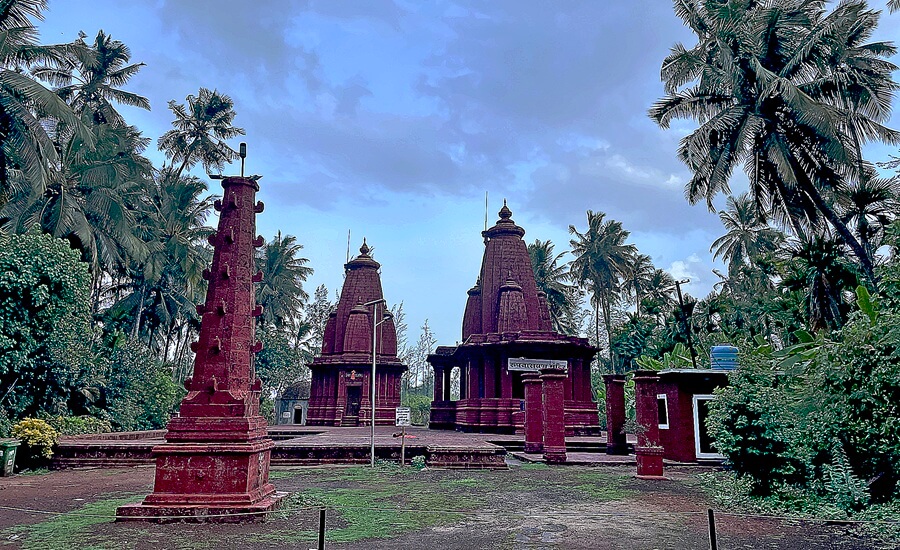
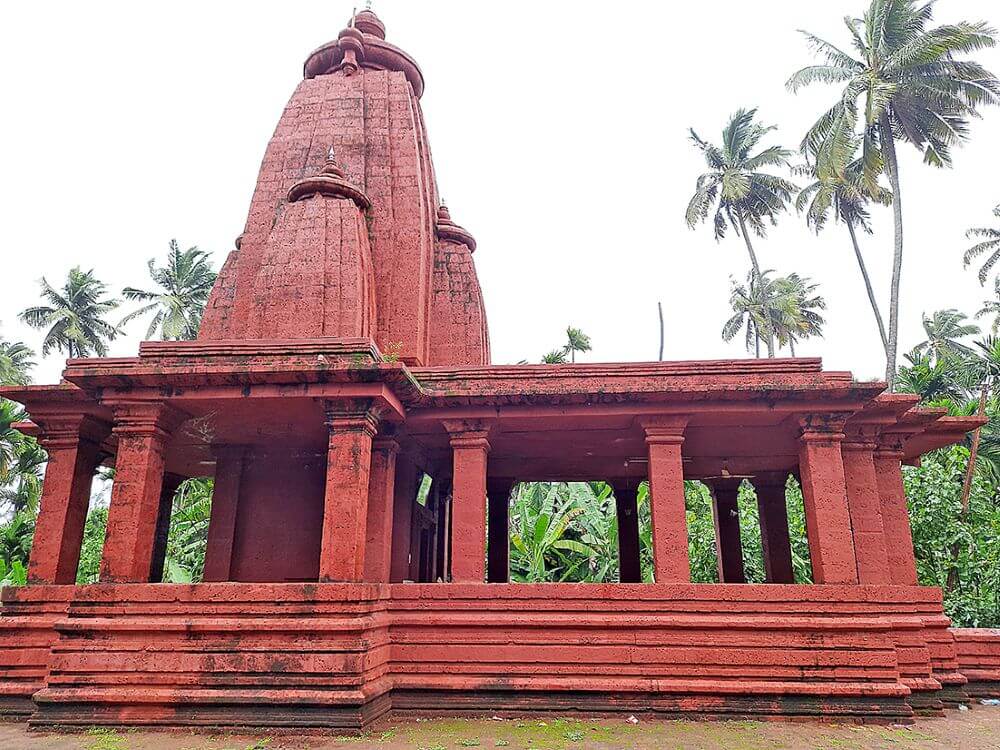
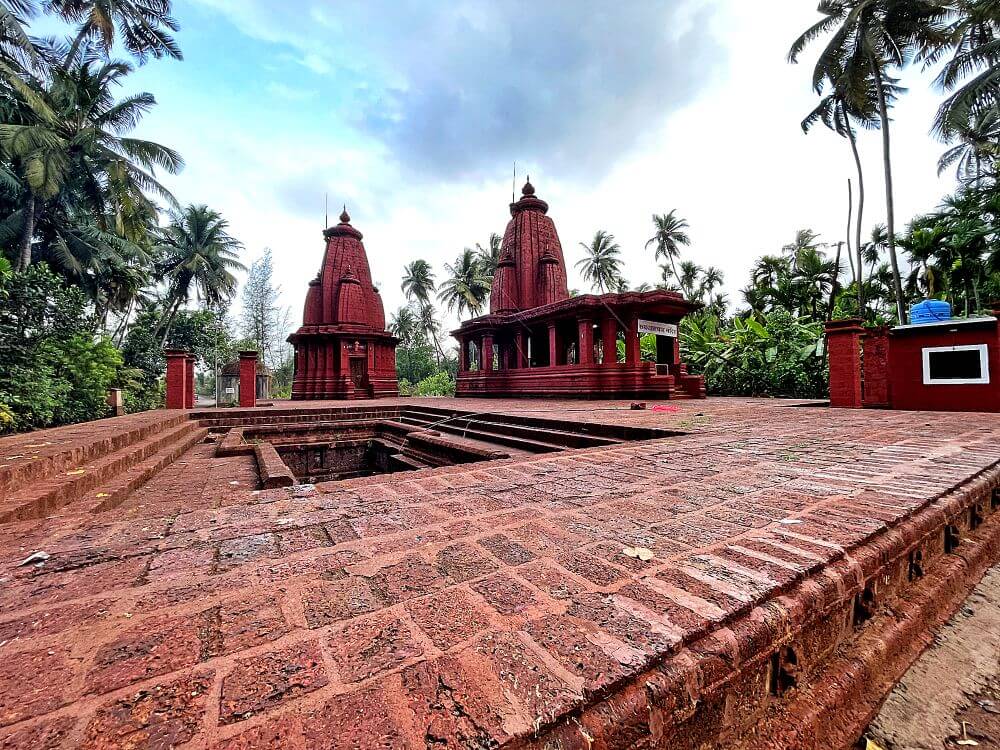
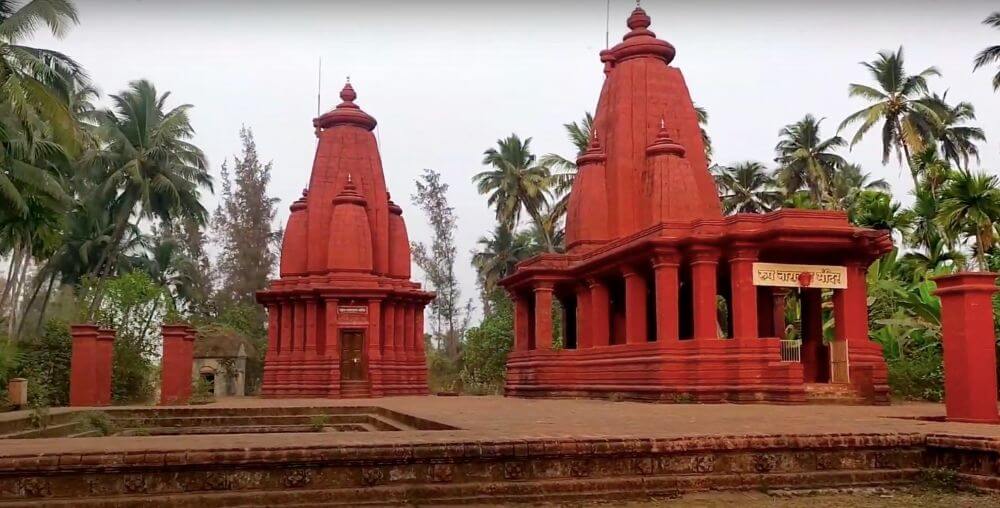
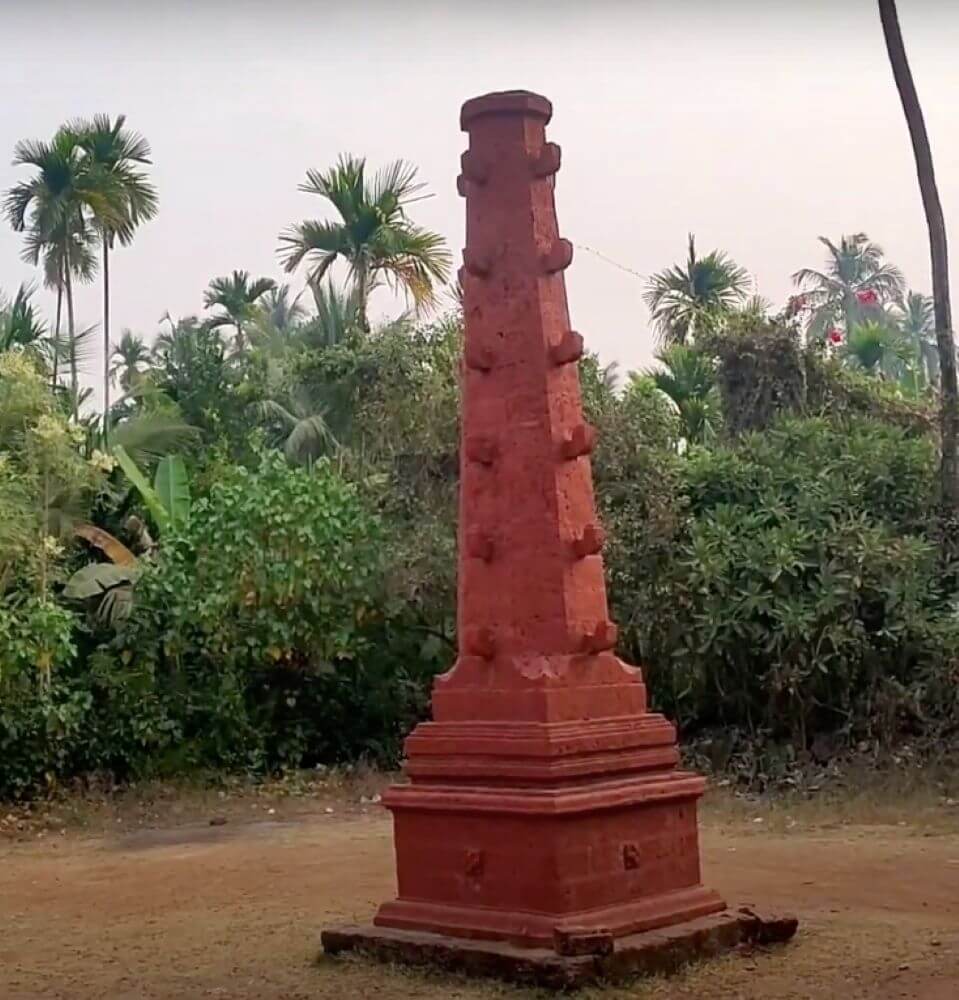
In this historically famous village, this beautiful and compact temple of Rupnarayan is situated near the seashore, amidst dense coconut and betel nut trees. The ancient temple was renovated in 1960. Recently, the temple has been renovated using laterite stone construction. There is a lamp pillar (Deepstambh) in front of this temple. The temple stands on a high plinth. There are four large laterite stone pillars in front of the temple. The structure of this temple consists of a porch (Mukhamandap), a main hall (Sabhamandap), and a sanctum sanctorum (Garbhagriha) excluding the circumambulation path. One enters the Sabhamandap after climbing a few steps from the porch. The Sabhamandap here is open-style and has stone benches (Kakshasanas) on the sides for devotees to sit.
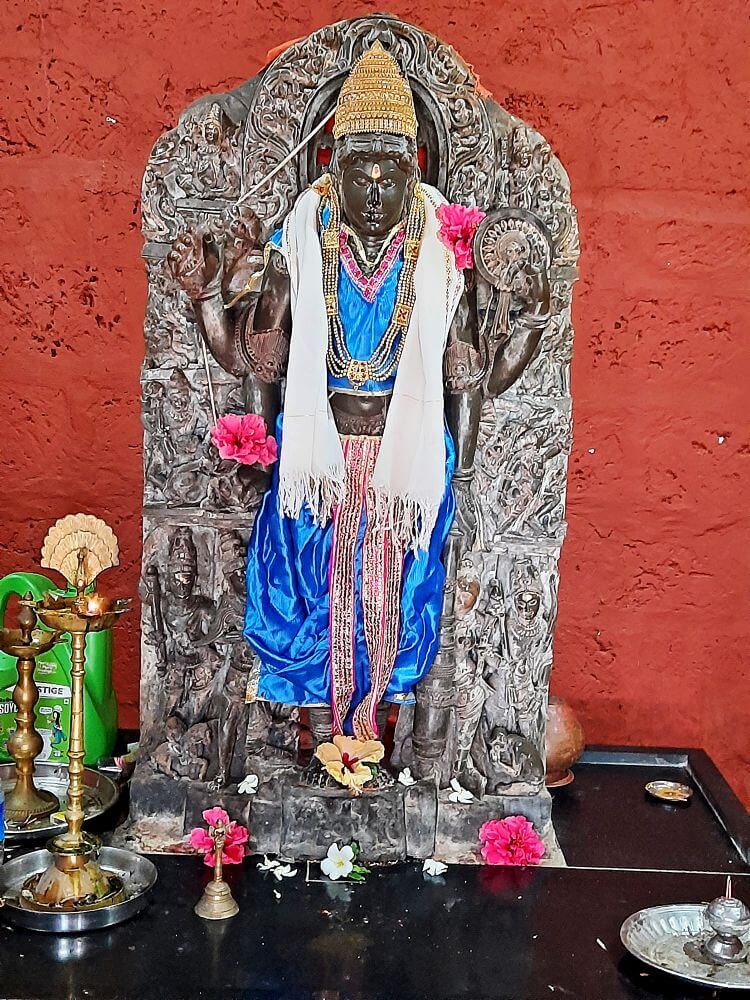
The unique idol of Rupnarayan in the sanctum sanctorum is about one and a half meters tall. According to scholars, this idol is carved from greenish-black marble stone from the Madhumala forest in Tamil Nadu. It is an excellent example of sculptural beauty. Scholars estimate that this idol belongs to the Shilahara period, i.e., from the ninth to the thirteenth century. During this period, the Konkan region was under the rule of the Northern Shilaharas. The delicate craftsmanship on this idol is unique. One can see Makara-shaped earrings, lotus-like eyes, pearl necklaces, the sacred thread (Janeu), a waistband on the garment at the waist, wristbands, and a loose necklace hanging down. Armbands are on the arms, rings on all fingers of the hands, and many ornaments are carved around the waist. Due to the lotus-shaped crown on the head and the Kaustubha symbol and tiger face on it, this idol is said to be of the South Indian style.
The Dashavatara (ten incarnations of Vishnu) are carved on both sides of the main idol. The Matsya, Kurma, Varaha, and Vamana (as a dwarf) incarnations, as well as the Narasimha incarnation fighting Hiranyakashipu, are worth seeing. Narasimha, who has caught Hiranyakashipu with his left leg, is holding his hair with his left hand. In the area behind the halo of the idol, sculptures of Lord Buddha and Krishna performing Kaliyamardana also catch the eye. On the shoulders of this Vishnu idol, the four-faced Brahma is found carved on the right side and an image of Shiva on the left. In the halo behind the head of the idol, there are Gandharvas holding lotuses and Vidyadharas wearing garments. In front of the temple, there is an ancient stone stepped tank (Pushkarini). Apart from this, there is also a temple of Sundar Narayan, another form of Vishnu.
A legend is told about the Rupnarayan temple that some years ago, foreign invaders tried to steal this idol. While they were taking the idol to their boat, the villagers resisted them. At that time, the thieves even opened fire on the villagers. After the idol was placed on the boat, the thieves’ vessel began to sink, so they abandoned the idol there and fled. In the first half of the twentieth century, when the idol was being coated with Vajralepa, a bullet was removed from the wheel (Chakra) of the idol. The temple remains open for devotees throughout the day. Tourists visiting here also make it a point to visit this temple.
This sacred temple stands as a testament to deep spiritual devotion, ancient architectural grandeur, and rich local cultural traditions.
The sanctum sanctorum houses the divine idol consecrated according to ancient Vedic traditions, surrounded by serene courtyards and traditional temple architecture.
Navratri, Maha Shivratri, Annual Temple Jatra & Deepotsav
Compare and book flights, secure top-rated local hotels near the temple, hire reliable guides, and rent cars instantly.
Extend your pilgrimage by visiting other highly sacred temples located nearby.


Add ₹999 more to unlock FREE SHIPPING!
Your sacred cart is currently empty.
Shop Photo FramesFill in your delivery details below to place your order.
Add comment