
Add ₹999 more to unlock FREE SHIPPING!
Your sacred cart is currently empty.
Shop Photo FramesIn Hindu Dharma, many religious traditions and sects emerged to propagate against the growing ritualism and caste discrimination. Among them, great rebellious saints, social reformers, and enlightened beings worked to bring society onto the righteous path by imparting new thoughts. While propagating these ideas, a Guru-shishya tradition was established, leading to the creation of many revered places of worship for holy personages. Bisalsiddheshwar is one such Siddha Purusha in this Guru-shishya tradition. His ancient shrine stands in the village of Achkanhalli. Devotees believe that by having the darshan of Bisalsiddheshwar, one attains the fulfillment of all desires.
In Kannada, ‘Bisal’ means sunlight or intense sun rays. It is said that Jataadhari Siddheshwar Swami was a yogi. He was a lifelong sannyasi. His attire consisted of a saffron lungi and a rudraksha mala around his neck. He would perform penance by sitting in the sun for twelve months, eight periods of the day. Hence, he came to be known as Bisalsiddheshwar. He resided in Kalyanpattana in Karnataka. It is also said that during the reign of the Dafale Sarkar of Jath, Bisalsiddheshwar resided for some time in Karajanagi village, which is nearby. From there, he came to Achyutpur, which is now Achkanhalli. In due course, he offered his body to the Shiva Linga here. Today, his samadhi mandir stands at that very spot.
An anecdote is told about this temple that Nandappagouda, the head of Mirwad and surrounding villages in Jath taluka, had a son named Mahalinga. He contracted leprosy at the age of twelve. Then, a Jangam from the village told him that a great ascetic named Siddheshwar resides in Kalyanpattana. If he went to him, his illness would be cured. Accordingly, Nandappagouda took Mahalinga to Siddheshwar Swami. They accepted the Swami’s discipleship. For twelve years, Mahalingappa served the Swami. By his grace, Mahalinga’s ailment was cured. After that, to test Mahalingappa, the Swami once told him, “I have told your mother that I will send you home after your illness is cured. So, go there and offer your service.”
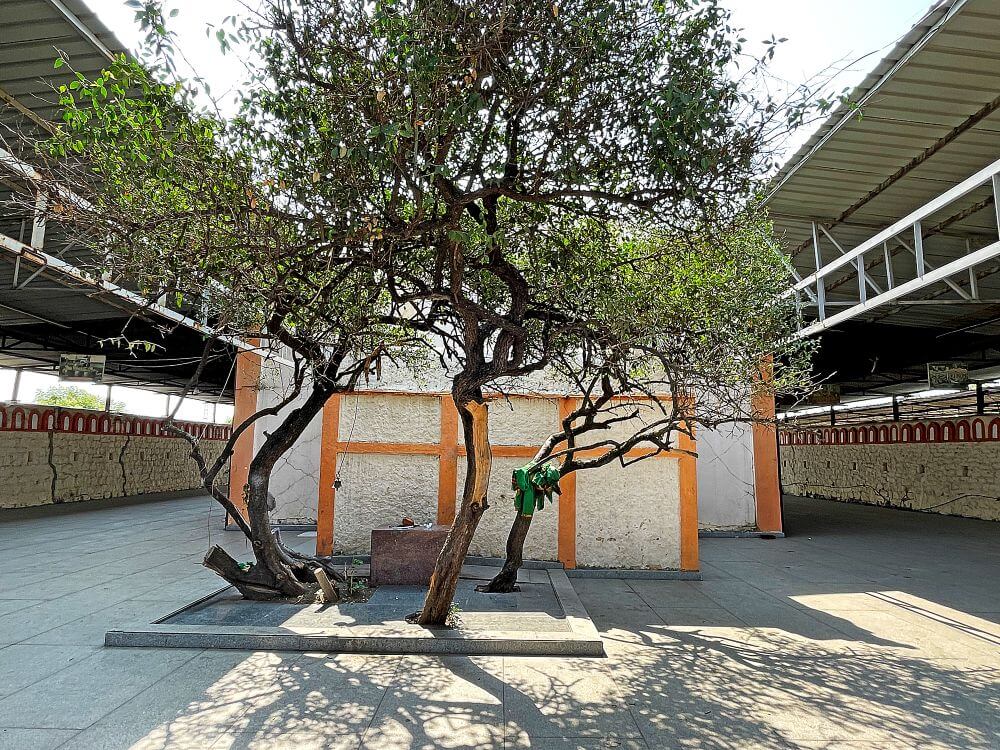
Accordingly, Mahalinga returned to his village, Mirwad. However, he would daily travel from Mirwad to Kalyanpattana and offer oblations of milk, curd, and ghee into the Agnikunda there. Bisalsiddheshwar Swami was pleased with his service. Once, as per Mahalingappa’s wish, while Swami was coming to Mirwad, he stayed for some time in Karajanagi. His devoted disciple Revanna resided there. After staying for some time in the old Shiva temple in that village, he proceeded to Mirwad. On the way, he stopped for rest under a tree in Achkanhalli. It was there that he firmly resolved to attain nirvana. One day, holding his Ishtalinga in his palm and fixing his gaze upon it, he left his mortal coil. Seeing this, his disciple Revanna also gave up his life. Upon hearing the news of their demise, Mahalinga also gave up his life, and his soul became one with Lingadeva.
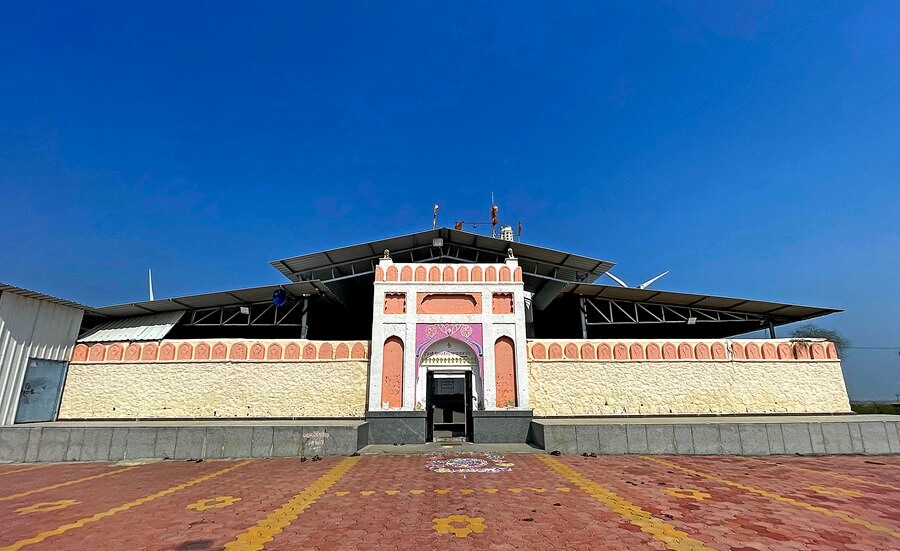
On the road leading to this samadhi mandir of Bisalsiddheshwar, there is a recently built welcome arch. On both sides are ornate square pillars, and on the connecting balcony in the center are a Shivpindi and Nandi idols on either side. In front of the temple is a spacious parking lot, and beyond that, a courtyard paved with paver blocks. Around the temple is a strong stone wall about twelve feet high. The entrance gate in the wall is about twenty feet high and has a horizontal shikhara. On the shikhara are lion sculptures on both sides. The entrance gate has five vertical and horizontal panels, and in the center is a semicircular arch.
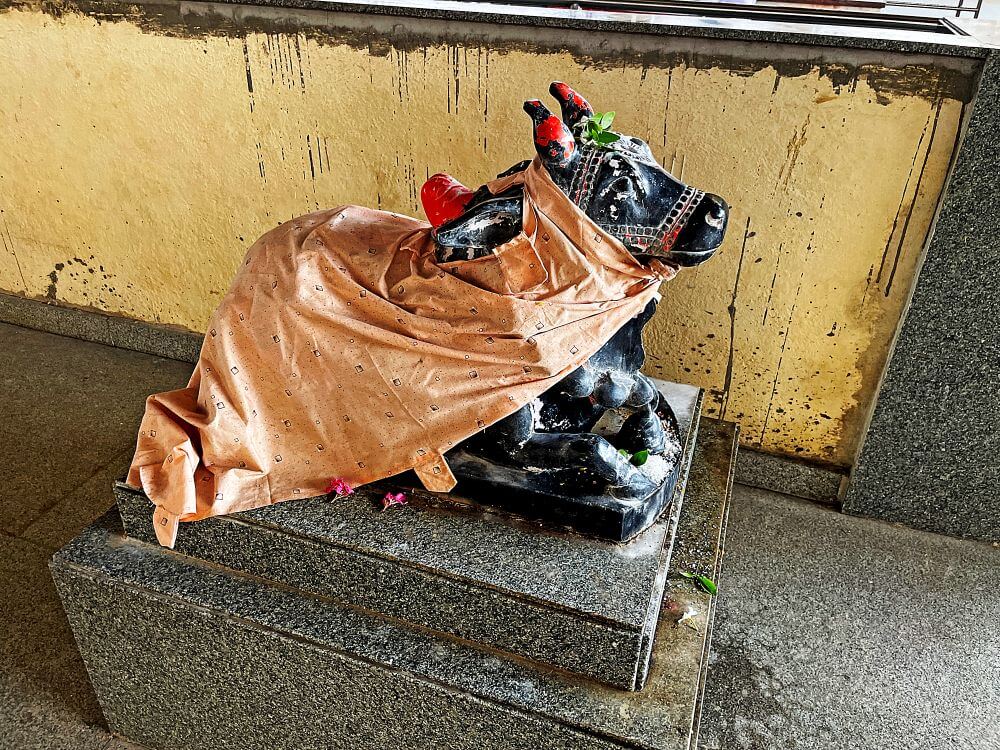
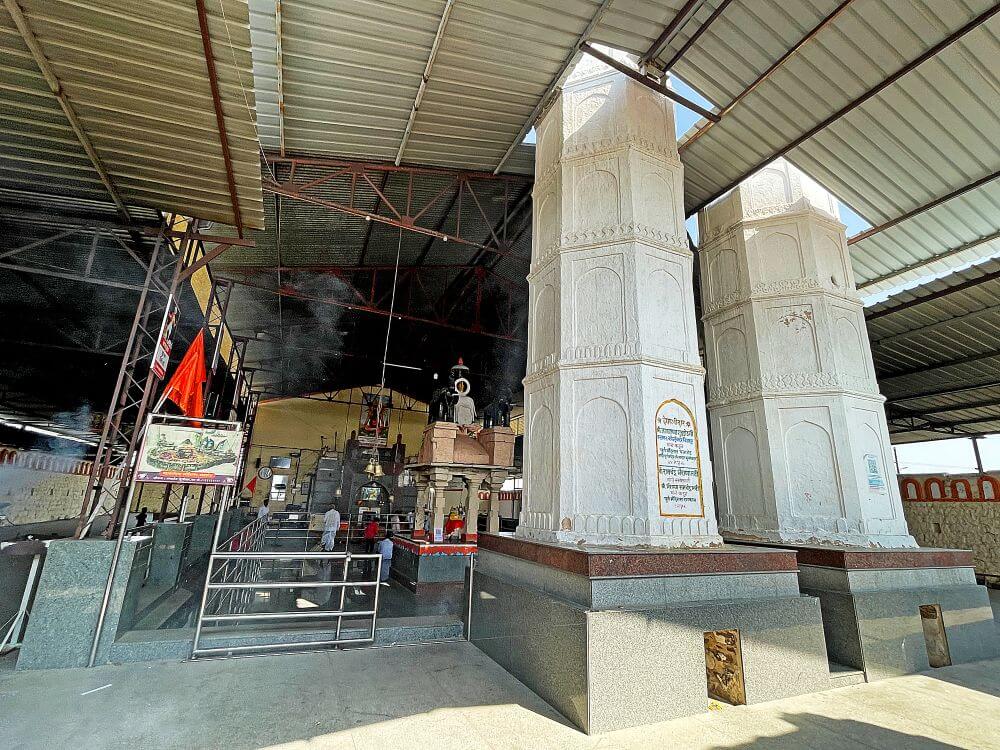
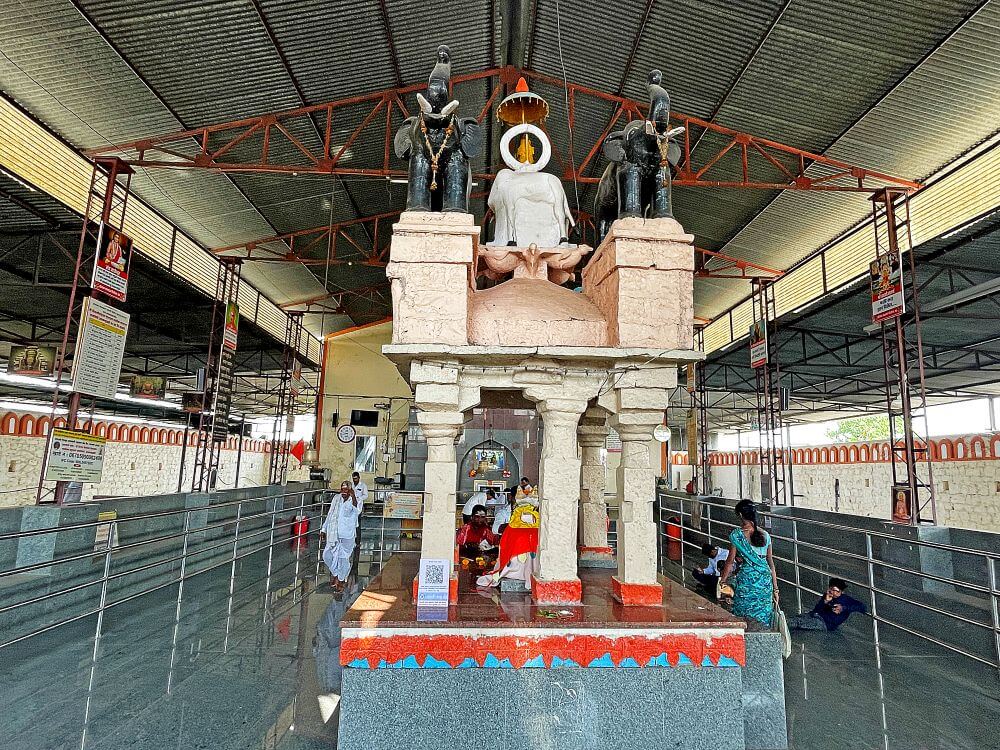
Upon entering through this gate, one steps into the spacious mandapa of the temple. A tin roof has been installed over this mandapa for the convenience of devotees. In the mandapa, two ornate Deepmalas (lamp towers) of eleven hexagonal tiers rise through the tin roof from two platforms. Beyond the Deepmalas is the Nandimandapa. In the Nandimandapa, which stands on a platform, there is a black stone idol of Nandi and six ornate pillars surrounding it. At the top of the vertical pillars on the pillar bases are cornices, above which are brackets, and on the beams above the brackets is the roof. On the front side of the roof are two Gajraj sculptures. In the center is an idol of Shri Krishna. In the Nandimandapa, there is a vermilion-smeared idol of Ganapati. In this mandapa, there is a queue system for managing the crowd of devotees.
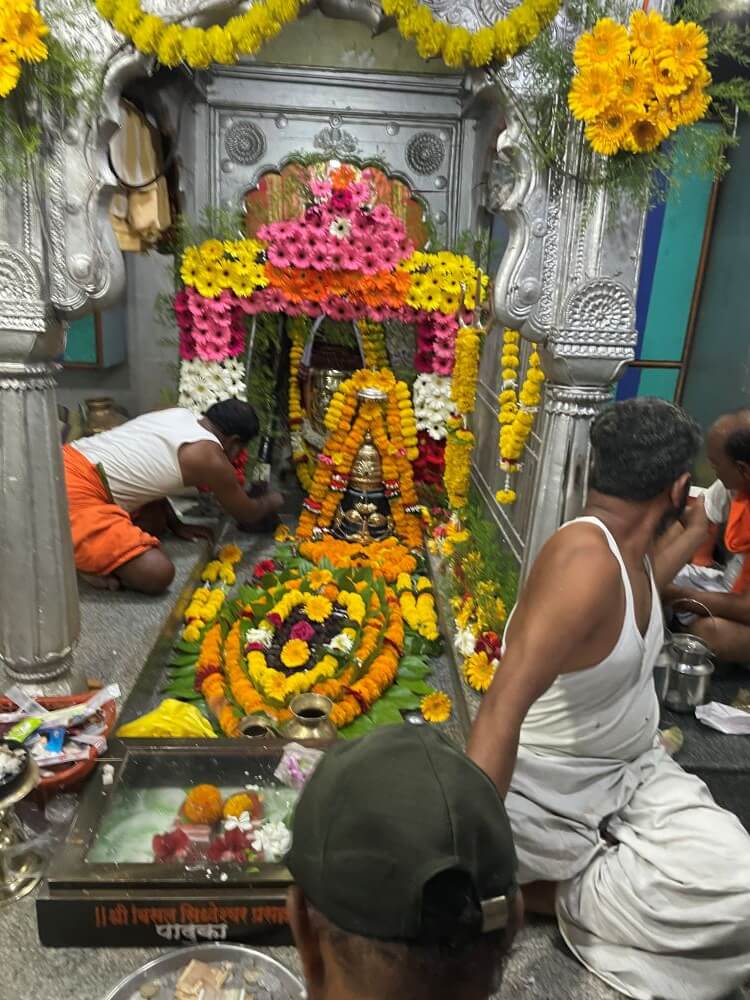
On both sides of the garbhagriha entrance are कक्षसने (sitting platforms). On both sides of the entrance are Deepkostakas (niches for lamps). Ornate square pillars are connected by arches. The doorframes have vertical ridge carvings, and on the Lalatabimba (central panel above the doorway) is an idol of Ganapati. On the Mandaraka (lintel) is a Kirtimukha sculpture. Inside the garbhagriha is a long, flat black stone. This stone is worshipped as Bisalsiddheshwar. Behind it are stone idols of Revanna and Mahalinga, adorned with silver masks. It is said that Bisalsiddheshwar Swami is in a reclining posture here, and his disciple-attendant Revanna Swami is in a seated posture.
The annual Jatrotsava (fair festival) is celebrated here on the last Monday of Shravana. Before that, various rituals and festivals are celebrated in the temple throughout the entire month of Shravana. About one kilometer from the temple is a well, which is said to be the deity’s bathing pond. On the first Monday of Shravana, the deity’s bathing pond is ritually cleaned. Then, the deity’s palanquin is brought from the Mahalingeshwar and Bisalsiddheshwar temples in the village to the bathing pond. Here, the deities are given a ritual bath. Afterwards, the deities, seated in the palanquin, tour the homes of devotees in a palanquin procession for the next month. The first week is spent in Achkanhalli village, the second week in Anantapur in Karnataka, the third week stopping at the river in Hallal, and on the fourth Thursday, the palanquin returns to the Siddheshwar Temple. The Yatra (pilgrimage fair) is held on the fourth Monday. Thousands of devotees from states like Maharashtra, Andhra Pradesh, Karnataka, and Telangana participate in this entire palanquin circumambulation ceremony.
This sacred temple stands as a testament to deep spiritual devotion, ancient architectural grandeur, and rich local cultural traditions.
The sanctum sanctorum houses the divine idol consecrated according to ancient Vedic traditions, surrounded by serene courtyards and traditional temple architecture.
Navratri, Maha Shivratri, Annual Temple Jatra & Deepotsav
Compare and book flights, secure top-rated local hotels near the temple, hire reliable guides, and rent cars instantly.
Extend your pilgrimage by visiting other highly sacred temples located nearby.


Add ₹999 more to unlock FREE SHIPPING!
Your sacred cart is currently empty.
Shop Photo FramesFill in your delivery details below to place your order.
Add comment