
Add ₹999 more to unlock FREE SHIPPING!
Your sacred cart is currently empty.
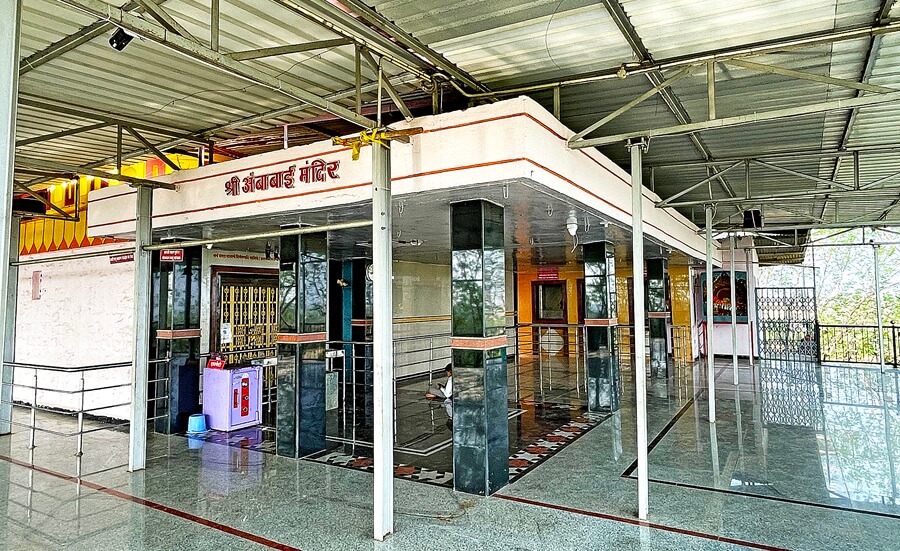
Shop Photo FramesThe concept of the three-and-a-half Shaktipeethas is associated with the three-and-a-half matras (syllables) of Omkara. These Pithas are also referred to as ‘Aut Pithas’. Among these Aut Pithas, one complete Pitha is the Mahalakshmi Temple in Kolhapur. This Goddess is also known by the name Ambabai. All Shakta devotees across the country desire to visit Kolhapur and have the darshan of Ambabai. However, this is not possible for everyone. Therefore, devotees visit Ambabai temples located in various places across the country for darshan. Among these, one ancient and renowned temple is situated on a hilltop at the outskirts of Jat city. Devotees believe that the awakened Goddess here fulfills their vows.
This temple is said to date back to approximately the twelfth century. However, in recent times, the temple has undergone renovation and acquired a modern appearance. The legend associated with this temple states that among the sixty-four Yoginis of Ambabai, a Yogini named Jayanti resided on this picturesque hilltop. It is said that as the village experienced peace and prosperity under the Goddess’s protection, the village was initially named Jayanti after the Goddess, and later, through linguistic corruption, it became Jat. This Goddess is the Kuldevata (family deity) of many families in the villages of Bilur and Ravalgundwadi here. It is believed that this Goddess is the sister of Bhairavnath of Bilur.
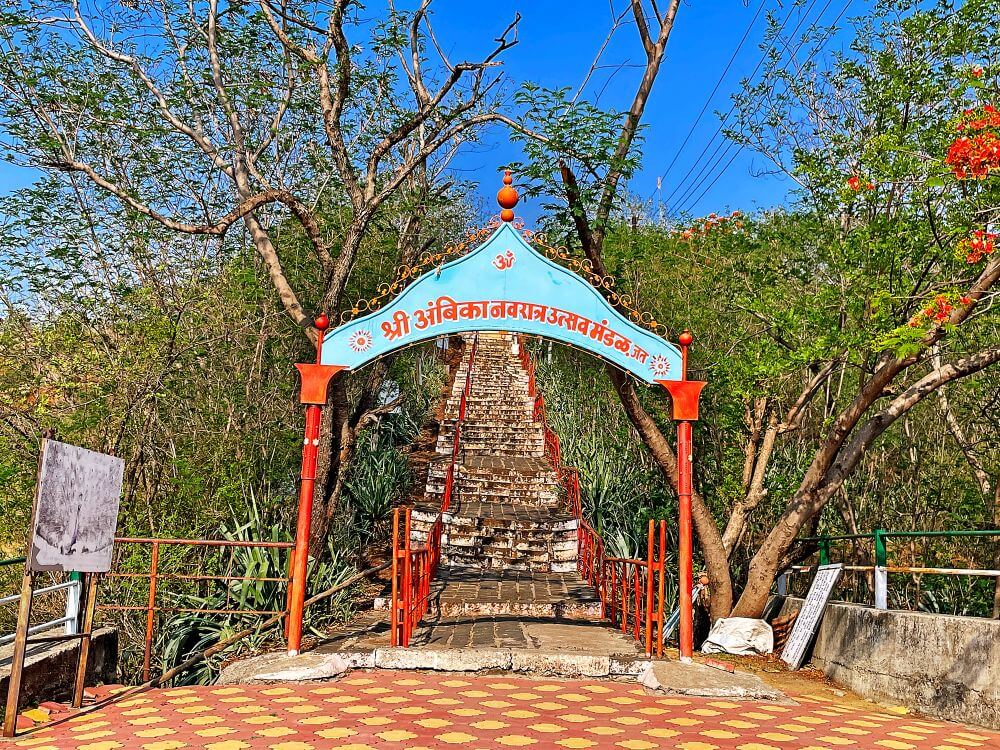
On the road leading to this temple, situated on a hilltop two kilometers from Jat city, there is the first welcome arch. The welcome arch features two square, ornate pillars on each side of the road, and on the platform above them, three spires rest on four square pillars each. From here, there is a paved asphalt road up to the base of the hill, 500 meters away. Lush green trees line both sides of the road. As this temple and its surroundings fall under the jurisdiction of the Forest Department, a welcome arch has also been erected here by the Forest Department.
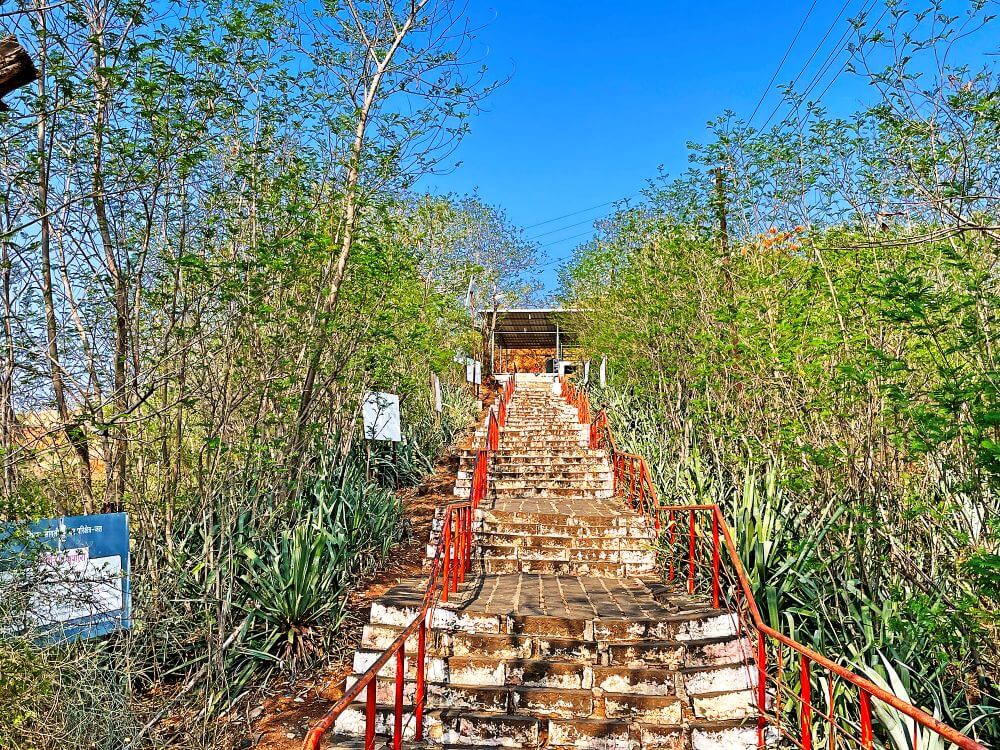
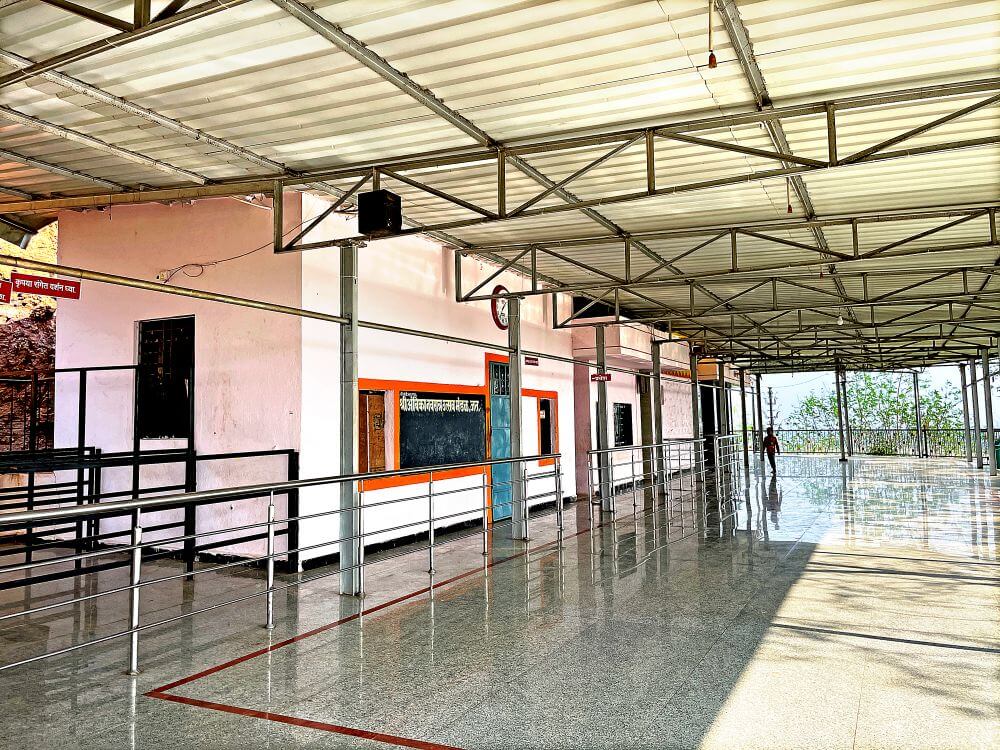
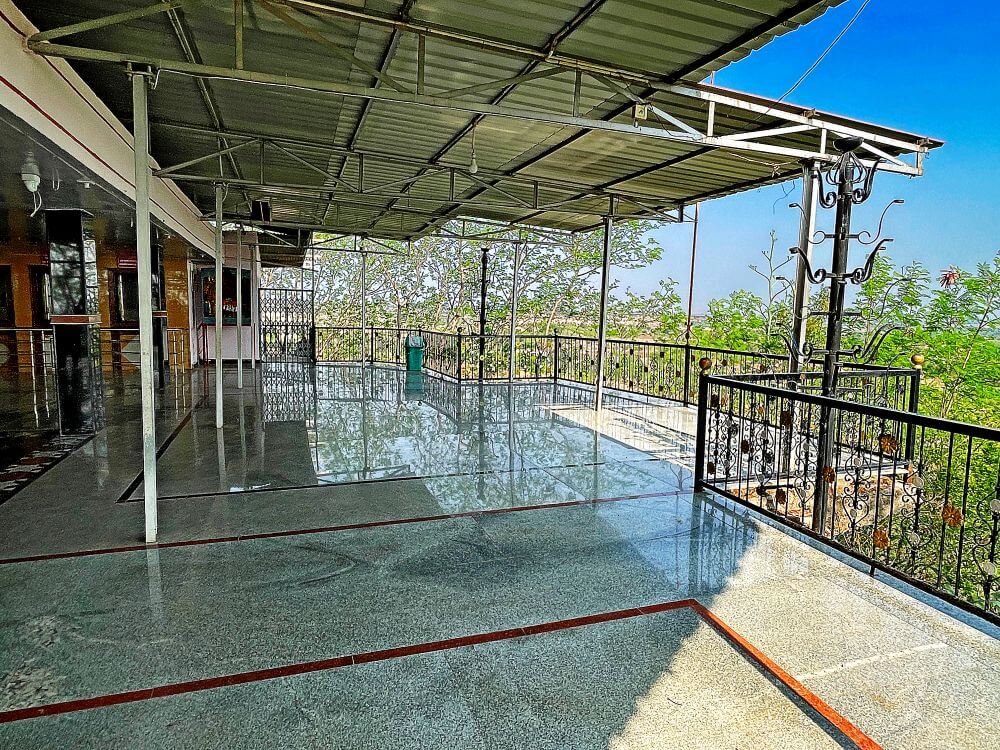
There are approximately sixty steps to reach the temple from the base. On both sides of the approximately seven-foot-wide pathway, built with carved stone, there are iron safety railings. Various informational and social message boards have been placed on the railings by the Forest Department. As the stairway ends, one enters the temple courtyard. In one corner of the courtyard, there is an observation deck. From here, a panoramic view of Jat city is visible. Further ahead, there is an open Sabhamandap (assembly hall). In the Sabhamandap, there is a queue system for darshan to manage the crowd of devotees. In the Garbhagriha (sanctum sanctorum), on a Vajrapeetha, there is a four-armed idol of Goddess Ambabai carved from black stone. In the upper two hands of the idol are a sword and a Trishul (trident), while one lower hand is in a blessing posture (Ashirwad Mudra), and the other holds an Amritpatra (nectar pot). A crown is carved on the idol’s head, and garments and ornaments are sculpted on its body. On the back slab of the idol, there is a Kirtimukh (glorious face) in the center and leaf-and-flower motifs on both sides. Silver footprints are placed on the Vajrapeetha in front of the idol.
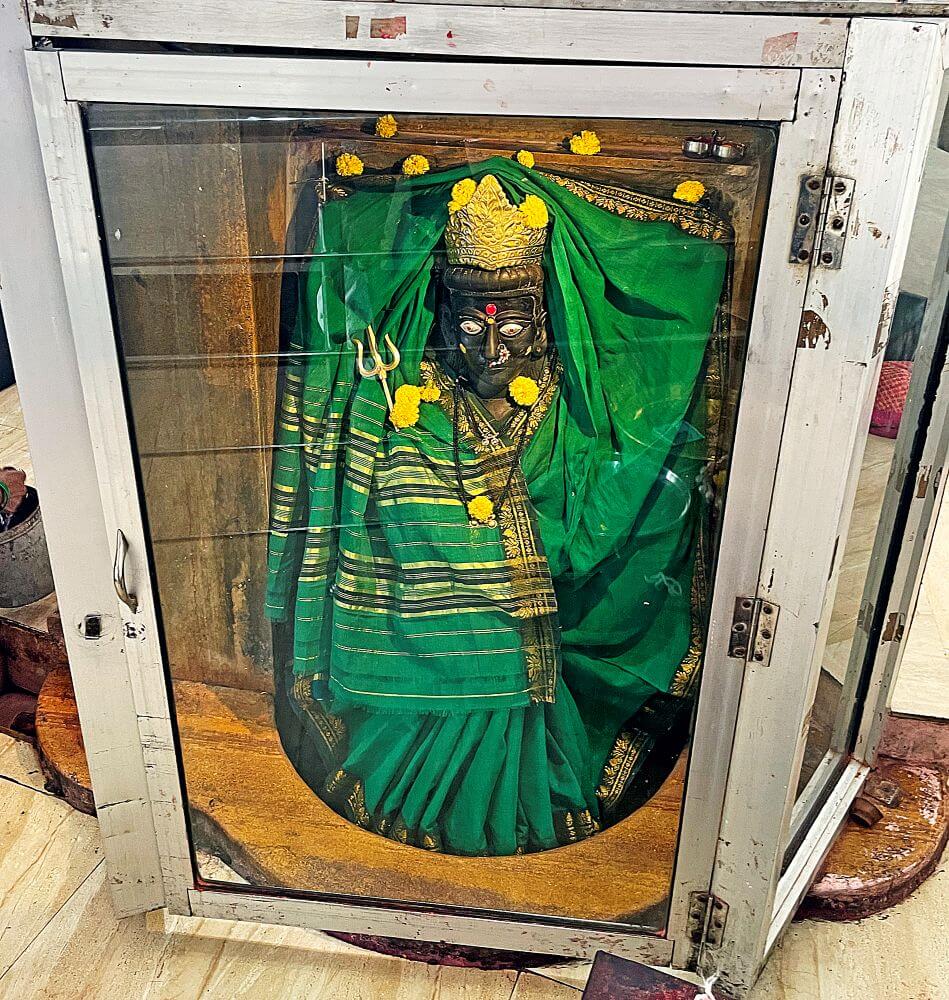
In the chamber to the left of the Garbhagriha, there is an eight-armed Utsav Murti (processional idol) of the Goddess in a glass shrine. In the hands of this idol are weapons such as a Trishul, Khadga (sword), bow, arrow, Agnikund (fire pit), and a Narmund (human skull). The Goddess is depicted pressing down the demon Mahishasura under her right foot. The Goddess is adorned with rich garments and ornaments. She wears a golden crown on her head, and her eyes are made of silver. To the right of the Ambabai Garbhagriha, there are three small shrines. These house Ganapati, Shri Datta, and a Shivlinga. On the roof of the Garbhagriha, there is a tall, square Shikhara (spire) with vertical fluted designs. At the apex of the Shikhara is an Amlak, topped by a Kalash.
The Sharadiya Navratrotsav is the main annual festival here, celebrated with great enthusiasm. This festival lasts for fifteen consecutive days, from Ashwin Shuddha Pratipada to Ashwin Pournima. Mahaprasad is arranged for devotees on Dasara and Kojagiri Pournima. Thousands of devotees come during this fortnight for the Goddess’s darshan and to fulfill their vows. The number of devotees visiting on Tuesdays, Fridays, Pournima (full moon), Amavasya (new moon), and other such days is large. As this place is also known as Ambabai Hills tourist destination, nature lovers, bird watchers, and tourists visit here. Various species of butterflies, birds, animals, and plants are found in this hill.
This sacred temple stands as a testament to deep spiritual devotion, ancient architectural grandeur, and rich local cultural traditions.
The sanctum sanctorum houses the divine idol consecrated according to ancient Vedic traditions, surrounded by serene courtyards and traditional temple architecture.
Navratri, Maha Shivratri, Annual Temple Jatra & Deepotsav
Compare and book flights, secure top-rated local hotels near the temple, hire reliable guides, and rent cars instantly.
Extend your pilgrimage by visiting other highly sacred temples located nearby.


Add ₹999 more to unlock FREE SHIPPING!
Your sacred cart is currently empty.
Shop Photo FramesFill in your delivery details below to place your order.
Add comment