
Add ₹999 more to unlock FREE SHIPPING!
Your sacred cart is currently empty.
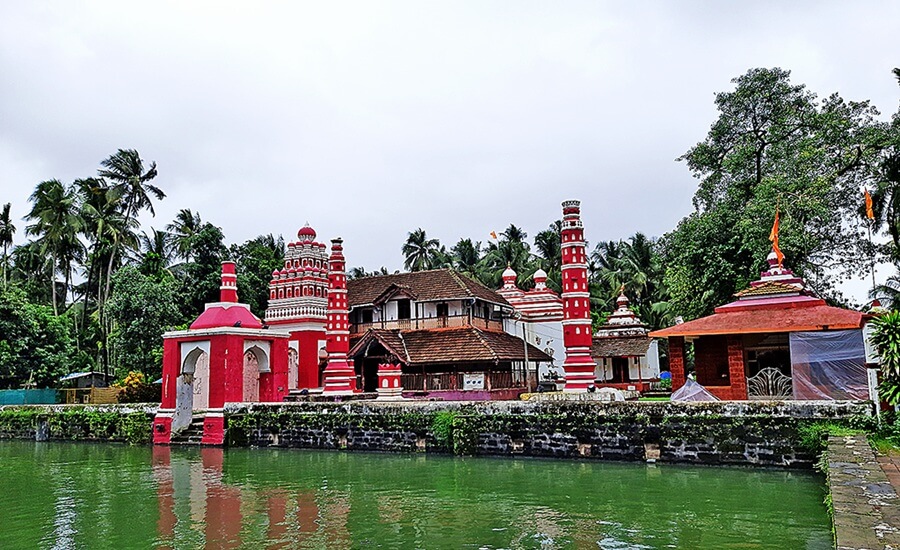
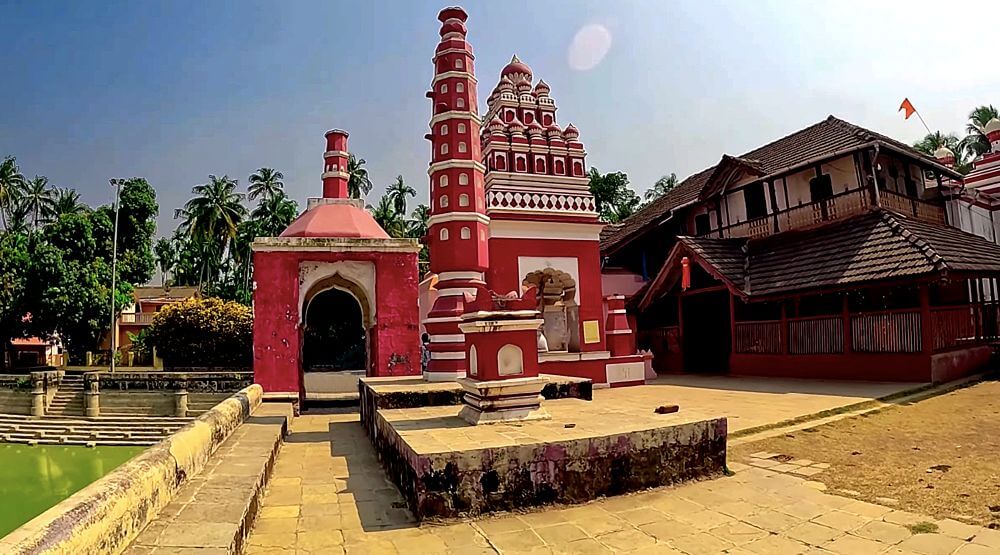
Shop Photo FramesThe road from Alibaug to Revdanda is filled and imbued with temples. Since ancient times, Chaul has been renowned as a city of temples. It is said that in the past, Chaul was home to three hundred and sixty ponds and three hundred and sixty temples. Although some of these temples have vanished, the historic Pandava-era Rameshwar Temple, standing majestically on the banks of a large temple tank here, is especially famous among devotees. The temple tank in front of this temple is vast, but the temple complex itself is even more expansive, covering a significant area.
According to historical and ancient records, the present-day Chaul region was once home to an abundance of Champak, or frangipani trees. For this reason, the area was widely known as Champavati Nagari. In his book titled ‘Notes on the History and Antiquities of Chaul and Bassein’, published in the year 1876, historian J. Gerson da Cunha states that Chaul derived its ancient name, Champavati, from a king named Champa. The book mentions that it was this king who laid the foundation for the city of Champavati. This city was known as Champavati to the ancient Hindus, Simylla to the Greeks, Saimur to the Arabs, and Chivel to ancient Muslim chroniclers. Historians believe that the name Chaul is a corrupted form of the names Chaimul or Chaul. An inscription discovered at Kanheri, near Mumbai, mentions that two warriors established the village of ‘Chemula’ in the second century AD. According to historical researchers, that is the present-day village of Chaul.
According to a mythological legend, in the Dvapara Yuga, King Pithora ruled over the city of Champavati. Chava was his minister. This Chava assassinated King Pithora and ascended the throne. It was he who renamed Champavati to Chaul. Human existence in the Chaul region dates back two thousand years. References to Chaul are also found in the books of historians like Ptolemy and Arrian from the period between 80 AD and 150 AD. This was an important port on the western coast of India. It was active from 300 BC to 1700 AD. Due to its prosperous surroundings and strategic port, traders from many countries used to visit here. Records indicate that ten Egyptian merchant ships arrived here in 1508. In those days, silk was produced and traded here. Apart from this, copper and brass utensils, rice, dried fish, and salt were exported from here to all over the world. Excavations conducted here have unearthed black earthen pottery from the Mauryan period, black and red shards/pottery from the Satavahana period, porcelain from the Nizamshahi era, structural remains, and various types of coins. This place was ruled at different times by the Shilaharas, Rashtrakutas, Mauryas, Chalukyas, Kadambas, Yadavas, Siddis, and the British. From the ninth century to the thirteenth century, there was Muslim rule here. The Yadava dynasty, which defeated the Sultan of Mahim in the year 1312, belonged to Chaul. From the year 1508 to 1553, the Adil Shahi dynasty of Bijapur held sway here. Later, the Portuguese arrived. Traces of their existence can still be found in various places here today. According to another reference, Afanasy Nikitin (1433 to 1472), the first Russian traveler to visit India, traveled from Russia by sea in the fifteenth century via Georgia, Armenia, Iran, and Muscat to the west coast of India. He had disembarked at the port of Diu and from there, via Khambhat, he arrived at Chaul. He referred to Chaul as Chevel. (A memorial to this Afanasy Nikitin has been erected recently in Revdanda.) On 8 September 1524, Vasco da Gama’s ship docked at the port of Chaul. However, there is also a historical record stating that he did not step onto the land of Chaul.
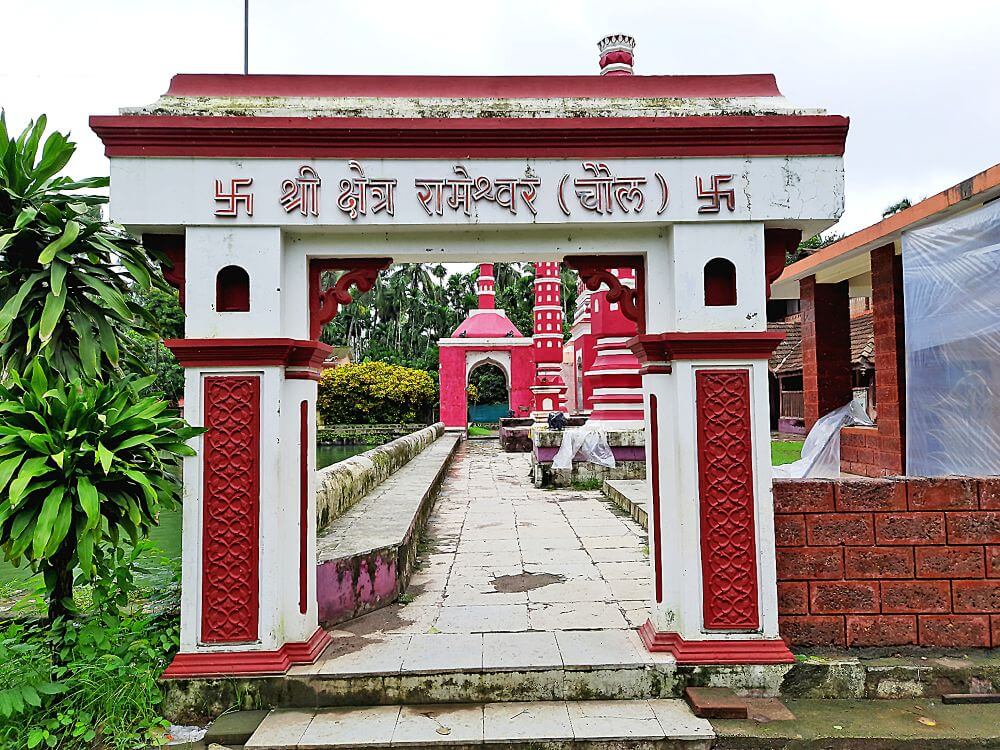
The Rameshwar Temple, situated in this historic and ancient town of Chaul, finds mention in the Sahyadri Khanda of the Skanda Purana. It is said to be one of the three significant Rameshwar temples in India. The first of these is in Tamil Nadu, and the second is in Karwar. The temple here stands as a testament to the prosperity that once flourished in this region. Nestled on the banks of a large temple tank, the architecture of this temple resembles a Peshwa-era mansion. It is believed that this temple dates back to the twelfth or thirteenth century. One enters the temple premises through an arched gateway set within the boundary walls surrounding the temple. Adjacent to this entrance, there is a temple dedicated to Lord Ganesha. The idol of Ganesha in this temple is two and a half feet tall. In this four-armed idol, there are weapons in both hands on the right side and one hand on the left, while the other left hand holds a laddu. There are broken tusks on both sides of the trunk. It is a tradition to wash one’s feet in the temple tank after arriving for the darshan of Rameshwar, take darshan of this Ganesha, and then proceed for the darshan of Rameshwar. Next to the Ganpati idol is a marble idol of Dattatreya.
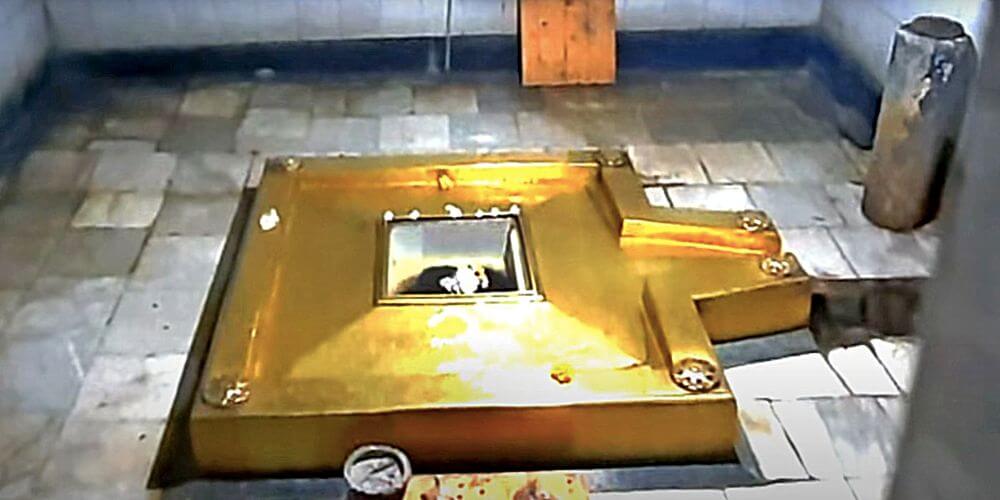
To reach the upper floor of this two-story temple, there is an ancient wooden staircase with steps located in the main assembly hall. From the balcony here, one can behold the pond situated in front of the temple, the Nandi Mandap, and the surrounding area. There are many vacant rooms on the second floor of this temple. It is said that they were built in ancient times for the priests residing here. The sanctum sanctorum of the east-facing Rameshwar temple is square in shape. In its center, there is a slightly elevated square pedestal (Shalunka) covered with brass sheets. Unlike the usual tradition, there is no tall Linga in the center of this pedestal. Instead, a Swayambhu (self-manifested) Shiva Linga is situated in a square pit here. Regarding this, the mythological legend states that while Lord Shiva and Goddess Parvati were playing a game of dice on Mount Kailash, Lord Shiva was defeated. Seeing this, Goddess Parvati laughed, which offended Lord Shiva, who left and went to reside at the confluence of the Krishna and Venna rivers. Later, he traveled from there to Bhargava Kshetra, which is in the Konkan region. Goddess Parvati went there in search of him, but before she arrived, Lord Shiva had already departed for Champavati. He resided in Champavati for a long time. It was during that period that this Linga was manifested here.
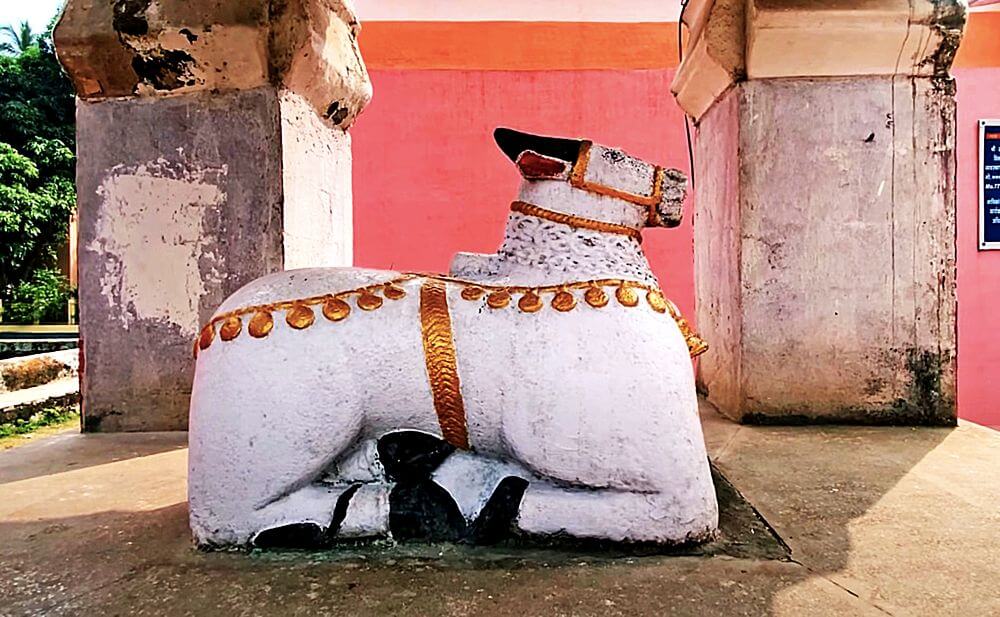
There are four large lamp towers in the premises of the Rameshwar Temple. Among them, the lamp tower in front of the Nandi at the temple was built by Visajipant Subhedar, the second lamp tower near Bairagi Ganpati was built in the year 1784 by Lado Bhavji Prabhu Tamhane, and the third lamp tower near the Tulsi Vrindavan was built in the year 1669, while the Pushkarani and the fourth lamp tower here are recorded to have been built by Balaji Lohar of Revdanda. In the tall Nandi Mandap located in front of these lamp towers, there is a massive idol of Nandi. There are four steps to reach this Nandi Mandap, which is elevated from the ground. Although this Nandi appears colorful, it is carved from a single piece of black stone. There is a Tulsi Vrindavan between the Nandi Mandap and the main temple. The temple structure consists of a Darshan Mandap, an open Sabha Mandap, a main Sabha Mandap, a main Garbhagriha, and two sub-Garbhagrihas.
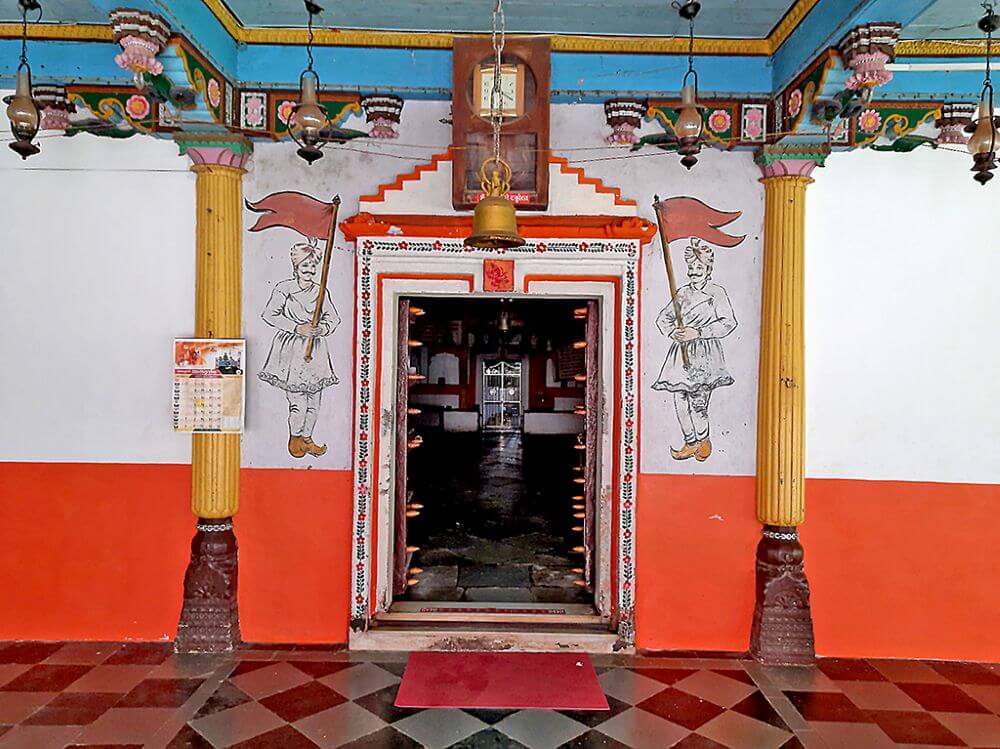
To reach the open assembly hall of this temple, which is situated at a slight elevation, there are five steps leading up from the entrance porch. The ceiling and pillars of the assembly hall are adorned with intricate wooden carvings. Near the entrance, there is a brass bell dating back to the Portuguese era. Since the town of Chaul remained under Portuguese rule for many years, its traces are visible in this temple as well. On the front wall of this assembly hall, there are images of various saints and deities. From the open assembly hall, one enters the main assembly hall of the temple. The main assembly hall of this spacious temple is a two-story wooden structure. On both sides of the entrance to this hall, there are images of gatekeepers, and an idol of Lord Ganesha is carved on the lintel. The wooden door of this temple resembles the gate of a fortress. This assembly hall is enclosed. There are some windows here for ventilation. The pillars here are connected to each other by arched structures. The wooden carvings in the assembly hall are distinctive. Various mythical creature figures are seen carved on these pillars.
On the right and left sides of the assembly hall, there are sub-sanctums. In the one on the right, there are idols of Lord Shiva and Lord Vishnu, while on the left, there is an idol of Lord Ganesha. There are three sacred pits here that hold historical and religious significance. The Parjanya Kund (Rain Pit) is in front of the Vishnu idol, the Vayu Kund (Wind Pit) is in front of the Ganesha idol, and the Agni Kund (Fire Pit) is in front of the main sanctum. It is believed that these were opened whenever there were disasters related to fire or wind. However, there are records of the Parjanya Kund being opened many times. The first recorded instance of this is from the year १६५३. In १७३१, due to delayed rains, Yesaji Angre opened the Parjanya Kund. It is said that the rain started immediately afterward. Similar incidents occurred many times thereafter. The Parjanya Kund was opened in the years १७९०, १८५७, १८७६, and १८९९. Most recently, this pit was last opened in the year १९४२.
The entire construction of the sanctum of this temple is made of stone. It is said that this sanctum is the original ancient temple. In later times, the temple was kept at the center, and renovations were carried out around it. Previously, this temple was on the seashore. Today, it is in the middle of the village. It is said that the sea gradually receded. Every year, a continuous stream of water is poured over the Shiva Linga to ensure good rainfall. If there is no rain until August, the Parjanya Kund in this temple is opened. A one-day fair is held here on Mahashivratri. There is a large crowd of devotees here every Monday of the Shravan month. A grand festival is also celebrated here on Tripurari Purnima. At that time, the entire temple and its premises are illuminated with electric lights. The reflection of the entire illuminated temple can then be seen in the temple pond located in front of it.
Apart from the main temple, there is a Hanuman temple and a Vitthal-Rukmini temple in the temple premises. On a large stone adjacent to the temple, there are nine Shiva Lingas, with the remaining three spaces left vacant. Therefore, this stone is considered a symbol of the twelve Jyotirlingas. Next to these Shiva Lingas is the temple of the Mother Goddess. In this temple premises, there is a well, as well as some samadhis and hero stones.
This sacred temple stands as a testament to deep spiritual devotion, ancient architectural grandeur, and rich local cultural traditions.
The sanctum sanctorum houses the divine idol consecrated according to ancient Vedic traditions, surrounded by serene courtyards and traditional temple architecture.
Navratri, Maha Shivratri, Annual Temple Jatra & Deepotsav
Compare and book flights, secure top-rated local hotels near the temple, hire reliable guides, and rent cars instantly.
Extend your pilgrimage by visiting other highly sacred temples located nearby.


Add ₹999 more to unlock FREE SHIPPING!
Your sacred cart is currently empty.
Shop Photo FramesFill in your delivery details below to place your order.
Add comment