
Add ₹999 more to unlock FREE SHIPPING!
Your sacred cart is currently empty.
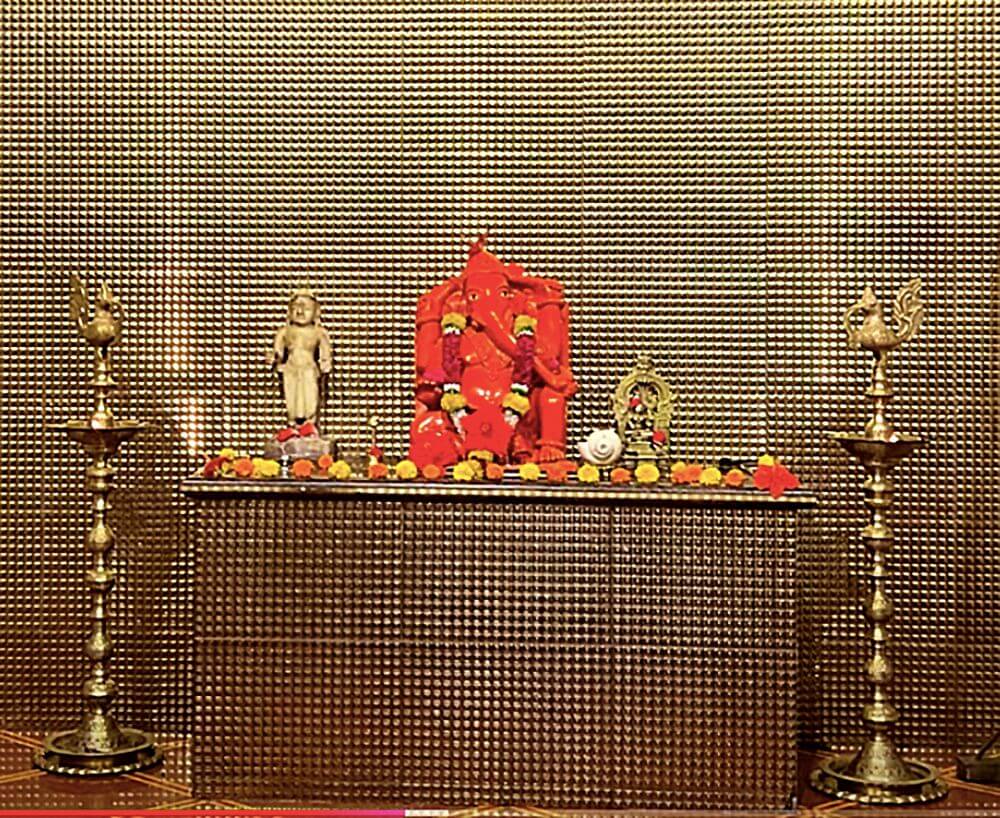
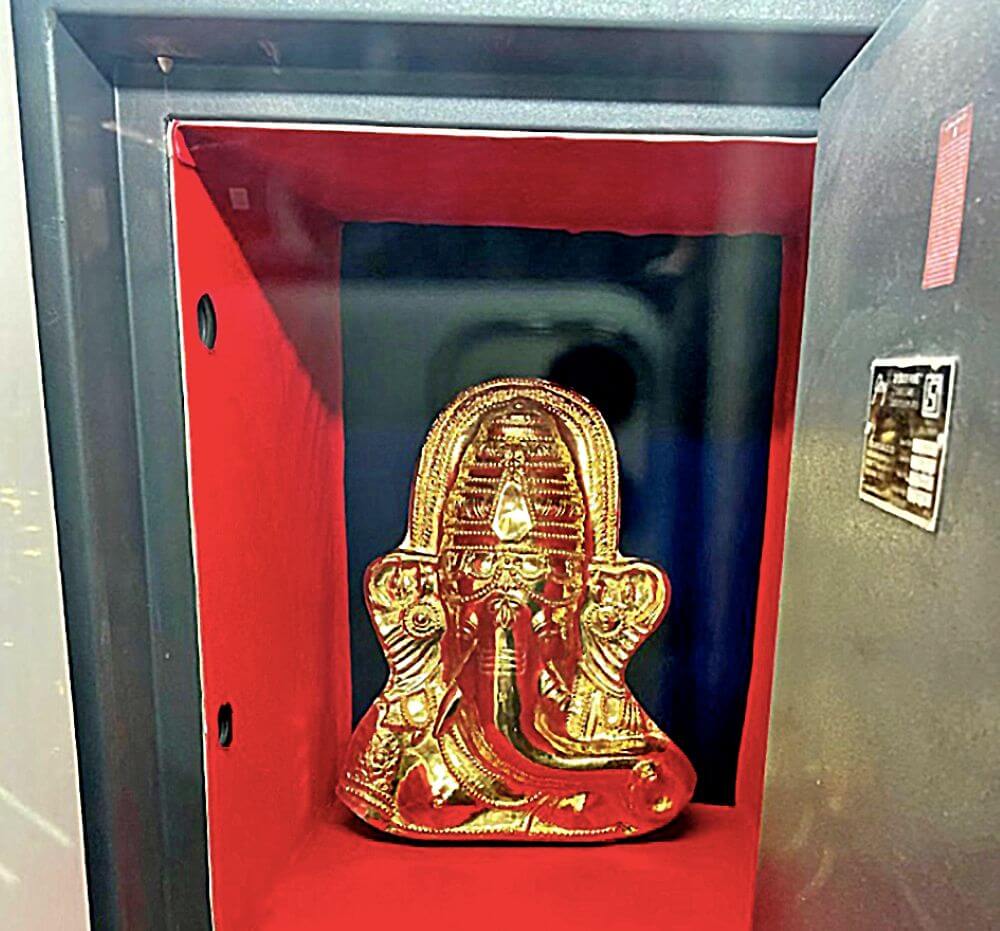
Shop Photo FramesDiveagar in Shrivardhan taluka is a picturesque village blessed with natural beauty. This village is famous for its vast, clean, and beautiful beach! Diveagar gained a unique identity due to the Suvarna Ganesh (Golden Ganesha) Temple located here. In November 1997, a gold mask of Lord Ganesha weighing approximately 1320 grams and ornaments weighing 280 grams were discovered while digging in the ground, bringing Diveagar into the limelight across the entire state. Although the Suvarna Ganesh is installed in the Siddhivinayak Temple, which is the presiding deity of Diveagar, the temple is now famously known as the Suvarna Ganesh Temple.
It is said that next to the Siddhivinayak Temple lies the coconut orchard of Draupadi Patil. While digging a pit for an areca nut sapling in that orchard, a crowbar struck something, producing a metallic clanging sound. Upon inspection, an old copper box was found. Inside were a gold mask of Ganesha weighing approximately one and a quarter kilograms, a necklace, and other ornaments. The date was November 17, 1997. A special feature of that day was that it was Sankashti Chaturthi. Everyone was astonished to see the Ganesha mask and ornaments discovered on such an auspicious day. Following this, Draupadi Patil kept the mask and ornaments for public viewing. Feeling that it would be difficult for her to perform the proper worship of the mask and believing that it originally belonged to the Siddhivinayak Temple, she handed it over to the temple management. Today, this idol has made Diveagar famous throughout the country.
Information regarding this suggests that the mask is made of pure, 52-carat gold. Its craftsmanship is in the South Indian style. One reason for this is the ‘Vyalmukh’ (mythical creature face) carved on its crown, which is characteristic of South Indian architecture. Experts speculate that this mask dates back to the Shilahara period. Chafa (plumeria) flowers are carved on the ears and shoulders of this Suvarna Ganesh. Another unique feature is that mangoes are carved on both ears of the idol. These are of the ‘Payari’ variety. Since the Konkan region is famous for ‘Alphonso’ (Hapus) mangoes, the fact that a ‘Payari’ mango is carved on it suggests that the idol predates the arrival of the Portuguese, according to experts. It is likely that due to the fear of Muslim invaders, someone buried this golden mask in the coconut orchard. The fact that it was found just two to two-and-a-half feet below the surface suggests it was buried in haste. Subsequently, its memory faded until it was discovered in 1997. After the box containing the mask and ornaments was found, the state government issued a notification stating that if anyone owned these items, they should file a claim within two months. However, no one came forward. Consequently, the mask became the property of the government. However, the villagers requested the then Chief Minister Manohar Joshi to allow the mask to remain in Diveagar, as it belonged to Siddhivinayak and was discovered there. Accordingly, it has been kept in a safe place next to the Siddhivinayak idol in the temple. However, it is not worshipped.
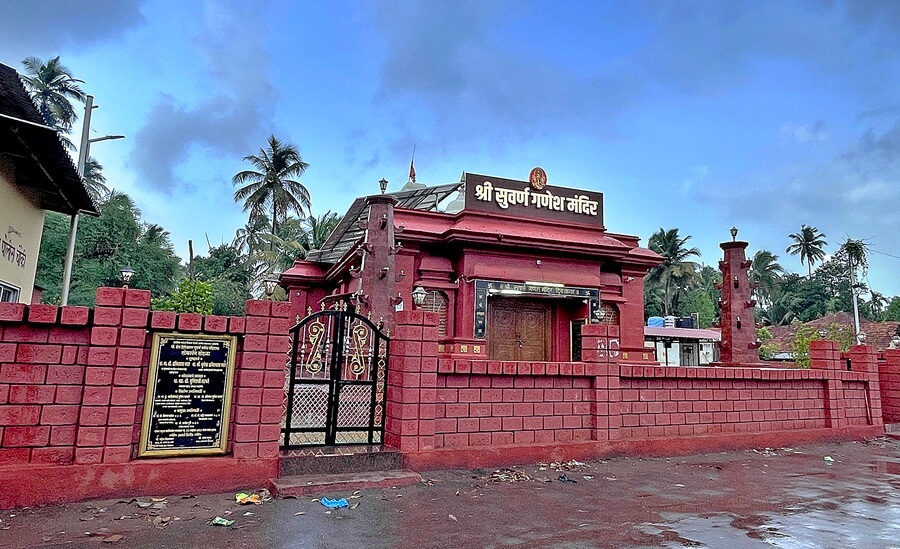
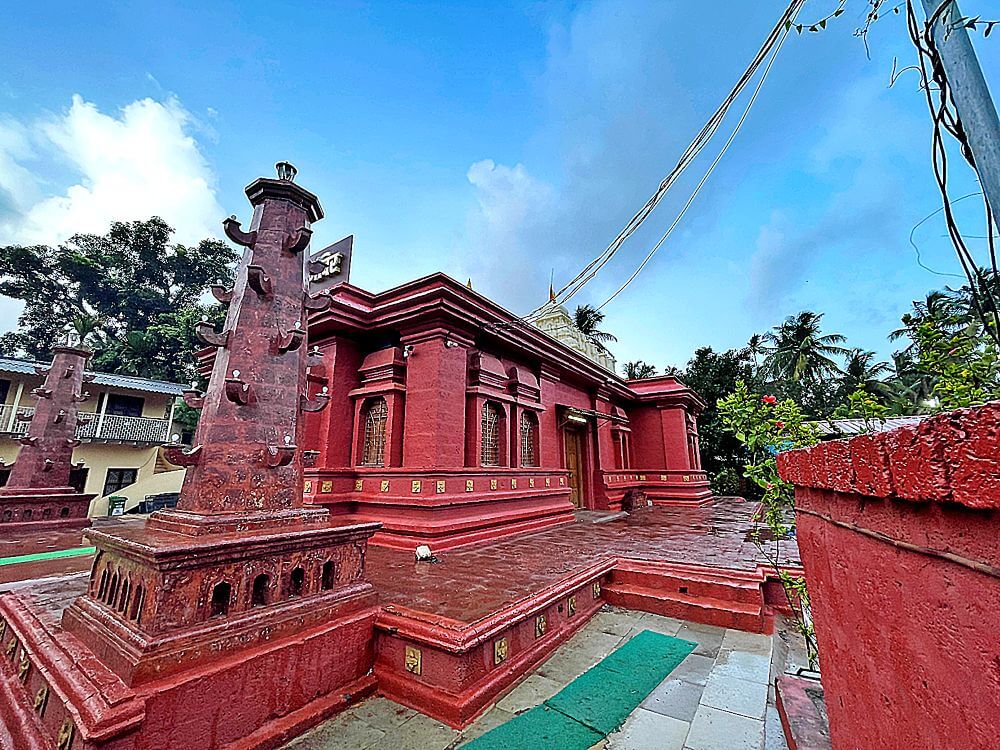
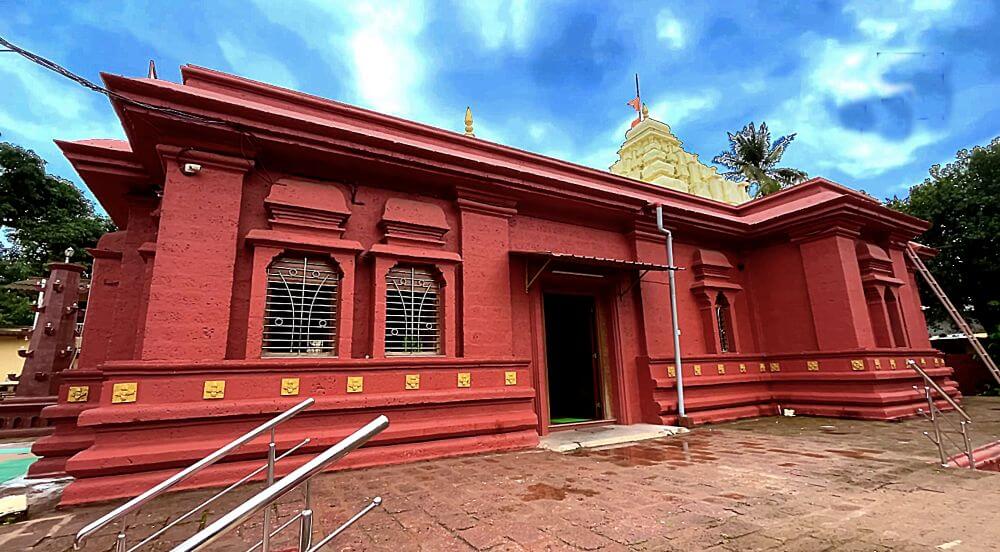
Upon entering Diveagar, a tall archway welcoming visitors to the “City of Suvarna Ganesh” comes into view. A short distance ahead, on the left side of the road, behind a boundary wall, stands the attractive red-colored Suvarna Ganesh Temple. This tiled-roof structure, built entirely of laterite stone, reflects Konkan architectural style. In front of the temple, there are many shops selling worship materials and prasad. The boundary wall, built of red laterite stone along the road, has two small iron gates through which one enters the temple courtyard. After climbing a few steps from the entrance, one reaches the high plinth of the temple. On both sides of the main entrance, there are two stone ‘Deepmalas’ (lamp towers) erected on stone platforms. Nearby is a beautiful Tulsi Vrindavan made of black stone.
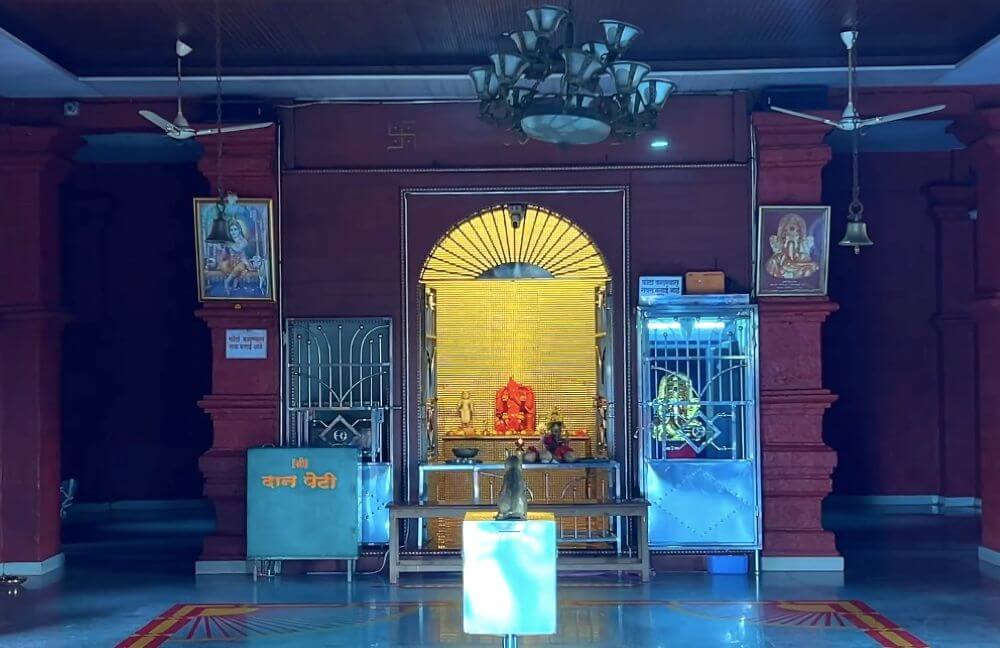
The temple architecture consists of a small Darshan Mandap (viewing hall), a spacious Sabha Mandap (assembly hall), and a Garbhagriha (sanctum sanctorum). A replica of the Suvarna Ganesh is placed above the entrance of the Darshan Mandap. The entrance is wooden, with intricate carvings on the door frames. The Sabha Mandap is enclosed, with several windows on the walls to allow for light and ventilation. Beyond the Sabha Mandap, after passing the circumambulation path, lies the Garbhagriha. In this sanctum, the vermilion-smeared idol of Siddhivinayak is seated on a high pedestal. Beside this idol are Goddess Annapurna and some local deities. On the left side of the Garbhagriha, the Suvarna Ganesh mask is kept in a large locker-like box.
The villagers have unwavering faith in this deity. Historical references suggest that this temple was the deity of the Shilahara dynasty. Similarly, it was also a place of faith for the Peshwas. There is a record that Ramabai, the wife of Madhavrao Peshwa, visited this place for darshan. The golden idol truly brought golden days to Diveagar. Since the arrival of the Suvarna Ganesh, the flow of tourists and devotees to Diveagar has increased manifold. The Ganesh Janmotsav is celebrated here on Magh Shuddha Chaturthi, and the ‘Prakat Din’ (appearance day) of the Suvarna Ganesh is celebrated on Kartik Vadya Chaturthi. Thousands of devotees from the Konkan region, including Raigad district, attend these festivals.
Devotees can have darshan of the Suvarna Ganesh daily between 8:00 AM and 8:00 PM. The spot in the orchard where Draupadi Patil found the copper box containing the golden mask can still be visited today. A small temple has been built on that very spot amidst the coconut and areca nut trees, and devotees can offer prayers there. The historical significance of this coconut and areca nut orchard is that a copper plate was once found here, which is said to be the first copper plate in the Marathi language.
This sacred temple stands as a testament to deep spiritual devotion, ancient architectural grandeur, and rich local cultural traditions.
The sanctum sanctorum houses the divine idol consecrated according to ancient Vedic traditions, surrounded by serene courtyards and traditional temple architecture.
Navratri, Maha Shivratri, Annual Temple Jatra & Deepotsav
Compare and book flights, secure top-rated local hotels near the temple, hire reliable guides, and rent cars instantly.
Extend your pilgrimage by visiting other highly sacred temples located nearby.


Add ₹999 more to unlock FREE SHIPPING!
Your sacred cart is currently empty.
Shop Photo FramesFill in your delivery details below to place your order.
Add comment