
Add ₹999 more to unlock FREE SHIPPING!
Your sacred cart is currently empty.
Shop Photo FramesRankala is the largest water reservoir in Kolhapur and a major attraction for tourists visiting the city. Much like the Mahalakshmi Temple, Rankala Lake is an identity of Kolhapur. This lake derives its name from Rankbhairav, the Kshetrapal (guardian deity) of this sacred site. Rankbhairav is considered a supreme devotee of Goddess Mahalakshmi. Due to her blessings, he resides here in the lake in the form of a Tirtha (sacred water) and on the banks in the form of a Linga. The temple of this very Rankbhairav is located in Mangalwar Peth, near the Mahalakshmi Temple. It is said that this temple, built in the Hemadpanti architectural style, is approximately 900 years old.
According to records in the Kolhapur Gazetteer, the Mahalakshmi Temple was established here in the 7th or 8th century. Even before that, there were six large settlements in this area. They were named Brahmapuri, Uttareshwar, Kholkhandoba, Padmala, Ravaneshwar, and Rankala. Among these, Brahmapuri was the oldest settlement, while Uttareshwar and Kholkhandoba were its wards. The Padmala settlement was situated on the banks of Padmala Lake, while Ravaneshwar and Rankala were independent wards. After the establishment of the Mahalakshmi Temple, it became the central hub of Kolhapur. Jain texts narrate the story of the creation of this lake as follows:
Shilahar King Marsimha (reign 1055 to 1077) had his son Gandaraditya build 360 Jain temples in this area. It was during his time that the pinnacle (Kalash) was installed atop the Mahalakshmi Temple. The stone required for this construction was extracted by digging a quarry at Rankala. Later, during an earthquake, this quarry expanded and filled with water. There is a popular belief that a golden temple of Rankbhairav lies at the bottom of this water.
Regarding Rankbhairav, the legend goes that in ancient times, there was a severe drought everywhere. Since Goddess Mahalakshmi resided in Kolhapur, the city remained untouched by the drought and had an abundance of water. Seeing this, many people migrated to Kolhapur, leading to a struggle for water. To protect this sacred site, Mahalakshmi, also known as Ambabai, appointed eight Bhairavas in the eight cardinal directions. Rankbhairav protected the water reserves exceptionally well, and the Goddess appointed him as the Kshetrapal of this region. He is also known as the Kotwal (guardian) of Karveer. The temple of Rankbhairav is located just a few minutes’ walk straight from the southern gate of the Mahalakshmi Temple. There is no concrete information available about exactly when this ancient temple was built. Some scholars believe it may have been constructed in the 11th or 12th century. The path to the temple leads through an entrance arch at the beginning of a lane on the main road in Sardar Balasaheb Yadav Chowk. Nearby is the Shri Datt Shridharashram. From there, one climbs a few steps to enter the temple courtyard.
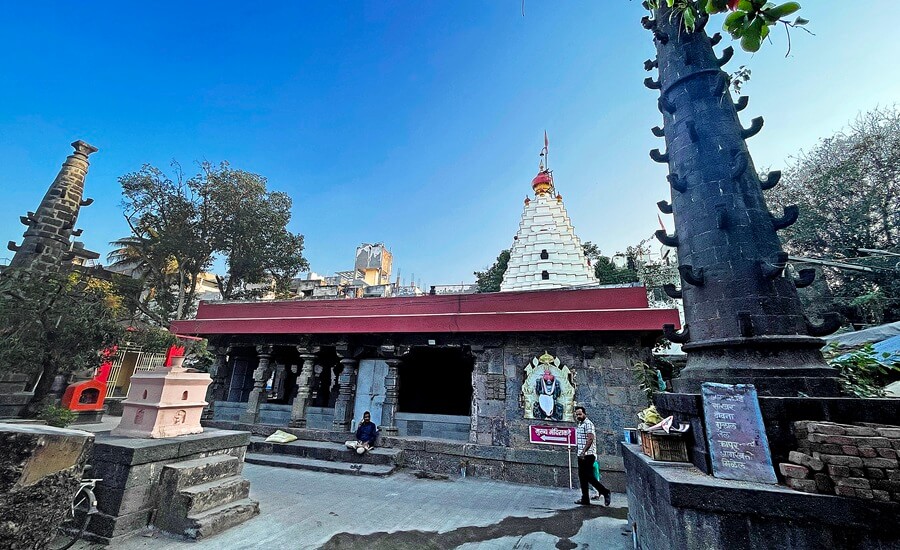
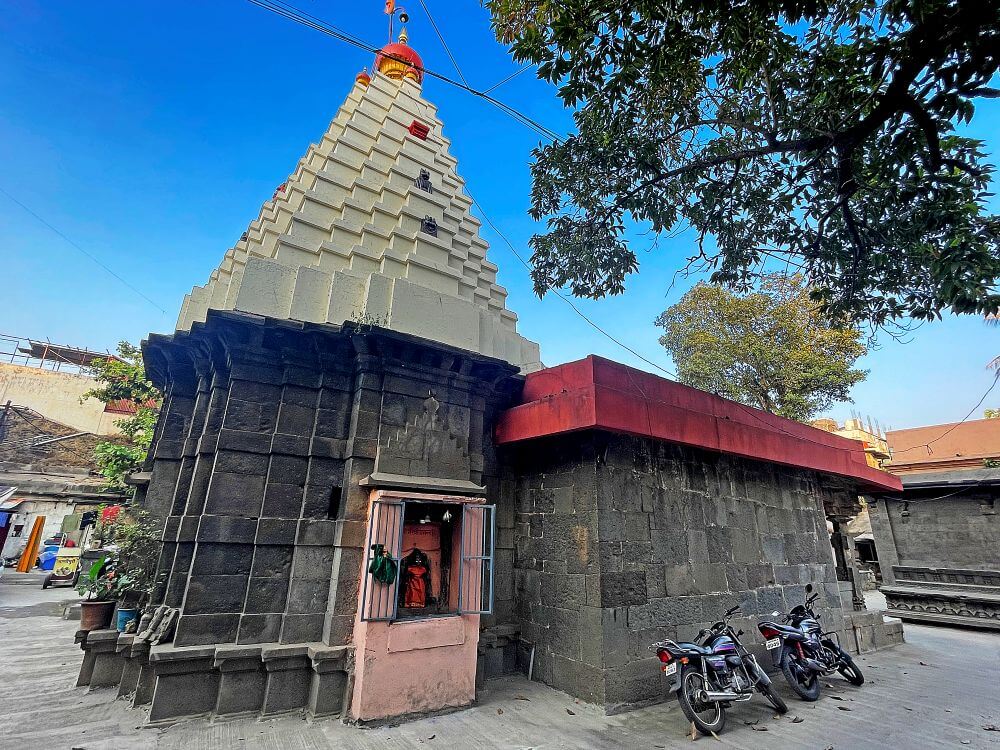
The temple is surrounded by somewhat dilapidated fortification walls on all four sides. Upon entering the courtyard, one sees elegant Deepmalas (lamp towers) built on high stone platforms. There are such lamp towers on all four sides of the temple. In front of the temple, there is a Tulsi Vrindavan on a platform. This temple was under the jurisdiction of Sardar Rekhuji bin Narsojirao Jadhav, who held the titles of Japtanmulukh and Sarnaubat in the Kolhapur State. Some of the Tulsi Vrindavans in this courtyard are the samadhis of women from the Jadhav family. Behind the temple, there is a shrine for the Goddess in a niche on a stone platform, where an ancient stone idol of the Goddess is installed.
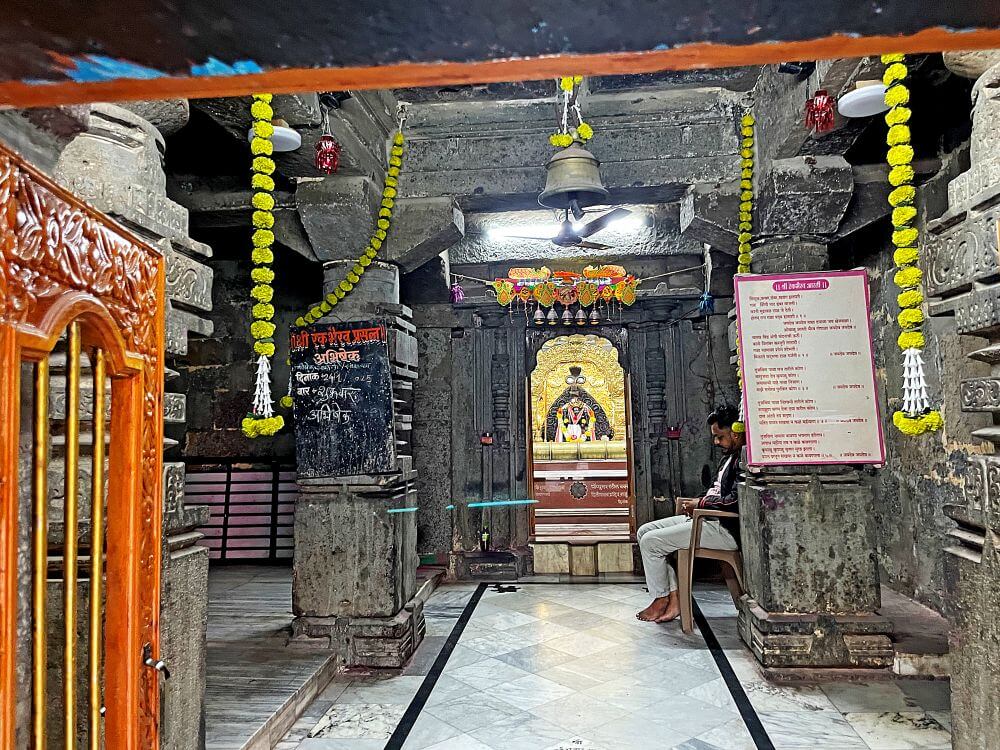
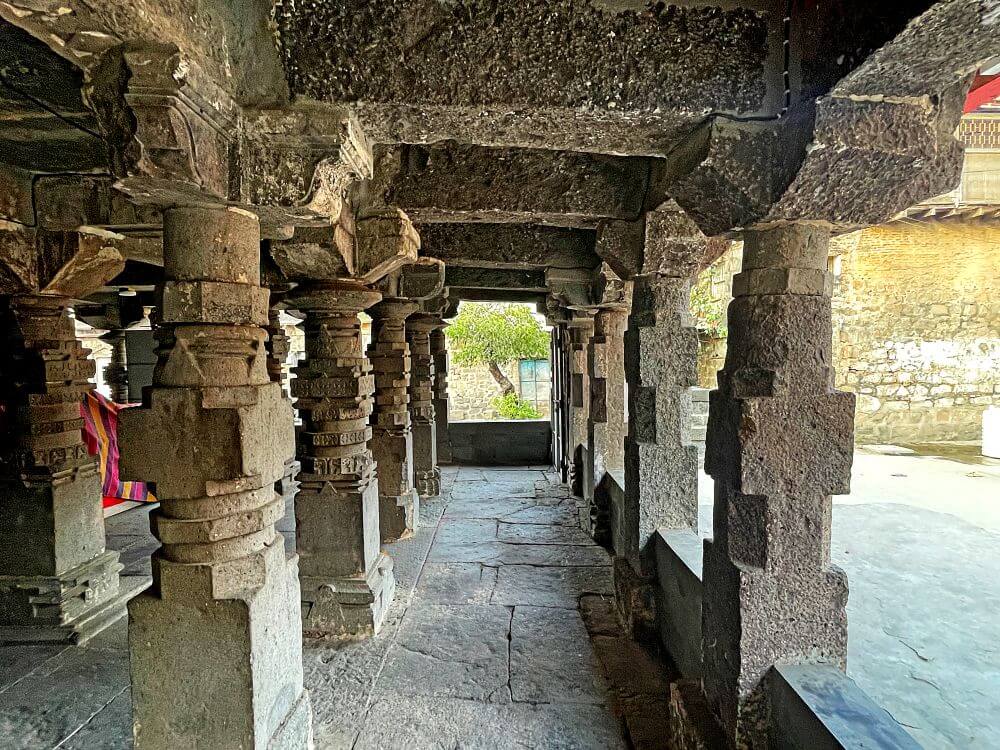
The structure of this stone-built temple consists of an Ovri (veranda), a Sabha Mandap (assembly hall), and a Garbhagriha (sanctum sanctorum). A newly built high Shikhara (spire) sits atop the sanctum. The temple is built on a high Jagati (platform). A marble porch leads to the veranda via four steps. This veranda and the assembly hall feature carved stone pillars. The pillars are designed with a square base, an octagonal and circular middle section, and a capital at the top that supports the beams. The middle shaft of these pillars is carved with floral and leaf motifs. According to temple architecture experts, this type of pillar design is primarily found in Chalukyan-era temples, clearly showing the influence of that architectural style.
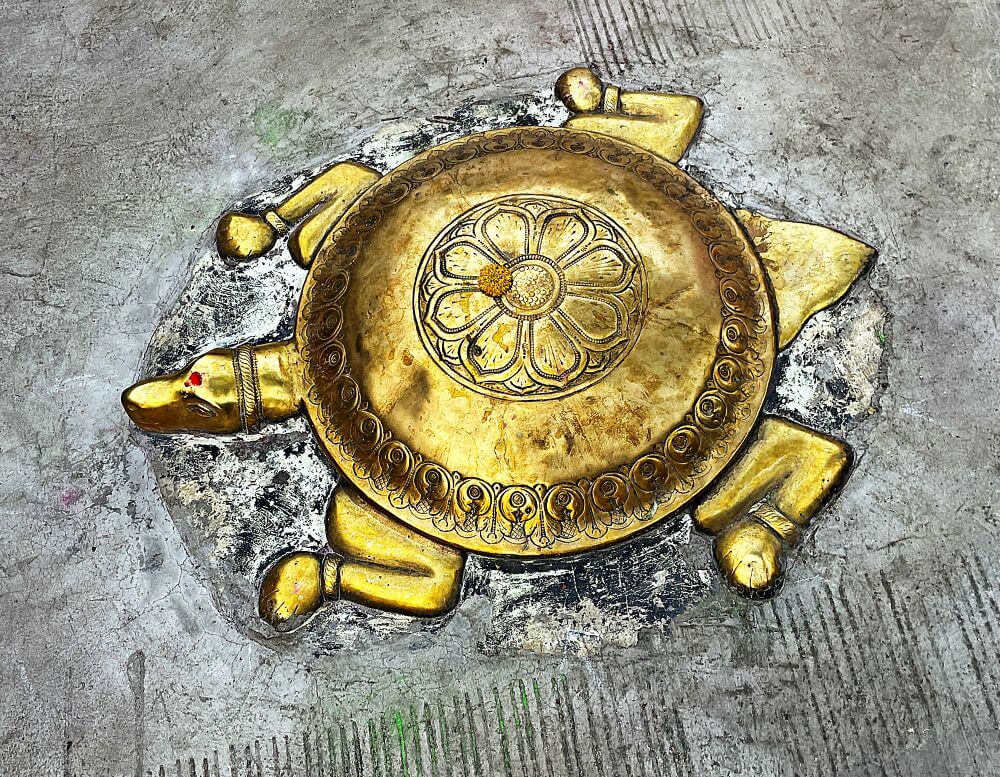
The entrance to the assembly hall is three-fold and covered with brass sheets. On the sides of the frame are large, flat door pillars. The threshold is made of stone and features a square section instead of a semi-circular moonstone. At the center of the door frame (Lalatbimba) is a brass idol of Lord Ganesha. Inside, there is marble flooring and stone pillars. In the center, there is a brass Kurma (tortoise) sculpture.
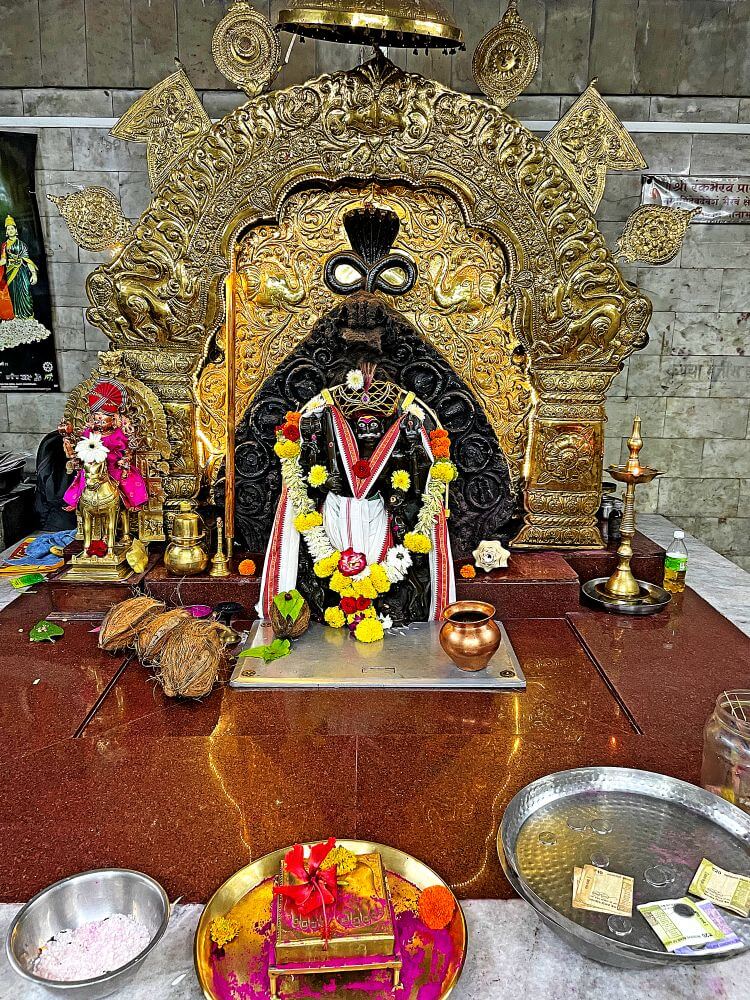
The entrance to the sanctum is also made of stone and features an arched top. The door frame is adorned with geometric carvings. The carved door pillars feature peacock motifs on their shafts. The sanctum is spacious and has a stone ceiling. Inside, on a high marble pedestal, stands the stone idol of Rankbhairav, wearing a Maratha-style turban. Behind the idol is a circular carved stone slab, and at the top, there is a five-headed serpent with its hood raised, coiled in the shape of the letter ‘ळ’. Behind the idol is a beautiful golden-plated Makhar (shrine frame). Beside the idol is a brass statue of Kalbhairav riding a horse.
On one side of the temple is a Vitthal Rukmini temple, as well as a stone-built Neminath Digambar Jain temple. According to the priests of the Rankbhairav temple, it is considered a place of faith for all communities, including the eighteen castes and the traditional village artisans. Regular Abhishek, Puja, Nanda Deep (eternal lamp), and Sanai-Chaughada rituals are performed in the temple. On the day of Dussehra, the palanquins of both Ambabai and Rankoba Deva are taken out, and the ceremony of their meeting is celebrated at the Panchganga Ghat.
This sacred temple stands as a testament to deep spiritual devotion, ancient architectural grandeur, and rich local cultural traditions.
The sanctum sanctorum houses the divine idol consecrated according to ancient Vedic traditions, surrounded by serene courtyards and traditional temple architecture.
Navratri, Maha Shivratri, Annual Temple Jatra & Deepotsav
Compare and book flights, secure top-rated local hotels near the temple, hire reliable guides, and rent cars instantly.
Extend your pilgrimage by visiting other highly sacred temples located nearby.


Add ₹999 more to unlock FREE SHIPPING!
Your sacred cart is currently empty.
Shop Photo FramesFill in your delivery details below to place your order.
Add comment