
Add ₹999 more to unlock FREE SHIPPING!
Your sacred cart is currently empty.
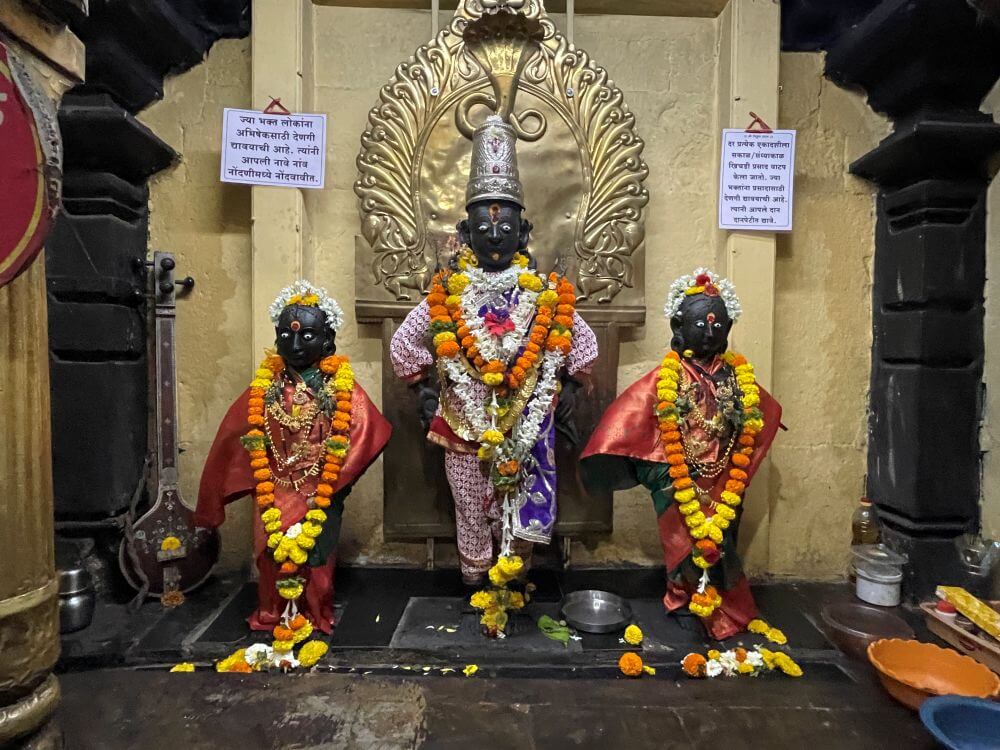
Shop Photo FramesLocated in the heart of Kolhapur city in Mangalwar Peth, the Vitthal Temple is counted among the most ancient and famous temples of the city. This temple is renowned for its deity of Vitthal, known as the ‘Vitthal wearing footwear’. Based on the architectural style, scholars estimate that this temple dates back to the 11th or 12th century. Devotees believe that Nandwal, located at some distance from Karveer, is the original abode of Vitthal, while the Vitthal in the Karveer temple comes here to partake in meals. A similarity is observed in the construction and design of the three temples at Pandharpur, Nandwal, and Karveer.
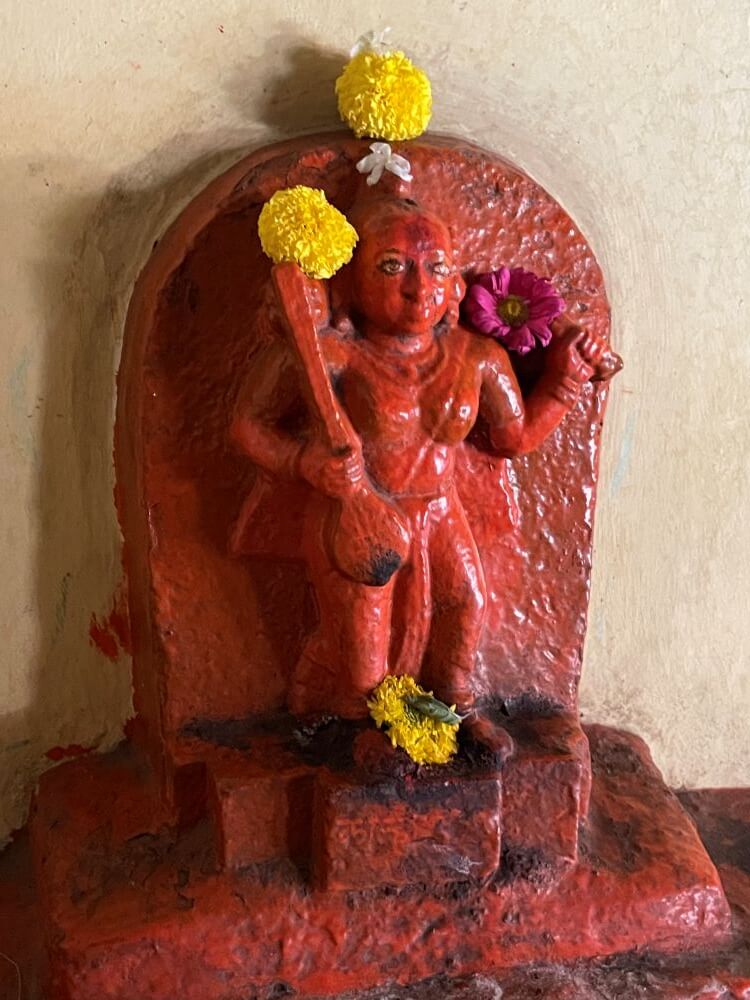
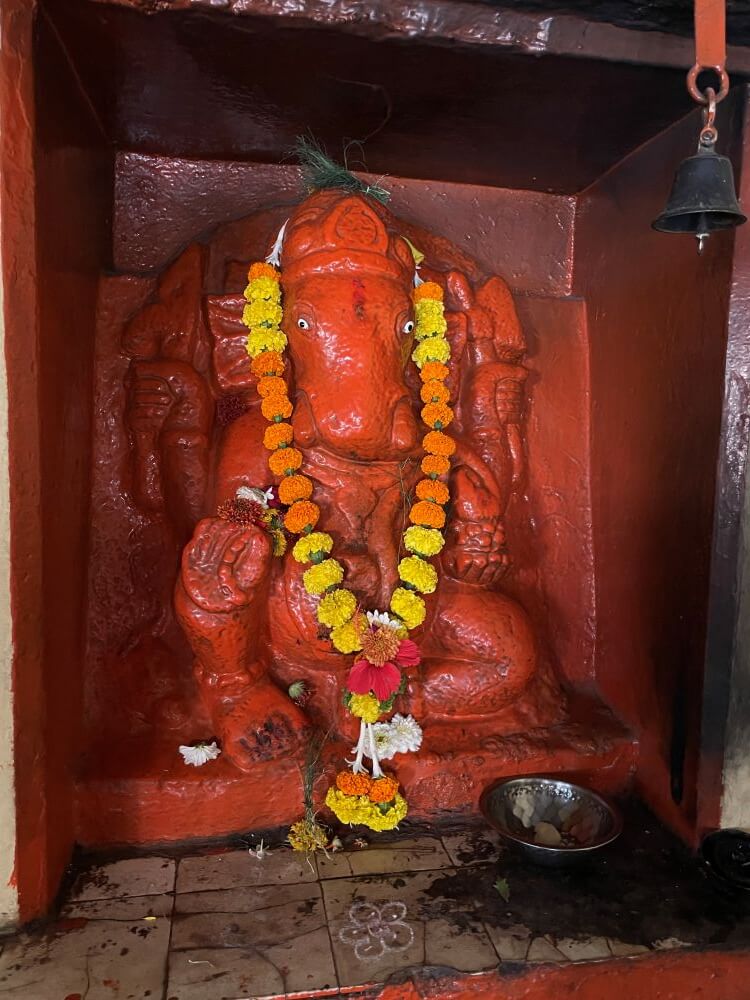
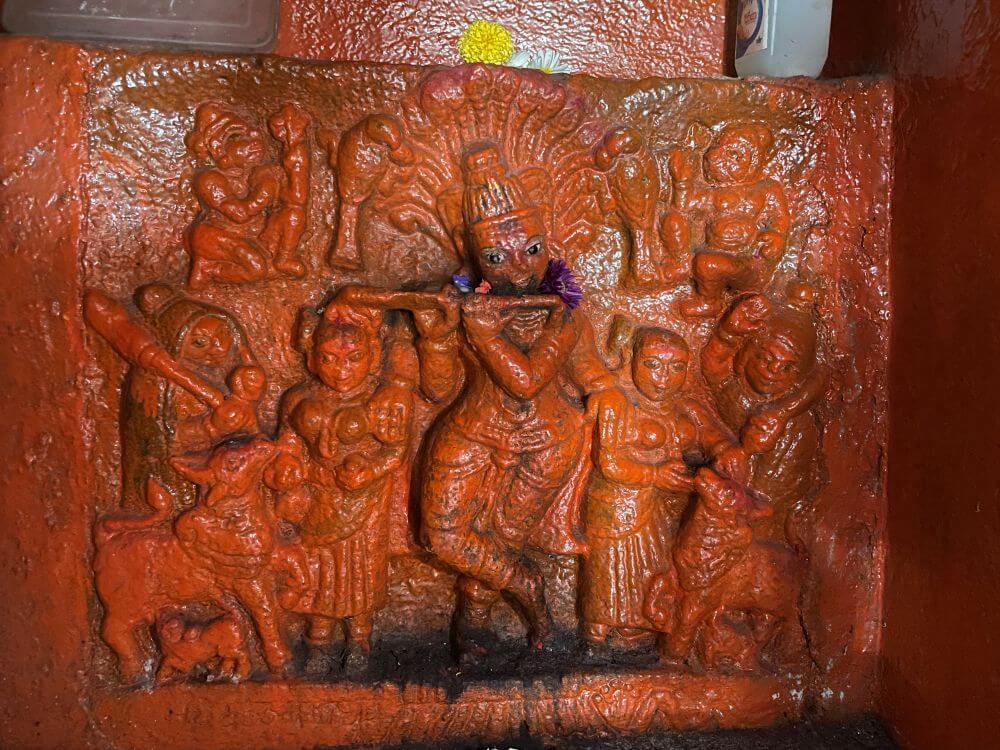
Near the premises of the ‘Nutan Marathi Vidyalaya High School’ in Mangalwar Peth, there is a cluster of temples including the Vitthal Temple. Along with the Vitthal Temple, there are other temples here, such as the ancient Omkareshwar Temple, Shriram Temple, Dakshinmukhi Hanuman Temple, Shiva Temple, and Dattatreya Temple. The original ancient Vitthal Temple consists of a Mukhamandapa (entrance hall), Gudhamandapa (inner hall), Antarala (vestibule), and Garbhagriha (sanctum sanctorum). During the period of the Karveer Sansthan, a wooden Sabhamandapa (assembly hall) was constructed outside this temple for religious programs like Bhajans, Kirtans, and festivals. This Sabhamandapa is simple in design. One enters the Mukhamandapa of the temple by climbing a few steps from this spacious assembly hall, which features square wooden pillars and a wooden ceiling. In a niche in the Mukhamandapa, there is a relief sculpture of Muralidhar Krishna. In the center, there is Lord Krishna playing the flute in a Dehudacharan posture (right leg crossed over the left), with a serpent hood above his head. Sculptures of Gopis, a cow, and a calf are carved beside Krishna. Above, sculptures of Hanuman, Garuda, and Shuka are carved. In a niche on the right, there is a stone idol of Ganesha smeared with vermilion. There is also an idol of the 15th-century Marathi saint-poetess Kanhopatra here. In one hand, the idol holds a Veena, and in the other, cymbals.
The Sabhamandapa of the main temple has an entrance with five door jambs. Although the door jambs or pillars are not intricately carved, the upper part of the door frame features beautiful carvings. An idol of Ganesha is placed at the lintel of the entrance. This stone Sabhamandapa of the original temple is also spacious. Sixteen carved pillars made of black stone are a distinctive feature of this temple. The temple in Pandharpur also has similar pillars. Beyond this is a small Antarala, followed by a four-pillared Garbhagriha. The entrance to the Garbhagriha has five jambs. The door pillars are carved. The upper part of the door frame features a Torana (arch) carved with small replicas of temple Shikhara (spires). Inside the sanctum, on a high stone pedestal, are beautiful idols of Vitthal, Rahi, and Rukmini. The Vitthal idol is three to three-and-a-quarter feet tall. With both hands resting on the hips, the right fist of the idol holds the sun deity’s Chakra, while the left hand holds a conch. The idol wears traditional wheat-grain-shaped ornaments (Gahutode). There are Makarkundalas (crocodile-shaped earrings) in the ears. On the head of the Vitthal idol is a Matulinga. The idol is adorned with various ornaments. On the feet, there are ornaments called Tode and Padjalika. Devotees mistake this Padjalika ornament for footwear. Due to this misunderstanding, the deity became famous as ‘Vitthal wearing footwear’. Some devotees also call this Vitthal the ‘Traveling Vitthal’. Behind the idol is a golden-plated, semi-circular arch (Makhar), and in its center is a serpent deity with a raised hood. At the top is a Kirtimukha. To the left of the Vitthal idol is an idol of Rukmini, approximately two-and-a-half feet tall, and to the right is the idol of Rahi. Both these idols have their hands on their hips and are adorned with ornaments. Rahi and Rukmini also wear the Padjalika ornament on their feet.
In front of the wooden Sabhamandapa of the temple, there is also the ‘84 Lakh Yoni’ pillar. This pillar, which has 84 squares and tapers into a dome shape at the top, has been painted orange. There is a belief that by leaning one’s back against this pillar and chanting the name of Vitthal, one attains liberation from the cycle of birth and death, and one does not have to be born through the 84 lakh species. A similar pillar exists in the Vitthal Temple of Pandharpur. A short distance from here, on a high platform, is a small temple of Mahadeva. In the niches here, there are stone idols of Hanuman and Garuda. The most unique feature here is a sculpture in one of the niches. This sculpture depicts the devotion of the devotee Pundalik towards his parents. It shows Pundalik serving his sleeping parents. In his right hand, he holds a brick, which he is offering to Vitthal to stand upon, and with his left hand, he is massaging his father’s feet. There are also some Virgal (hero stones) on the outer walls of the Mahadeva temple. One of these Virgal is highly unique. It features two three-tiered hero stones carved on a single slab, with a large Kirtimukha carved at the top. Such a Virgal is rare. A sculpture of the serpent deity is also visible here. On Ashadhi Ekadashi and Kartiki Ekadashi, devotees flock to the Vitthal Temple. Devotees believe that because this is a ‘Jagrut Devasthan’ (a spiritually awakened place), one’s wishes are fulfilled upon visiting here.
Beside the Vitthal Temple is the two-story Shriram Temple. The specialty of this temple is the idol of Lord Shriram and Sita carved in sandstone. In the Dhyan-Shloka of the Ramraksha Stotra composed by Sage Budhkaushika, Shriram is described as ‘Vamankarudha Sita’ (with Sita seated on his left lap). This idol is of the same nature. Here, Sita is seated on the left lap of Shriram.
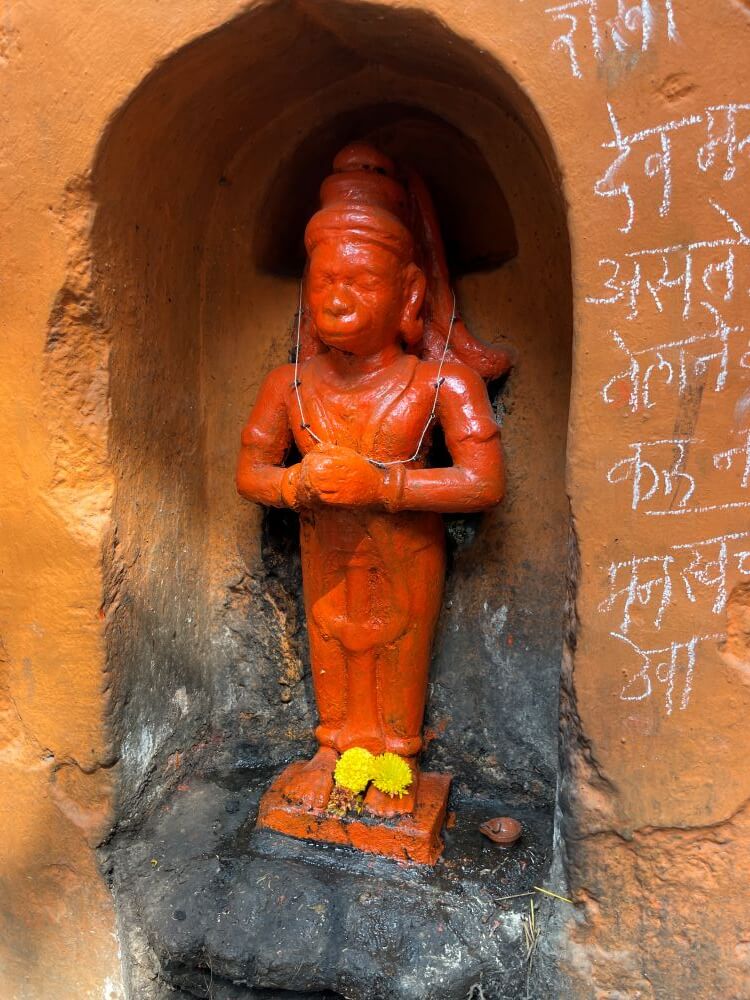
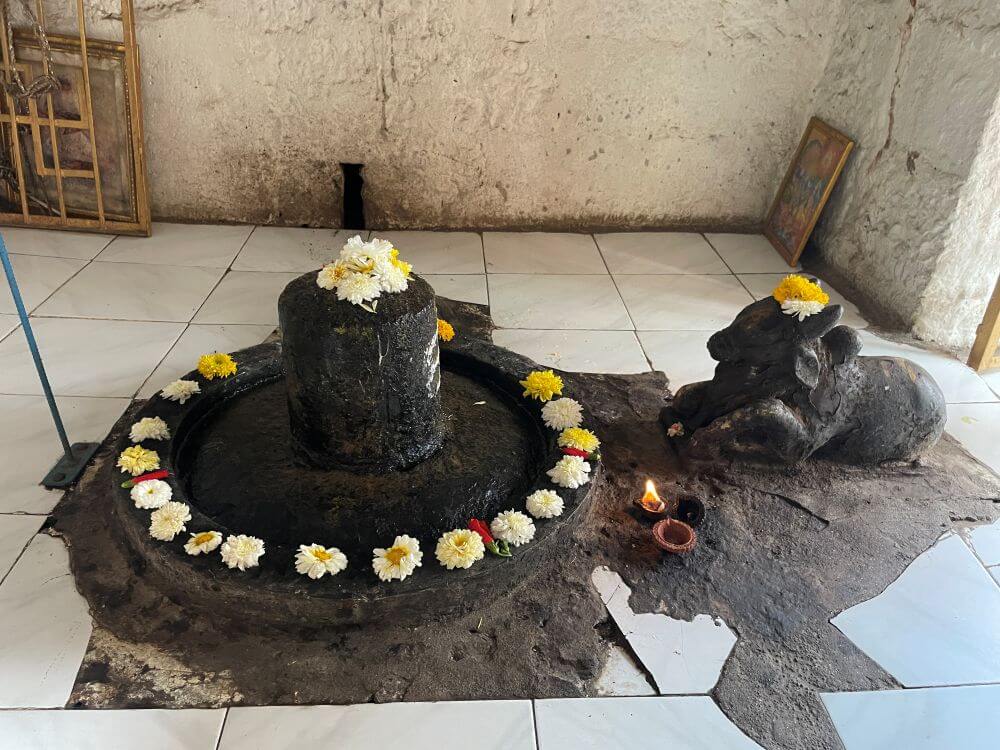
Beside the Ram Temple is the ancient Omkareshwar Temple. This temple consists of a Mukhamandapa, Sabhamandapa, Antarala, and Garbhagriha. The pillars, arches, and door jambs of the temple are beautifully carved. In the Mukhamandapa of the temple, there is a large, ancient idol of Nandi. The idols of the door guardians (Dwarapalas) at the base of the Sabhamandapa’s door jambs are eye-catching. A serpent hood is carved above the heads of these idols. The arch on the door frame of the Garbhagriha is decorated with small replicas of Nagara and Vesara style Shikhara. Also, idols of Yakshas and Yakshinis are carved on the door pillars. In the Garbhagriha, there is the Omkareshwar Mahadeva Linga. A large brass serpent is placed over it. The outer walls of this temple also feature fine carvings. These include sculptures of many gods and goddesses as well as some Jain-style sculptures. In front of this temple, under a large tree, is a Hanuman temple, and on the path leading to the Vitthal Temple, on the left, is a single-faced Dattatreya temple.
This sacred temple stands as a testament to deep spiritual devotion, ancient architectural grandeur, and rich local cultural traditions.
The sanctum sanctorum houses the divine idol consecrated according to ancient Vedic traditions, surrounded by serene courtyards and traditional temple architecture.
Navratri, Maha Shivratri, Annual Temple Jatra & Deepotsav
Compare and book flights, secure top-rated local hotels near the temple, hire reliable guides, and rent cars instantly.
Extend your pilgrimage by visiting other highly sacred temples located nearby.


Add ₹999 more to unlock FREE SHIPPING!
Your sacred cart is currently empty.
Shop Photo FramesFill in your delivery details below to place your order.
Add comment