
Add ₹999 more to unlock FREE SHIPPING!
Your sacred cart is currently empty.
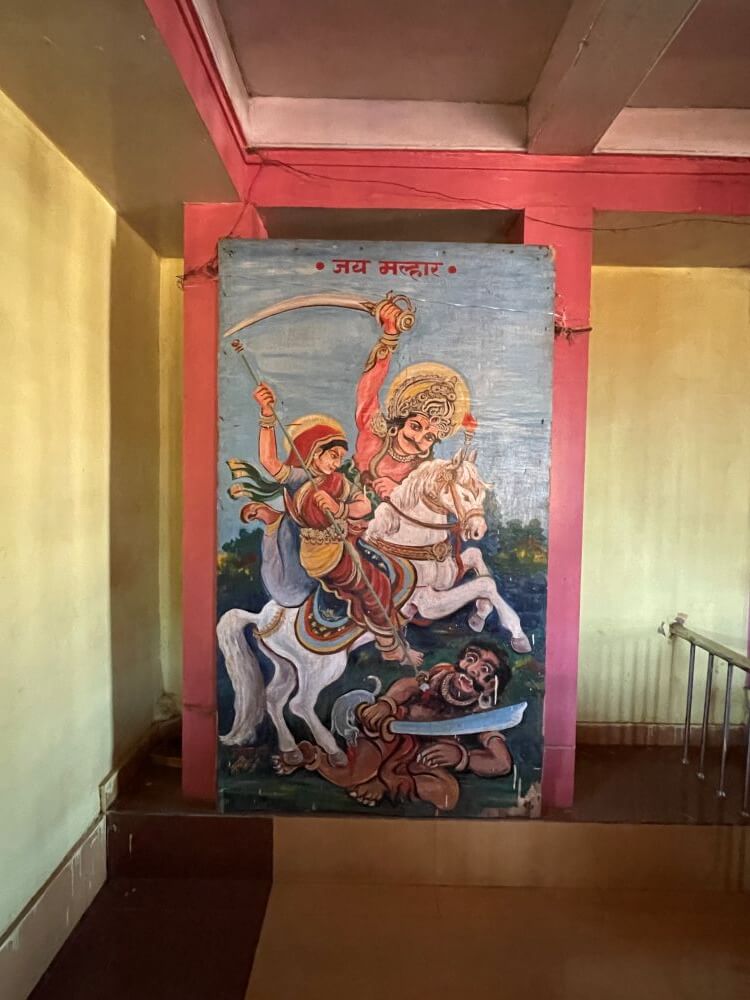
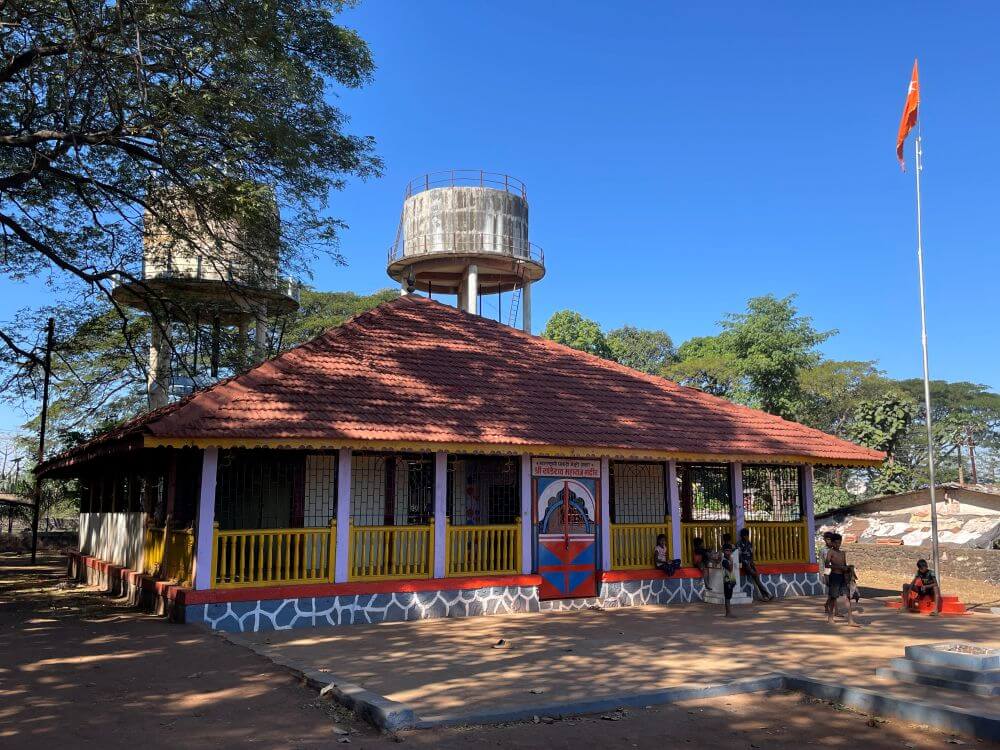
Shop Photo FramesKhandoba or Khanderaya is considered a symbol of Shiva and Shakti. The original seat of this Khandoba in Maharashtra is at Jejuri. The royal family of the Jawhar princely state had immense devotion to Khandoba. The letters ‘Jai Malhar’ were prominently featured on the royal emblem of the Jawhar state. Born out of this devotion and a divine vision (drishtanta) granted by the Khanderaya of Jejuri, this Khanderao Maharaj temple was established in Jawhar by the royal family. This site, which is the family deity (kuldaivat) of the Jawhar royal family, is today famous in Palghar district as ‘Dhakti Jejuri’ (Little Jejuri). The three-day Champashashti Yatra held here is the largest fair in the Jawhar taluka.
The ancient name of Jawhar was ‘Javar’. Even before the establishment of Swarajya by Chhatrapati Shivaji Maharaj, this state of the tribal Warli community existed. King Jayadev (Jayaba) Mukne of the Mahadev Koli community from Mukne village in the Igatpuri region conquered it from the Warlis and established the Koli kingdom here. When Alauddin Khilji and Muhammad Tughlaq devastated the Devgiri empire, the Jawhar empire was established during that same period, in the year 1316 AD. Jayaba Mukne’s eldest son, Dhulbaraje alias Nimshah, was a great warrior. He conquered about 22 forts across the Nashik and Thane districts. On June 5, 1343, the Sultan of Delhi, Muhammad bin
Tughlaq, bestowed the title of ‘Raja’ upon Nimshah. Bhopatgad (Bhupatgad) in Jawhar was the capital of this Koli kingdom. Records indicate that the annual revenue of the state at that time was about 9 lakh rupees (90 thousand pounds). The Jawhar princely state existed for 632 years, until June 10, 1948. It was the only princely state in the Thane and surrounding region. After India gained independence, this state was merged into India.
The mother of the King of Jawhar, Malharrao alias Patangshah Mukne IV (1865–1905), Queen Lakshmibai, was the daughter of the Maratha Sardar Ramji Chavan from Jejuri. Her maiden name was Muktabai. Since Khandoba was her presiding deity, she worshipped him regularly. Legend has it that one day, Khandobaraya appeared to her in a vision and said, “I am at a certain place; search for it and build my temple there.” Following this, when they dug at the current site of the temple, a Pindi was discovered. She instructed Patangshah to build a temple on this spot. Accordingly, Patangshah IV built this Khanderaya temple on a plateau on one side of Jawhar village, which resembles the Kadepathar of Jejuri, near the Surya Lake. This clarifies that the temple was built in or around 1867, as Patangshah IV took over the administration of the state after March 18, 1867. During the reign of the state, a very large Champashashti Yatra used to be held here. Many devotees from Nashik, Igatpuri, Ghoti, Deolali, and other areas would attend this yatra.
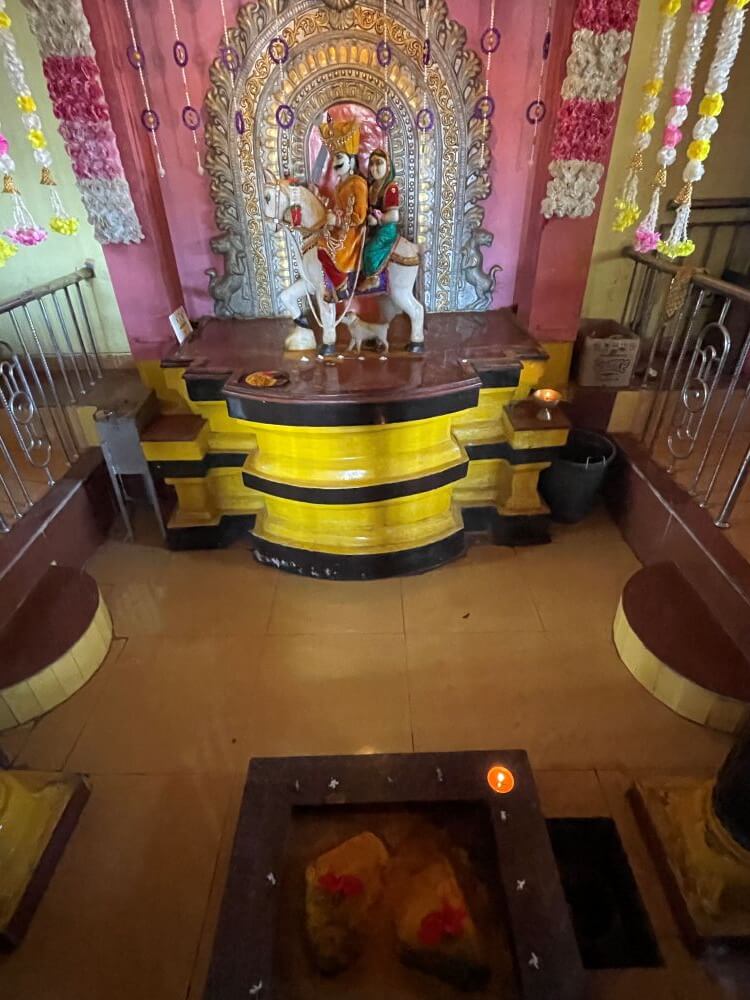
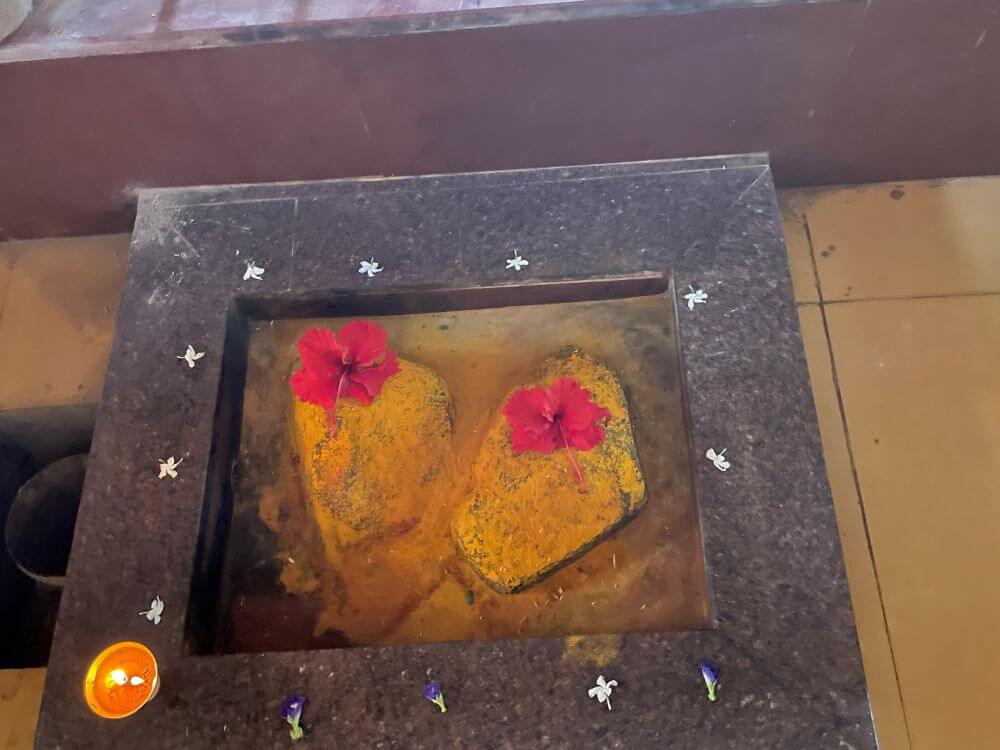
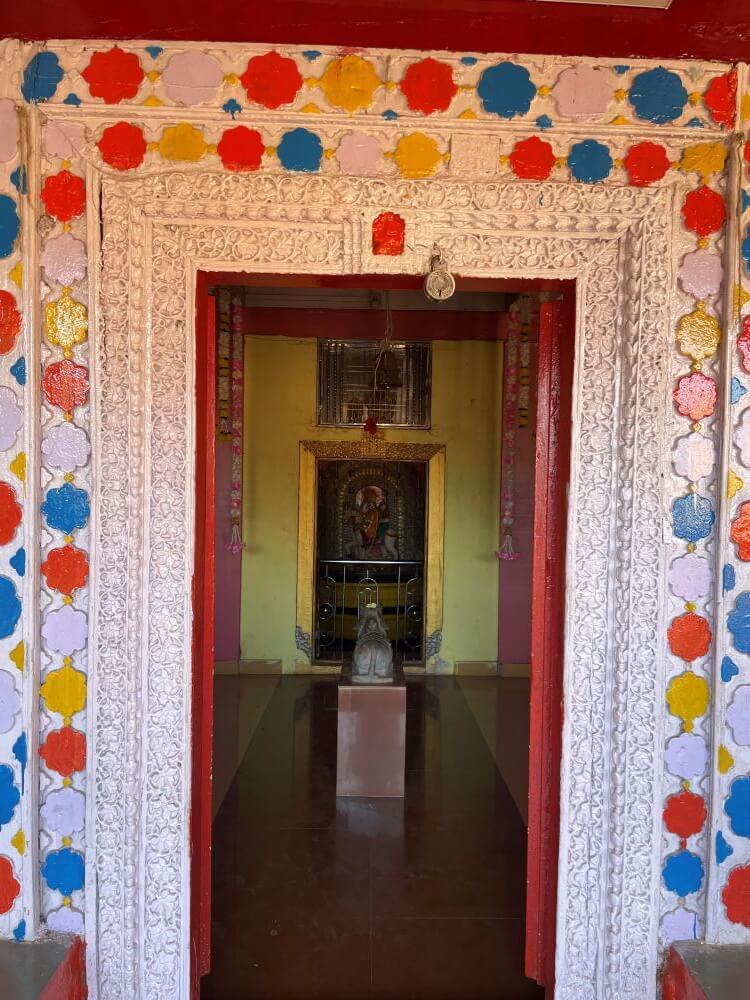
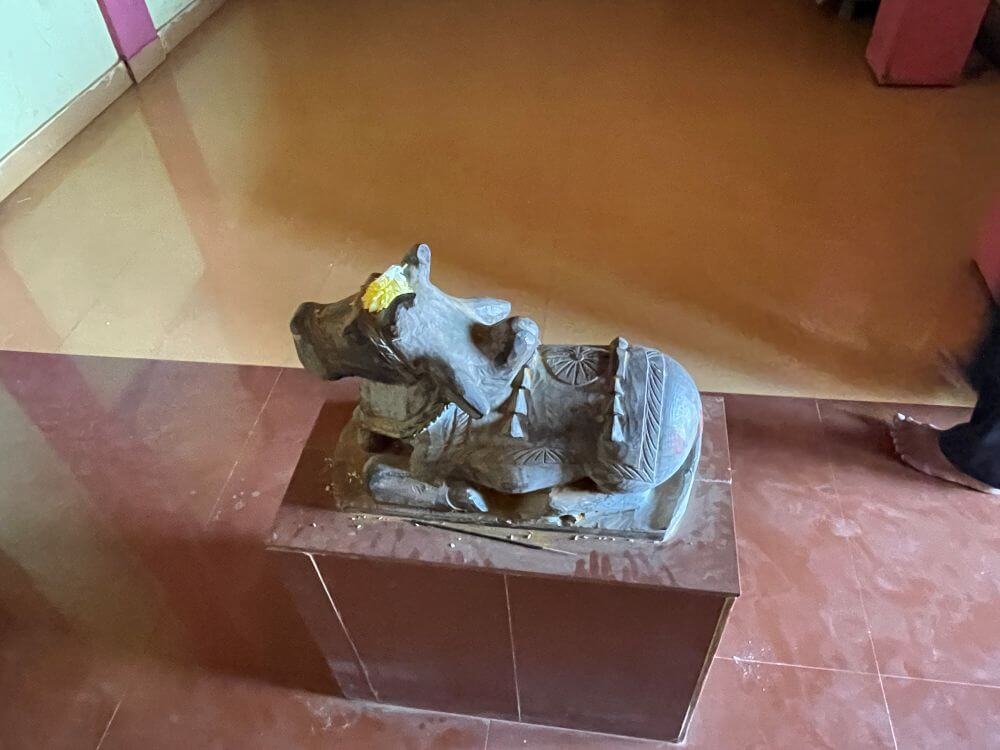
Jawhar, located in the tribal, remote, and hilly region of Palghar district, is known as a tourist destination. Jawhar is often called the Mahabaleshwar of Palghar district. The Khanderao Maharaj temple is situated in a large courtyard near the Jawhar bus stand. In front of the temple, there is a Homa Kund (sacrificial fire pit) and a Tulsi Vrindavan. Entering through the main gate of this four-sided tiled-roof temple, one finds a porch-like area. From there, one enters the temple’s Sabha Mandap (assembly hall). The door frames of the Sabha Mandap feature intricate carvings, and there is an image of Lord Ganesha at the center of the lintel. In the enclosed Sabha Mandap, there is an idol of Nandi on a pedestal in the center. In the niches above the entrance to the sanctum sanctorum (garbhagriha), there are brass idols of Ganesha and Khandoba riding a horse. Inside the sanctum, on a high pedestal, are the idols of Khandoba and Mhalshai riding a white horse. A small dog is also present near the horse’s feet. Additionally, near this pedestal, there are the Swayambhu Lingas, which are the original site of Khandoba, consisting of two stones.
According to the story in the Malhari Mahatmya text, Khandoba fought against the demons Mani and Malla for six days, from Margashirsha Shukla 1 to 6. He killed both of them on the sixth day, Champashashti. Khandoba’s festival is celebrated everywhere during these six days. This festival is known as ‘Khandobache Navratri’. During this period, a large three-day fair is held at this Khanderao Maharaj temple. On the day of Champashashti, at 3 PM, the Palkhi (palanquin) of Khanderaya departs on horseback and is taken around the entire village. At night, Gondhal programs are held. Mahaprasad and Bhandara (sacred turmeric powder) are organized for the visiting devotees. Many devotees from North Maharashtra who are unable to travel to Jejuri attend this yatra.
One kilometer away from the Khanderao Maharaj temple is the Jai Vilas Palace, the royal palace of the Jawhar state. This palace is spread over 500 acres. It is the private property of the Mukne family of the royal house. Therefore, entry into the palace is prohibited, but its grandeur and beauty can be experienced from the outside.
This sacred temple stands as a testament to deep spiritual devotion, ancient architectural grandeur, and rich local cultural traditions.
The sanctum sanctorum houses the divine idol consecrated according to ancient Vedic traditions, surrounded by serene courtyards and traditional temple architecture.
Navratri, Maha Shivratri, Annual Temple Jatra & Deepotsav
Compare and book flights, secure top-rated local hotels near the temple, hire reliable guides, and rent cars instantly.
Extend your pilgrimage by visiting other highly sacred temples located nearby.


Add ₹999 more to unlock FREE SHIPPING!
Your sacred cart is currently empty.
Shop Photo FramesFill in your delivery details below to place your order.
Add comment