
Add ₹999 more to unlock FREE SHIPPING!
Your sacred cart is currently empty.
Shop Photo FramesThe forest in the Katyayani hills of Kolhapur was once a reserved hunting ground. The Jayanti river originates there and eventually joins the Panchganga river. Although it is a tributary, over time it took the form of a stream (Odha), and the ancient Siddhivinayak temple situated on its bank came to be known as the Odhyavaracha Siddhivinayak Temple. Previously, the old gateway of Kolhapur was located near this temple. Currently, this temple is in the heart of the city. There is a tradition of seeking the blessings of Siddhivinayak before and after performing the Karveer Yatra to ensure the pilgrimage is successful and complete.
This temple was built by the Joshirao family of this region. The Joshirao family was renowned as scholars, poets, and astrologers. Dr. Ra. Chin. Dhere has provided information about this family in his book ‘Karveer-Nivasini Mahalakshmi’. According to it, the known progenitor of the Joshirao family, Ballal Joshi, was a Chitpavan Kokanastha Brahmin. He was from Sangameshwar in Ratnagiri district. After the passing of Chhatrapati Sambhaji Maharaj, he came to the Kolhapur region under the shelter of Maharani Tarabai. Dajiba Joshirao, who wrote the Marathi text ‘Karveer Mahatmya’, was his descendant. At the end of this text, in the ‘Kavikula-varnan’, he mentioned that he was a protégé of Shahaji Maharaj, also known as Buwasaheb. The reign of Buwasaheb Maharaj was from 1821 to 1837. It was during this period that the Karveer Mahatmya was composed.
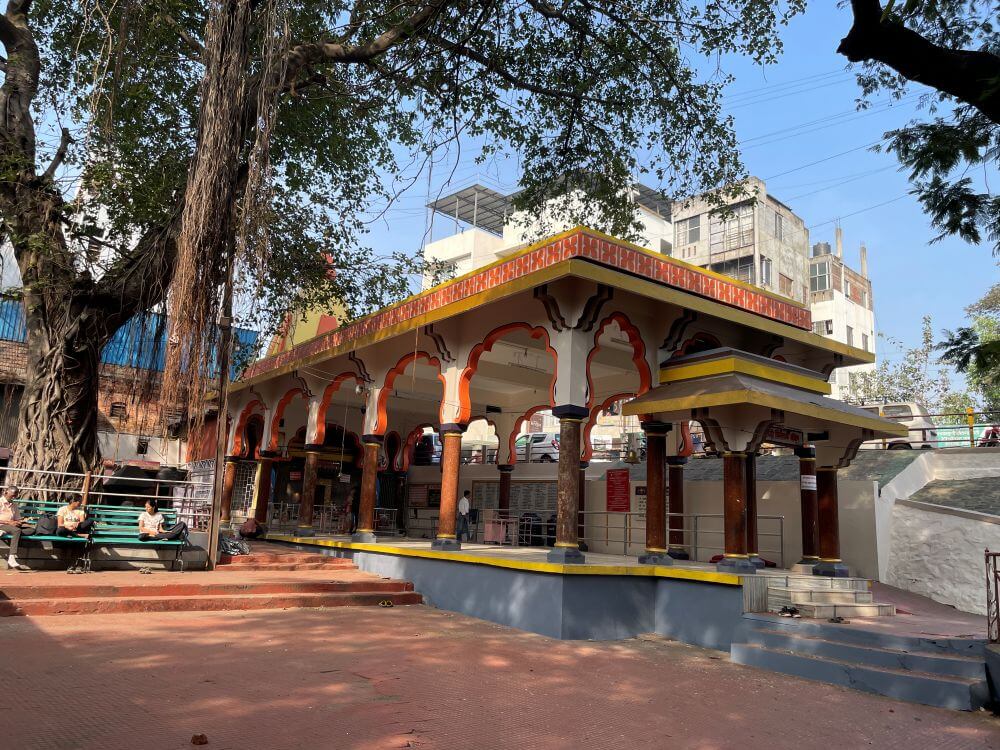
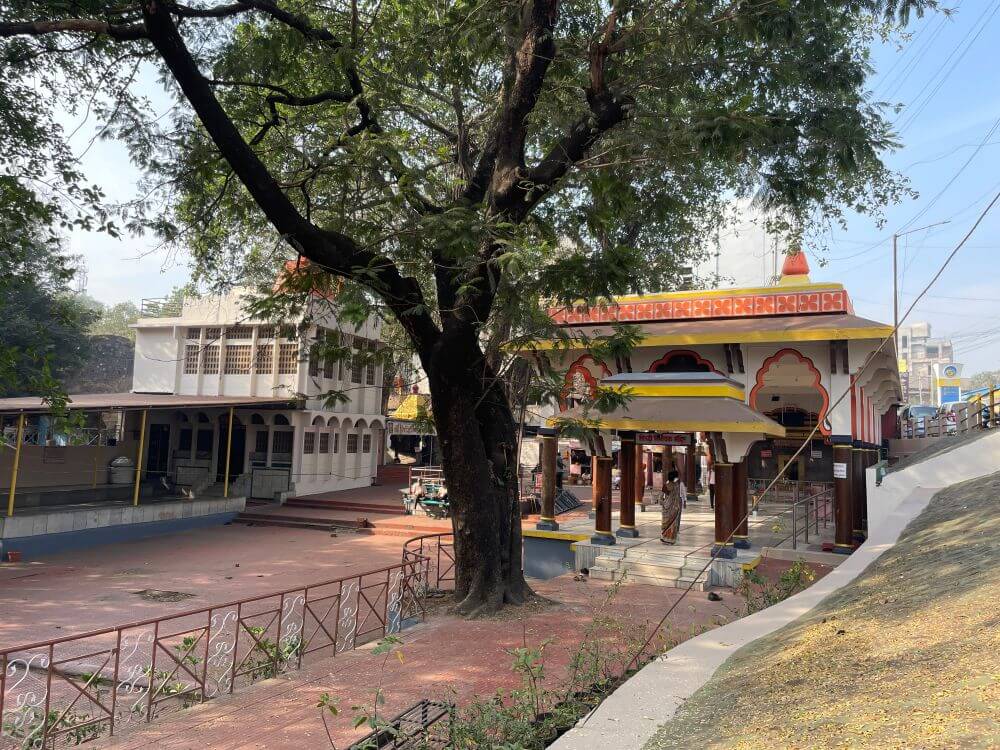
The main presiding deity of the Joshirao family is Ganesha. Ballal Joshirao was appointed as the astrologer and religious advisor to the Chhatrapati of Kolhapur. During that time, he established three major Ganesha temples in Kolhapur. One is the Siddhivinayak temple located on the left side after entering through the main gate of the Ambabai temple, the second is the Binkhambi Ganesha temple located nearby after exiting the main gate, and the third is the Siddhivinayak temple on the bank of the Jayanti stream. This temple on the stream was once on the outskirts of the city. Now, due to changes in urban planning, it has become a part of the city. Not only that, but the temple, which was once at road level, is now below the main road. One must now descend a few steps from the main road to enter the temple courtyard. After descending, this east-facing temple is situated on the right side. The temple structure consists of a Sabhamandap (assembly hall) and a Garbhagriha (sanctum sanctorum). The Sabhamandap is of modern construction, large and open in nature. It is fitted with marble tiles. In this bright and airy Sabhamandap, a large number of devotees can sit together for Kirtan and Bhajan.
The Garbhagriha here is made of stone and is the original temple from ancient times. In front of it, a large cement concrete arch has been constructed. On its pillars, colorful portraits of the gatekeepers Jaya and Vijaya are painted. The stone-built Garbhagriha of the temple is six by six square feet. Its entrance is small, measuring three feet in height. The entrance is covered with silver plating and features intricate carvings. A beautiful idol of Ganesha is installed in a silver throne inside the Garbhagriha.
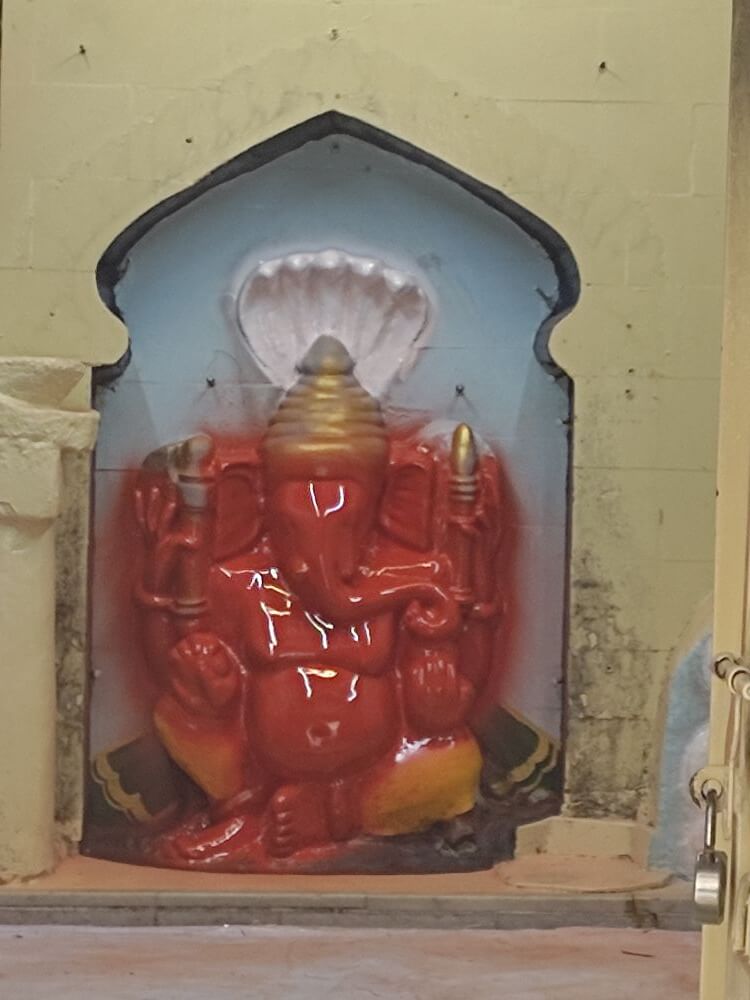
This idol is in the Lalitasana posture (with the right leg folded). Painted in vermilion, this idol has a trunk turned to the left and is four-armed. In the right hands of the idol are a Parashu (axe) and a tusk, while in the left hands are an Ankusha (goad) and a Modak. The idol wears a silver crown on its head. A five-hooded Shesha (serpent) forms a canopy over its head. To the right of this Siddhivinayak, another idol of Ganesha is seated. It is an ancient stone idol, and it is believed that this is the same Ganesha whom Agastya and Lopamudra worshipped here, as mentioned in the Karveer Mahatmya. He is called Varadvinayak. To the right of the Siddhivinayak idol, there is also an idol of the serpent deity.
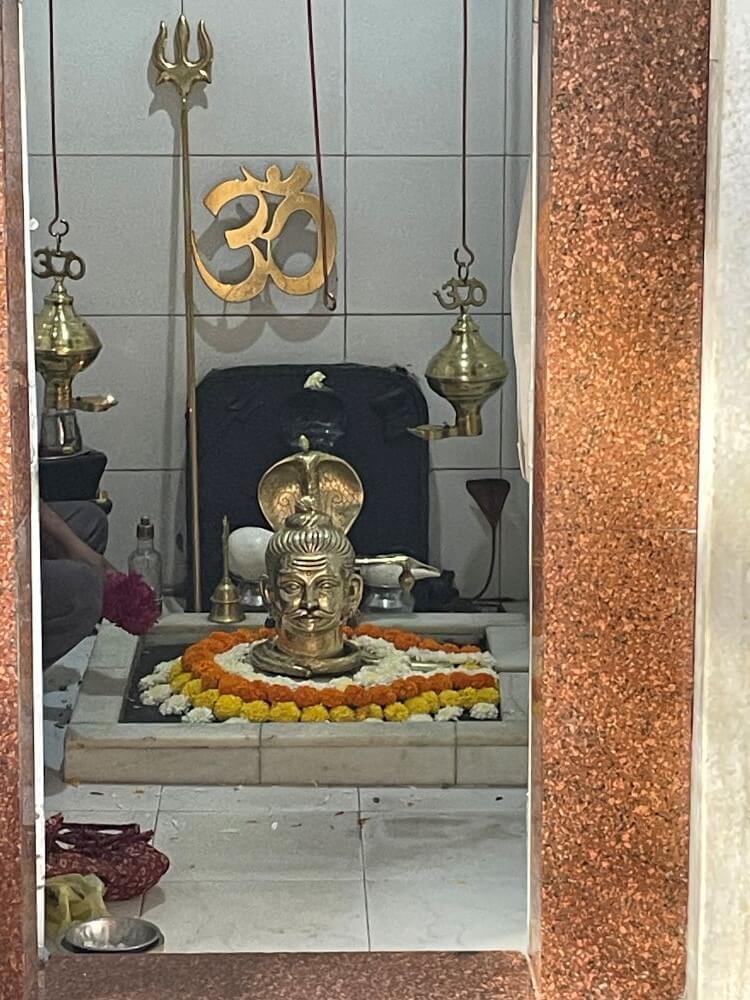
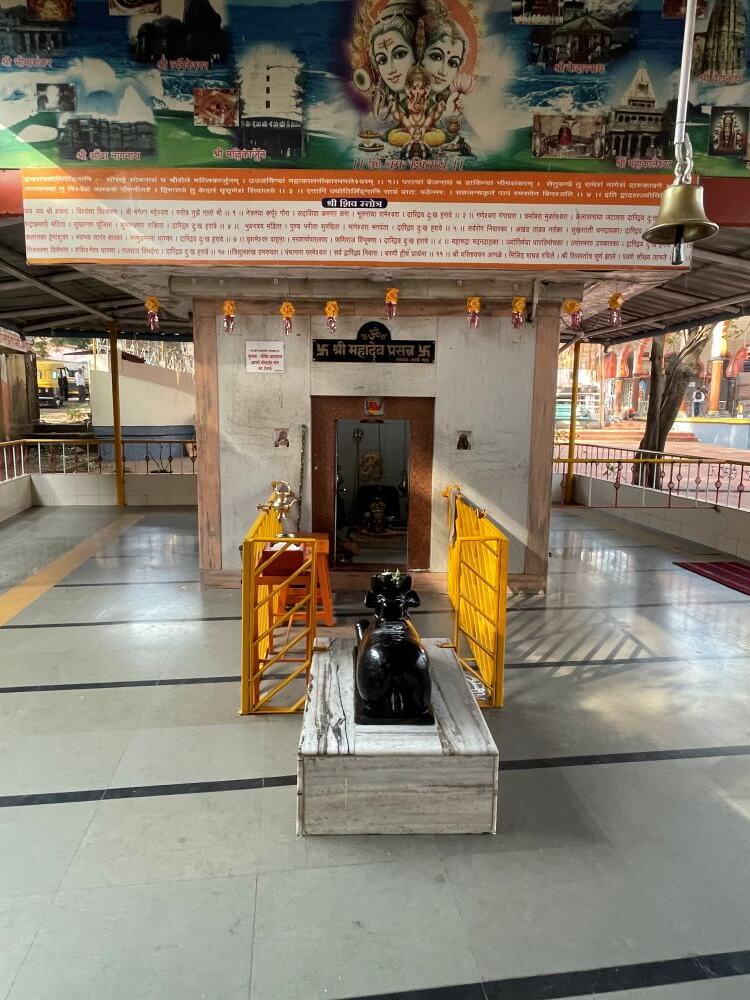
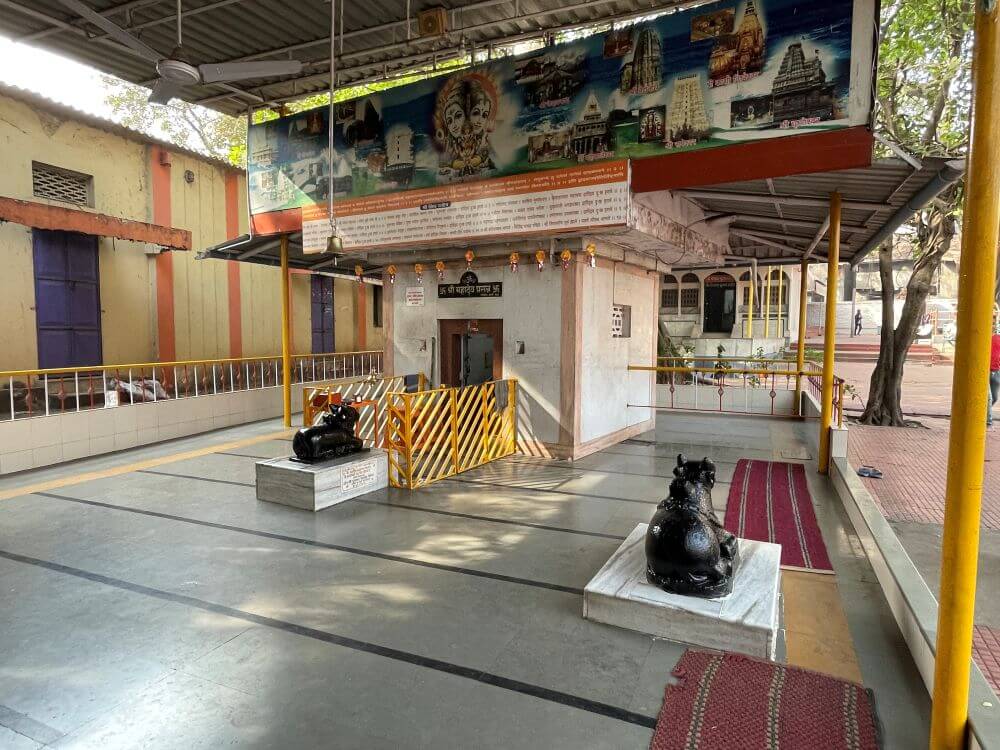
In the temple courtyard, there are temples of Mahadeva and Gopalakrishna. After descending the steps from the main road, the Mahadeva temple is directly in front. Just as the two idols of Ganapati are a specialty of this Siddhivinayak temple, the uniqueness of this Mahadeva temple is that there are two Nandi statues here. The Shiva Linga in the sanctum of the temple is also of a different nature. Its base (Shalunka) is square-shaped, and it features a mask of Shankara and a serpent hood. To the left of the Siddhivinayak temple is a modernly built temple of Gopalakrishna. In the sanctum of this temple, marble idols of Radha and Krishna are seated.
In the Siddhivinayak temple, the festivals of Ganesh Chaturthi in the month of Bhadrapada and Ganesh Jayanti in the month of Magh are celebrated with great enthusiasm and in a devotional atmosphere. A large number of devotees gather here for darshan on Sankashti Chaturthi and Vinayaki Chaturthi. During Navratri, on the day of Lalita Panchami, the Oti (offering) of the primordial power, Shri Mahalakshmi, is filled by Ganaraya. Durvankur Puja, Padya Puja, and Panchamrit Abhishek Puja are also performed in this temple. A fixed fee is charged for these. There is also a facility to perform rituals according to the wishes of the devotees and send the Prasad by post. Khichdi is distributed here every Sankashti Chaturthi.
This sacred temple stands as a testament to deep spiritual devotion, ancient architectural grandeur, and rich local cultural traditions.
The sanctum sanctorum houses the divine idol consecrated according to ancient Vedic traditions, surrounded by serene courtyards and traditional temple architecture.
Navratri, Maha Shivratri, Annual Temple Jatra & Deepotsav
Compare and book flights, secure top-rated local hotels near the temple, hire reliable guides, and rent cars instantly.
Extend your pilgrimage by visiting other highly sacred temples located nearby.


Add ₹999 more to unlock FREE SHIPPING!
Your sacred cart is currently empty.
Shop Photo FramesFill in your delivery details below to place your order.
Add comment