
Add ₹999 more to unlock FREE SHIPPING!
Your sacred cart is currently empty.
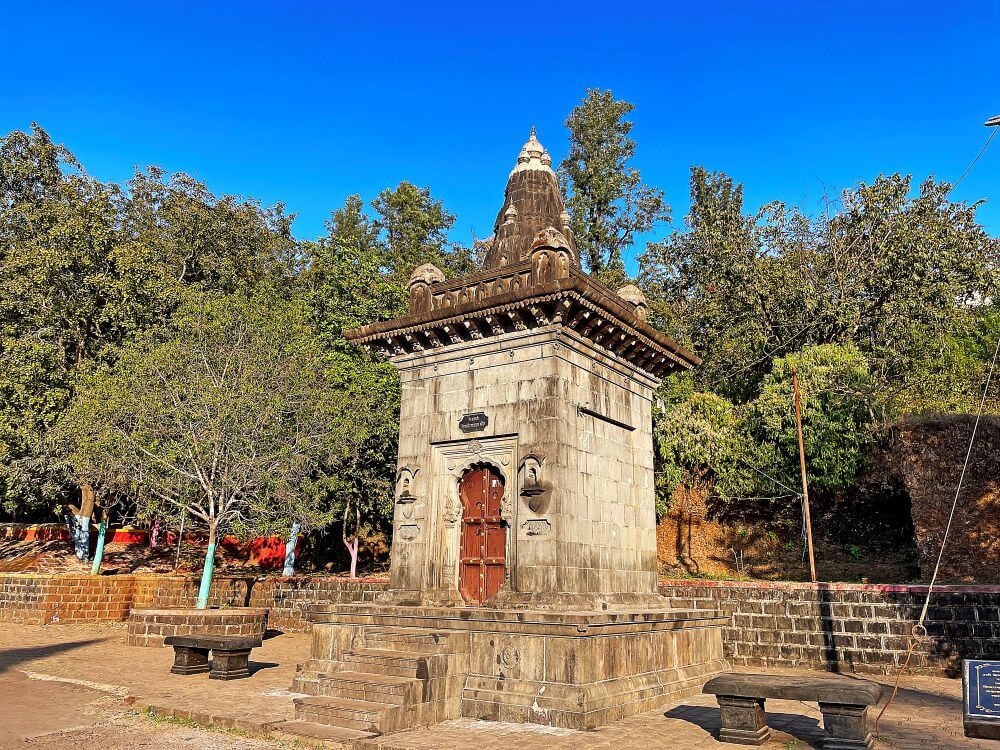
Shop Photo FramesPanhalgad is significantly recognized as the second fort after Sindhudurg Fort to house a temple of Chhatrapati Shivaji Maharaj. This elegant, small temple of Shivraya is situated on this fort, which was captured by Chhatrapati Shivaji Maharaj with great ingenuity in the year 1659 and stands as a witness to the glorious chapters of Maratha history. The world’s first temple of Shiv Chhatrapati was built on Sindhudurg Fort in 1695 during the reign of Chhatrapati Rajaram Maharaj. Later, around 1906-07, Shahu Chhatrapati constructed a spacious assembly hall (Sabhamandap) for that temple. It was this same Shahu Chhatrapati who built this temple on Panhalgad in 1913.
This beautiful, upright-shaped temple stands on a high stone platform in a spacious courtyard near the Tabak Garden and in front of the Tararani Palace on the fort. The entrance to the temple is arched. There is intricate carving on the door pillars. On both sides of the door, there are small carved niches in the walls. The temple features a spire in the Urushringa style, meaning smaller spires are carved onto the main spire. It is topped with one main and four smaller Amalakas. Inside the temple, there is an equestrian statue of Chhatrapati Shivaji Maharaj carved in white marble. This statue was created by the sculptor Dhwaj Mistri from Kagal. Beside the statue, the Padukas (footprints) of Maharani Tarabai Saheb have also been installed.
Shahu Maharaj of Kolhapur often stayed at Panhalgad. Whenever he resided here, he would regularly visit this temple every morning to seek the blessings of Chhatrapati Shivaji Maharaj. Every morning and evening, worship of Chhatrapati Shivaji Maharaj is performed here. During these times, one can have the darshan of the idol of Shiv Chhatrapati. The Shiv Jayanti festival is celebrated here with great enthusiasm and fervor. On this sacred day, a grand procession is taken out with a palanquin, amidst the chanting of slogans in honor of Chhatrapati Shivaji Maharaj.
Temple of Chhatrapati Sambhaji Maharaj (Second)
The temple of Chhatrapati Sambhaji Maharaj (Second), the grandson of Chhatrapati Shivaji Maharaj, is a major attraction for devotees of Shivaji who visit Panhalgad. This well-maintained temple resembles a large mansion. It was built at the very site where the last rites of Sambhajiraje Second, popularly known as Shambhu Chhatrapati Maharaj, were performed after his passing. The idol of Sambhajiraje is worshipped here daily. Another unique feature of this temple complex is the ancient stepwell located within its premises. This well of clean, sweet water is octagonal in shape, much like the royal seal of Shivaji Maharaj.
Chhatrapati Sambhaji Maharaj (Second) was the son of Chhatrapati Rajaram Maharaj and the nephew of Dharmaveer Chhatrapati Sambhaji Raje. After the release of Shahu Raje, son of Sambhaji, from the captivity of Aurangzeb, a conflict began between Maharani Tarabai, the wife of Rajaram, and Shahu Raje. From this, in the year 1710, Maharani Tarabai proclaimed the coronation of her son Shivaji (the Second) at Panhalgad, and Panhala became the second capital of the Marathas. However, within four years, a political revolution took place at Panhalgad, and Sambhajiraje, the son of Chhatrapati Rajaram and his second wife Rajasbai, ascended the throne. This transfer of power is recorded to have taken place between 2 August and 25 September 1714. Sambhajiraje, also known as Shubhuchhatrapati, managed the affairs of the Kolhapur State until 1760. After him, his wife Jijabaisaheb took over the administration of the state and managed it excellently. She passed away on 17 February 1773.
It was during the time of Jijabai that the temple of Shubhurao (the Second) was built. Historian Appasaheb Pawar has provided a letter regarding this in his book ‘Documents of the Jijabai Era’. It states: ‘The child, placing his head at the feet of Jotiba Yadav, submits this request… by the grace of the Saheb, the situation is stable… by opening the three gates and allowing passage, the grain and other supplies will flow; the Saheb who gives the order is the supreme authority. This should be made known to the service, may it be heard, this is the request: Ranga God and his… having ordered the stone-cutters to be sent, the work of the Maharaja’s temple began; the stone-cutters from the mountain of Pavangad should come, the fort… are here…’ This letter sent by Jijabaisaheb contains references to the construction work of the temple of Sambhaji Maharaj.
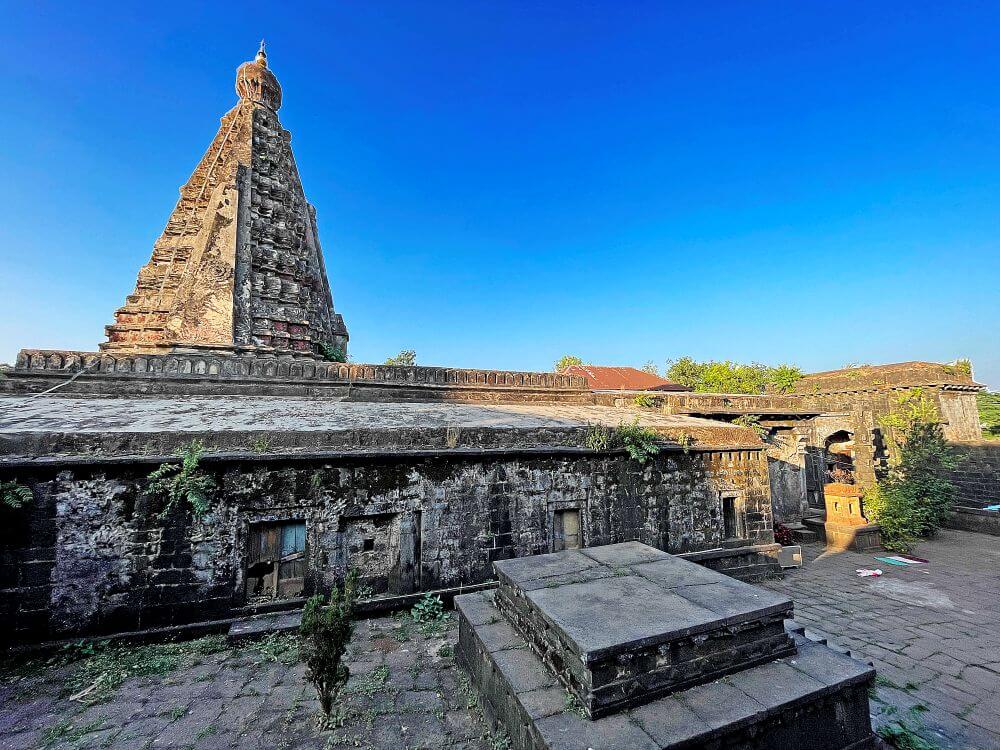
This temple, built in the eighteenth-century Maratha architectural style, is situated within a grand square-shaped courtyard. The temple premises feature a magnificent stone main gate. This gate is similar to the old entrance located in front of the Meghadambari on Raigad. Inside, on both sides, there are two large lamp pillars (Deepmalas) as well as Tulsi Vrindavans. The entire courtyard is paved with stone. There are small bastions at all four corners. On one side, there is a two-story Nagarkhana building. In this building, on the lower level, resides the Muslim family who are the priests of the temple.
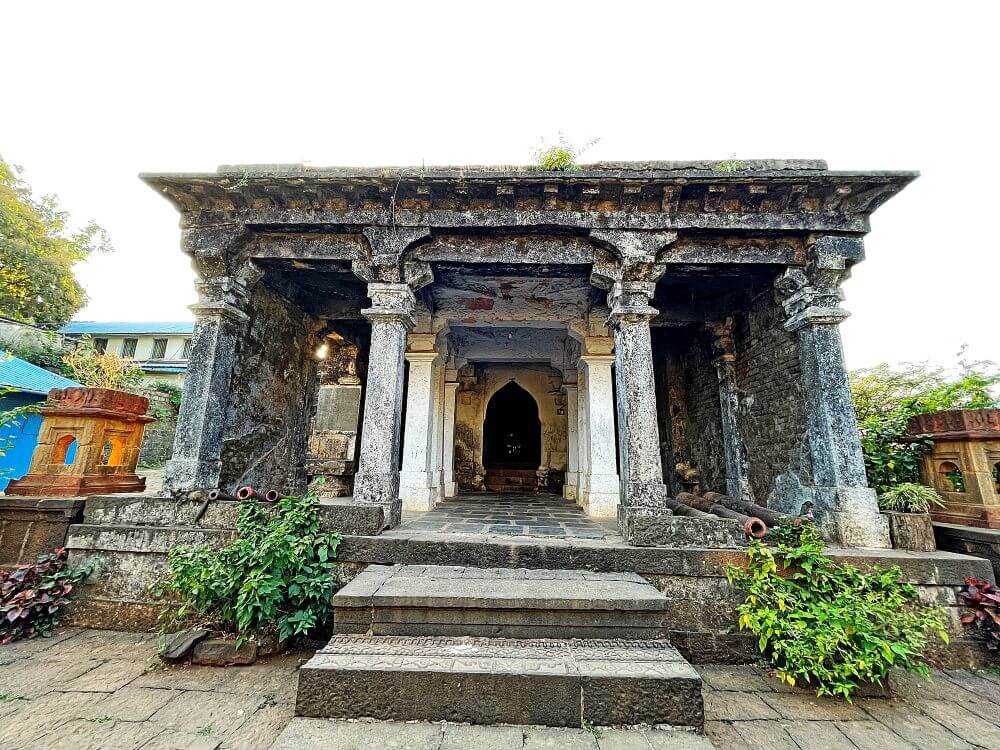
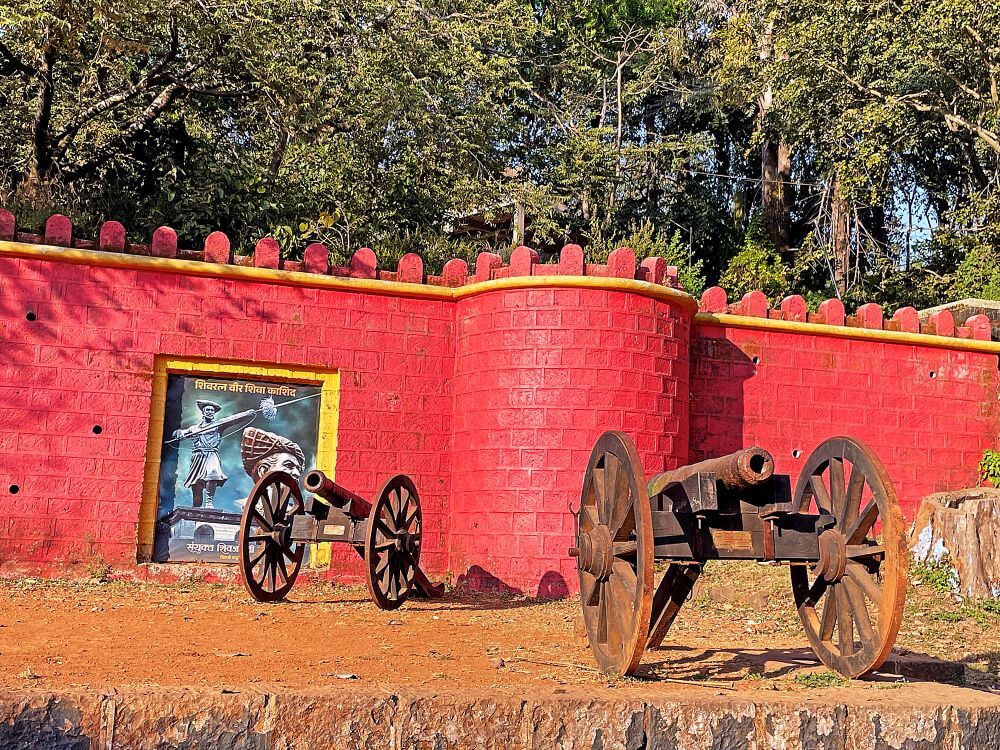
This temple is built on a high plinth and measures 𝟵𝟬 x 𝟰𝟲 feet. The height from the ground to the pinnacle is 𝟱𝟱 feet. It is said that there is a golden kalash atop the temple spire. The temple structure consists of an open porch-like sub-assembly hall at the front, a spacious main assembly hall, and the sanctum sanctorum. The sub-assembly hall features square-cut stone pillars supporting a flat roof. Three antique cannons are placed on both sides here.
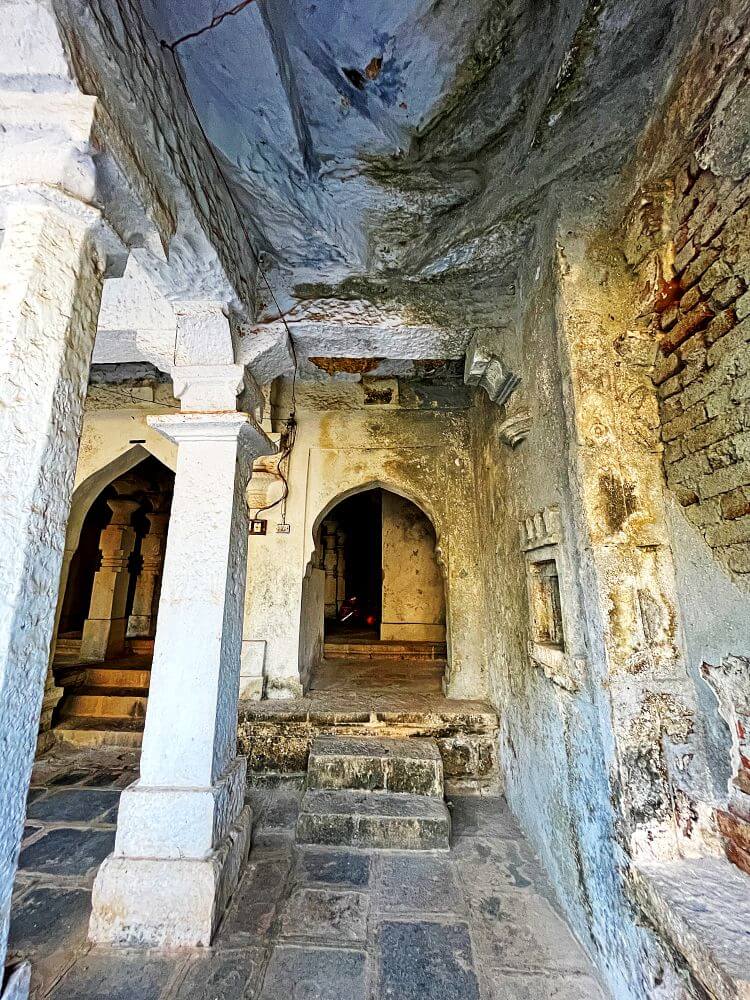
The front wall of the assembly hall has three entrances: one main and two auxiliary. Inside the assembly hall, at some distance from the walls, stand large stone pillars. These pillars are made of hewn stone. They are square at the base, followed by an octagonal section, then another square section, a circular section, a disc, and finally, a lotus petal design at the four corners of the square capital. Although these pillars lack intricate carvings, this simplicity is compensated by the ornate entrance to the sanctum sanctorum. The sanctum has a brass door with three doorjambs featuring delicate carvings. On the pillars flanking this frame, there are carvings of gatekeepers at the bottom and sculptures of Hanuman and Garuda in the middle. An image of Lord Ganesha is carved on the lintel of the frame.
Inside the sanctum, a beautiful black stone idol of Sambhaji Maharaj (II), seated in the Virasana posture on a throne, is consecrated. With the sentiment that this temple belongs to Shiva-Shambhu, ritualistic worship is performed here every morning and evening. Notably, the worship of Shiva-Shambhu is conducted by a Muslim family of Nagarchis, who hold the honor of playing the nagara (kettledrum). This family has held this honor for many years and resides here while strictly observing all Hindu customs.
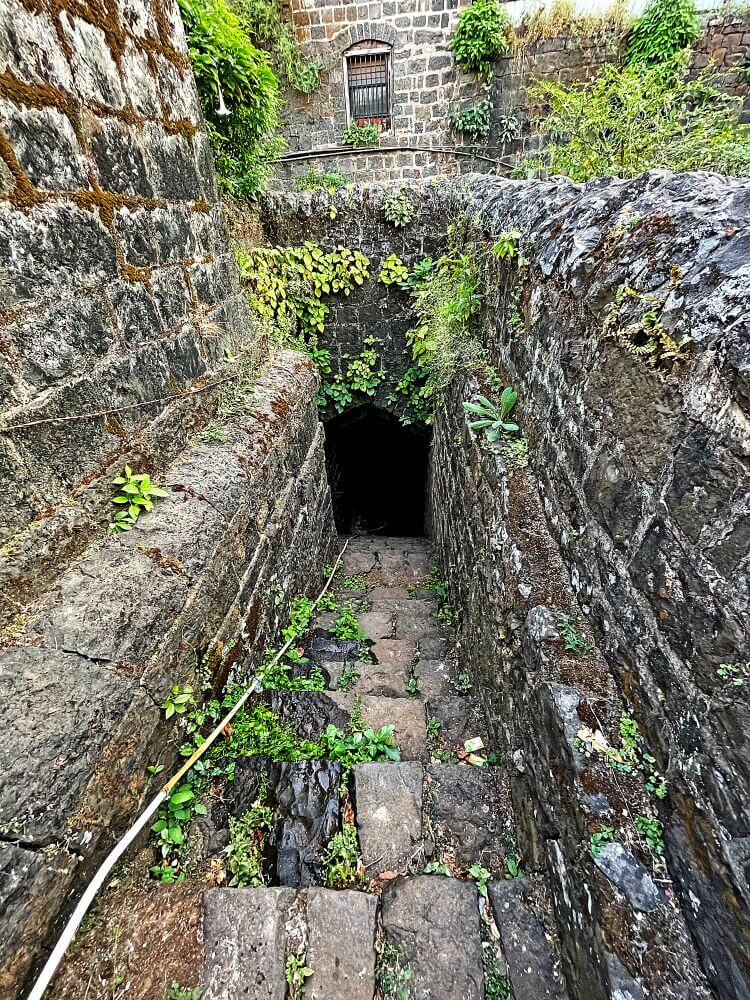
Behind this temple, there is a well. It has been constructed with such ingenuity that no one realizes there is a well inside. This was done with the intention of keeping the water reserves secure. After descending the stone steps here, an octagonal-shaped well becomes visible. Some cloisters have also been built behind the temple. Opposite this temple, on the other side of the road, is a Shiva temple built in memory of Queen Jijabaisahib.
This sacred temple stands as a testament to deep spiritual devotion, ancient architectural grandeur, and rich local cultural traditions.
The sanctum sanctorum houses the divine idol consecrated according to ancient Vedic traditions, surrounded by serene courtyards and traditional temple architecture.
Navratri, Maha Shivratri, Annual Temple Jatra & Deepotsav
Compare and book flights, secure top-rated local hotels near the temple, hire reliable guides, and rent cars instantly.
Extend your pilgrimage by visiting other highly sacred temples located nearby.


Add ₹999 more to unlock FREE SHIPPING!
Your sacred cart is currently empty.
Shop Photo FramesFill in your delivery details below to place your order.
Add comment