
Add ₹999 more to unlock FREE SHIPPING!
Your sacred cart is currently empty.
Shop Photo FramesThe Samadhi temple of Shri Chidghanaswami Sakharam Maharaj, a saint of the Samarth Ramdas tradition who guided devotees toward spirituality with the aim of leading society onto the righteous path, is located in the village of Kawad in Bhiwandi taluka. For approximately one hundred and fifty years, the Chidghanaswami Punyatithi ceremony held here on Bhadrapada Vadya Saptami has been conducted according to the traditions of the festival at Sajjangad. The Mahaprasad at this place is prepared from provisions collected by begging for alms from house to house in the village. Thousands of his followers from the surrounding five villages are present on this occasion. The wrestling competition held during the fair organized on the occasion of Chidghanaswami’s Jayanti has a tradition of १३० years.
Born in the year १८०१ on the day of Jyeshtha Shuddha Ashtami in a Dashagranthi Brahmin family at Karambovane near Dabhol in Ratnagiri district, Chidghanaswami’s original name was Sakharam Haripant Ketkar. His father had provided him with education in the Sanskrit language, Modi script, accounts, and all religious scriptures. Possessing a sharp intellect from childhood, Chidghanaswami had studied texts like ‘Vivekasindhu’ in depth at a young age. Under pressure from his parents, he married against his will, but his wife passed away shortly thereafter. Having resolved that spiritual practice would be his life’s purpose, Chidghanaswami attained Yogic powers while still a young man. After he once rescued a boat caught in a storm in the Vashishti River, he became famous as a ‘Siddhayogi’ in the surrounding region. A few days later, he left his village in search of a Guru and arrived at Tarapur. There, Athaleshastri initiated him into the Shiva-Shadakshari Mantra. Even after that, his daily routine of chanting, meditation, and Sun worship continued.
The longing for a meeting with the Guru always remained in their heart. Finally, in the year 1819, on the tenth day of the bright fortnight of the month of Magh, they received initiation through a divine vision from Raghunathbhatt Moghe of Nashik. Driven by a yearning for spiritual education, they resided for some time in Alibaug and Pune. In search of a suitable place for the study of Brahmavidya, he arrived at Kawad, a village inhabited by families of learned Agnihotri Brahmins. He chose Kawad for his spiritual studies due to its picturesque geographical setting, featuring a Shriram Mandir from the Peshwa era to the north, the gently flowing Kamvari River to the south, a beautiful pond to the east, and a forest to the west. At the earnest request of Gadadharbhat Daji Ghargunde, a resident of the village, he resided for ૪૪ years in a room adjacent to the veranda of his house. It was in this very room that he engaged in spiritual practice and contemplation of Brahmavidya. He was ૨૩ years old when he arrived in Kawad, but due to his profound spiritual authority, everyone addressed him as ‘Sakharambuva’. He sustained himself by seeking Madhukari from five households daily. He performed penance here for two full cycles of twelve years (૨૪ years). As word of his knowledge, scholarship, and attained state of realization spread, hundreds of people from the surrounding region came to him for guidance. During this period, his circle of disciples also grew. Anandraje Pawar III, the ruler of the Dhar State, received the Guru Mantra and spiritual instruction from Chidghanaswami in the year ૧૮૫૨. Among the disciples of Chidghanaswami were also the Diwan of Baroda State, Ganeshpant Ozhe, and his wife Gangabai, who visited regularly for his Darshan. In the year ૧૮૬૪, Maharaja Khanderao Gaikwad of Baroda State, along with Ganeshpant Ozhe and Gangabai, came to seek the blessings of Chidghanaswami. When asked what service they could perform as an offering to the Guru, the Swami instructed them to desilt and clean the pond, build a Ghat upon it, and reconstruct the pavilion of the Shriram Mandir, which had been damaged by fire. They acted accordingly. An inscription recording this event can still be seen near the pond today. The pond was once surrounded by a fortification wall, which collapsed over the passage of time, though its remnants can still be found there.
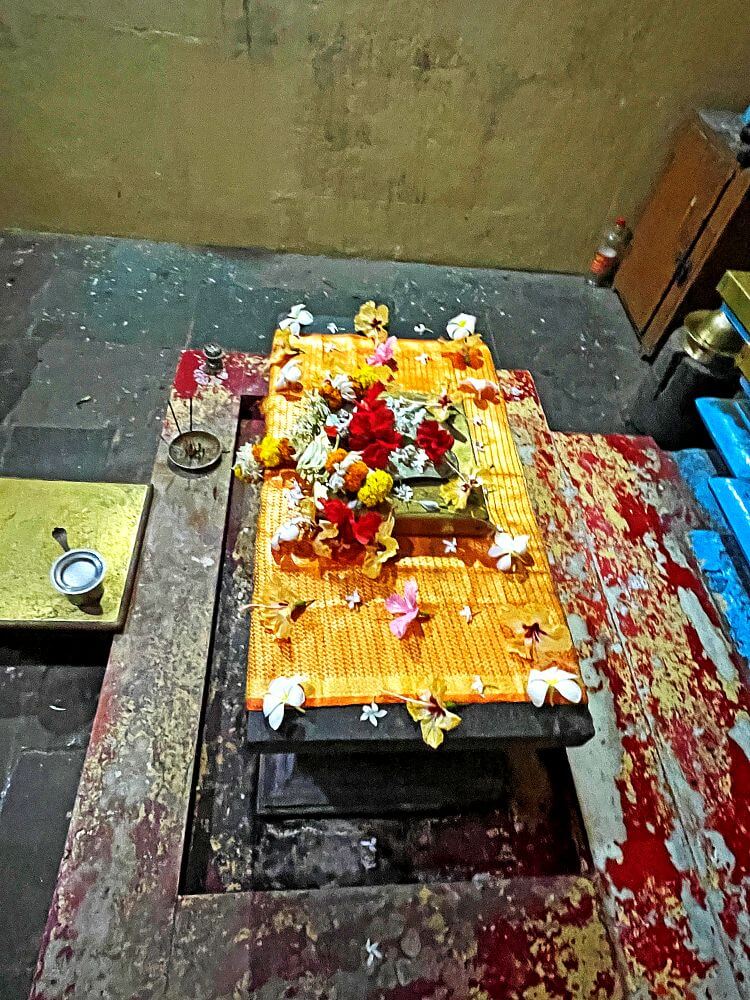
In the year 1867, on the sixth day of the waning moon in the month of Bhadrapada, at the age of 67, Chidghanaswami attained Jivanta Samadhi in the presence of his disciples while seated in the Swastikasana posture. Some time before his departure, he had embraced the fourth stage of life (Sannyasa) and adopted the name Siddhan. Thereafter, his disciples decided to construct a Samadhi temple here. His disciple, Ramakrishnabuva Mate, took the initiative for this task. To fund the construction of the temple, he traveled from village to village performing Kirtans and seeking alms. The temple was built using the funds collected through the alms sought by him and other disciples of Chidghanaswami. Through the initiative of Mate, a Dharmashala was later built near the temple. Subsequently, Mate attained Samadhi at Ghatale near Nagaon, close to Alibaug, on the ninth day of the waning moon in the month of Magha in 1879. A festival is held there as well, similar to the one at Kawad, from the fifth to the ninth day of the waning moon in the month of Magha.
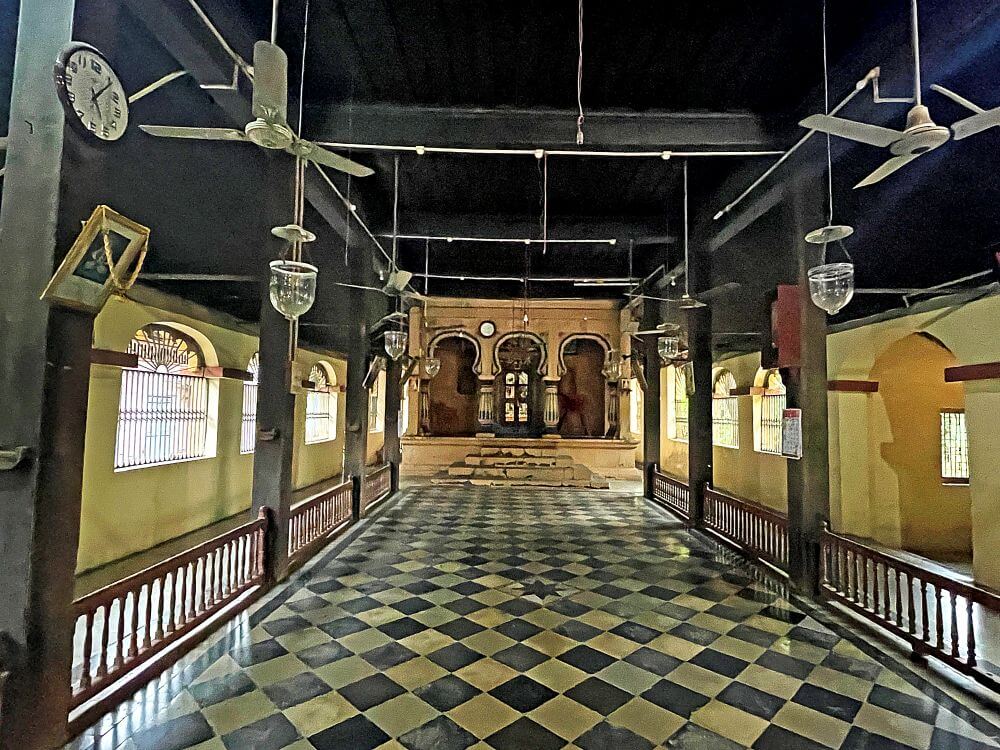
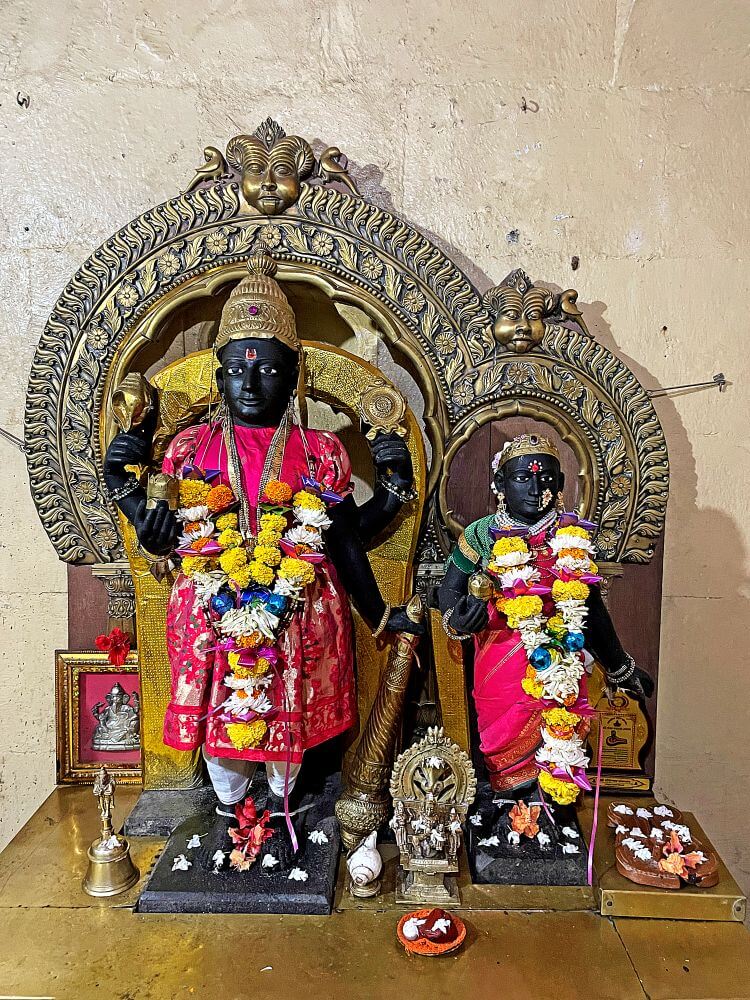
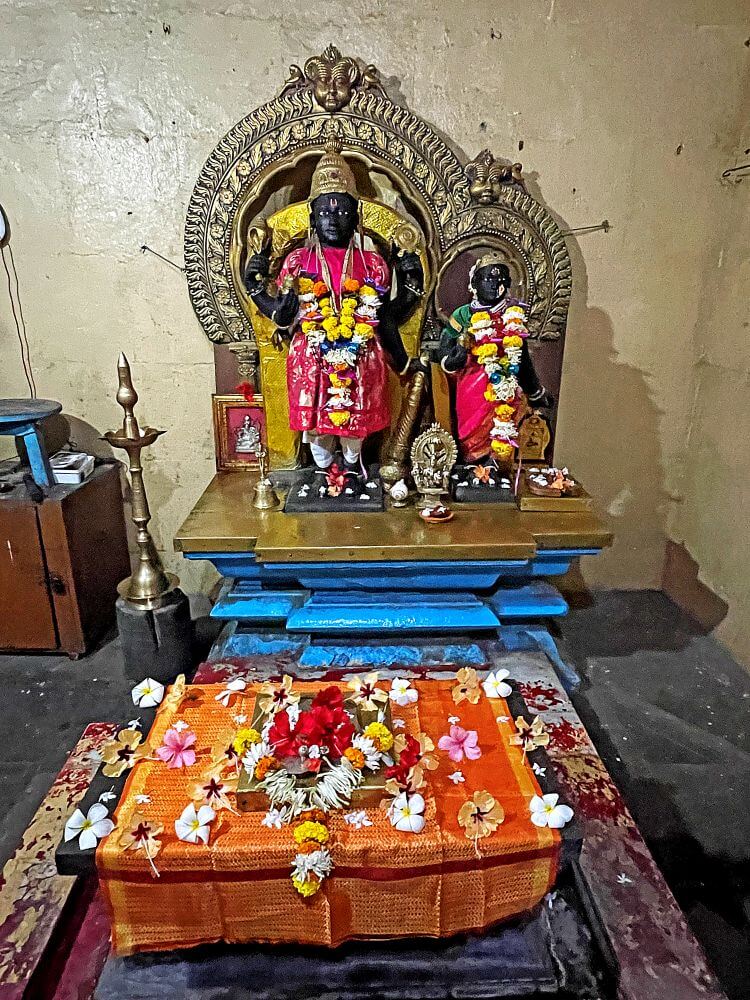
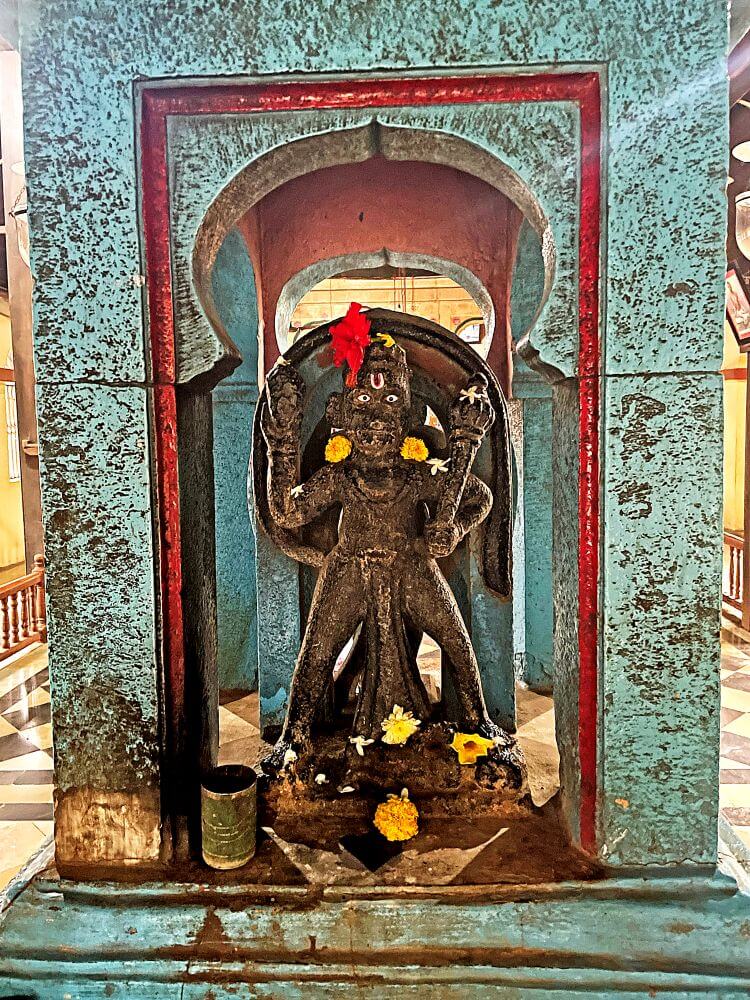
The Chidghanaswami Sakharam Maharaj Temple is located in the village of Kawad on the Bhiwandi-Wada road. There are many trees in the temple premises. The temple, which has a two-story structure resembling a traditional mansion, features iron grilles on its facade. A wooden staircase leads to the upper floor of the mansion. There is a Nagarkhana here. Built using stone and wood, the temple follows the architectural style of an old-fashioned mansion with a veranda and courtyard. Upon entering the temple, one sees the Samadhi of Ghargunde. The frame of the main entrance is adorned with attractive carvings, and there are gatekeepers on both sides at the bottom. Near the entrance of the assembly hall, there is an idol of Garuda-Maruti in a small shrine on a raised platform. The assembly hall has railings on both sides, and beyond them, seating arrangements have been made for female devotees. There is also an old-style wooden seat here. On the right side is the Samadhi of Vishnubuva Joglekar Maharaj. The assembly hall houses portraits of many saints. An old drum is kept in the veranda reached after climbing the stone steps here. On the left side is the room where Chidghanaswami resided for 44 years. In this room, there is his portrait, Paduka, a crutch, and the wooden plank upon which he used to sit for his spiritual practice. At the bottom of the entrance to the sanctum sanctorum, there is a Kirtimukha. An idol of Lord Ganesha is placed on the lintel of the entrance. Above the entrance to the sanctum sanctorum, there is a portrait of Mate. Upon entering the sanctum sanctorum, one gets the darshan of Chidghanaswami’s Samadhi. On a platform behind the Samadhi, there is an idol of Lakshmi-Keshava. A Gomukh is carved on the back side of the temple along the circumambulation path. Near the temple are a kitchen, an administrative office for the trustees, a pilgrims’ rest house, and ancient mango trees planted by Chidghanaswami.
In this temple, the Punyatithi festival of Chidghanaswami is celebrated from Bhadrapada Vadya Panchami to Saptami, and the Dattatreya Jayanti festival is held in the month of Margashirsha. On the following day, Pratipada, the Palkhi procession takes place. The festivals here are celebrated in the same manner as those at Sajjangad in Satara district. The traditional programs of the festival commence with the chanting of slogans in praise of Lord Rama. On festival days, the Kakad Aarti is performed to the accompaniment of Taal and Mridangam. Thereafter, devotees holding silver staffs in their hands chant, “Rajadhiraja Raghuraja Gurunatha Maharaja Ki Jai.” Subsequently, in remembrance of the great saints, the Bhupalis of Chidghanaswami, Sakharam Maharaj, and Ramkrishna Mate of the Samartha Sampradaya, along with specific Abhangs and Padas, are recited. After the daily worship and Abhishekam, the temple officials and devotees carry a Zoli (alms bag) and a Kubdi (staff) to go door-to-door in the village to seek alms. This alms-seeking is done while reciting the ‘Manache Shlok’, and offerings are collected in the form of money and grains. Upon returning to the temple with the alms, the devotees perform a circumambulation of the temple while singing the Aarti. In the past, a Puran discourse used to follow this program.
For the Punyatithi festival of Chidghanaswami, Vedic Brahmins from various villages are invited. On this day, sixteen Brahmins are seated for the meal. Their feet are then washed, and the holy water from their feet is collected in a sacred Kalash. An official of the temple places this Kalash on his head and dances amidst the chanting of the Narayanasukta and Upanishadic mantras until his body is drenched with the water. Following this, married women dressed in nine-yard sarees serve the Shraddha meal to the sixteen Brahmins. Thereafter, the Mahaprasad is distributed to the devotees. This includes a special dish called ‘Thappad’, along with rice, chutney, and Prasad Sheera. In the evening, Manache Shlok, Karunashtakas, and Marathi Ashtakas based on the life of Chidghanaswami are recited.
During the fair held on the occasion of the birth anniversary of Chidghanaswami on Jyeshtha Shuddha Ashtami, a wrestling competition takes place in the village. Renowned wrestlers from areas including Thane, Bhiwandi, Kalyan, Nashik, Dhule, Jalgaon, and Buldhana participate in this competition, which has a tradition spanning one hundred twenty-five years. Women wrestlers also showcase their prowess during this event. The winning contestants are awarded cash prizes as well as other rewards.
This sacred temple stands as a testament to deep spiritual devotion, ancient architectural grandeur, and rich local cultural traditions.
The sanctum sanctorum houses the divine idol consecrated according to ancient Vedic traditions, surrounded by serene courtyards and traditional temple architecture.

Navratri, Maha Shivratri, Annual Temple Jatra & Deepotsav
Compare and book flights, secure top-rated local hotels near the temple, hire reliable guides, and rent cars instantly.
Extend your pilgrimage by visiting other highly sacred temples located nearby.


Add ₹999 more to unlock FREE SHIPPING!
Your sacred cart is currently empty.
Shop Photo FramesFill in your delivery details below to place your order.
Add comment