
Add ₹999 more to unlock FREE SHIPPING!
Your sacred cart is currently empty.
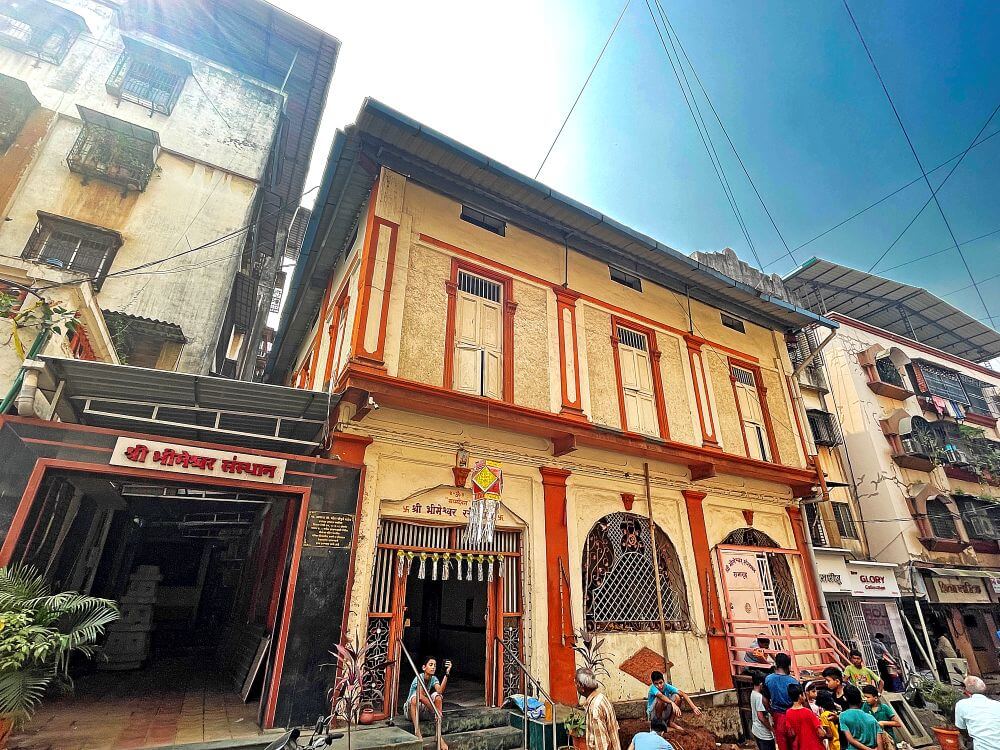
Shop Photo FramesThe ancient temple of Bhimeshwar is located in Bhiwandi (District Thane), a city famous as the city of weavers. More than four hundred years old, this ancient temple, which stands as a witness to the glorious history of the city, still stands majestically today. Hundreds of devotees come here for darshan, with the faith that the abode of Bhimeshwar here is spiritually awakened. It is said that Chhatrapati Shivaji Maharaj also visited this place to seek the blessings of Bhimeshwar. The Ganga Dussehra festival, which has been held for 175 years at the Bhimeshwar temple, the presiding deity of Bhiwandi, is considered one of the cultural landmarks of the city. Thousands of devotees participate in this festival, which is the oldest in Thane district.
The city of Bhiwandi, which has a geographically ideal location from a commercial point of view, has an ancient history. Situated at a strategic point for both waterways and land routes, this city rose to prominence during the reign of King Bhimdev. The city of Bhiwandi was known by the names Bhimdi and Bimbri. This was a part of North Konkan, also known as Kawadidweep. The Shilaharas ruled here. A copper plate from the year 997 AD belonging to Aparajit Shilahara has been found at Bhere near Bhiwandi. In the year 1140 AD, Pratap Bimb, from the Bimb Maharashtrian Kshatriya dynasty of Champaner, captured this area from the Shilaharas. He established his capital at Mumbai-Mahim, also known as Bimbsthan. British historians mistakenly referred to this King Bimb as Bhim, and that name became established. The fourteenth volume of the ‘Gazetteer of Bombay Presidency’ mentions that there were 15 Hindu temples here. The structure of the Bhimeshwar temple located in Brahmin Ali is one of them.
Outside this temple, there is a stone slab dating back 400 years. From this, one gets an idea of the antiquity of this temple. The Gazetteer records that the Koli King of Jawhar built the Bhimeshwar temple and also started an annual grant of 126 rupees for the temple. A sanad (royal decree) was granted to this temple in 1857. At that time, Patangshah III was the King of Jawhar. Even today, funds are received from the government for the lighting of lamps in this temple. It is said that Chhatrapati Shivaji Maharaj himself, as well as Chimaji Appa during the campaign of Vasai, had visited the Bhimeshwar Temple for darshan. It is also said that Saint Ram Maruti visited this ancient temple and bowed before Bhimeshwar.
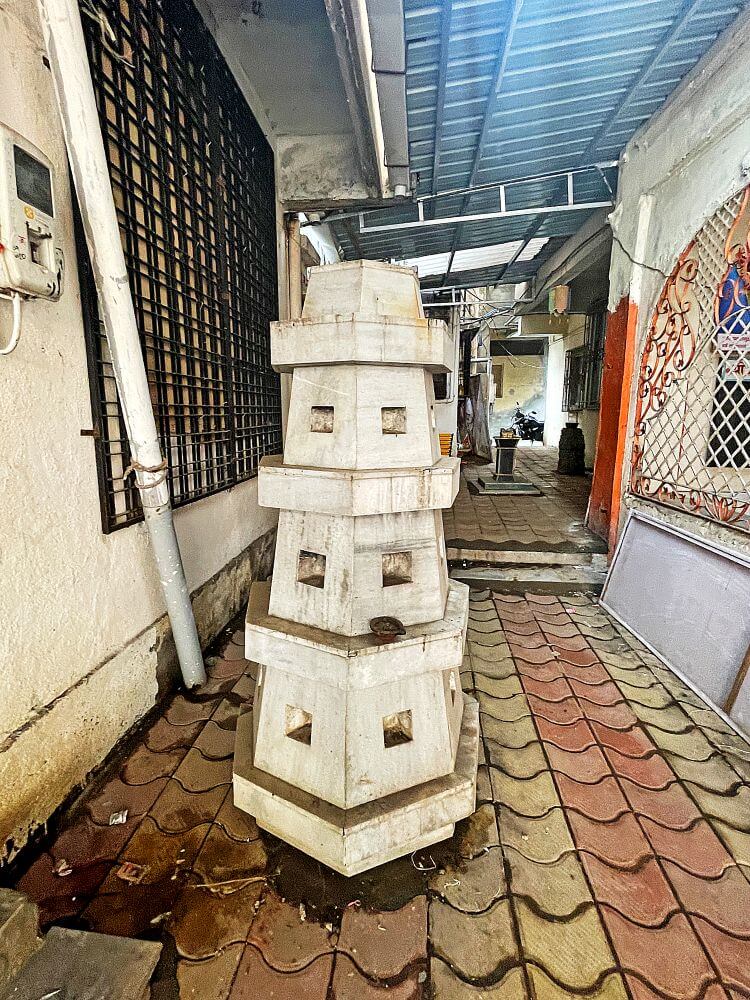
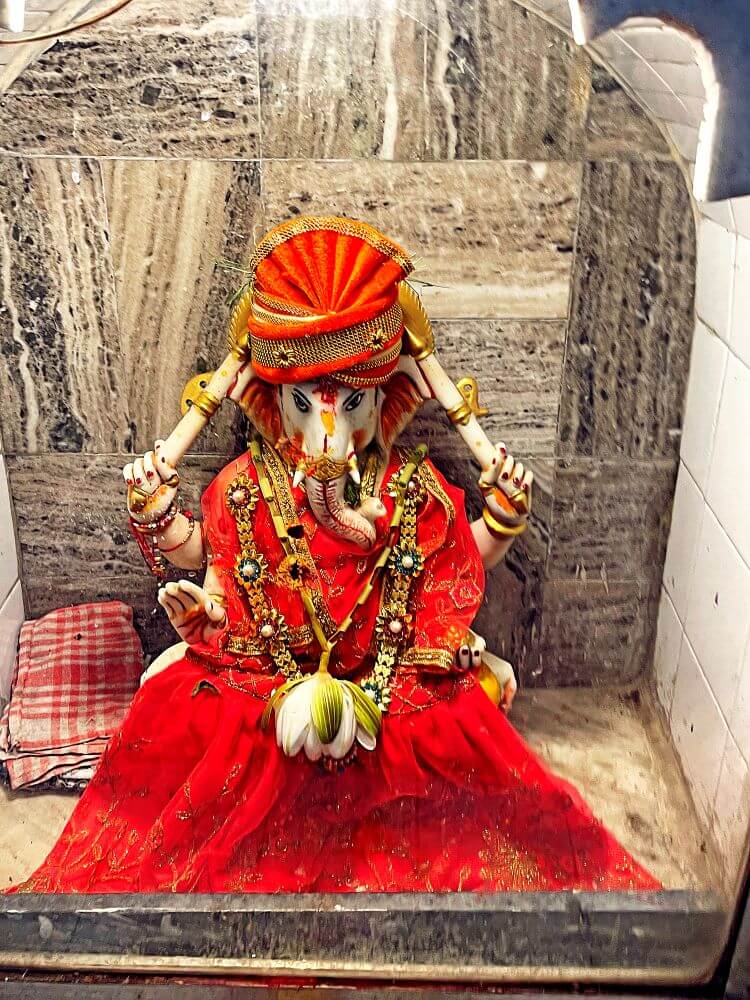
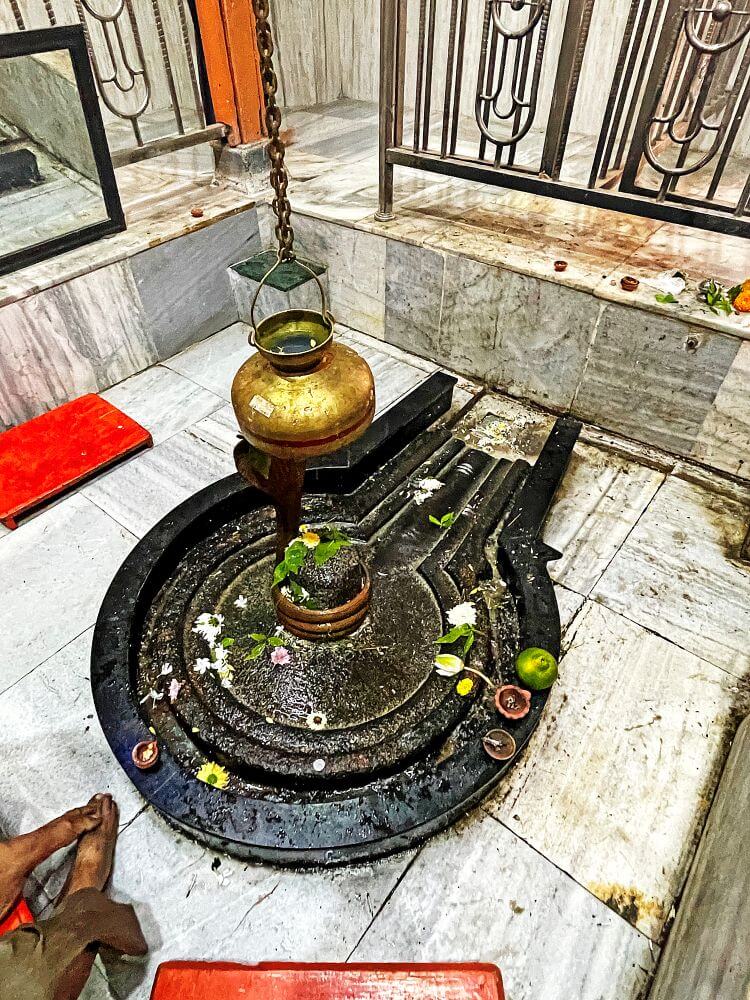
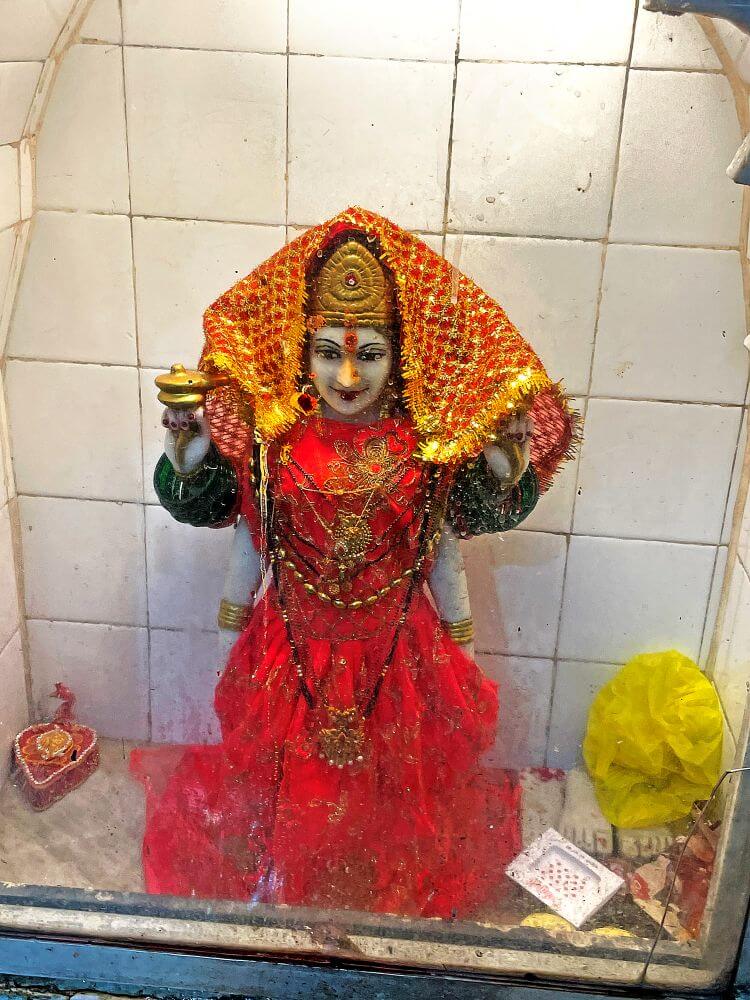
There are two entrances to reach this temple located along the road. The temple has a dome-shaped spire. There is a small lamp pillar (Deepmal) in front of the temple. Previously, there were water tanks on the side of the temple, which were filled up over time. Upon entering the temple, the sanctum of Bhimeshwar is on the right, and the main Sita-Ram Panchayatana temple is in front. There is a beautiful idol of Lord Ganesha in a niche at the base of the wall near the entrance of the Bhimeshwar Temple’s sanctum sanctorum. There is an idol of Lord Ganesha on the lintel of the sanctum’s entrance. The marble sanctum has wooden pillars. In front of the Shiva Linga in the center of the sanctum, there is an idol of Nandi carved from a single stone. In front of this Nandi is a stone idol of a tortoise. The Shiva Linga here is situated in a slightly recessed area below the ground level. Therefore, a stainless steel railing has been installed around this Shiva Linga. On the wall behind the Linga is an idol of Goddess Parvati, and in front of her are the holy footprints (Padukas) of the Goddess. Devotees can perform Puja, Abhisheka, and Laghurudra rituals in this temple by paying a certain fee.
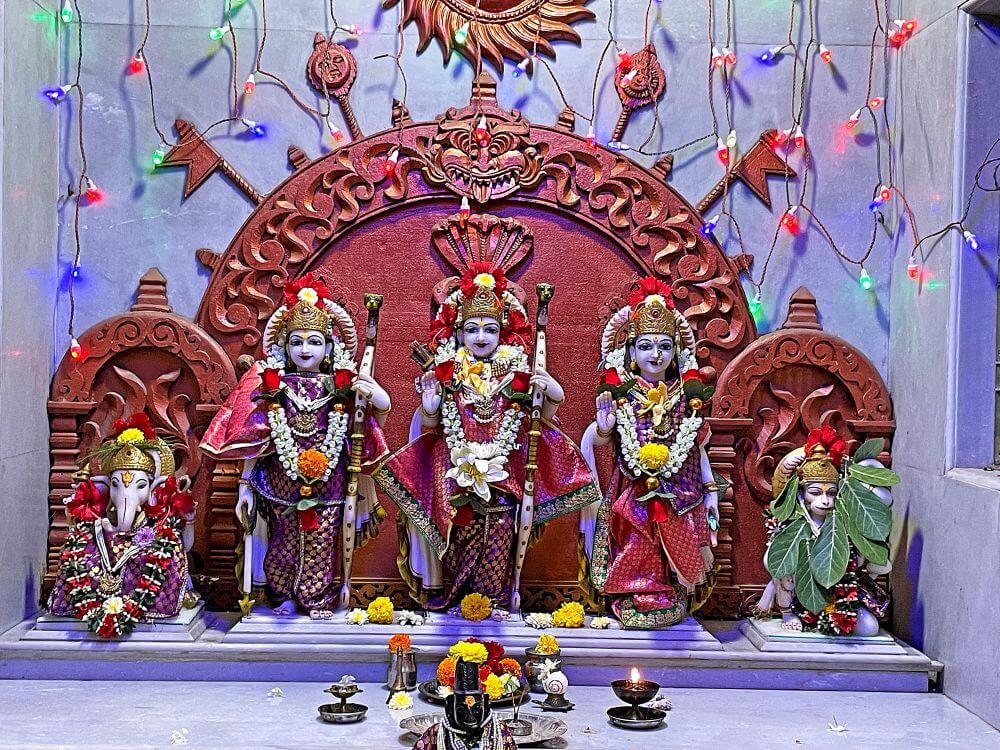
In the sanctum of the Sita-Ram Panchayatana temple here, the idols of Shri Ram, Lakshman, and Sita are placed on a high pedestal. To the left of these idols is Lord Ganesha, and to the right is Lord Hanuman. A serpent holds a canopy over the idol of Shri Ram. There is an attractive halo behind these idols. The temple is constantly bustling with devotees. Hundreds of devotees come here for darshan on Mahashivratri and Shravani Mondays. Every year, the Ganga Dashahara festival is celebrated here from the first day (Pratipada) to the tenth day (Dashami) of the bright fortnight of the month of Jyeshtha. Traditionally, this festival is observed at locations where a Shiva temple is situated on a riverbank. However, there is a historical event behind why this festival is celebrated in Bhiwandi city, despite the absence of a river near the temple.
Currently, the Varhala Lake is located near the Varhala Devi temple in the Dhamankar Naka area of Bhiwandi. During the Peshwa era, Shrimant Madhavrao Peshwa had devised a special water project with the intention of providing the water from this lake to the villagers. However, it was stalled due to certain reasons. Later, a severe drought occurred in Bhiwandi between the years 1848 and 1850. Villagers had to wander in search of water. Against this backdrop, in 1851, water from this lake was brought into the city through earthen pipes. The cost of that work at the time was 16,000 rupees. Out of this, 5,000 rupees were collected by local citizens, and the remaining expenditure was borne by the East India Company government. Further improvements were made to this work by incurring additional expenses in 1873-74. The water from Varhala Lake was released into a cistern built in front of the Bhimeshwar temple through earthen pipes. It would fall into this cistern from a Gomukh (cow-faced spout). Many other cisterns were built in the village connected to this main cistern. This is also recorded in the Gazetteer. With the sentiment that the Ganga had descended in the form of this cistern, the villagers started the Ganga Dashahara festival at the Bhimeshwar temple in 1850.
To this day, this festival is celebrated in its original form. During these ten days, religious programs such as Kirtan, Pravachan, Palkhi procession, Rudrabhishek, Gangalahari recitation, and Ganga Pujan are held. In 2024, the post-centenary platinum jubilee year of this festival was celebrated. On that occasion, various programs such as Ganga Pujan and a welcome procession of the Ganga Kalash were organized.
This sacred temple stands as a testament to deep spiritual devotion, ancient architectural grandeur, and rich local cultural traditions.
The sanctum sanctorum houses the divine idol consecrated according to ancient Vedic traditions, surrounded by serene courtyards and traditional temple architecture.
Navratri, Maha Shivratri, Annual Temple Jatra & Deepotsav
Compare and book flights, secure top-rated local hotels near the temple, hire reliable guides, and rent cars instantly.
Extend your pilgrimage by visiting other highly sacred temples located nearby.


Add ₹999 more to unlock FREE SHIPPING!
Your sacred cart is currently empty.
Shop Photo FramesFill in your delivery details below to place your order.
Add comment