
Add ₹999 more to unlock FREE SHIPPING!
Your sacred cart is currently empty.
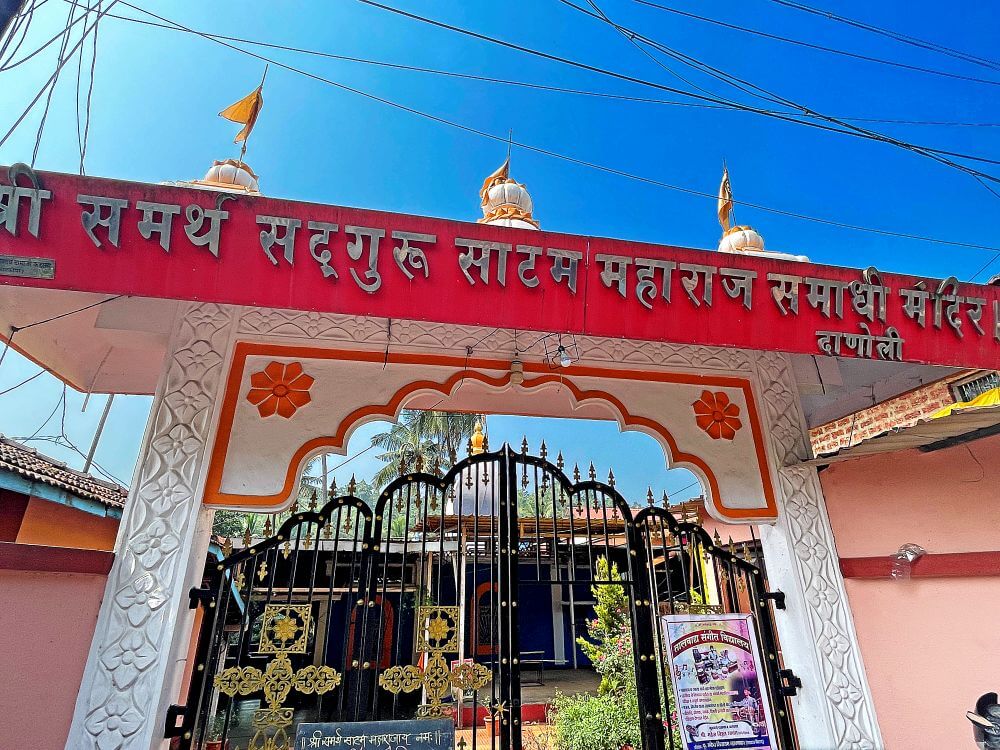
Shop Photo FramesDanoli is a village located near Sawantwadi, while traveling towards Goa through the Amboli Ghat, a well-known tourist destination in the Konkan region. Danoli, the abode of Shri Samarth Satam Maharaj, is considered a sacred site today. The Samadhi temple of Satam Maharaj is situated in this village. Within the premises of this Samadhi temple are significant sites and structures related to the life of Satam Maharaj. Countless devotees from across Maharashtra visit this place to seek the blessings of this great Siddha Purusha, who possessed the power of Vachasiddhi (the power of speech where words manifest into reality). Devotees believe that they still experience his miracles today.
The full name of Satam Maharaj was Shankar Narayan Satam. He was originally from the village of Koil in Malvan Taluka, where he was born. However, his exact date of birth is unknown. He was known as a great Siddha Purusha in the Sawantwadi princely state. It is said that many experienced his spiritual powers. Before the year 1924, for two or three generations, the male heirs of the Sawantwadi royal family had not received their royal rights. However, through the grace of Satam Maharaj, the King of Sawantwadi, Shrimant Bapusaheb Khemsawant, received his royal rights. Consequently, he became a devoted follower of Satam Maharaj. Satam Maharaj attained Nirvana on 28 March 1937. Thereafter, Shrimant Bapusaheb Maharaj himself built the Samadhi temple of Satam Maharaj in Danoli.
The early life of Satam Maharaj was filled with highly unpredictable events. While he was still a child, his parents had to move to Mumbai for their livelihood. He had to live in the slums of Kamathipura in Mumbai, where he spent his childhood. After growing up, he took on various small jobs. For a while, he even worked at a liquor shop, but these jobs did not last due to the bad company he kept in Kamathipura and his carefree nature. The plague epidemic that hit Mumbai in the years 1897-98 had not yet subsided. According to the ‘Council Denison Report’, the plague claimed 5197 lives in the year 1909. This same plague took the lives of Satam Maharaj’s brother and sister-in-law. Subsequently, his parents also passed away. This trauma left him deeply despondent. Later, his wife also renounced worldly life and left. These events had a profound impact on the Maharaj’s mind. He began to wonder why he had to face such karmic consequences. While wandering in a state of mental distress in search of answers to these questions, he met a Siddha Purusha named Baba Abdul Rehman.
The ancestors of Baba Abdul Rehman were originally from Baghdad. His father, Hazrat Shamsuddin Qadir, had come to Madras (now Chennai) from Baghdad. There, Baba studied the Quran and became a Hafiz. Later, he came to Mumbai and began living in a mosque in Jambli Mohalla on what is now Bapu Khote Street in Pydhonie. He had also performed the Hajj pilgrimage. It is said that once he met Akkalkot Swami Samarth. At that time, it is believed that Swami Samarth gave him the mantra ‘Shri Dattaswarupaya Namah’ and ordered him to carry forward his work. After this, Baba began his social and religious work. Once, when Satam Maharaj was sitting in a distressed state near a Parsi well near Churchgate, Baba Rehman saw him. In that meeting, Baba Rehman gave him spiritual guidance. From then on, Satam Maharaj began visiting Dongri regularly. There used to be a hill next to the police station in Dongri, where Baba Rehman would sit.
Within a few days, Satam Maharaj became a beloved disciple of Baba Rehman. He received initiation from Baba. Later, he began his penance and also traveled on a pilgrimage across the country. During these travels, he arrived in the forests of Amboli. After performing penance there, he came to Sawantwadi around the year 1910. Initially, people considered him mad and would not even offer him alms. At this time, two Christian beggars would share a portion of their alms with him. Around 1914 to 1916, the Maharaj came to Danoli. Gradually, people began to experience his spiritual powers. Soon, he became famous as a great Siddha Purusha. Many people became his devotees, including Shrimant Bapusaheb Maharaj of Sawantwadi and Ganesh Wader, the creator of ‘Nogi’ and ‘Makadchap’ tooth powder. It is said that when Mahatma Gandhi once visited Amboli, he met Satam Maharaj. When Mahatma Gandhi saw Satam Maharaj, he remarked that there are only two Maharajas in Sawantwadi: one is Bapusaheb and the other is you. At that time, Satam Maharaj only smiled.
It is said that the Maharaj was always in a state of childlike innocence and divine detachment. Legends suggest that he would sometimes appear tall and sometimes short. Sometimes he would become heavy in weight, and at other times light. Sometimes he would sing Bhajans, and at other times Qawwali. Furthermore, sitting in Danoli, he would understand all the happenings of the world. The Maharaj resided at the home of Sakharam Anant Kesarkar, also known as Baba Mestri, in Danoli. It was there that Satam Maharaj left his mortal body on 28 March 1937.
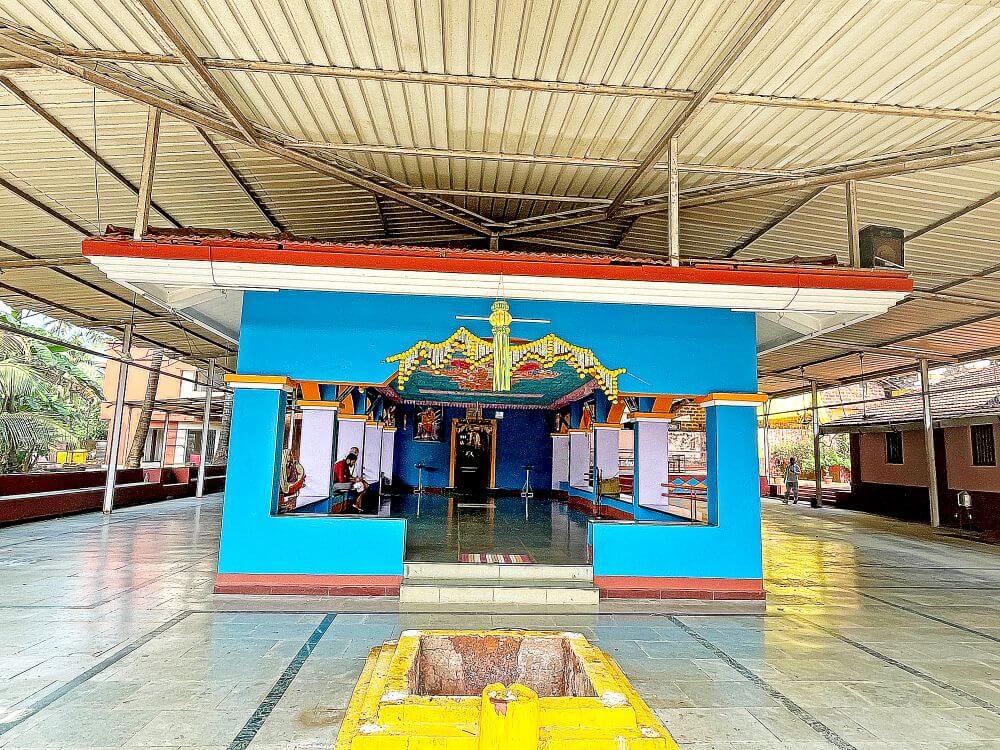
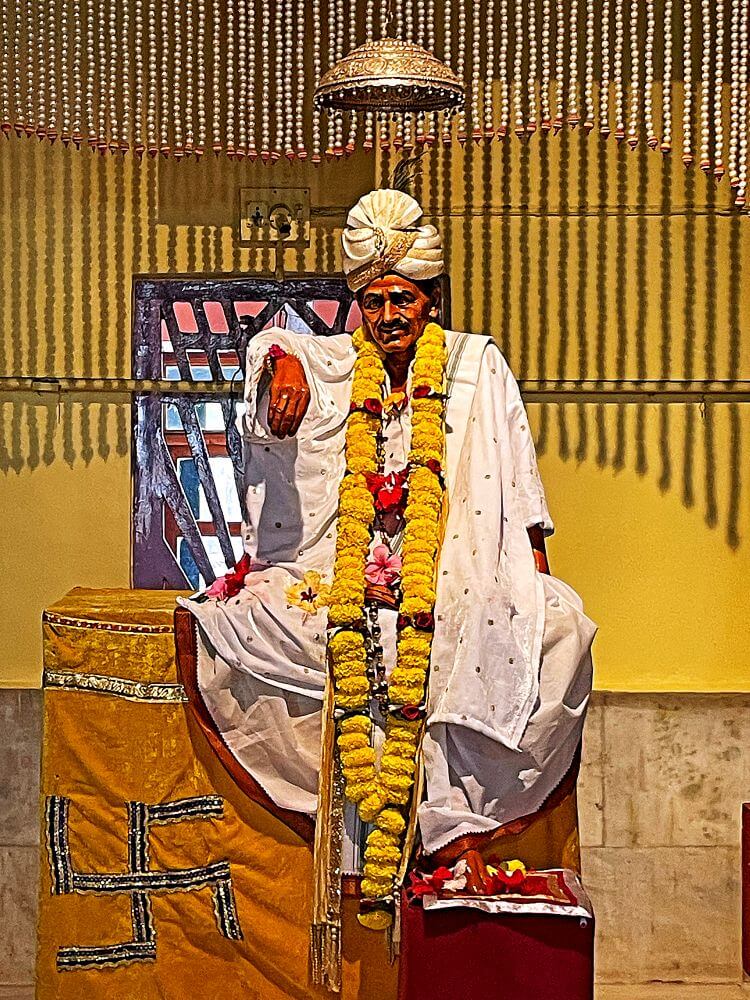
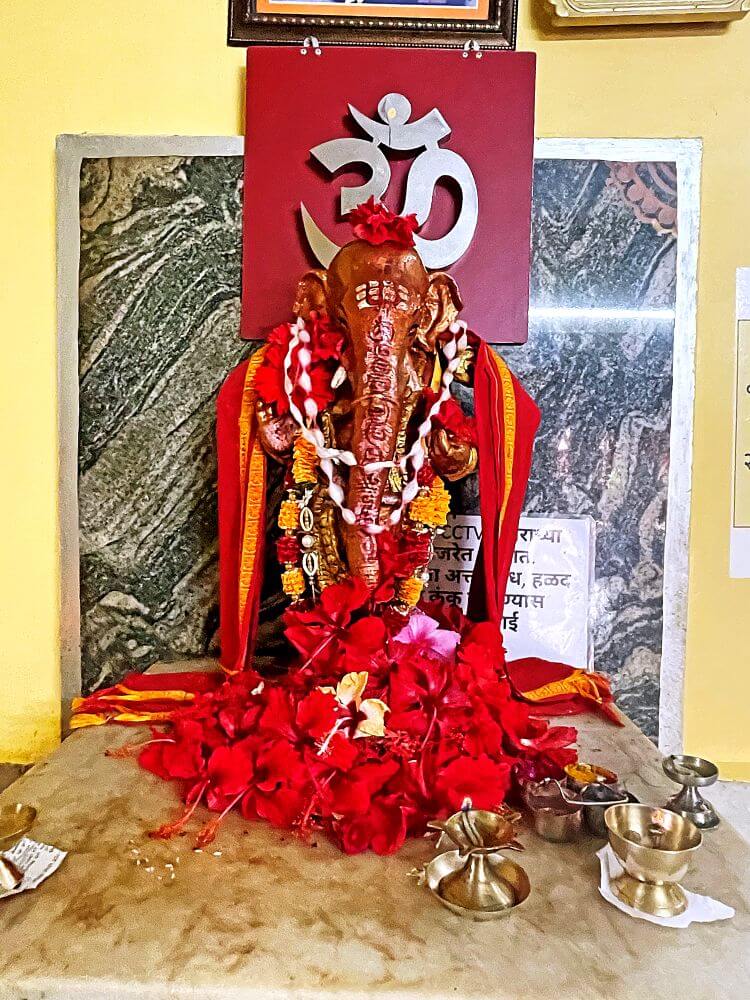
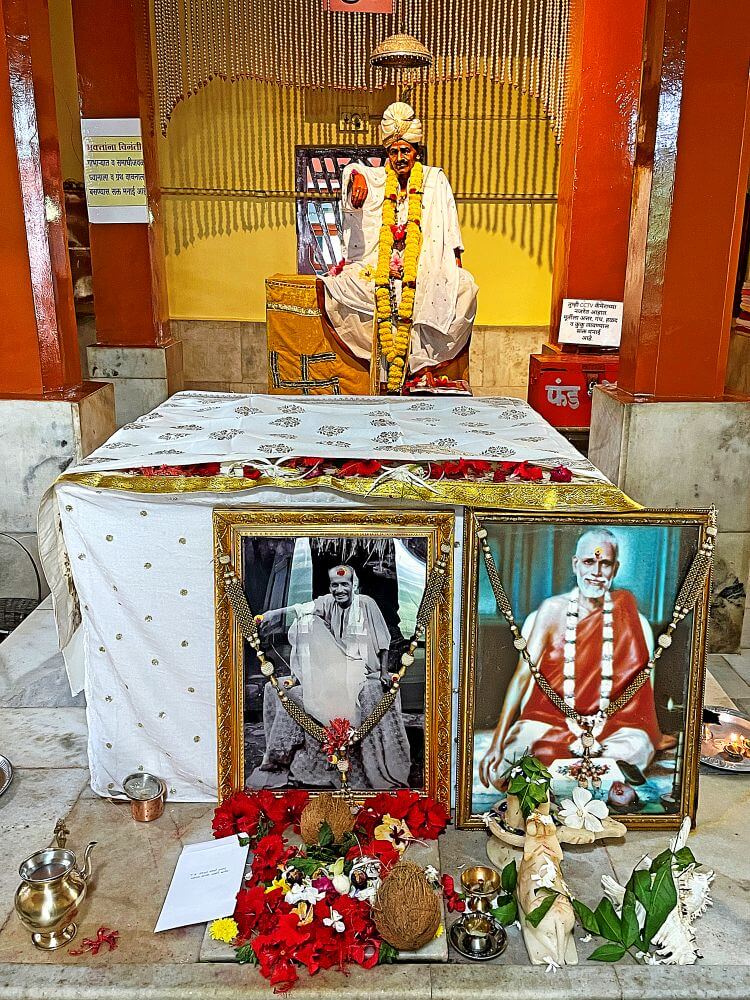
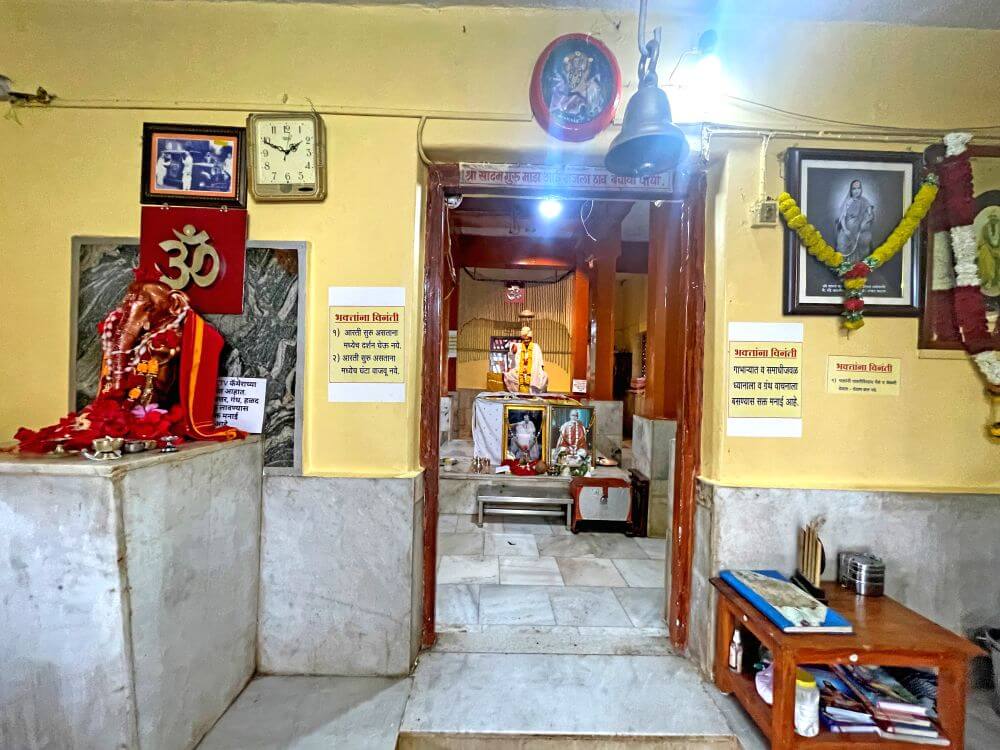
The Samadhi temple of Satam Maharaj is located in a spacious courtyard along a road in Danoli. The courtyard has a tall entrance arch with three small spires. Inside, under a large tin shed, is the Samadhi temple with a roof structure in the Konkan architectural style. The temple is designed with a Sabhamandap (assembly hall), Antarala (vestibule), and Garbhagriha (sanctum sanctorum). In front of the temple is a Tulsi Vrindavan and a Homa Kund (sacrificial fire pit). The Sabhamandap is semi-open with five pillars on each side and semi-arches, featuring stone benches (Kakshasanas). In the Antarala, on the right side on a high platform near the front wall of the sanctum, there is an idol of Ganesha. Photographs of various incidents from Satam Maharaj’s life, as well as portraits of people, are displayed here. On one side, there is a table for selling religious books. Inside the sanctum, on a high pedestal, is the idol of Satam Maharaj. His bronze idol was ceremoniously installed on the occasion of his death anniversary on 28 March 1985. A photograph of the Maharaj taken during his lifetime is also kept adjacent to the pedestal.
The Maharaj’s residence is located nearby. In this renovated, modern-style building, various portraits of the Maharaj are displayed on the walls. The cot upon which Satam Maharaj used to rest has also been preserved here. Behind it stands a magnificent image of the Trimukhi Dattatreya, and nearby are the bust of the Maharaj as well as a small idol of Sai Baba. In this same room, there is also a portrait of the Maharaj’s Guru, Baba Abdul Rahman. The spot where the Maharaj was given his final ritual bath is preserved here, along with his personal belongings such as his chiplya, hookah, padukas, and garments. Behind this residence, in a thatched hut, Satam Maharaj used to sit for meditation. It was a place surrounded by dense foliage, accompanied by the soothing sound of the flowing waters of the Nagzari stream. Today, a simple pavilion-like structure stands at that site. Devotees visit this place in large numbers, as well as the Nagzari Tirtha where he used to bathe daily, to partake of its sacred water. Every year, the Punyatithi ceremony is celebrated with great devotion and amidst a massive gathering of devotees at the Maharaj’s Samadhi Mandir on March 28.
This sacred temple stands as a testament to deep spiritual devotion, ancient architectural grandeur, and rich local cultural traditions.
The sanctum sanctorum houses the divine idol consecrated according to ancient Vedic traditions, surrounded by serene courtyards and traditional temple architecture.
Navratri, Maha Shivratri, Annual Temple Jatra & Deepotsav
Compare and book flights, secure top-rated local hotels near the temple, hire reliable guides, and rent cars instantly.
Extend your pilgrimage by visiting other highly sacred temples located nearby.


Add ₹999 more to unlock FREE SHIPPING!
Your sacred cart is currently empty.
Shop Photo FramesFill in your delivery details below to place your order.
Add comment