
Add ₹999 more to unlock FREE SHIPPING!
Your sacred cart is currently empty.
Shop Photo FramesIn Hindu Dharma, the Divine is perceived in all living beings. Therefore, along with plants, animals such as cows, bulls, and buffaloes are also worshipped here. The tiger is considered the mount of Goddess Durga. The striped tiger, which has inhabited the Indian subcontinent for twelve thousand years, holds a place of reverence here. In some tribal communities of North Maharashtra, a festival similar to Vasubaras, known as Waghbaras, is still celebrated. In the village of Tondavali in Konkan, there is a temple dedicated to Vagheshwar or Vyaghreshwar. There are also two samadhis (memorials) of tigers at that location. Today, this village is famous in Konkan as the village with a tiger temple.
The village of Tondavali is situated at the foothills of a mountain in a dense forest area of Malvan Taluka in Sindhudurg District. Villagers say that tigers are still seen in the vicinity of this village from time to time. According to the ‘All India Tiger Estimation – 2022’ report, there are at least 3167 tigers in India, while according to the 2024 report by the Wildlife Conservation Trust, 32 tigers roam the Sahyadri-Konkan wildlife corridor region. In the past, tigers would often come to the Vyaghreshwar temple in Tondavali and rest for some time before returning. Significantly, the villagers state that these tigers never harmed any human or animal in the village. Every village has a presiding deity (Gram-Daivat) that looks after the village. Similarly, in Tondavali, the tiger is considered the guardian of the village. This is why a sense of worship towards the tiger prevails in every household there.
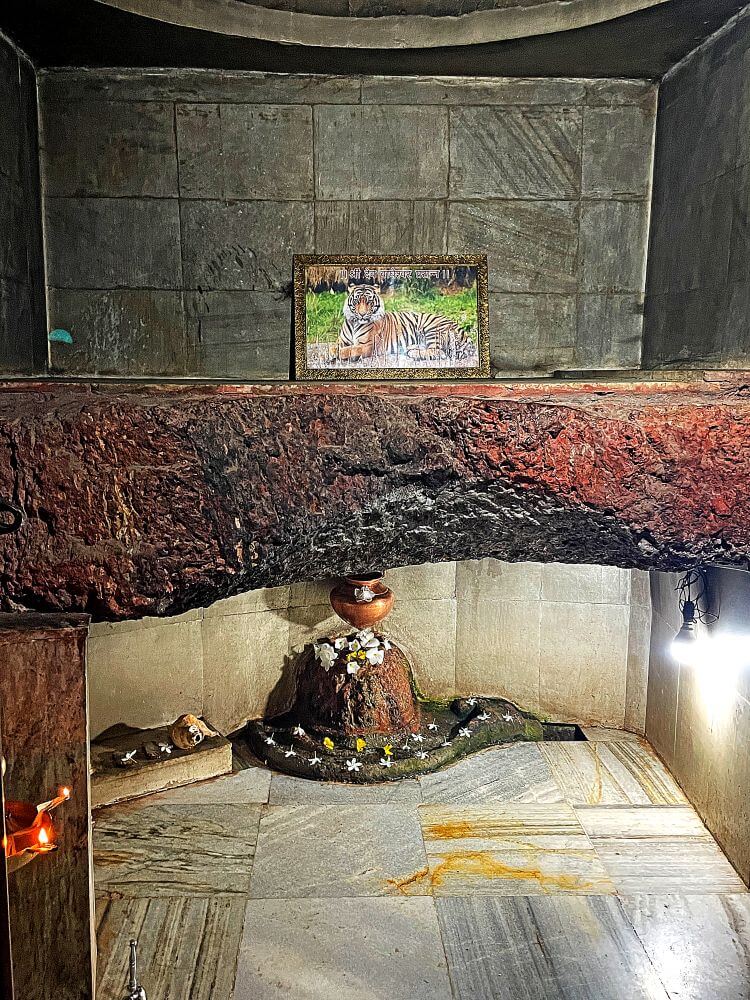
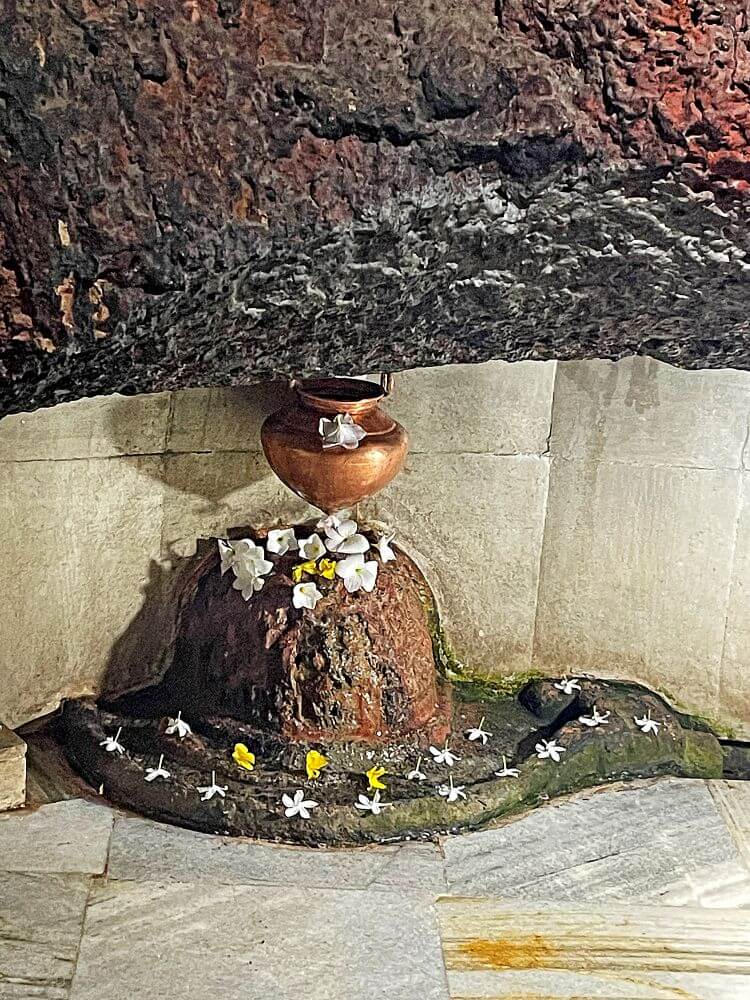
In this tiger-worshipping village, there is an ancient temple of Vyaghreshwar. The legend of this temple is told as follows: once, a gentleman named Tikam went fishing. He cast his net into the water as usual. After some time, he tried to pull the net in, but he felt as if something was stuck in it. It had become dark by then. Therefore, he decided to come and check in the morning. When he looked in the morning, he found a self-manifested (Swayambhu) Shiva Linga made of black stone. Previously, this area was underwater. A short distance from here is the confluence of the sea and the river. However, villagers say that as the sea receded over time, the temple was built here. It is said that the dome of the temple was constructed in 1752. A tiger used to come and sit on the rock located in the sanctum sanctorum of this temple. It is said that the deity got the name Vagheshwar because the tiger would roar from the sanctum.
Located at the foothills, this Vagheshwar temple is situated in a large courtyard. A four-foot-high boundary wall has been built around it. The courtyard has an entrance arch, and a large picture of a tiger is painted on its upper part below the nameplate. On both sides of it, there are statues of meditating sages on small pillars.
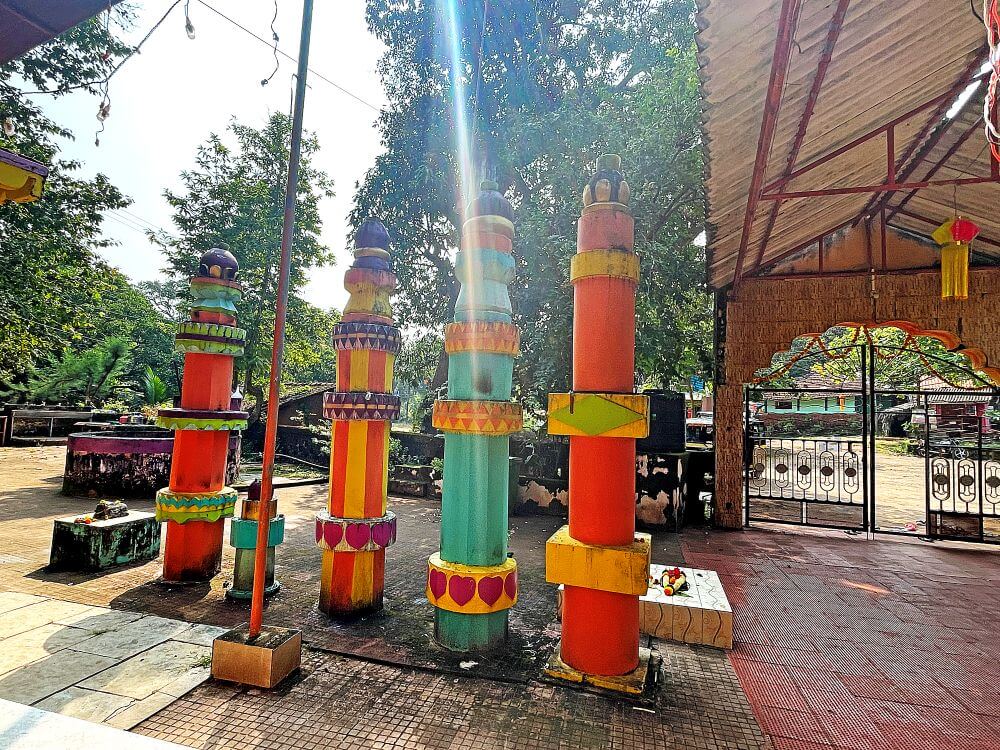
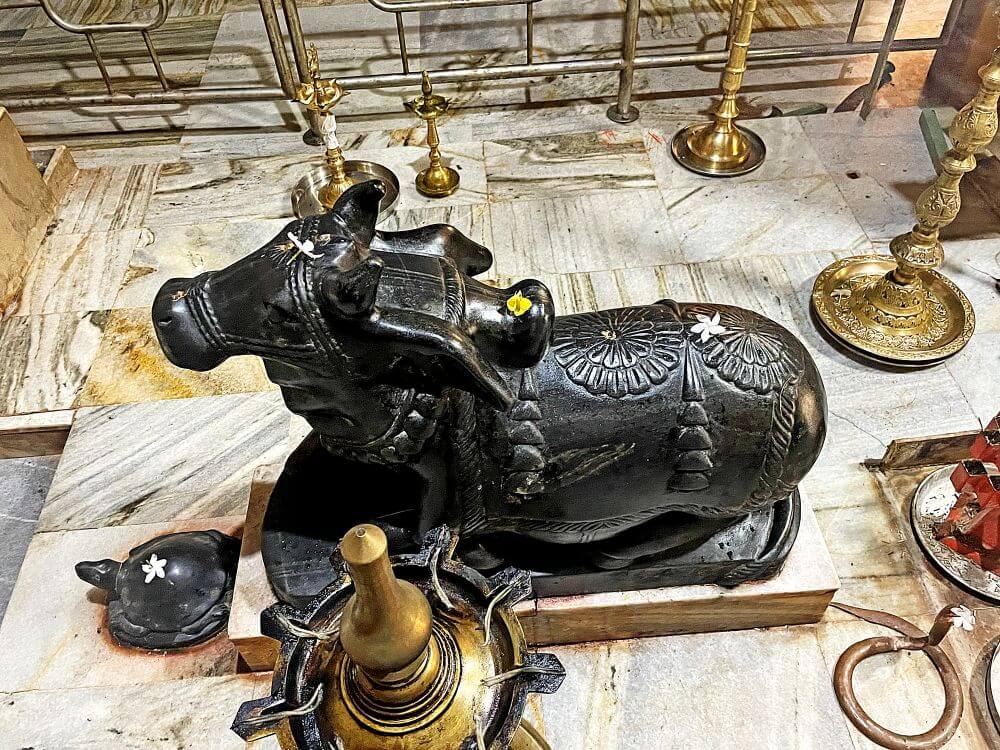
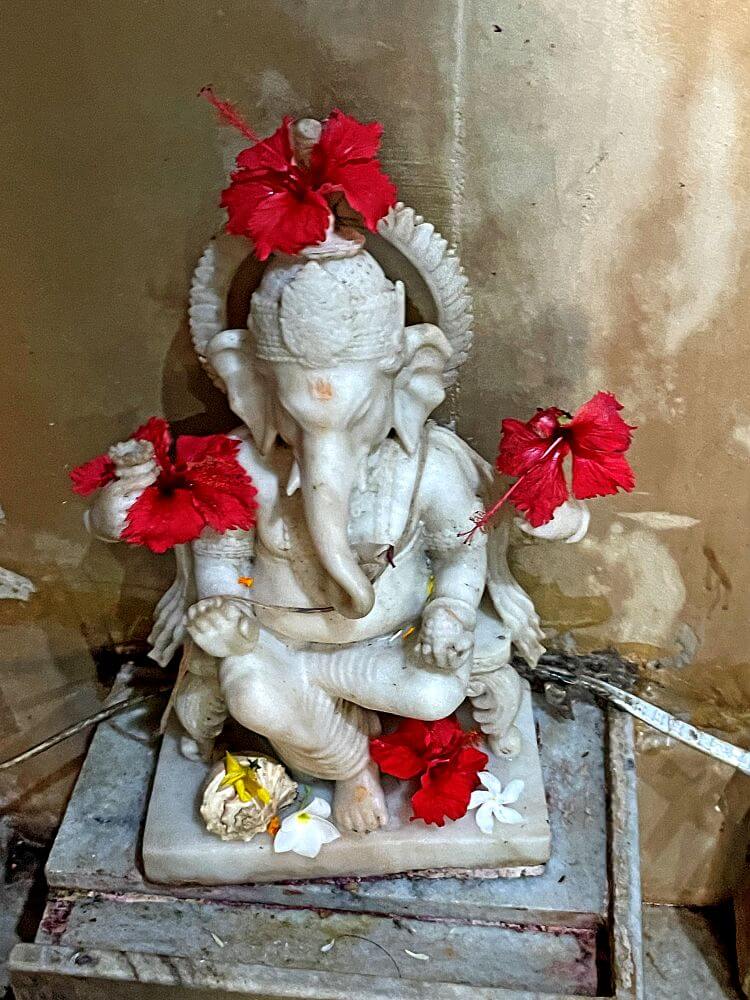
Upon entering the courtyard, one sees six large lamp pillars (Deepstambhas) of varying circumferences and heights. Adjacent to them are stone Linga forms on a small marble platform. In front is the semi-open assembly hall (Sabhamandap) of the temple, fitted with marble tiles. In front of the assembly hall is the Antarala. On one side of this place are ceremonial poles (Tarang Kathya). In front of the entrance to the sanctum sanctorum, there is a statue of Nandi carved in black stone. Near the entrance of the sanctum, on the left side against the front wall, there is a small marble statue of Ganesha on a platform, while on the right side are the statues of Vitthal-Rukmini. In the sanctum sanctorum, there is an unhewn Shiva Linga on the floor. It is said to be a Swayambhu Shiva Linga. Above this Shiva Linga, there is a rock protruding halfway from the back wall. Here, there is a Naga deity and a tortoise made of black stone. A ritual water offering (Jalabhishek) is performed on the Shiva Linga from a Panchadhatu (five-metal) vessel. There is a path for half-circumambulation (Pradakshina) around the sanctum.
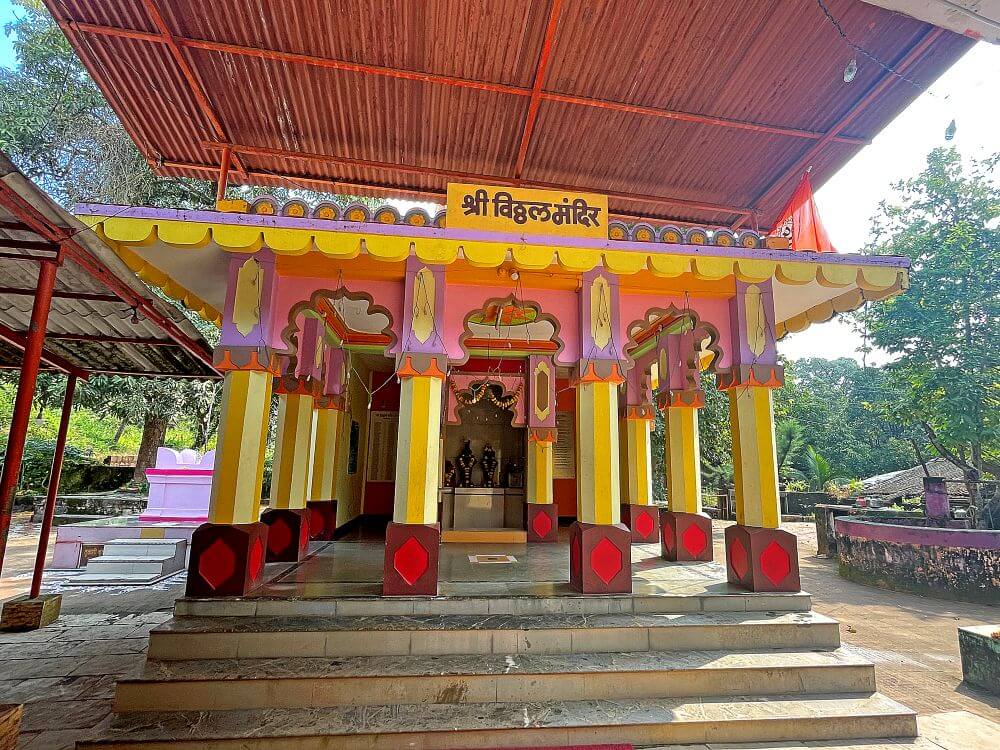
To the left of the Vagheshwar temple is the Gangeshwar temple, and on the other side is the Vitthal-Rukmini temple. There are two tiger samadhis in the temple premises. Regarding this, it is said that many years ago, a hunter shot a tiger in the forest of a neighboring village. The tiger was injured. In that state, it reached the border of Tondavali village. Hunting is strictly prohibited within the boundaries of this village. Although this rule is unwritten, it is followed here. Therefore, the hunter and his companions turned back. However, after entering the Tondavali border, the injured tiger died. The next day, some cowherds found its body. The villagers placed the tiger’s remains in a palanquin, brought them to the temple, buried it there, and built a samadhi. The second incident occurred in 1995. One day, a tiger came and sat in the sanctum of this temple. It was in a dying state. It had been poisoned. Seeing this, the villagers called a veterinarian. It died while undergoing treatment. Upon learning this, forest department officials came to the village. According to the Wildlife Protection Act, they decided to take the tiger’s body for a post-mortem. However, the villagers strongly opposed this. Finally, the forest department had to bow before the faith of the villagers. The villagers buried that tiger as well, next to the tiger-samadhi in the temple premises, and built a second samadhi. Today, devotees pay their respects at both these samadhis.
A short distance from this temple, there is a cave in the mountain. A saint used to perform penance there. It is said that tigers also used to reside in this cave. Devotees visiting the temple make it a point to visit this cave for darshan. Festivals like Mahashivratri, Shimga Utsav, Tripurari Purnima, and Ram Navami are celebrated with great enthusiasm in this temple. During these times, the image of the tiger is worshipped in every house. The tiger is given the first honor everywhere. Due to this faith of the villagers, this area has become a tiger sanctuary. The people of this village do not hunt tigers and do not let anyone else do so either.
This sacred temple stands as a testament to deep spiritual devotion, ancient architectural grandeur, and rich local cultural traditions.
The sanctum sanctorum houses the divine idol consecrated according to ancient Vedic traditions, surrounded by serene courtyards and traditional temple architecture.
Navratri, Maha Shivratri, Annual Temple Jatra & Deepotsav
Compare and book flights, secure top-rated local hotels near the temple, hire reliable guides, and rent cars instantly.
Extend your pilgrimage by visiting other highly sacred temples located nearby.


Add ₹999 more to unlock FREE SHIPPING!
Your sacred cart is currently empty.
Shop Photo FramesFill in your delivery details below to place your order.
Add comment