
Add ₹999 more to unlock FREE SHIPPING!
Your sacred cart is currently empty.
Shop Photo FramesNestled in the nature-rich village of Degave in Sawantwadi Taluka, the 17th-century Mahalakshmi Sthapeshwar Temple is one of the most vibrant and renowned shrines in South Konkan. Sthapeshwar here is revered as the presiding deity of 48 surrounding villages. It is said that the Mahalakshmi Sthapeshwar Temple is the only south-facing shrine in the entire taluka. Devotees hold deep faith that Sthapeshwar, considered a Rudra-avatar of Lord Shiva, is one who rushes to answer prayers and fulfills the vows of the faithful.
According to historical records, the Kadamba dynasty ruled a vast region from Konkan to Karnataka during the 13th century, with Goa serving as their capital. Queen Kamaladevi, the wife of King Permadi—the son of King Jayakeshi II of the Kadamba dynasty, whose family deity was Saptakoteshwar Shiva—had built a temple for Kamal Narayan and Mahalakshmi around the year 1147 AD in Degave or Degao, located in the Sampgaon taluka of Karnataka. The descendants of this Kadamba dynasty were known for constructing south-facing temples. Experts believe that the temple in Sawantwadi preserves the memory of this tradition. It is said that in order to protect the village from any kind of calamity, 10 dignitaries (Manakaris) from the 48 surrounding villages came together in 1621 to build this temple and consecrate the idols of Sthapeshwar and Mahalakshmi. In the past, a special assembly (Chavadi) was held in the temple to resolve disputes among these 48 villages, and the decisions made here were later communicated to the respective villages.
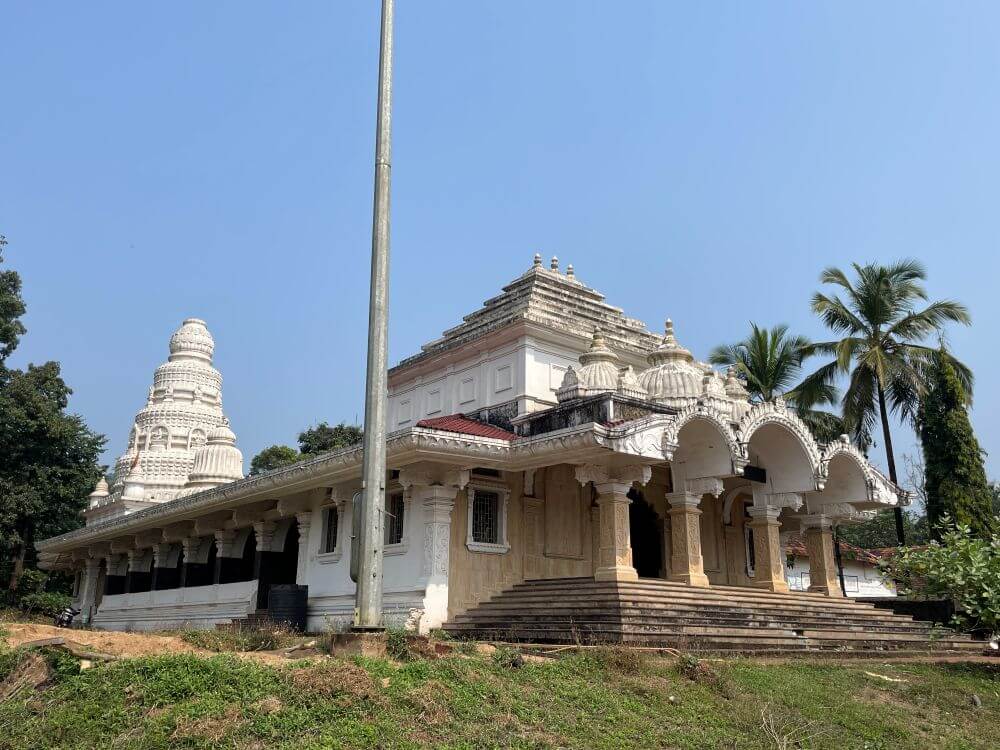
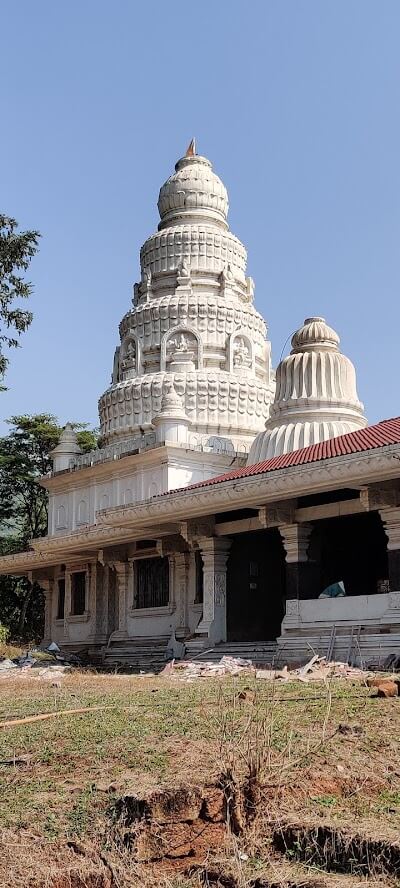
Located near the town of Banda, Degave is a village rich in natural beauty. Surrounded on all sides by lush green hills, the beauty of the village is further enhanced by its coconut and areca nut orchards. The village is composed of seven hamlets: Ambekhanwadi, Phanaswadi, Jambhalwadi, Bazarwadi, Moyzarwadi, Mirekhanwadi, and Waradkarwadi. The Mahalakshmi Sthapeshwar Temple is situated on one acre of land and is enclosed by a stone boundary wall. The attractive white structure of the temple bears a resemblance to the Nagara style of architecture.
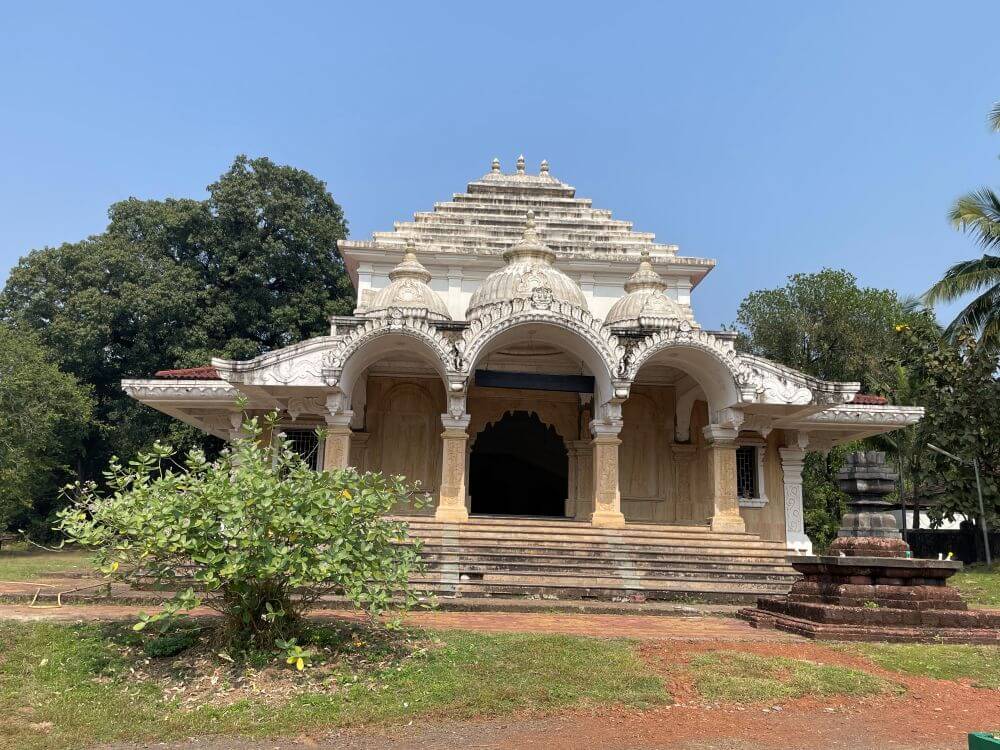
In front of the temple stands a star-shaped stone Tulsi Vrindavan, built upon a wide pedestal. This Vrindavan is unique due to its star-shaped base, a small pillar of the same shape, and a top resembling blooming lotus petals, which speaks to its antiquity. The temple underwent renovation between 2007 and 2010, though the original form of the main sanctum sanctorum (Garbhagriha) was preserved. Built on a high platform (Jagati), the temple structure consists of a Darshan Mandap, Sabha Mandap, Antarala, and Garbhagriha. One enters the Darshan Mandap by climbing 11 steps from the ground. The Darshan Mandap features three arches, topped by three modak-shaped spires (Shikharas), each adorned with an Amalaka and a Kalash. These spires, along with the arches below and the pyramid-like structure of the Sabha Mandap behind them, give the temple the ‘Vimana’ shape described in ancient texts.
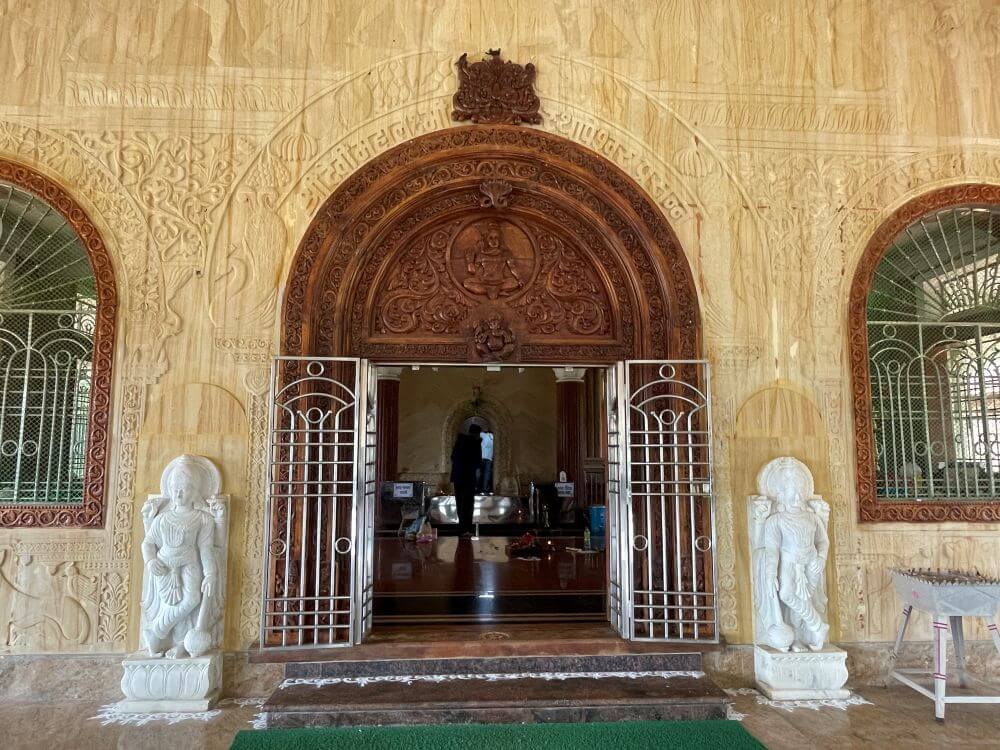
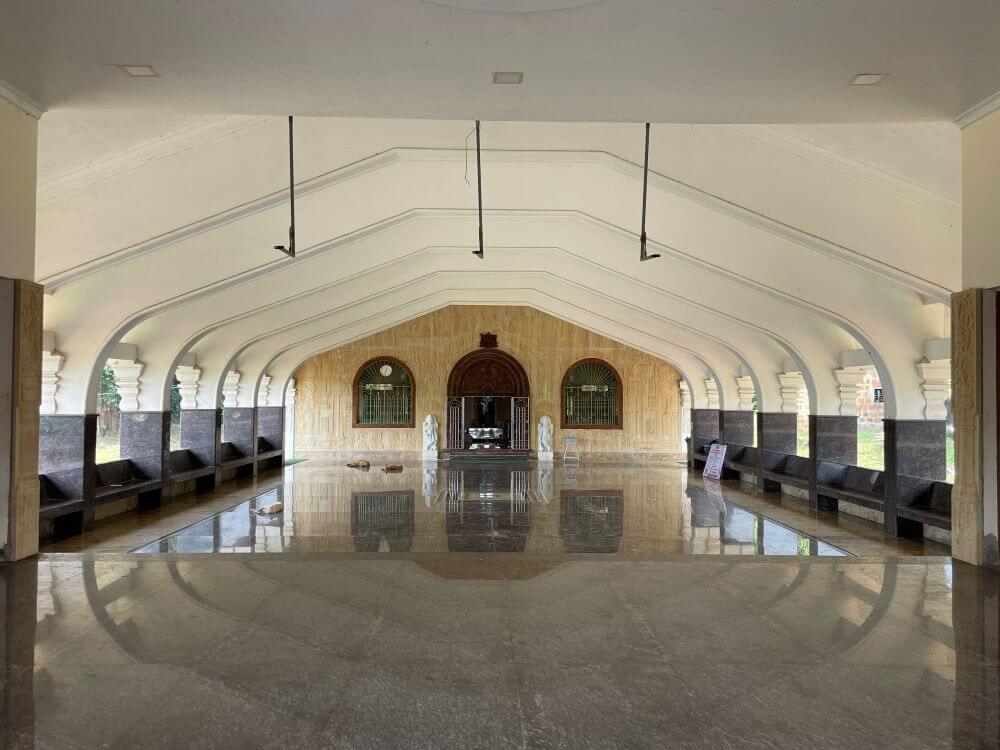
The Sabha Mandap of the temple is very spacious. This semi-open hall has stone benches (Kakshasanas) along the sides for devotees to sit. The wooden entrance to the Antarala is decorated with exquisite carvings. On both sides of this entrance are carved figures of door guardians (Dwarapalas) holding a conch, discus, and mace. Above the door lintel is an image of Lord Ganesha, and above that, a wooden carving of Lord Shiva. The door frame is adorned with carvings of the ten avatars of Lord Vishnu. The Garbhagriha is situated slightly higher than the Antarala.
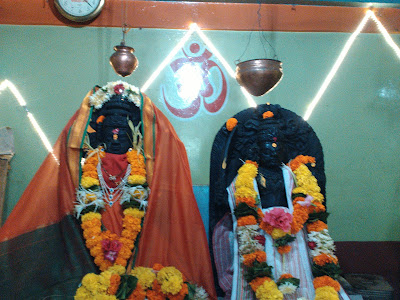
The elliptical entrance to the Garbhagriha is three-branched and carved with vine and floral motifs. At the top center of the entrance is a Shrifal-Kalash. On both sides of the entrance are two sculptures of lions, the vehicle of the Goddess. Inside the Garbhagriha, the idols of Mahalakshmi and Sthapeshwar are placed on a high pedestal. These idols were newly crafted and consecrated in 1976. Both idols are approximately two and a half feet tall and face south. Sthapeshwar holds a sword in his right hand and a shield in his left, while Mahalakshmi is four-armed. Near these idols, on a pedestal, are stones bearing the footprints of a tiger.
Above the Antarala of the temple is an inverted cup-shaped spire, topped with a small modak-shaped Amalaka. The spire above the Garbhagriha is circular and tapers towards the top, consisting of four levels including the Amalaka. On the second level from the bottom, there are niches on all sides containing idols of deities such as Shiva and Parvati, while at the base of the third level are idols of Vinayaka. At the base of this spire, there are small circular pillar-like spires at all four corners.
Various religious programs are held in the temple throughout the year. The annual Jatrotsav (fair) of the deity takes place on the first Monday of February, during which the temple is beautifully illuminated. Villagers who have settled in different parts for work and business make it a point to return for this festival. On the day of the fair, at 7 AM, an Abhishekam is performed on the idols by Brahmins. Subsequently, the idols of Sthapeshwar and Mahalakshmi are adorned with clothes and ornaments. The palanquin is then decorated with flowers. To ensure the festival proceeds without any obstacles, the Manakaris offer prayers to the processional idols of Sthapeshwar and Mahalakshmi. The idols are then placed in the palanquin, and a procession is taken around the temple with music. After the palanquin is brought into the Garbhagriha, 12 Manakaris offer ‘Oti’ (offerings) to the Goddess according to their respective ranks. This is followed by offerings from the five Kulkari, Sthalkari, and five Manakaris of Degave. Thereafter, devotees perform rituals such as offering Oti and making or fulfilling vows. Around midnight, the Manakaris take the palanquin for a circumambulation of the temple. Once the palanquin returns to the temple, a Dashavatar drama performance is held late at night. The festival concludes the next day after the ‘Dahikala’ performance by the Dashavatar artists.
Since 2010, a ‘Lakshadeep’ (hundred thousand lamps) ceremony is held at the temple on Gudi Padwa. On this day, after the morning Abhishekam, the idols are dressed in new clothes, followed by the Satyanarayan Mahapuja. Interested Manakaris from the 48 villages are given the opportunity to host the Puja. On this occasion, about three thousand lamps are lit, and prayers are offered to the deities for “light to shine in the lives of the devotees.” During this time, all electric lights in the temple premises are turned off, and the entire area is illuminated solely by the glow of the lamps. In addition to these festivals, Navratri is also celebrated here with great enthusiasm.
This sacred temple stands as a testament to deep spiritual devotion, ancient architectural grandeur, and rich local cultural traditions.
The sanctum sanctorum houses the divine idol consecrated according to ancient Vedic traditions, surrounded by serene courtyards and traditional temple architecture.
Navratri, Maha Shivratri, Annual Temple Jatra & Deepotsav
Compare and book flights, secure top-rated local hotels near the temple, hire reliable guides, and rent cars instantly.
Extend your pilgrimage by visiting other highly sacred temples located nearby.


Add ₹999 more to unlock FREE SHIPPING!
Your sacred cart is currently empty.
Shop Photo FramesFill in your delivery details below to place your order.
Add comment