
Add ₹999 more to unlock FREE SHIPPING!
Your sacred cart is currently empty.
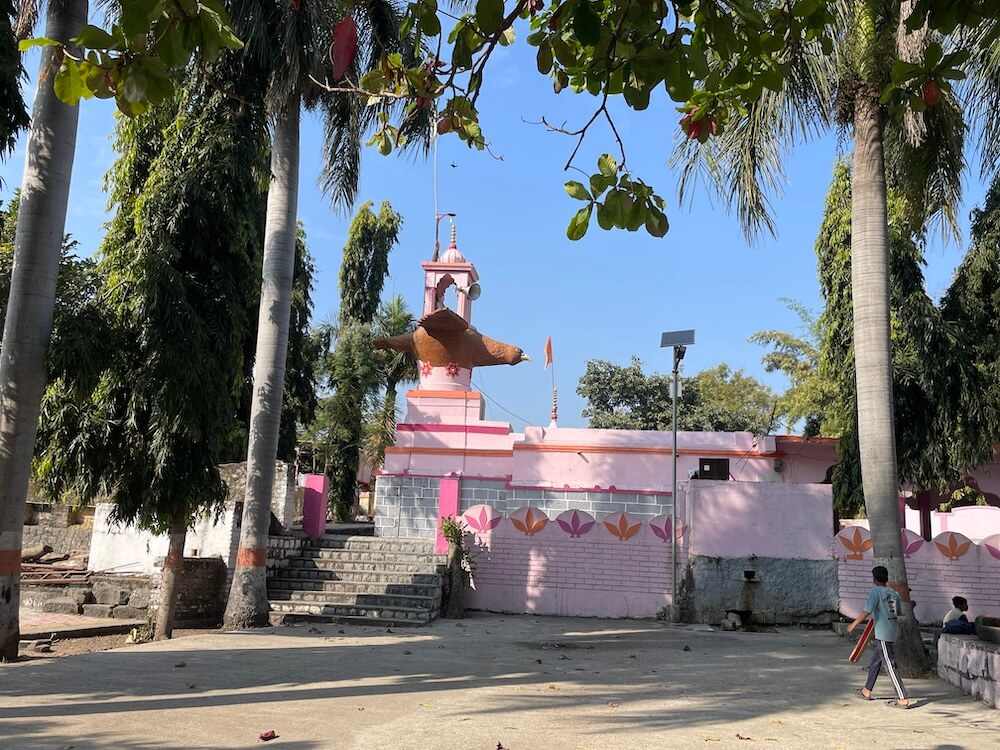
Shop Photo FramesThe village of Malgi, situated in the Chikhli taluka of Buldana district, is famous for its ancient temple of Mallikarjun Mahadeva. It is estimated that this temple, built in the Hemadpanti architectural style, dates back to approximately the 12th or 13th century. A unique feature of this temple is that during the month of Shravan, two to two and a half feet of water suddenly accumulates in the sanctum sanctorum (Garbhagriha). This remains an unsolved mystery to this day. Furthermore, the scene of Saint Tukaram’s bodily ascension to Vaikuntha is beautifully sculpted at the temple’s spire (Shikhara).
Spiritually, ‘Mallika’ refers to Mother Parvati, and ‘Arjun’ is a name for Lord Shiva. The mythological context of this name is primarily associated with the Mallikarjun temple at Srisailam, one of the twelve Jyotirlingas. According to legend, after the competition of circumambulating the Earth between Kartikeya and Ganesha, when Kartikeya went to the Krauncha mountain in a huff, Shiva and Parvati went there to meet him. From the time Mother Parvati worshipped Shiva with ‘Mallika’ (jasmine flowers), this combined form has been known as Mallikarjun. This name is considered a symbol of the non-dual union of Shakti and Shiva. The name Mallikarjun signifies the balance between Prakriti (Nature) and Purusha (Consciousness) in the universe. Devotees believe that by constantly chanting this name, the restlessness of the human mind is destroyed, leading to inner peace and spiritual energy.
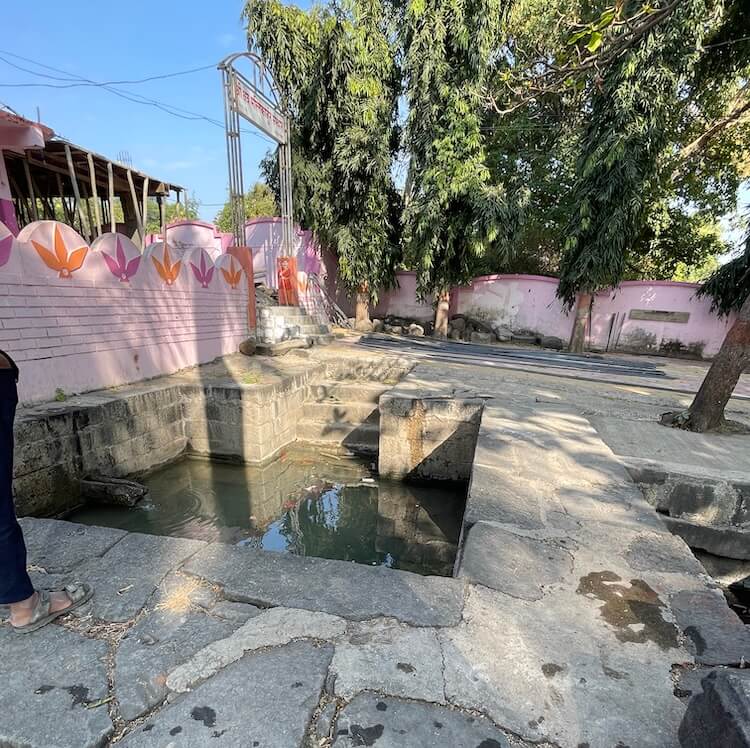
There is no precise information available regarding when the Shiva Linga of Mallikarjun Mahadeva was installed in this temple at Malgi. In ancient times, the belt from Amravati to Nashik in Maharashtra was part of the Dandakaranya forest. Legend has it that during their exile, Lord Shriram, along with Mother Sita and Lakshman, stayed at this temple for four to five days. It is estimated that the temple was built in the Hemadpanti style during the 12th or 13th century. There is also an ancient inscription in this temple. A few years ago, the temple was renovated while preserving its original structure. The temple is located approximately two kilometers from the Malgi Phata on the Chikhli-Jalna road. Situated outside the village, the temple has a spacious courtyard. There are replicas of small bastions on both sides of the temple entrance. In front of the temple, there is a small pond (Kund) and some ancient sculptures nearby. Adjacent to this pond is an ancient stone-built stepwell (Barav). There are stone steps to descend into this stepwell. From here, there are steps leading towards the temple. In the Nandi Mandapa in front of the temple, there are two Nandi statues—one large and one small.
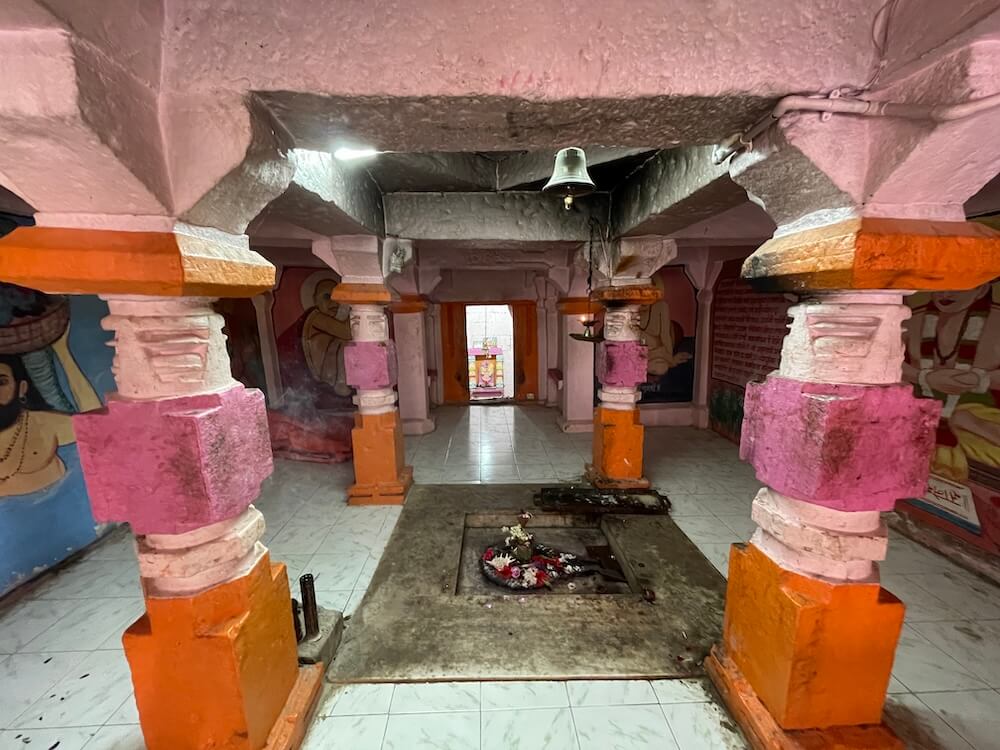
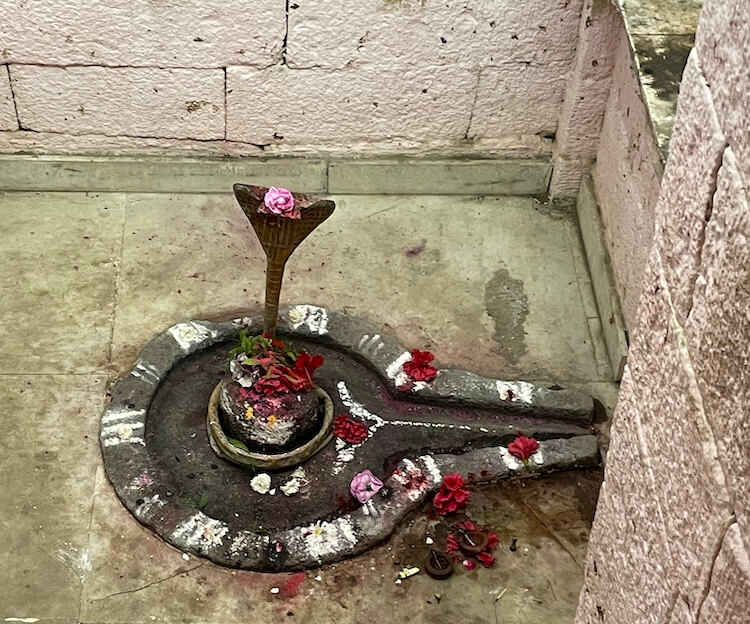
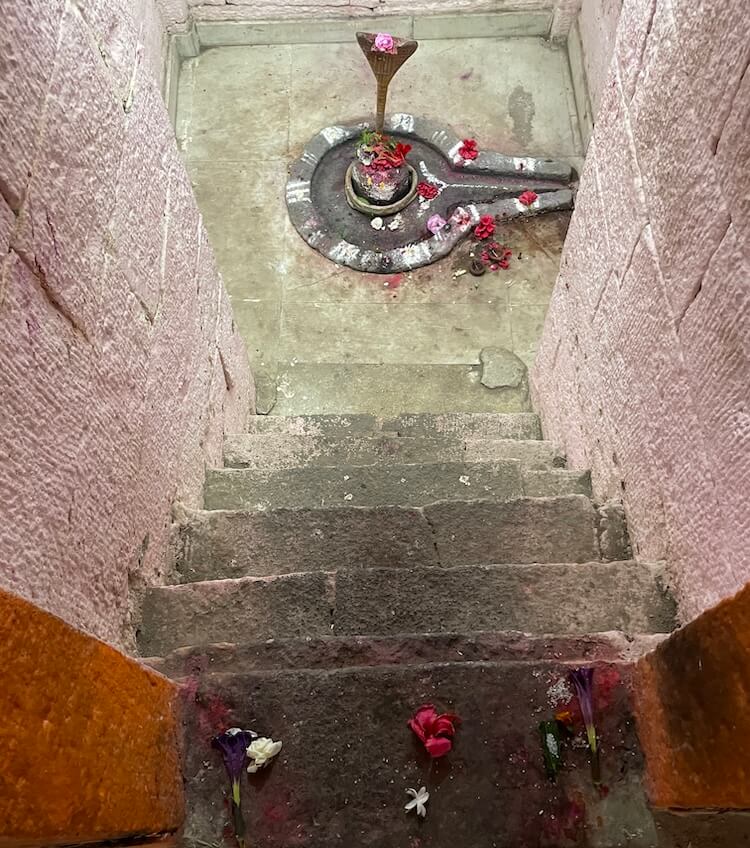
The temple structure consists of a semi-open Mandapa, a Sabha Mandapa, and a Garbhagriha. The Mandapa here was built in front of the original temple at a later period. The four main pillars of the Sabha Mandapa stand on stone bases. Various shapes are carved on each pillar. The walls of this Sabha Mandapa are adorned with paintings of various deities and saints. In the center of the four pillars, where the Rangashila is usually located, there is an ancient Shiva Linga, over which a Panchadhatu (five-metal) serpent holds a canopy. From here, one descends eight steps through the Antarala to enter the sunken Garbhagriha. In the center of the Garbhagriha is the Mallikarjun Mahadeva Linga, carved from a single stone. A serpent holds a canopy over this Linga. In the Devakoshtaka (niche) carved on the back wall, there is an idol of Mother Parvati. There are door pillars on both sides of this niche. There are also idols of some deities in the Garbhagriha. It is said that in the month of Shravan, water rises to a height of about two and a half feet in this Garbhagriha. However, no matter how heavy the rain, the water never touches the feet of the Mother Parvati idol.
The scene of Saint Tukaram’s bodily ascension to Vaikuntha is sculpted at the temple’s spire. The statues of Saint Tukaram and Garuda here appear lifelike. To the right of the temple is a small Ganesha temple, which houses an idol of Ganesha smeared with vermilion. Near the Vitthal-Rukmini temple, a short distance away, is a Yajna Kund. In front of this temple is an idol of Garuda, with a tortoise beneath it. On the pedestal in the Garbhagriha are the pleasant idols of Vitthal and Rukmini. Remnants of the old temple and ancient sculptures can be seen in the temple premises.
A grand festival is held at this temple on Chaitra Purnima. At that time, the area takes on the form of a fair. A ‘Saptah’ (seven-day religious event) is organized for this festival, during which religious programs like Kirtan and Bhajan are held. At the conclusion of the Saptah, Mahaprasad is distributed to the devotees. About twelve quintals of grain are used for the Mahaprasad. Various religious programs are also held here during Mahashivratri, Ashadhi Ekadashi, and Gokulashtami. The temple premises are bustling with devotees during the month of Shravan. A Maha-Aarti is held here every Monday of this month. During this time, snacks are distributed to the visiting devotees by various organizations.
This sacred temple stands as a testament to deep spiritual devotion, ancient architectural grandeur, and rich local cultural traditions.
The sanctum sanctorum houses the divine idol consecrated according to ancient Vedic traditions, surrounded by serene courtyards and traditional temple architecture.

Navratri, Maha Shivratri, Annual Temple Jatra & Deepotsav
Compare and book flights, secure top-rated local hotels near the temple, hire reliable guides, and rent cars instantly.
Extend your pilgrimage by visiting other highly sacred temples located nearby.


Add ₹999 more to unlock FREE SHIPPING!
Your sacred cart is currently empty.
Shop Photo FramesFill in your delivery details below to place your order.
Add comment