
Add ₹999 more to unlock FREE SHIPPING!
Your sacred cart is currently empty.
Shop Photo FramesMithbav village in Devgad Taluka, known as a tourist destination, is recognized for its clean and beautiful beaches. The coconut groves and the silvery white sandy shore here captivate the minds of tourists. The ancient and historically significant Rameshwar Temple in this very village is particularly famous. A unique blend of faith, culture, and beauty is felt upon seeing this temple. The villagers and devotees believe that Rameshwar, the presiding deity of Mithbav, is a living presence who rushes to answer the calls of his devotees.
The legend of this temple is that the local dignitaries, the Lokes and Ranes of Mithbav village, could not begin the Ram Navami festival at their place without attending the festival at the Inamdar Rameshwar Temple in Achare. One year, due to a flood in the Achara River, these dignitaries could not reach Achare on time. They were angered when the festival was celebrated in their absence. They carved a Shiva Linga from a black stone found in the same Achara River. After performing the ritualistic consecration of this Shiva Linga, they built a small temple around it. Villagers state that this Linga, currently in the sanctum sanctorum of the Rameshwar Temple in Mithbav, is approximately 350 years old. After continuous renovation work for six years from 2009 to 2015, the temple has attained a spacious and grand appearance.
Chhatrapati Sambhaji Maharaj, son of Chhatrapati Rajaram Maharaj, had initiated a grant of 51 rupees for this temple. It is said that Chimaji Appa offered a palanquin to this Rameshwar so that his wife might regain her health. This event occurred between 1716 and 1740 AD.
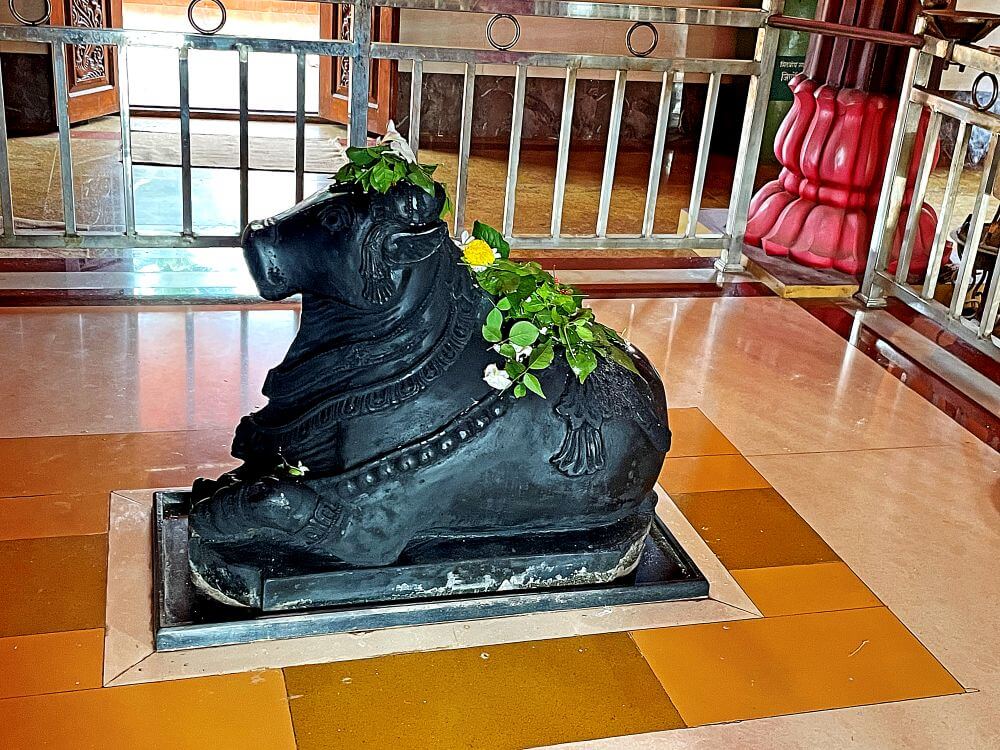
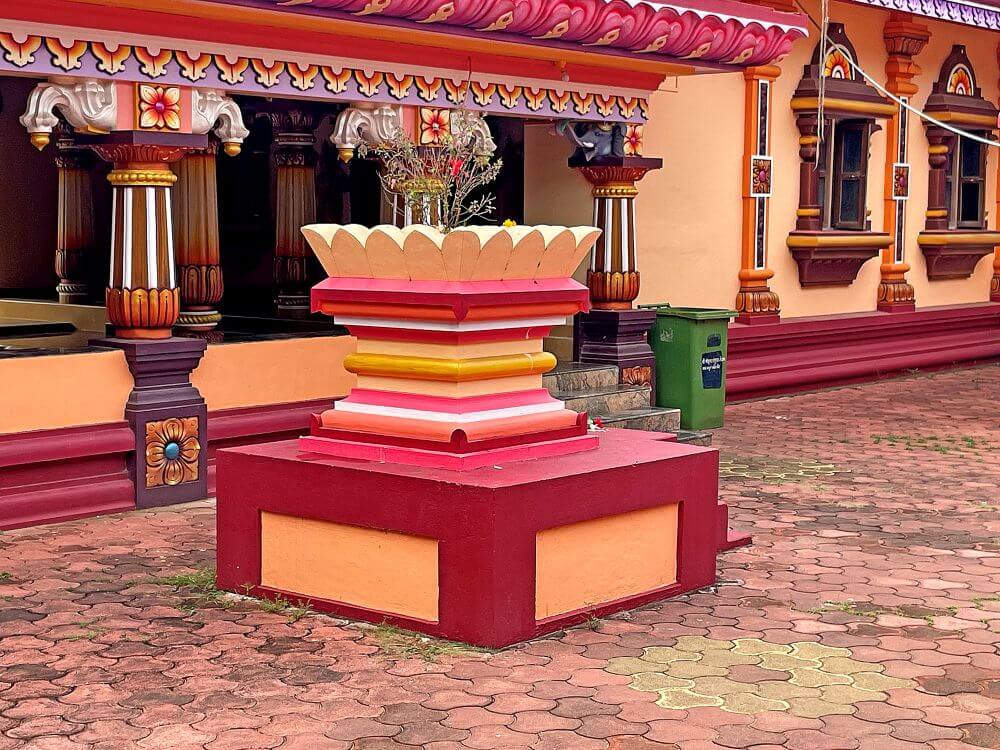
The courtyard of the Rameshwar Temple complex has a large entrance gate. It features two intricately carved pillars, a large niche in the middle of the horizontal beam above, statues of Nandi on both sides, and small shrine-like structures at both ends. This niche contains statues of Lakshmi, Shankar, and Ganesha, while the side shrines feature relief sculptures of Shiva Lingas. In this courtyard, there are the Ravalnath Temple, Devcharivada Temple, Purvatar Khamba Temple, Jain Akari Brahmin Temple, Maruti, and Gajant Lakshmi temples. On one side of the courtyard, there is a stage for presenting cultural programs and an open space in front for the audience to sit. Passing the Hanuman Temple and Akari Brahmin Temple in this courtyard, one reaches the entrance arch within the boundary wall of the Rameshwar Temple. The structure of the Rameshwar Temple consists of a Mukhamandapa (front hall), Sabhamandapa (main hall), Antarala (vestibule), and Garbhagriha (sanctum sanctorum). Near the temple entrance, on a pedestal, there is a series of five lamp pillars—four with five tiers and one with seven tiers. Nearby, after some distance, there is a small pillar on a pedestal, at the base of which is an ancient stone statue of Nandi and a stone representing a local deity.
Since the temple is on a high platform, one enters the Sabhamandapa by climbing three steps of the Mukhamandapa. On the upper side of the Mukhamandapa, on a Vajrapitha, sits a statue of Ganesha. This four-armed statue, about five feet tall, holds a noose, a goad, and a modak, with one hand in the Abhaya Mudra (gesture of fearlessness). The pillars at the entrance have distinctive carvings.
The Sabhamandapa has four rows of ornate pillars. The middle two rows have five pillars each, while the two side rows have seven pillars each. According to the Konkani architectural style, the floor in the center of the Sabhamandapa is slightly recessed by a few inches. This semi-open Sabhamandapa has stone benches along the sides. The tops of the pillars here are carved with sculptures of Mahadeva, Vishnu, Maruti, Nandi, Kirtimukha, etc., and the lower parts of the pillars feature lotus flower carvings. All the pillars here are connected to each other by ornate arched beams. The ceiling of the Sabhamandapa is wagon-vaulted. On the wall near the entrance, there is a large relief sculpture of Shiva performing the Tandava dance. On the wall near the Antarala, close to the ceiling, there are beautiful relief sculptures of Shiva-Parvati sitting on Mount Kailash, Ganesha, Narada, Kartikeya, Rajabaksha, Nandi, and a lion.
From there, one enters the Antarala through a doorway between two ornate pillars. On both sides of these pillars are four-armed guardian statues holding a conch, discus, mace, and noose. On the door frame of the Antarala, at the Lalatabimba (center of the lintel), a relief sculpture of Sheshashayi Vishnu is carved. This sculpture depicts Vishnu reclining on Shesha, Brahma emerging from a lotus from his navel, and Lakshmi at his feet. Notably, the attire and hairstyle of Lakshmi here are in the Marathi style. Above this frame are carved statues of Ganesha and Riddhi-Siddhi. Higher up on the wall is a large Kirtimukha.
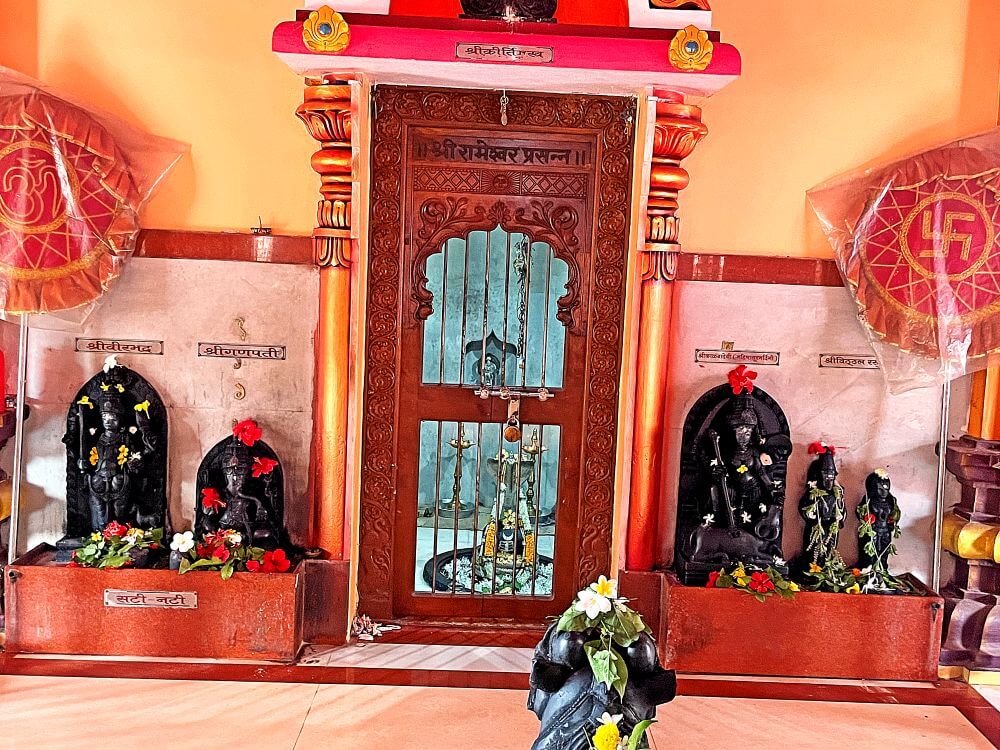
In the Antarala, there is a wooden palanquin on one side. Leaving a circumambulation path, there is the Garbhagriha. The area in front of the Garbhagriha is enclosed with steel bars. Inside, there is a Nandi statue made of black stone. On the front wall of the Garbhagriha, on the left side, are black stone statues of Kalamba Devi in the form of Mahishasurmardini and Vitthal-Rukhumai, and on the right side are statues of Ganesha and Virabhadra. In the center of the Garbhagriha is a Shiva Linga made of a single piece of black stone.
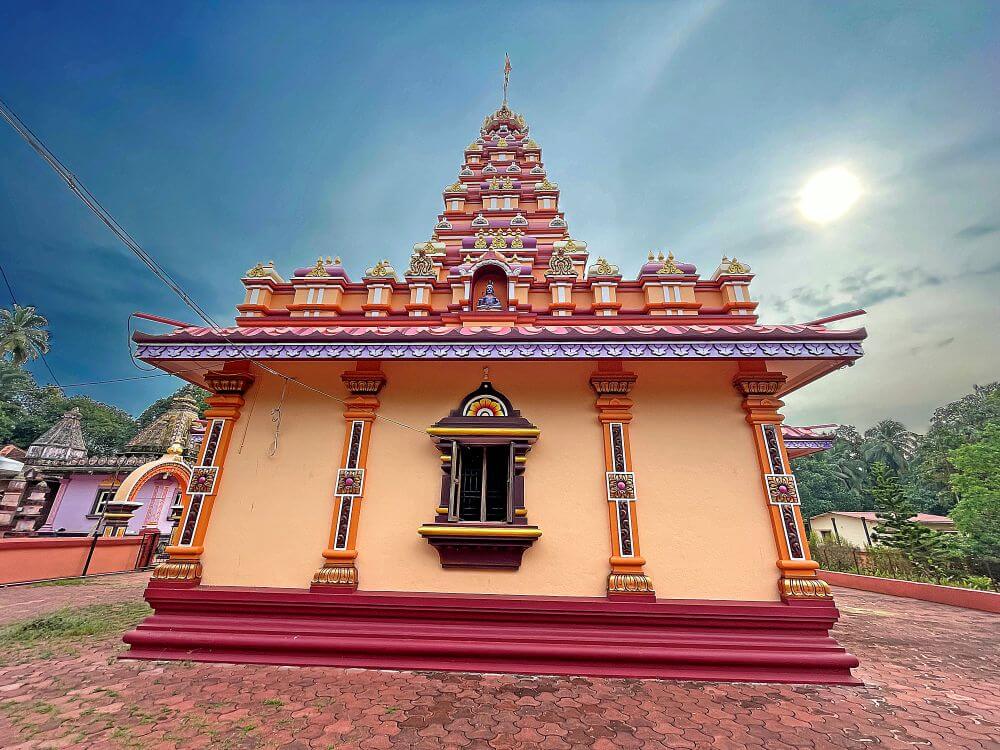
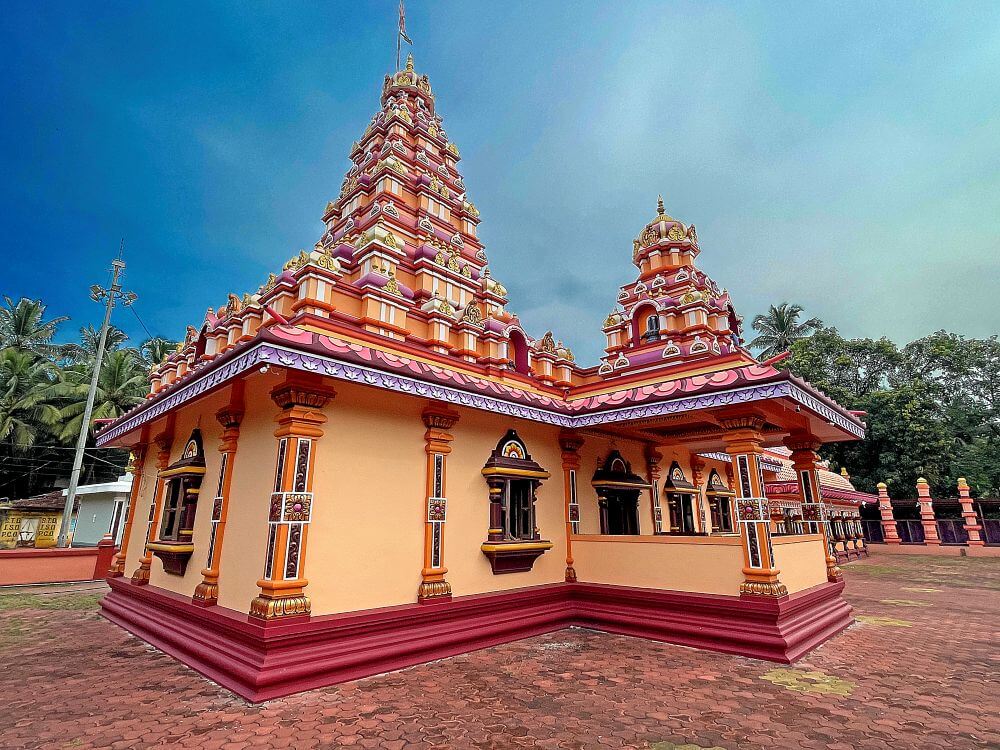
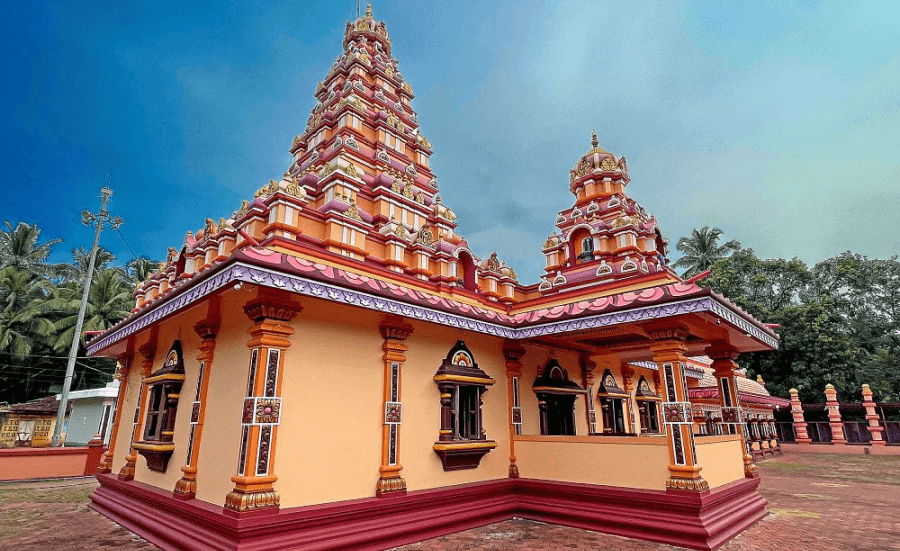
The ceiling of this temple is very beautiful and decorated with distinctive carvings. There are five finials in a row on the roof of the Mukhamandapa. The roof of the Sabhamandapa is in three parts. The middle strip is wagon-vaulted and has 18 finials in a row. The first, ninth, and eighteenth finials are somewhat larger. Attached to the middle part of the roof are straight sloping roofs on the left and right sides. Above the Garbhagriha is a square Urushringi-style Shikhara (spire), topped with an Amalaka and a finial. The finial is gold-plated. On both sides of this finial are smaller spires with finials.
Festivals like Mahashivratri, Gokulashtami, Vaikuntha Chaturdashi, Tripurari Purnima, Navratri, Dussehra, and Ram Navami are celebrated in this temple. Every year on 11 May, there is a large fair on the occasion of the temple’s anniversary. On this day, religious programs like Maha-Abhishek and Laghurudra are organized. Programs such as Bhajans, Kirtans, Dashavatar plays, and a grand feast are held throughout the day. Women are prohibited from entering the inner sanctum of the temple. However, on Vaikuntha Chaturdashi, women can enter the sanctum for Darshan between 3 and 5 in the morning after bathing and wearing new clothes before sunrise.
Mithbav, known in Maharashtra due to the Salt Satyagraha called by Mahatma Gandhi in 1930, is also known as the village of the renowned Marathi poet Pu. Shi. Rege. The beach of Mithbav is famous for ‘Olive Ridley’ turtles.
This sacred temple stands as a testament to deep spiritual devotion, ancient architectural grandeur, and rich local cultural traditions.
The sanctum sanctorum houses the divine idol consecrated according to ancient Vedic traditions, surrounded by serene courtyards and traditional temple architecture.
Navratri, Maha Shivratri, Annual Temple Jatra & Deepotsav
Compare and book flights, secure top-rated local hotels near the temple, hire reliable guides, and rent cars instantly.
Extend your pilgrimage by visiting other highly sacred temples located nearby.


Add ₹999 more to unlock FREE SHIPPING!
Your sacred cart is currently empty.
Shop Photo FramesFill in your delivery details below to place your order.
Add comment