
Add ₹999 more to unlock FREE SHIPPING!
Your sacred cart is currently empty.
Shop Photo FramesIn the historic village of Munge, situated on the border of Malvan and Devgad in the Konkan region, right by the coastal highway, stands the awakened shrine of Devi Bhagavati. According to local legend, in ancient times, this village was home to Rishis and Munis. Hence, it was known as Munigram, which later corrupted into Munge. Devi Bhagavati is the presiding village deity here. The temple of the Devi is said to date back to the Peshwa era. Inside the temple, there is an idol of the Devi in her Mahishasuramardini form. This stone idol was consecrated two hundred years ago. Devotees here believe that the presence of this Devi has transformed Munge village into a powerful spiritual centre.
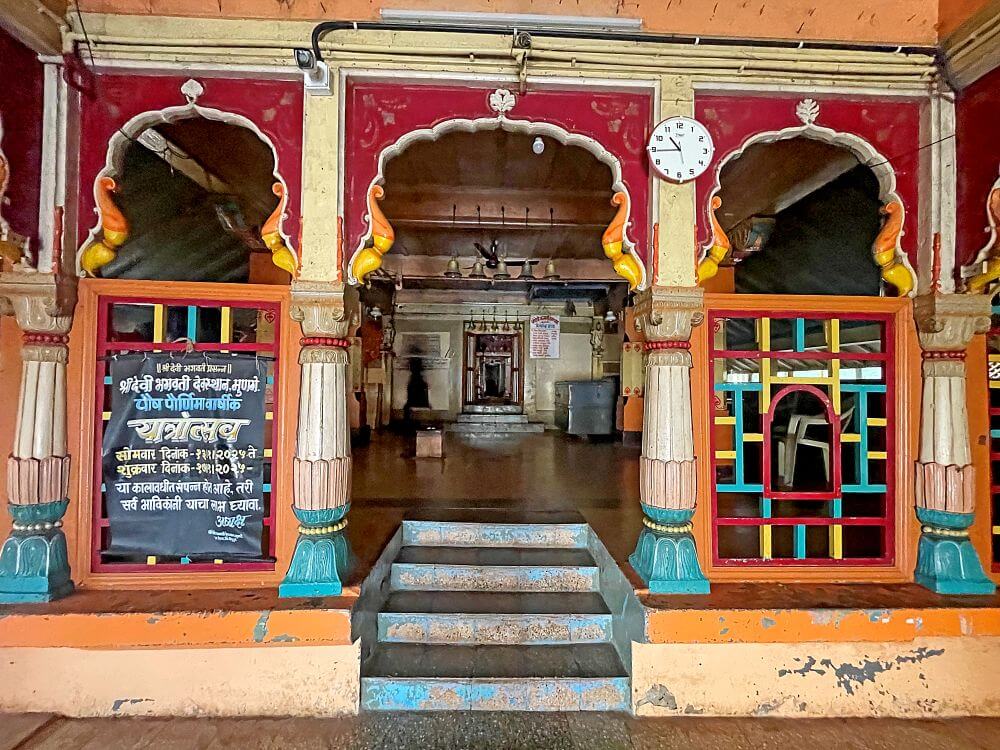
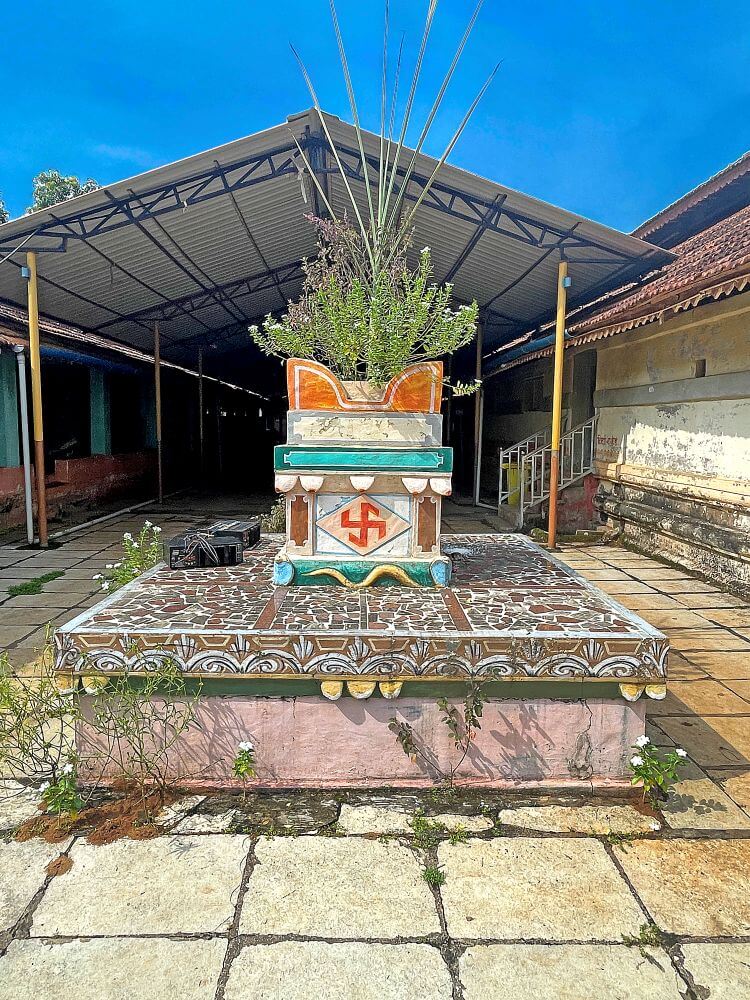
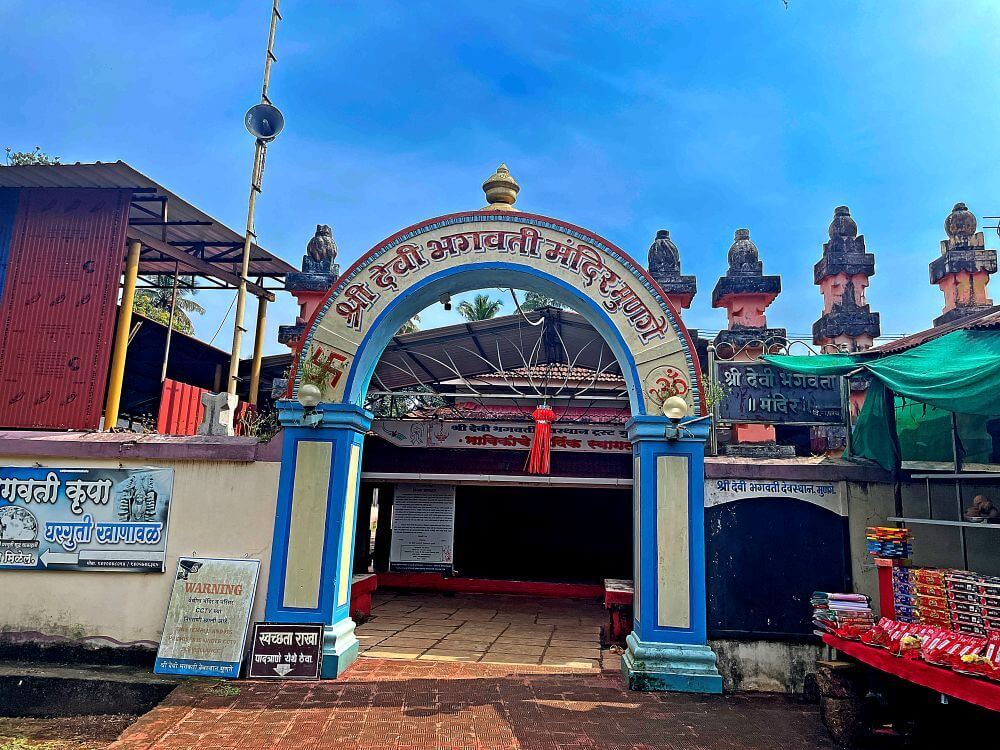
The legend of this temple states that ‘Baychi Devi’ in Bambharwadi, near this village of twelve hamlets, was formerly the original seat of Munge village. Over time, Devi Bhagavati, located in a central position, was accorded the status of the village deity. The temple of this Devi is nestled in a spacious courtyard. A small paved road has been constructed from the main road leading to the temple. Here, one finds a few shops selling puja materials for the Devi, such as khana and coconuts. Directly ahead, one sees the archway of the Devi’s temple, set within the compound wall. Upon entering, to the right, on a platform, there are four Konkani-style lamp pillars, and one to the left, making a total of five. Directly in front is the Devi’s tiled temple, built in the Konkani architectural style with a sloping roof. The temple’s structure comprises a sabhamandap (assembly hall), an upasabhamandap (subsidiary assembly hall), an antarala (vestibule), and a garbhagriha (sanctum sanctorum) with a pradakshina path (circumambulatory passage) within the antarala.
Most of this temple’s construction is in wood. The sabhamandap is spacious and open. It has square pillars on the sides, and a short distance inwards from these, on both sides, there are seven wooden, turned pillars each. Between these pillars are wooden arched doorways. The upasabhamandap is elevated by four steps. It features wooden octagonal pillars. Here, one finds an idol of Hanuman, as well as padukas (footprints) on a platform. On the upper part of the pillars flanking the entrance wall of the antarala, there are beautiful wooden sculptures of Jaya and Vijaya, the Vaishnava doorkeepers. At the entrance of the antarala, at the lalata-bimba (lintel centre), is Ganesha, flanked by his consorts Riddhi and Siddhi, standing on either side. This wooden sculpture is in a distinct Marathi sculptural style. Beside it are carved floral motifs and peacock images. This doorframe is an excellent example of ancient wooden sculpture.
Inside the antarala, on one side of the garbhagriha entrance, there is an idol of Nandi, and on the other side, tarangakathyas (waving staffs). Inside the garbhagriha, on a high vajra-pitha (diamond pedestal), one sees the Devi’s black stone idol, approximately four feet tall, with a smiling countenance. Beside this idol is an intricately carved silver arch. This stone idol of the Devi was consecrated here in the year one thousand eight hundred and ten. Here, the Devi is in the form of Mahishasuramardini. Holding a sword, trident, shield, and conch, the Devi stands with her foot on Mahishasura. To the right of the Devi’s idol is a Shiva lingam. It is considered the abode of Shri Dev Thanekar.
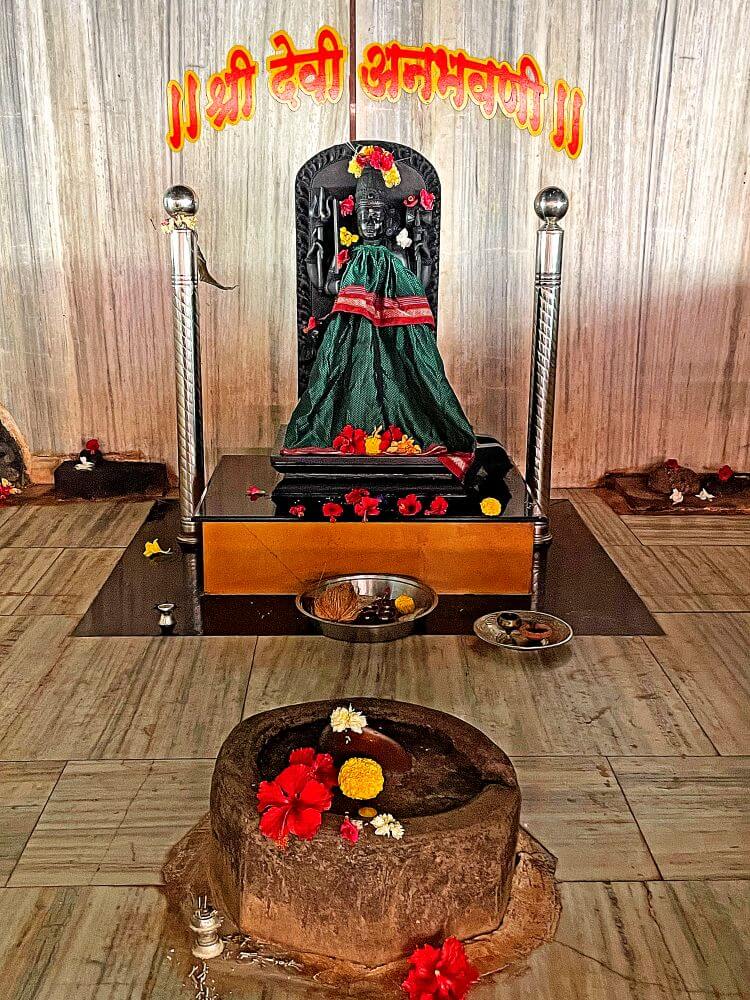
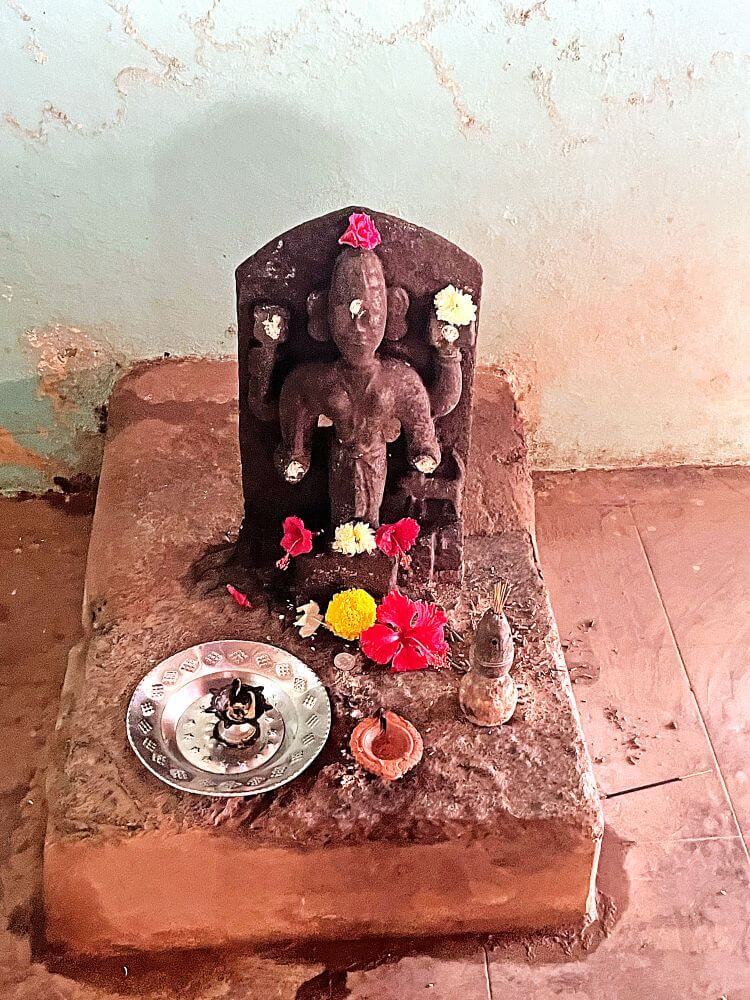
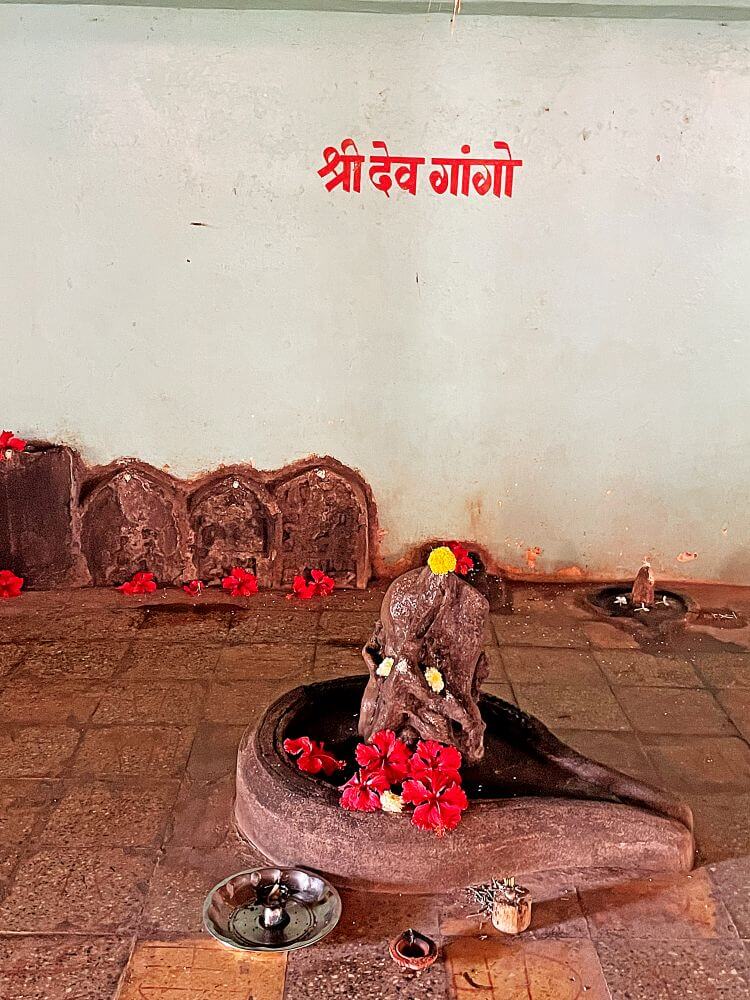
Outside the temple, to the right of the sabhamandap, there is a long verandah. It houses stones and idols of Dev Gaygarab, Gango, Chitkyacha Chala, and Devi Anbhavani. To the left of the temple, in another verandah, is the abode of Devi Bhavay. Behind the carved stone of this Devi are some veergal (hero stones) and satisheela (sati stones). Some of the relief sculptures on these veergal and satisheela are worn out. However, some satisheela are still intact. Within the temple courtyard, there is also a temple of Brahmandev, and a Shiva lingam is consecrated in its garbhagriha.
The entire temple complex is extremely picturesque and peaceful. Behind the temple, there is a natural spring. It has water throughout all twelve months of the year. Devotees take darshan of the Devi only after purifying themselves at this spot. A little further from here is the awakened shrine of Mahapurusha. The Devi’s yatra (pilgrimage fair) takes place on Pausha Pournima (full moon day of Pausha month). It lasts for five days. As devotees believe that this Devi grants wishes, a large crowd gathers during the yatra festival to make and fulfil vows. During the yatra, there are programmes such as Devi’s Gondhal, bhajan, pravachan-kirtan (discourses and devotional singing), and palanquin processions. On the last night of the yatra, there is a performance of the folk art form called Lalit.
According to one legend, when Devi Bhagavati came to Munge village from Kashi, she first resided at the home of the Padave family in Kariwane Wadi here. Therefore, the Padave house is considered the Devi’s maternal home. The Devi visits her maternal home every three years. This is called Devi’s Maher-swari (maternal visit). After the Devi’s puja and archan here, she proceeds to the temple with great pomp and music.
In the month of Chaitra, the Devi’s palanquin procession takes place for the entire month. During this period, Vasant Pujas are performed for the twelve-five mankaris (honoured individuals) during the palanquin procession in the temple courtyard. In the month of Jyeshtha, there is a ritual of ‘Desarudh’ in the temple, while in Shravan, Shravani Puja is performed daily. Similarly, the Devi’s Dalap-swari, which is a ceremony of visiting the homes of the twelve-five mankaris, is also celebrated with great enthusiasm. Festivals like Ganesh Chaturthi, Navratri, Tripurari Pournima, and Dev Diwali are also celebrated in a religious atmosphere in the temple. The Devi’s Shimotsav (Holi festival) is celebrated until Dhulwadi. From the day after Holi, Rombate, Tamasha, Dashavatar, and theatrical performances are organised at night. This shrine has received ‘B’ grade status from the Government of Maharashtra.
This sacred temple stands as a testament to deep spiritual devotion, ancient architectural grandeur, and rich local cultural traditions.
The sanctum sanctorum houses the divine idol consecrated according to ancient Vedic traditions, surrounded by serene courtyards and traditional temple architecture.
Navratri, Maha Shivratri, Annual Temple Jatra & Deepotsav
Compare and book flights, secure top-rated local hotels near the temple, hire reliable guides, and rent cars instantly.
Extend your pilgrimage by visiting other highly sacred temples located nearby.


Add ₹999 more to unlock FREE SHIPPING!
Your sacred cart is currently empty.
Shop Photo FramesFill in your delivery details below to place your order.
Add comment