
Add ₹999 more to unlock FREE SHIPPING!
Your sacred cart is currently empty.
Shop Photo FramesAt Shri Kshetra Kunケeshwar in Devgad, Lingeshwar Mahadev of Kunkeshwar is considered the elder brother. The temple of Lingeshwar is situated on the Iraye plateau, in a scenic and peaceful environment. Devotees firmly believe that any worship performed at this temple reaches Kunkeshwar. Consequently, this temple holds immense religious significance. The cave mouth (bhuyaar mukh) shown at the back of the temple and the ancient well in front of the temple are major attractions for the pilgrims visiting this place.
It is unknown when exactly this temple of Lingeshwara was built, but it is ancient. There is a common practice of referring to structures or things of such unknown ancient history as belonging to the era of the Pandavas (Pandavkaleen). Scholars have concluded that the writing period of the Mahabharata was between 860 and 840 BCE, whereas some researchers have expressed the view that the events of the Mahabharata took place around three thousand BCE, which is even prior to the Indus Valley Civilization. Although this temple may not be that ancient, the local villagers hold such a deep faith. Similarly, the local people believe that this deity is the elder brother of Lord Kunkeshwar Mahadeva of Kunkeshwar. During Mahashivaratri, the fair of Lord Kunkeshwar is held, at which time many deities from the surrounding five villages go to visit him; however, just like Rameshwar or Rahateshwar of Gadhitamhane, Lingeshwar of Iliye also does not go to visit Kunkeshwar.
According to the legend, the Mahashivaratri fair was traditionally held at the Lingeshwar Temple in Iliye. At that time, Lord Lingeshwar would travel to Kunakeshwar for a ritual bath. During one such visit, an elderly woman from the village slipped and fell from the black rocks at Kunakeshwar. Ever since that incident, Lord Lingeshwar stopped going to Kunakeshwar for his baths. However, once every three years, Lord Lingeshwar visits Mithmumbari.
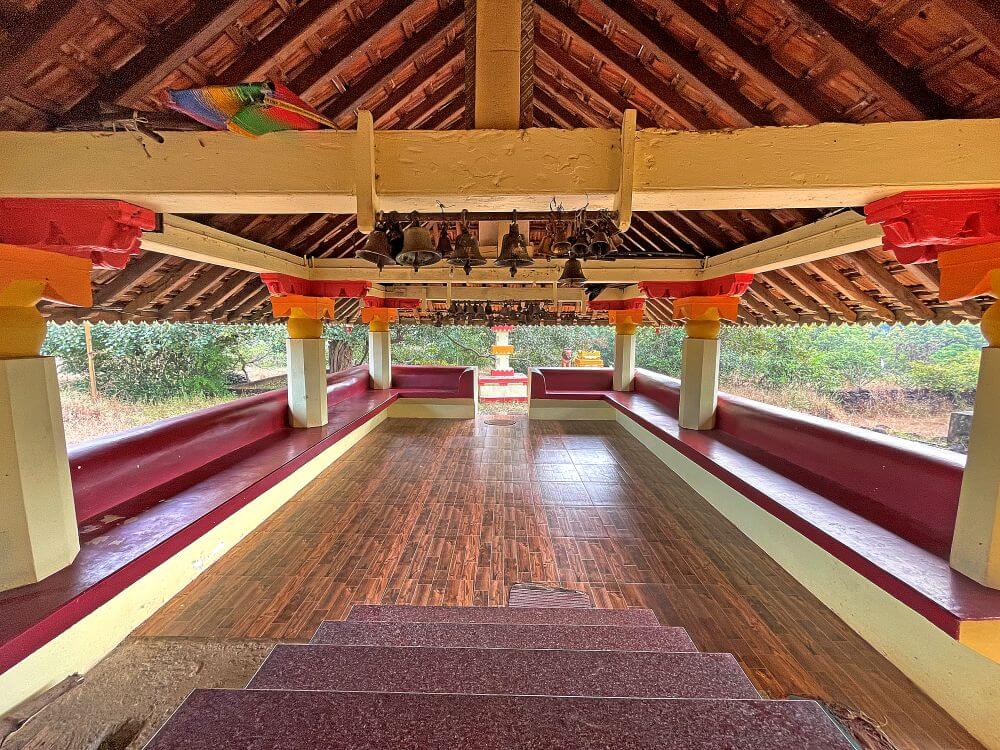
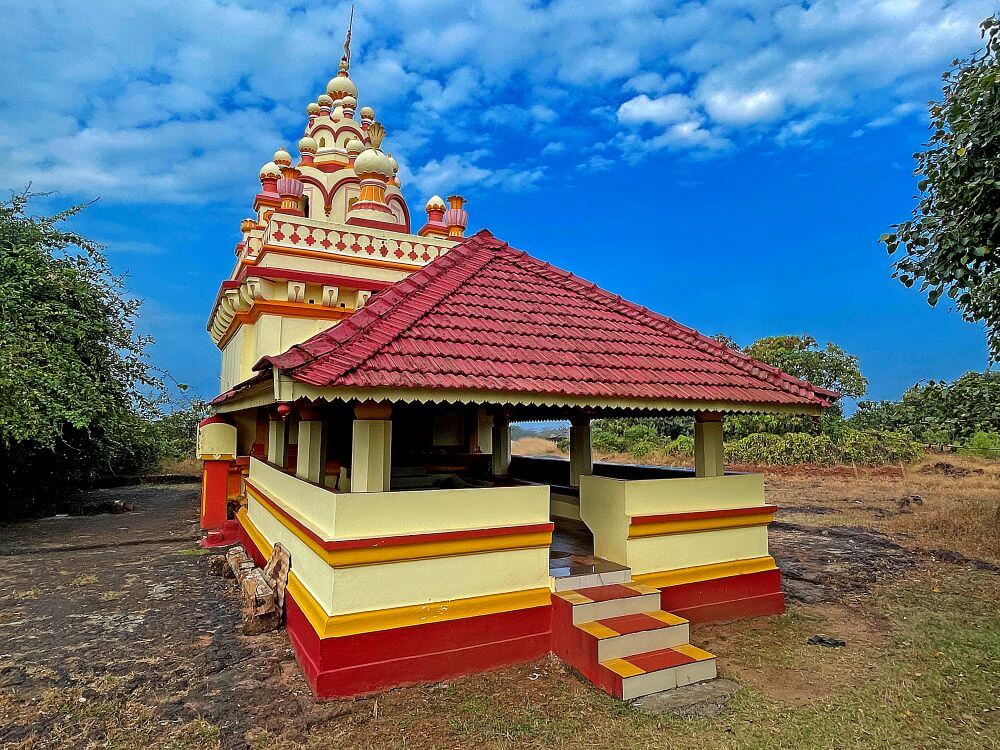
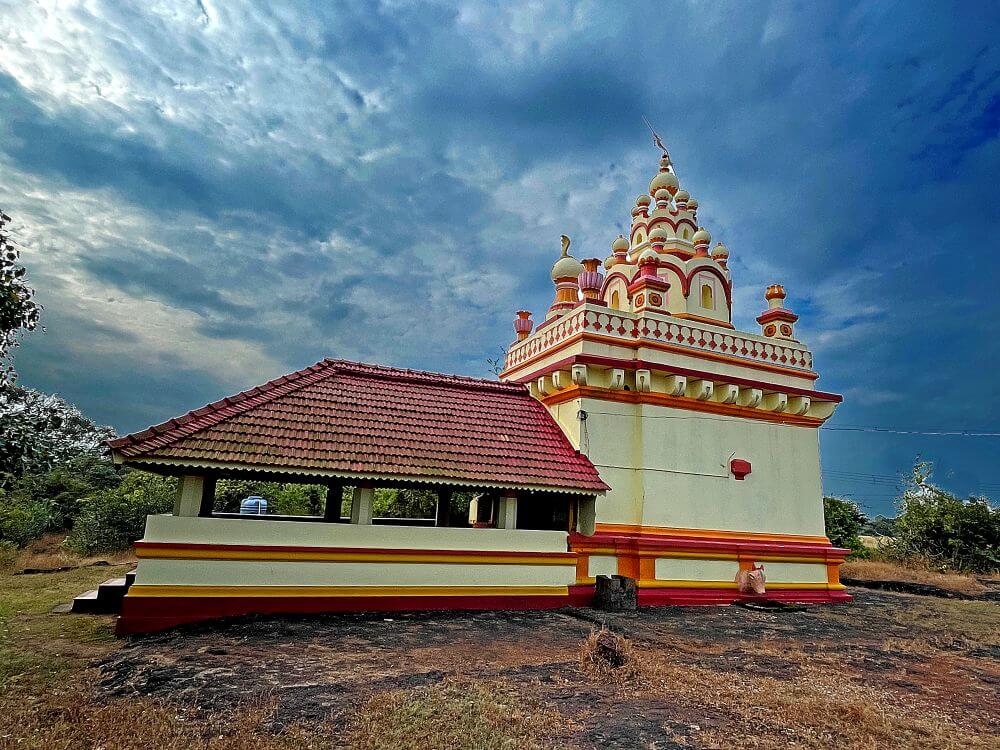
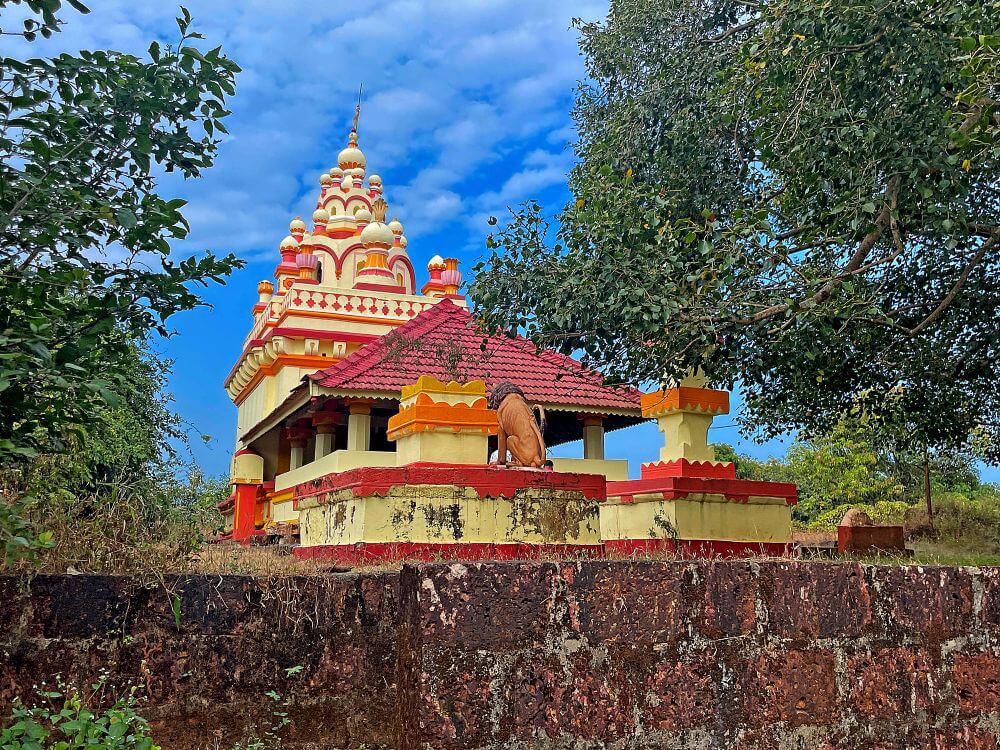
The east-facing Lingeshwar Temple appears to have been recently renovated. The temple is built on a high platform (jagati). In front of the temple, on a tall plinth, stands a Konkani-style lamp pillar (deepstambha). To its right, at a short distance on another plinth, are a Tulsi Vrindavan and an idol of a lion. While there is usually a Nandi in front of a Lord Shiva temple, here there is an idol of a lion instead. Right in front of this plinth are the foot-prints (pavale) of Lingeshwar, as well as stone slabs representing local deities. To the left of the lamp pillar is a small idol of Maruti. The structure of this temple consists of the Sabhamandapa (assembly hall), Antarala (vestibule), and Garbhagriha (sanctum sanctorum). There is a difference in the architectural style of the Sabhamandapa and the temple structure ahead of it. The Sabhamandapa is built in the Konkani architectural style, featuring a double-bay sloped roof and a semi-open design. The Sabhamandapa has kakasanas (stone benches with backrests) and eight octagonal pillars mounted on them. The special feature of these pillars is that they have a square-like shape at the top, adorned with carved tarangahastas (wave-brackets). The serpent and lion motifs carved on them are particularly eye-catching. These wooden tarangahastas reflect the antiquity of this temple. Many bells can be seen hanging in the assembly hall. Devotees fulfill their vows made to the deity by hanging bells here.
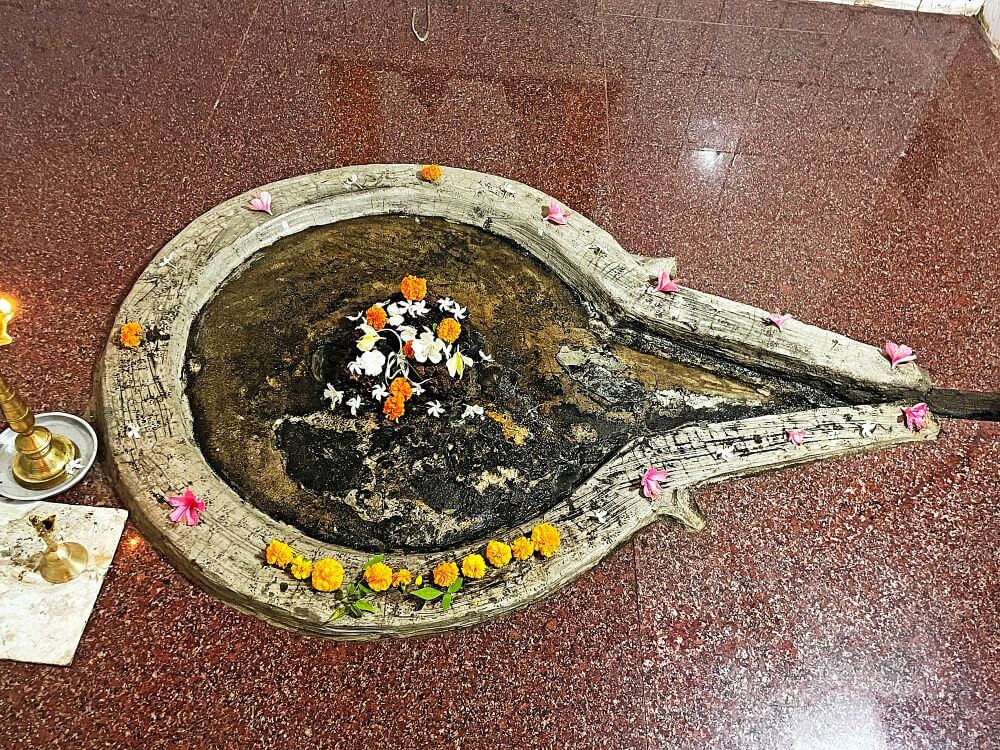
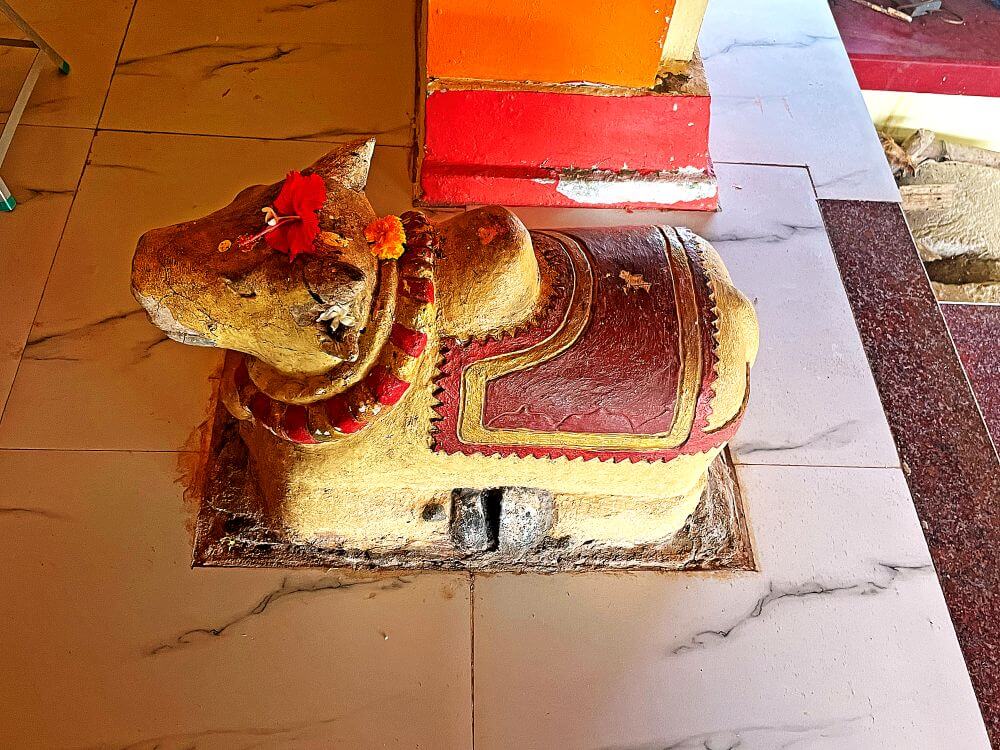
There is a verandah-like space raised by five steps from the floor of the hall. In this space, on one side of the sanctum sanctorum door, there is a stone idol of Nandi, while on the front wall of the sanctum, to the right in a niche, there is an idol of Ganesha carved in black stone. The entrance to the sanctum sanctorum is of a simple design, with a Kirtimukha above it. In this temple, the Patala Linga of Lingeshwara is consecrated. A Linga that is consecrated below the ground level is called a Patala Linga. In this temple, one descends three steps from the space to enter the sanctum sanctorum (Garbhagriha). There, on the floor, is the divine Linga (Pindi) of Lord Lingeshwara. The special feature of this Pindi is that right in the middle of the Shalunga, there is a Linga that looks like an uncarved, small rock. In a niche in the back wall of the sanctum sanctorum, there is a metallic face mask (Mukhavata) and a crown in the form of the Linga of Lingeshwara. On this crown, there is the divine facial form (Mukhamurti) of Lord Lingeshwara.
This square temple has a newly constructed tall shikhara. The design of this octagonal shikhara is also distinctive. On the lower tier, there are large-sized devakoshtakas and on the inner side, smaller-sized devakoshtakas. All these devakoshtakas are designed with an amalaka and a small kalasha. At the very top, amidst lotus petals, there is an amalaka and above it a tall kalasha. At all four corners of the temple roof, there are ghatakamalakar motifs resting on short square pillars.
Behind the temple, a short distance from the wall, there are two stone boulders. Flowers and vermilion are offered upon them. It is said that the mouth of an underground tunnel lies beneath one of these stones. Regarding this, there is a legend that Lingeshwar sent his younger brother Kunakeshwar through this tunnel to Kunakeshwar. Devotees worship Kunakeshwar from this very spot. It is the firm belief of the devotees that this worship reaches Kunakeshwar. A short distance ahead of the temple’s Tulsi Vrindavan, there is an ancient well. Villagers state that this well has steps and remains brimming with water throughout the year.
A grand fair is held at this temple on the auspicious occasion of Maha Shivaratri. On the occasion of this fair, devotees come in large numbers for the darshan of Lord Lingeshwara. Similarly, crowds of devotees gather here for darshan on every Monday of the holy month of Shravana.
This sacred temple stands as a testament to deep spiritual devotion, ancient architectural grandeur, and rich local cultural traditions.
The sanctum sanctorum houses the divine idol consecrated according to ancient Vedic traditions, surrounded by serene courtyards and traditional temple architecture.
Navratri, Maha Shivratri, Annual Temple Jatra & Deepotsav
Compare and book flights, secure top-rated local hotels near the temple, hire reliable guides, and rent cars instantly.
Extend your pilgrimage by visiting other highly sacred temples located nearby.


Add ₹999 more to unlock FREE SHIPPING!
Your sacred cart is currently empty.
Shop Photo FramesFill in your delivery details below to place your order.
Add comment