
Add ₹999 more to unlock FREE SHIPPING!
Your sacred cart is currently empty.
Shop Photo FramesAlthough the Konkan region is known as a high-rainfall area, the steep, hilly terrain causes rainwater to flow directly into the sea. Consequently, there is a shortage of water here during the summer; however, there are some rivers in Konkan that flow perennially, quenching the thirst of many villages and towns. The Annapurna River in Sindhudurg district is one of them. The Sthaneshwar Temple in the village of Kinjavade, located in Devgad Taluka, stands on the banks of this very Annapurna River. This sacred site, which is approximately 300 years old, is a place of faith for thousands of devotees. The deity is renowned for fulfilling vows and responding swiftly to the calls of the faithful.
The legend of the temple states that once, while a farmer was working in his field on the banks of the Annapurna River, his spade struck a stone, and blood began to flow from it. Seeing this, the farmer was frightened and informed the villagers. The villagers dug at that spot again and realized that the stone was actually the Pindi of Lord Sthaneshwar. The villagers installed the Pindi at that very spot and built a small temple of grass around it. They appointed a Harabhat Brahmin for the daily worship of the deity. One summer, a fire broke out in this temple. At that time, the Harabhat embraced the Pindi to protect it from the fire. In this effort, the Harabhat passed away. The villagers built a new temple here and re-installed Sthaneshwar. Since then, this temple has come to be known as ‘Harabhat Sthaneshwar’.
There is a royal decree (Sanad) from the year 1727 CE, issued by Chhatrapati Shambhu Raje, granting the entire village as an endowment (Inam) to this temple. Based on this, the temple is estimated to be over 300 years old. It is said that when Shambhu Raje visited Kinjavade village from Kolhapur for hunting, he had darshan at this Sthaneshwar temple. He had taken a vow that if his wish was fulfilled, he would build a large temple here. By the grace of Sthaneshwar, his wish was granted, and he built a magnificent temple for Sthaneshwar to fulfill his vow. Along with this, he gifted the villages of Kinjavade and Torsole as an endowment for the administration of the temple.
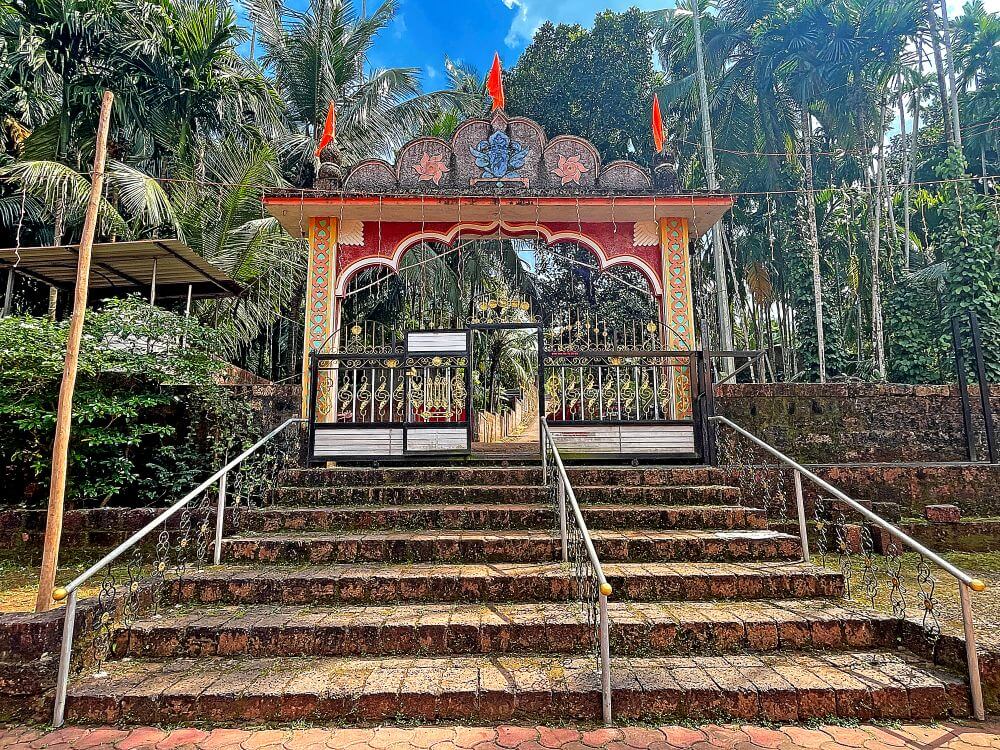
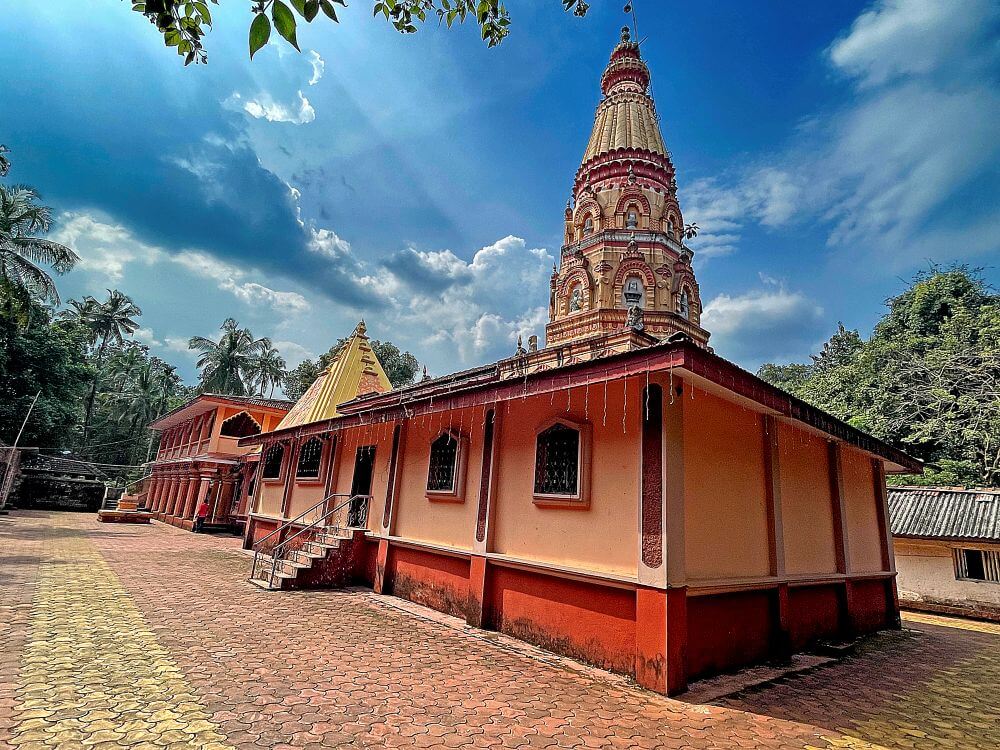
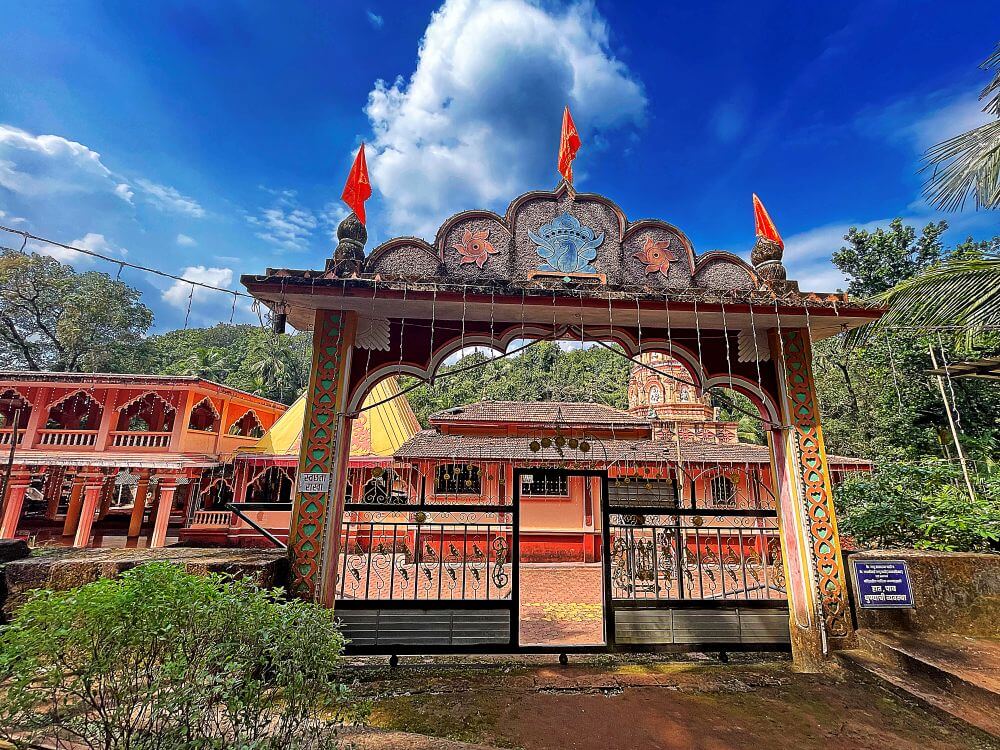
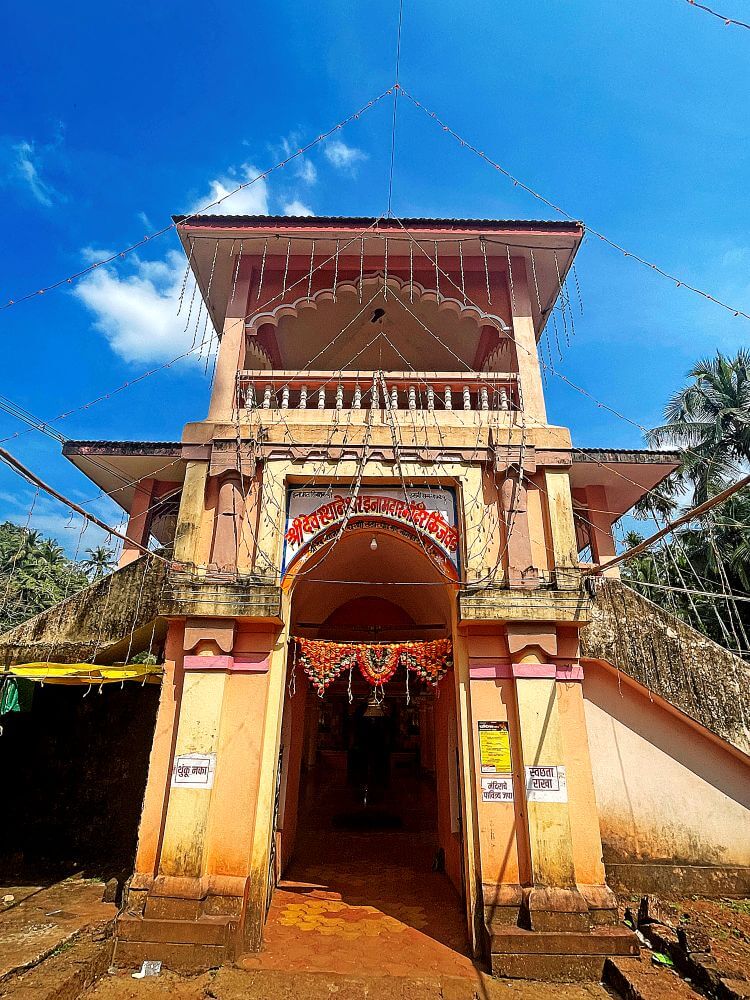
The temple acquired its present form after the restoration and renovation carried out in 2016-17. The temple has a strong boundary wall. One enters the temple courtyard through a two-storied gateway. There is a Nagarkhana (drum house) on the upper floor of this gateway. There are stairs on both inner sides of the gateway to reach this Nagarkhana. The construction of the gateway was done in 1725 CE using dressed stone. There is a large brass bell on the upper side of the gateway and guard rooms on both sides inside. In the courtyard, there is a Tulsi Vrindavan on a platform to the right of the temple and three lamp pillars (Deepstambhas) on the left. The structure of the temple consists of a Sabha Mandap, a main Sabha Mandap, an Antaral (vestibule), and a Garbhagriha (sanctum sanctorum).
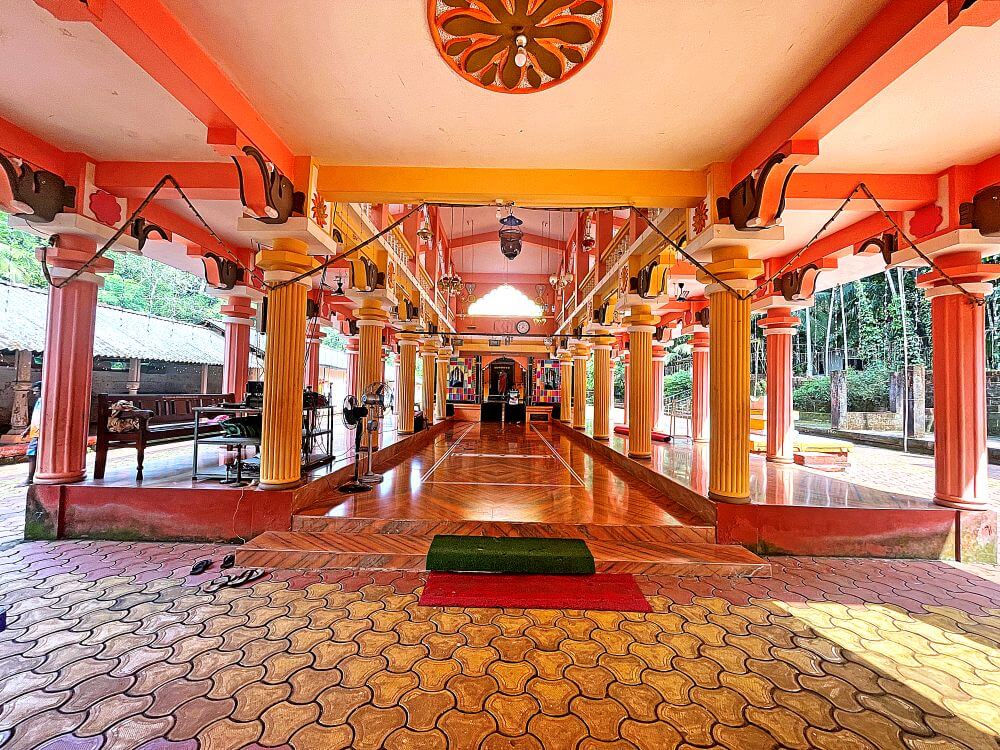
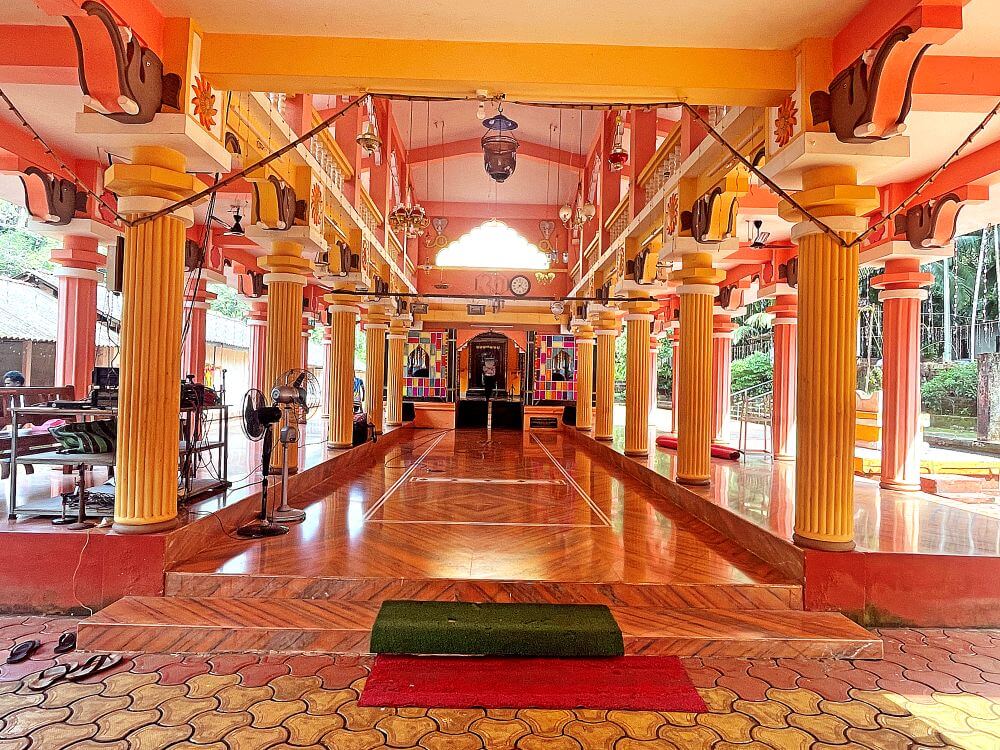
The first Sabha Mandap of the temple is two-storied and has four rows of pillars. There are seven pillars on each of the outer sides and five pillars in each of the two middle rows. These pillars feature sculptures of elephant heads (Gajamukhas) at the top. According to the Konkan architectural style, the floor in the middle row of pillars is a few inches lower. There are balconies on both sides of the upper floor of the Sabha Mandap. The main Sabha Mandap of the temple is slightly elevated. This Sabha Mandap is semi-open and has seating arrangements (Kakshasanas) on both sides for devotees. The palanquin of Sthaneshwar is kept in this very Sabha Mandap.
In the front wall of the Antaral, there are idols of Vitthal-Rukmini in the right niche and Ganpati in the left. The doorway of the Antaral is decorated with distinctive carvings. The Antaral is enclosed and has windows to allow light and air circulation. In the center of the Antaral is a black stone idol of Nandi and five Tarang deities nearby. In the niches on the front wall of the Garbhagriha, there are idols of Ganpati on the right and Shri Dattatreya on the left. In the center of the Garbhagriha is the black stone Pindi of Sthaneshwar. Above the roof of the Garbhagriha is a 60-foot-high octagonal spire (Shikhar). The niches within it contain sculptures of various deities and Shiva Pindis. The spire is topped with an Amalaka and a Kalash.
The Kartikotsav is celebrated here with great enthusiasm and devotion for six days starting from Kartik Shuddha Dashami. Along with various religious programs, Dashavatar folk plays are performed during this time.
This sacred temple stands as a testament to deep spiritual devotion, ancient architectural grandeur, and rich local cultural traditions.
The sanctum sanctorum houses the divine idol consecrated according to ancient Vedic traditions, surrounded by serene courtyards and traditional temple architecture.
Navratri, Maha Shivratri, Annual Temple Jatra & Deepotsav
Compare and book flights, secure top-rated local hotels near the temple, hire reliable guides, and rent cars instantly.
Extend your pilgrimage by visiting other highly sacred temples located nearby.


Add ₹999 more to unlock FREE SHIPPING!
Your sacred cart is currently empty.
Shop Photo FramesFill in your delivery details below to place your order.
Add comment