
Add ₹999 more to unlock FREE SHIPPING!
Your sacred cart is currently empty.
Shop Photo FramesMā Bhavāī Devī is indeed a sacred manifestation of Śrī Devī Bhagavatī Herself. There is a grand temple dedicated to Bhavāī Devī in Kuṇkerī village, nestled in the Sāvantvāḍī taluka. Devotees constantly throng here for darśan, drawn by the unwavering faith that this Divine Mother grants all sincere prayers and vows. In many villages across the Konkan region, the Bhavāī Utsav is joyously celebrated with the resounding chant of ‘Bhallī Bhallī Bhāvay!’ The Huḍotsav, celebrated in Kuṇkerī village on the auspicious occasion of Holī, has become a unique hallmark of this sacred place. Every year, an immense multitude of devotees gathers for this Huḍotsav, which reverently preserves distinctive customs and traditions. Thousands of devotees also participate in the grand fair and festival held on Mārgaśīrṣa Kṛṣṇa Daśamī, dedicated to Bhavāī Devī.
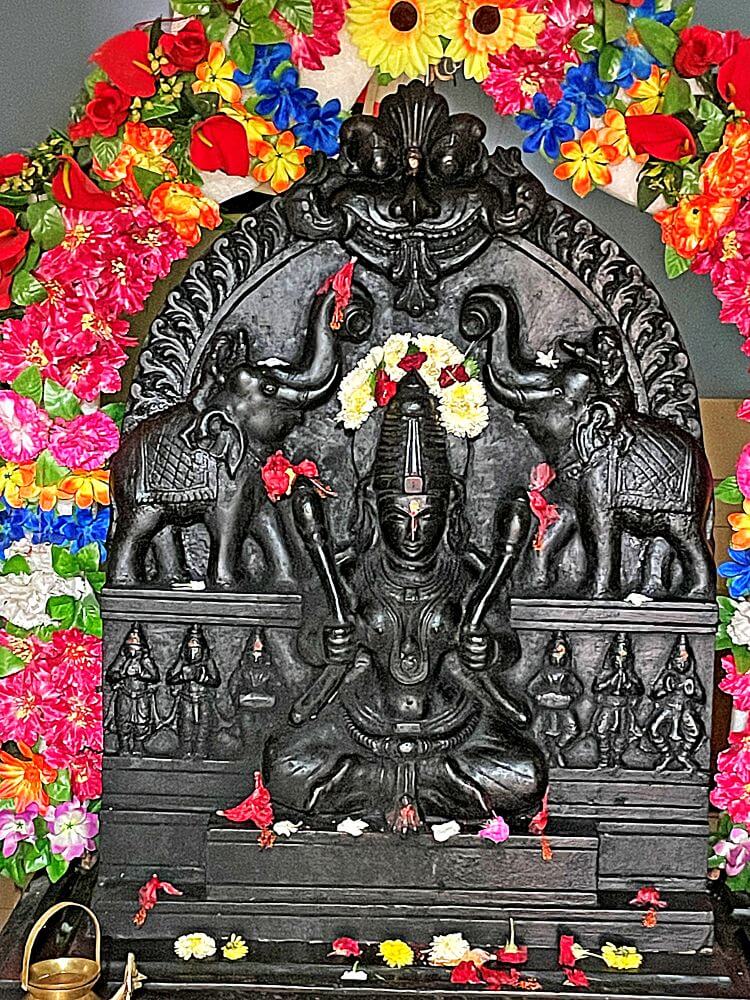
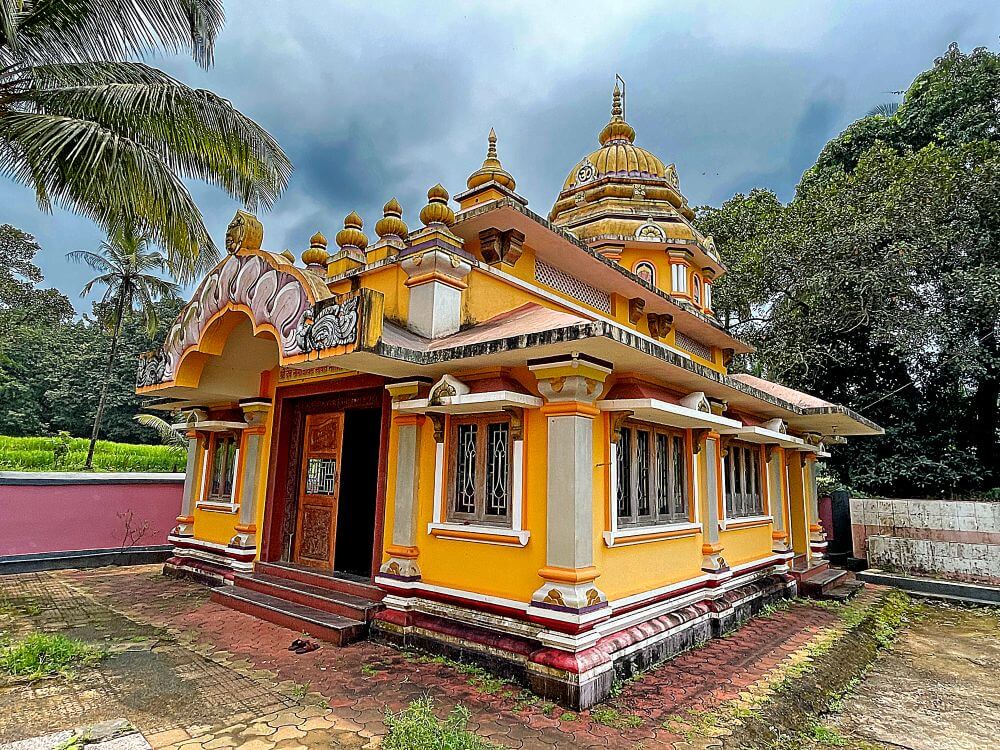
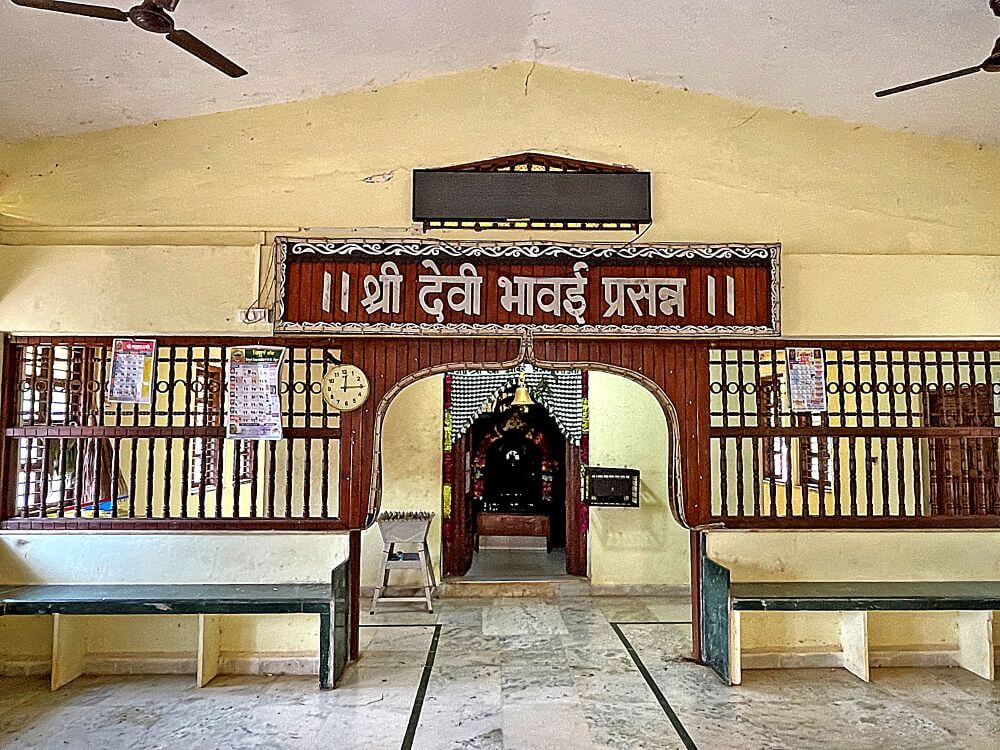
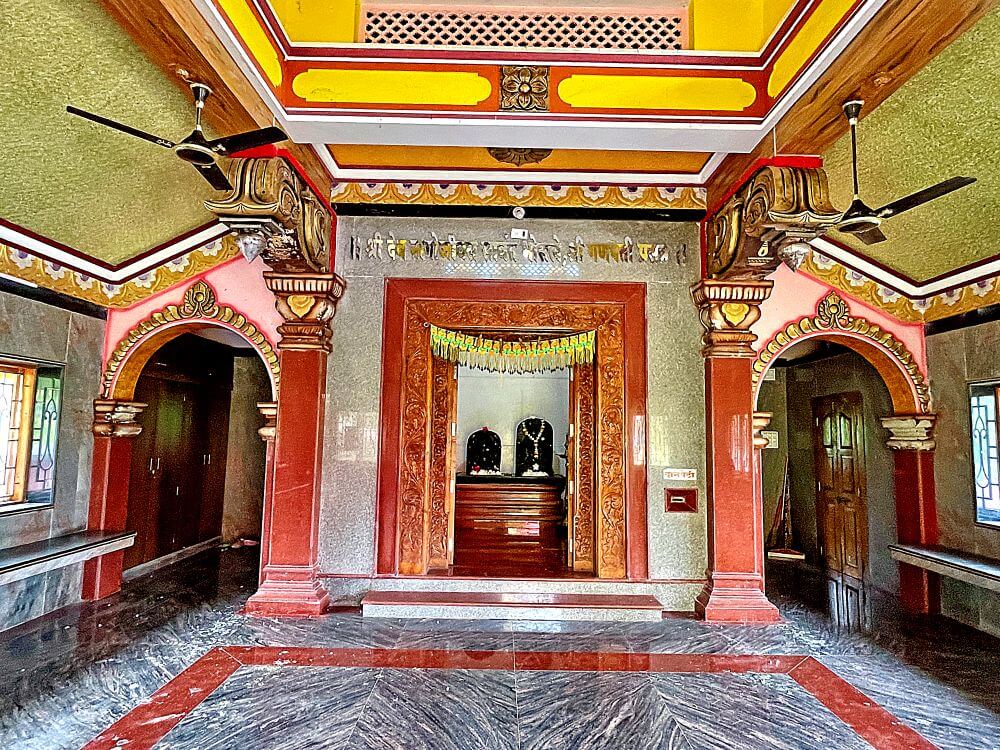
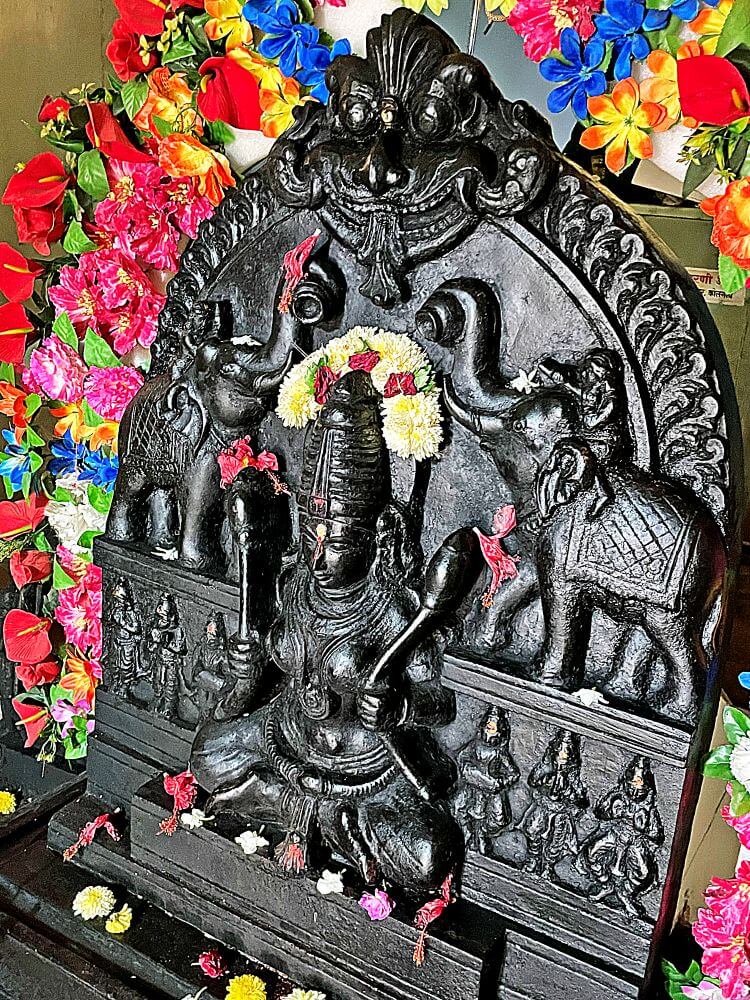
At Kunakeri, within a walled enclosure, stands the grand temple of Devi Bhavai. This ancient temple was renovated just a few years ago. The temple’s structure comprises a spacious sabhamandapa, an upasabhamandapa, an antarala, a garbhagriha, and a pyramid-shaped shikhara. In front of the temple, on a platform, there is a six-tiered, beautifully painted deepastambha, and beside it, a Tulasi Vrindavana. Directly ahead is the wide wooden entrance to the sabhamandapa. The temple’s sabhamandapa is enclosed, with windows for light. To exit this mandapa, there are two wide doors on either side at the front. The temple’s upasabhamandapa is elevated by two steps. Here, there are built-in seats along the walls. Directly ahead is a small antarala, from which one enters the garbhagriha. The entrance to the garbhagriha is a simple wooden one. Inside, on a tall vajra-pitha, is the seated black stone idol of Bhavai Devi. This idol’s
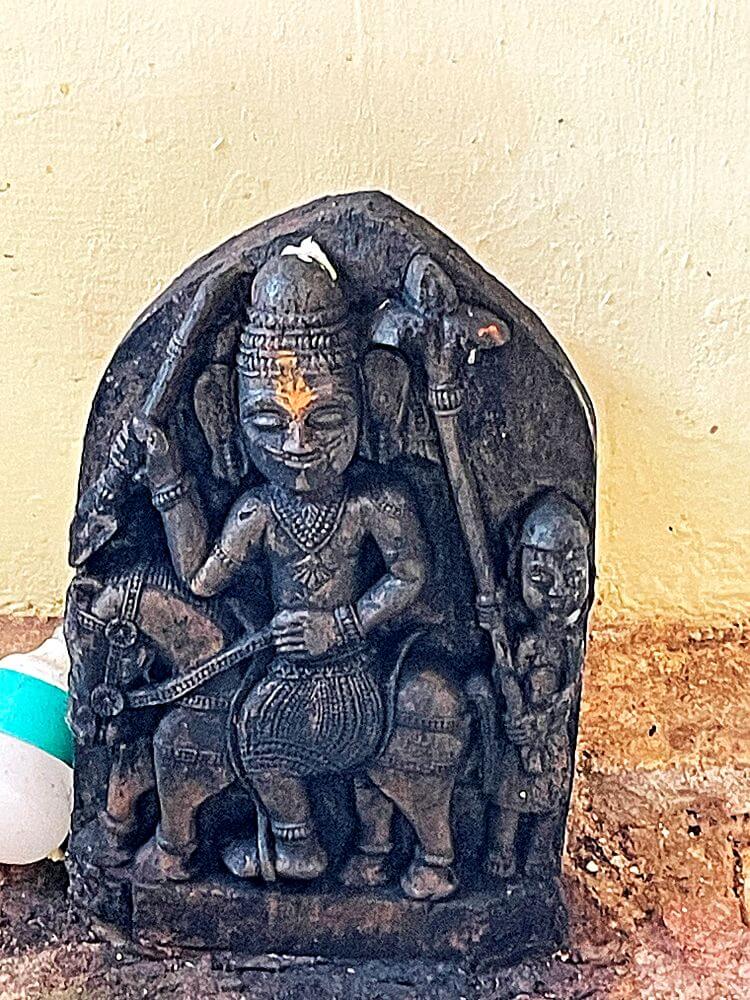
On the lower part of the supporting slab, small sculptures of Surasundaris are carved. In the upper section, on both sides, there are two majestic elephants with their trunks raised, and at the very top, a Vyala image is carved. Within the sanctum sanctorum, beside the Vajra-pīṭha, there are two stone liṅgas, as well as idols of folk deities. Right in front of this temple stands the Gaṇapati Mandir of Nāgojīvaṁs Sāvant Bhosale.
Each year, on the Kṛṣṇa Daśamī of the month of Mārgaśīrṣa, the fair of Bhavāī Devī is held. At that time, amidst the throngs of thousands of devotees and the resounding music of instruments, the palanquin of Devī Māte is carried out. Another significant festival in Kuṇkerī is the Huḍā festival. Kuṇkerī is renowned everywhere for this truly unique festival of Holī. This Huḍotsava commences every year on Phālguṇa Pourṇimā and is celebrated for seven days with various programmes. Huḍā refers to the Holī pole. This pole stands approximately one hundred feet tall. It is adorned, and arrangements are made for an ‘Avsār’ – a person through whom divine power manifests – to ascend it. In the local dialect, this is called Huḍā. The main characteristic of this festival is the Avsār Dev who climbs the Huḍā, and the pelting of stones by devotees upon them. It is the belief of the local people that whoever’s stone strikes the Avsār who has ascended, will experience good fortune in the future.
During this festival of Bhavai Devi, on the night of Phalguna Pournima, Holi is played at the Chawhatta, that is, near the Hudya, amidst the resounding music of various instruments. On that very day, the Ghatasthapana is performed. Additionally, the drums and Tasha of the village dignitaries are brought to the Chawhatta. On the following day, all the drums are brought to the temple of Bhavai Devi. After the religious ceremonies there, these drums are taken to each and every home in every Wadi. This programme continues for four days from the Pournima. On the fourth day, the Haldi and Rangpanchami ceremonies are observed.
On the fifth day, there are various sports events here, and Rombat, a unique game from the Konkan region, is celebrated. In this, the guise of Radharani is assumed. On the sixth day too, Rombat is taken out from the Devi’s temple along with the Nishankathi (flagpole). At this time, various guises are adopted. A specific ritual is prescribed for all these programmes. On the seventh day, there is a stone-throwing ceremony at the Sanchari Avsars who have climbed a hundred-foot-high Huda (platform). Before this, traditional programmes like Ghode Modani (breaking of horses) and Vaghachi Shikar (tiger hunt) are performed. In Rombat, a mock hunt of a tiger is carried out. Shri Dev Kshetrapal of Ambegaon is considered the elder brother of Bhavai Devi, and Kaleshwar of Kolgaon is considered the younger brother. These deities participate in their sister’s festival with Tarang (a type of palanquin) and Kathi (staff). Thousands of devotees, including Chakarmanyas (migrant workers), attend this festival. Here, as well as in Bhavai’s temple, rituals like making vows, fulfilling vows, and offering an Oti (a traditional offering to the deity) are performed.
This sacred temple stands as a testament to deep spiritual devotion, ancient architectural grandeur, and rich local cultural traditions.
The sanctum sanctorum houses the divine idol consecrated according to ancient Vedic traditions, surrounded by serene courtyards and traditional temple architecture.
Navratri, Maha Shivratri, Annual Temple Jatra & Deepotsav
Compare and book flights, secure top-rated local hotels near the temple, hire reliable guides, and rent cars instantly.
Extend your pilgrimage by visiting other highly sacred temples located nearby.


Add ₹999 more to unlock FREE SHIPPING!
Your sacred cart is currently empty.
Shop Photo FramesFill in your delivery details below to place your order.
Add comment