
Add ₹999 more to unlock FREE SHIPPING!
Your sacred cart is currently empty.
Shop Photo FramesLord Uparlkar is revered as the chief of the spirit guardians (*chalyas*) and the supreme master of 365 villages across the former Sawantwadi princely state, comprising present-day Ratnagiri and Sindhudurg districts. Located on the border of Sawantwadi town for around 350 years, this divine shrine was the tutelary deity (*Ishtadaivat*) of the royal family of Sawantwadi. Renowned as a deity who answers the earnest calls of His devotees and fulfills their vows, His fame extends across the entire Konkan region as well as the states of Maharashtra, Goa, and Karnataka. It is said that this shrine is situated in a cremation ground. Being a divinely active shrine (*Jagrut Devasthan*), it has become a revered sanctuary of faith for lakhs of devotees.
According to the legend of this shrine, the Sawant-Bhosale royal family of Sawantwadi assigned the responsibility of guarding the state’s four borders to four protector deities: Lord Uparlkar, Dindikar of Mathewada, Kajekar of Sailwada, and Helkar of Gardi. Among them, the other three border protectors functioned under the supreme authority of Lord Uparlkar. It is believed that all four guardian deities are incarnations of Lord Shiva. Once, Senapati Dalvi rushed to King Abasaheb with the news that enemy forces had invaded the state of Sawantwadi. As it was dawn, King Abasaheb was engaged in his morning worship (*Devpuja*). Since the state was in a precarious situation and lacked the strength to resist the invaders, King Abasaheb placed his ultimate faith in Lord Uparlkar. He handed a coconut to Senapati Dalvi and instructed him to offer a humble prayer (*Garhane*) to Lord Uparlkar for the state’s protection and break the coconut before the Lord.
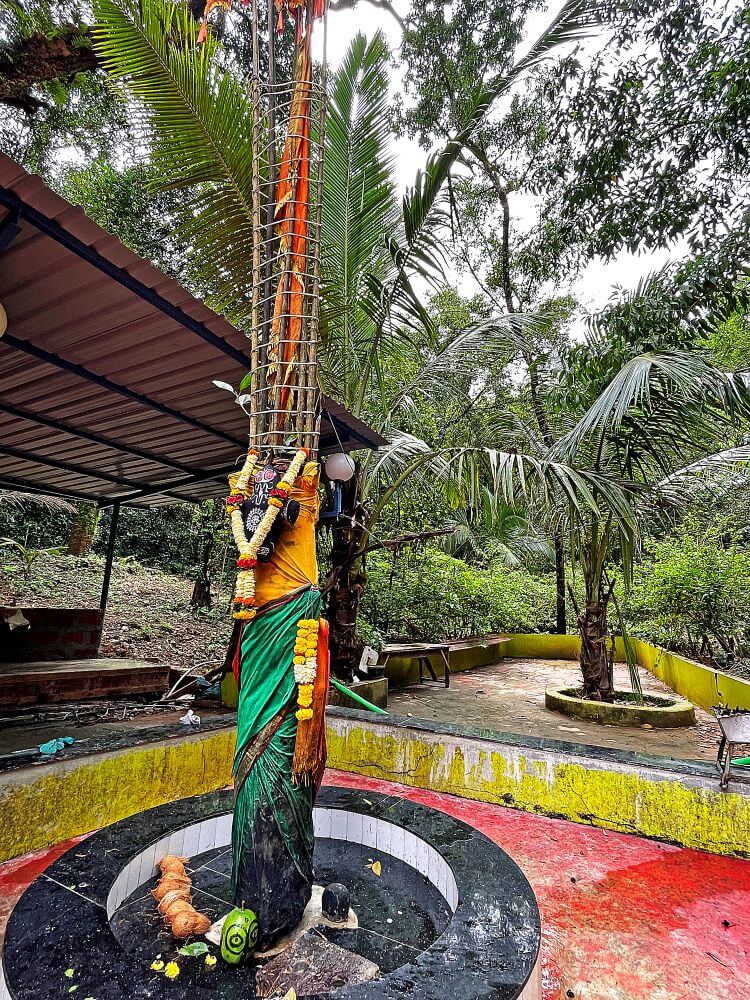
In accordance with the royal command, Senapati Dalvi prayed to Lord Uparlkar to avert the calamity threatening the kingdom and broke the coconut before the deity. The moment the coconut was offered, a massive swarm of hornets emerged from behind the sacred stone deity. Numbering in the millions, these hornets fiercely attacked the enemy army. This sudden attack sent the enemy into complete disarray, leaving them with no choice but to flee. As the enemy forces retreated, the swarm of hornets returned to the holy shrine, settled on a tree, and became calm. By the divine grace of Lord Uparlkar, a great peril over the kingdom was averted. This miracle brought realization to the entire kingdom that the Lord is divinely active (*Jagrut*) and rushes to aid in times of crisis. Ever since, devotees from Konkan and across the state have held boundless faith in this deity. Devotees believe that bowing down in prayer before Lord Uparlkar ensures His divine protection.
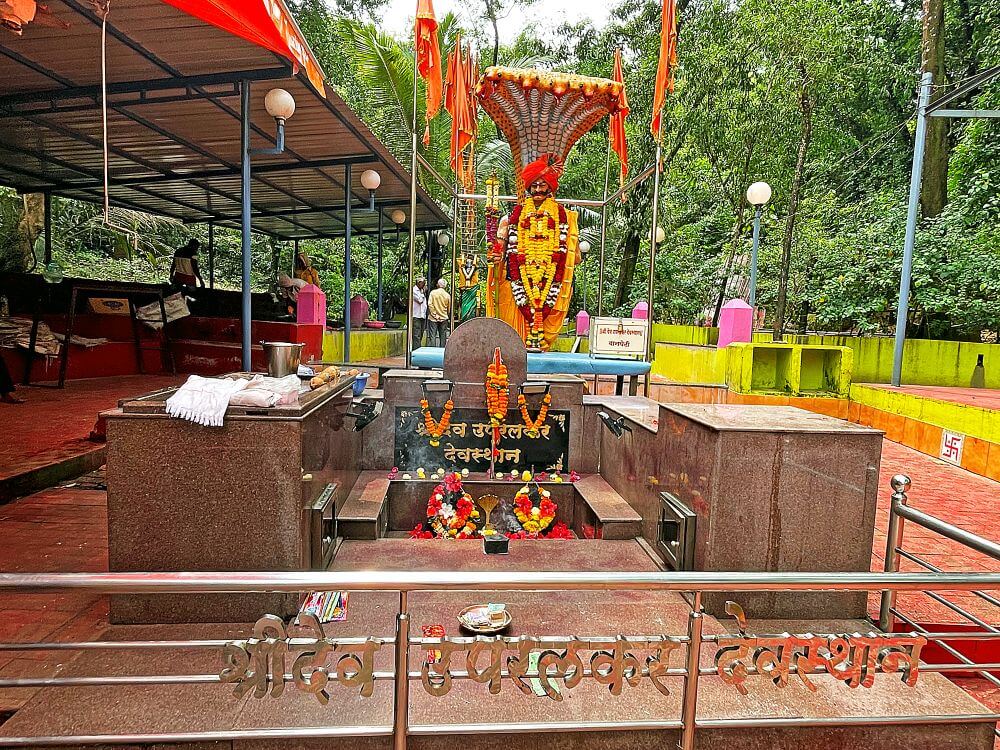
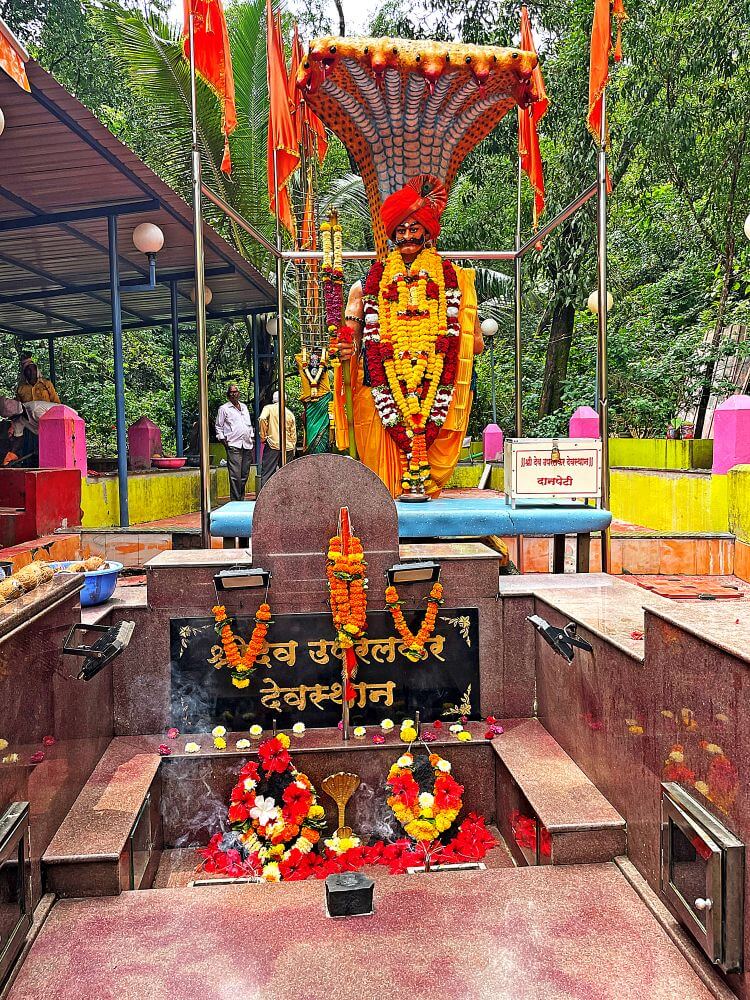
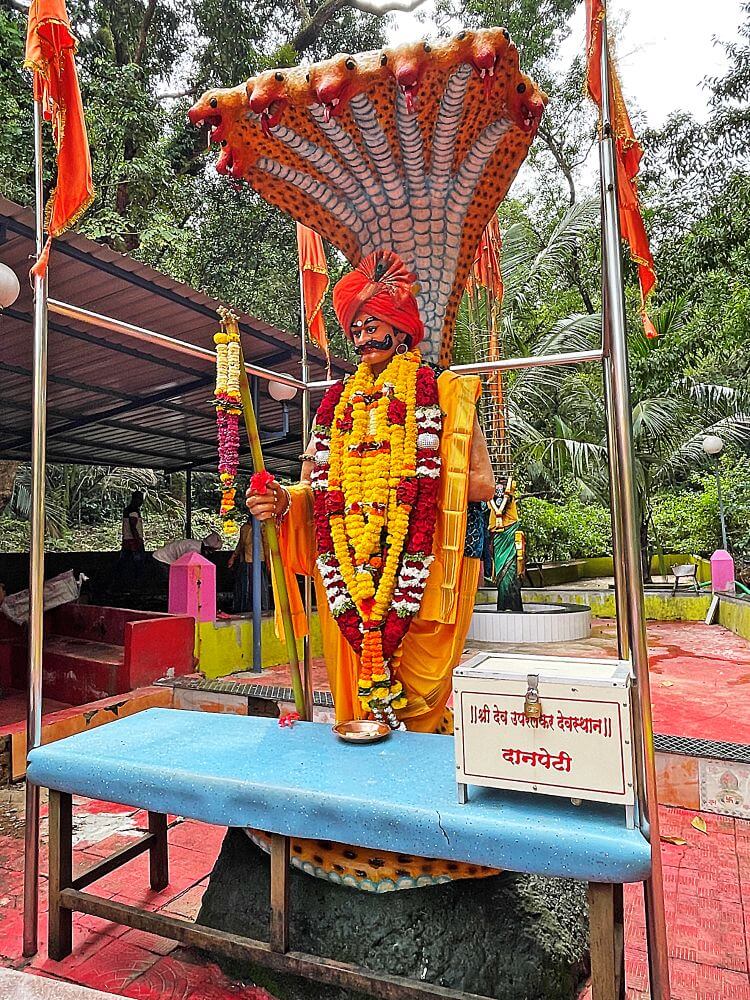
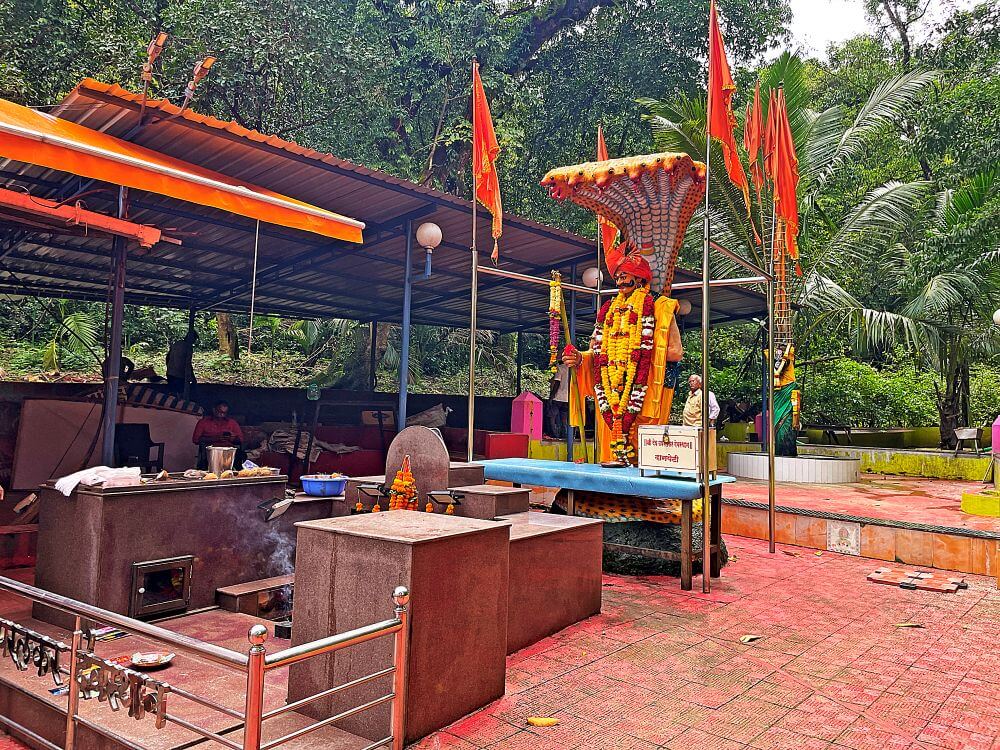
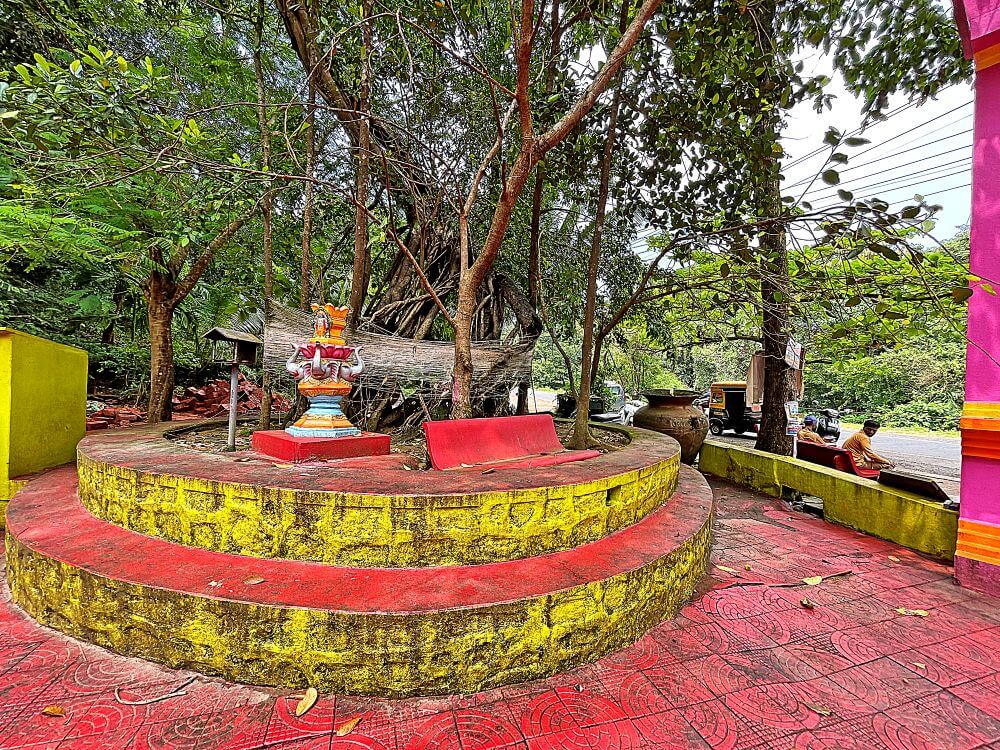
The Lord Uparlkar Shrine is situated in a cremation ground; nevertheless, the surroundings are exceptionally beautiful and enriched with natural greenery. A grand entrance arch stands by the roadside, leading into the temple courtyard. Notably, there is no conventional temple structure built within these premises. It is believed that since Lord Uparlkar continuously wanders across the districts of Ratnagiri and Sindhudurg, He does not wish to remain confined within a walled temple. Hence, no temple building has been constructed, and there is no roof over the deity’s head. Beneath the open sky, on a stone platform (*Vajrapitha*) situated slightly below ground level, rest two black stone idols of Lord Uparlkar. These idols are enclosed on three sides by walls about two feet high. Behind these idols, on a large raised platform, stands a newly sculpted, grand, and magnificent idol of Lord Uparlkar. A massive seven-hooded serpent coils around the base of this idol, spreading its hoods like a canopy over the deity’s head. Adorned with a majestic turban (*Feta*), holding a walking stick in His hand, and wearing traditional footwear, this idol—clad in fine garments and featuring a manly mustache—appears vibrant and lifelike.
In the cremation ground adjacent to the Lord Uparlkar Shrine, final rites and cremations are performed, while post-funeral rituals are conducted at the nearby Atmeshwari pond. Lord Uparlkar is revered as the master of 365 villages; hence, local villagers believe that the village deities (*Gramdaivat*) of all these villages are subordinate to Him. In earlier days, village leaders would arrive here accompanied by the traditional beats of *Dhol-Tasha* drums, bringing roosters, goats, coconuts, and *vida* (betel leaves and nuts) to pay homage, and animal sacrifices were offered to the deity. In ancient times, the kings themselves took the lead in these holy rituals. Later, with the spread of social reform, the practice of animal sacrifice was discontinued.
The number of devotees visiting the shrine continues to grow day by day. Lord Uparlkar’s birth celebration is observed every year on 1st February, on which occasion a grand fair (*Jatra*) is held. Thousands of devotees gather during this time to seek the divine *Darshan* of Lord Uparlkar. In addition, large crowds visit every Sunday, Wednesday, and Friday. Devotees present their sacred pleas (*Garhane*) before Lord Uparlkar. Seeking blessings to overcome their rivals just as the enemy was defeated in ancient times, many political leaders and candidates also bow before the deity to pray for victory.
This sacred temple stands as a testament to deep spiritual devotion, ancient architectural grandeur, and rich local cultural traditions.
The sanctum sanctorum houses the divine idol consecrated according to ancient Vedic traditions, surrounded by serene courtyards and traditional temple architecture.
Navratri, Maha Shivratri, Annual Temple Jatra & Deepotsav
Compare and book flights, secure top-rated local hotels near the temple, hire reliable guides, and rent cars instantly.
Extend your pilgrimage by visiting other highly sacred temples located nearby.


Add ₹999 more to unlock FREE SHIPPING!
Your sacred cart is currently empty.
Shop Photo FramesFill in your delivery details below to place your order.
Add comment