
Add ₹999 more to unlock FREE SHIPPING!
Your sacred cart is currently empty.
Shop Photo FramesThe Nath Sampradaya holds a unique and revered place in the cultural history of Maharashtra. Sant Dhyaneshwar, who planted the ‘nectar vine’ of Bhagavata Dharma in Maharashtra, was himself a disciple initiated into the Nath Sampradaya. Matsyendranath, also known as Machchhindranath, is regarded as the primordial Siddha (Adisiddha) of this tradition. The sacred site in Kudal taluka sanctified by the holy touch of Machchhindranath’s feet is known as Devacha Dongar. While traveling from Mumbai towards Goa, just before reaching Kudal on the highway near Pavshi, lies Devacha Dongar. This sacred location also houses the shrines of Mahakalika Devi and Lord Shiva. This site is revered as the Tapobhumi (place of penance) of Matsyendranath.
According to religious history, Srisailam-Kardalivan in Andhra Pradesh is the cradle of the Nath Sampradaya. Andhra Pradesh, Karnataka, and Maharashtra serve as the primary foundational landscapes of this tradition. This sect is referred to by various names such as the Nath Sampradaya, Siddha Pantha, Avadhuta Mata, Kanphata Sampradaya, and Gurumarga, among others. Matsyendranath is the first historical figure of this tradition. Eminent historian research scholar R. Chin. Dhere has stated that his era dates back to the latter half of the tenth century, though there are various opinions regarding his place of origin. Renowned texts such as *Kaulajnananirnaya*, *Shrikamakhyaguhyasiddhi*, *Akulagamatantra*, *Kularnavatantra*, *Kaulopanishad*, and *Kaulavalinirnaya* are attributed to Matsyendranath. Gorakhnath (circa 1050 to 1150 CE), whom Sant Dhyaneshwar praised in the *Dnyaneshwari* with epithets like ‘Yogabdanisarovara’ and ‘Vishayadhvansaekveera’, was a disciple of Matsyendranath. The text *Navnath Bhaktisara* mentions that this Adisiddha resided at Devacha Dongar for three days.
The text *Navnath Bhaktisara* was composed by Dhundisuta Malu Narhari. According to references within the text, its writing was completed on Jyeshtha Shukla Purnima in the year 1819. It contains forty chapters and seventy-six hundred ovis (verses). The text describes the glories of the nine Naths (Navnaths): Matsyendranath, Gorakshanath, Jalandharnath, Kanifnath, Charpatinath, Gahininath, Gopichandnath, Adabangnath, and Bhartarinath. The sixth chapter of this text mentions the village of Adul in the Kudal region. This village is known today as Ambadpal. This village was granted as an inam (gift) to Adi Sankaracharya. At that time, he renamed Adul to Ambadpal. The *Navnath Bhaktisara* states: ‘Yapari baramalhar karuni tirtha. Kumar daivat karuni kokansthanant. Kudal praant adul gaanvant. Yeuniyan rahila.. To gramabaahere durgalayi. Mahakalika daivat aahe. Tayache darshana lavalahe. Machchhindranath pain gela..’ (Chapter 6, Ovi 4, 5). Meaning – After fighting demons at the sacred place of Baramalhar, Matsyendranath came to the Konkan region to have darshan of Kumar Daivat (Lord Kartikeya, the son of Lord Shiva). He came and stayed in the village of Adul. Outside that village, upon a hill, was the shrine of Kalika Devi. He went there for her darshan. Kalika Devi is an embodiment of the Kalika weapon held in Lord Shiva’s hand. With this weapon, Lord Shiva had slain many demons. Pleased, Lord Shiva asked this weapon to seek a boon. Thereupon, that weapon, namely the Goddess, asked for the boon that she be granted some rest for a time and given a place where no one would disturb or awaken her. Then Lord Shiva established her at a site outside Adul village. Matsyendranath came here precisely to propitiate this Kalika Devi. At that time, offering his obeisance to the Goddess, he prayed: ‘Deviprati karuni namana. Mhane maya vo ashcaryapana. Myan mantrakavya kele nipuna. Tyajala sahay hoi tu..’ (Chapter 6, Ovi 13). However, finding her repose interrupted, the enraged Goddess said, ‘Are mi apala bhog saruna. Nivanta baisale sevita sthana. Tai tu mate vara gonvuna. Sinvau pahasi dugatmaya..’ (Chapter 6, Ovi 23). At that time, the Goddess used harsh words towards Matsyendranath, calling him a ‘withered gnat, wicked soul, and fool’. Consequently, to humble the Goddess’s ego, Matsyendranath reprimened her verbally. This led to a fierce battle between them. They hurled numerous celestial weapons at one another. Ultimately, the secret mantra-weapon hurled by Matsyendranath restrained the wind element there, rendering the Goddess motionless. At that moment, Mahadev (Lord Shiva) manifested. He asked Matsyendranath to restore Kalika Devi to consciousness. Thereupon, Matsyendranath prayed that his Shabari (Savari) poetry be granted a boon. After Lord Shiva granted that boon, Matsyendranath chanted the ‘Vatastramantra-akarshana’ mantra, and the Goddess regained consciousness. Following this, the Goddess kept them at that site for three days and three nights. Regarding this, the text states: ‘Machchhindra ani Umanatha. Devine thevuni tina ratra. Mag snehasampanna bol bolata. Machchhindranath odavila..’ (Chapter 6, Ovi 43). Thereafter, Machchhindranath proceeded from there to the seashore for the darshan of Lord Hareshwar.
Memories of this legend have been preserved in the public consciousness through the name ‘Devacha Dongar’ (Hill of the Divine). However, people had forgotten the reason behind this name. According to legend, in 1979, it was decided to construct a grand water reservoir on this hill to supply water to the city of Kudal. Accordingly, the work was entrusted to a contractor. His workers began excavation for the foundation on land allocated by the gram panchayat on this hill. At that time, they began hearing voices saying, ‘Go one hundred and fifty feet away from here.’ Snakes began to appear. Moreover, the pits they dug would mysteriously fill up overnight. No one could understand what was causing these interruptions and difficulties in the work. Believing this to be the mischief of anti-social elements, the contractor stationed his men there for night watch, yet in the morning, the pits would be found filled up once again. Finally, after a thorough inquiry, the contractor learned that this was Devacha Dongar and that the Naths had their sacred site here. Consequently, upon the villagers’ advice, the site for the water tank was shifted elsewhere. Around the same time, Gagangiri Maharaj instructed his devotee, Anant Maheshwar Sawant, saying that the sacred site of the Navnaths exists on this Devacha Dongar, instructing him to trace it and commence service there. Accordingly, he located this sacred site and built a temple here in 1980.
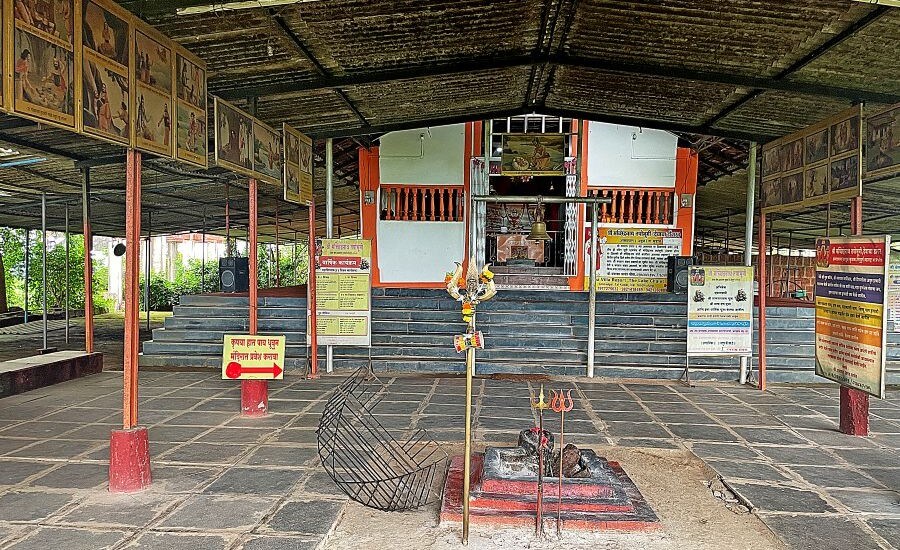
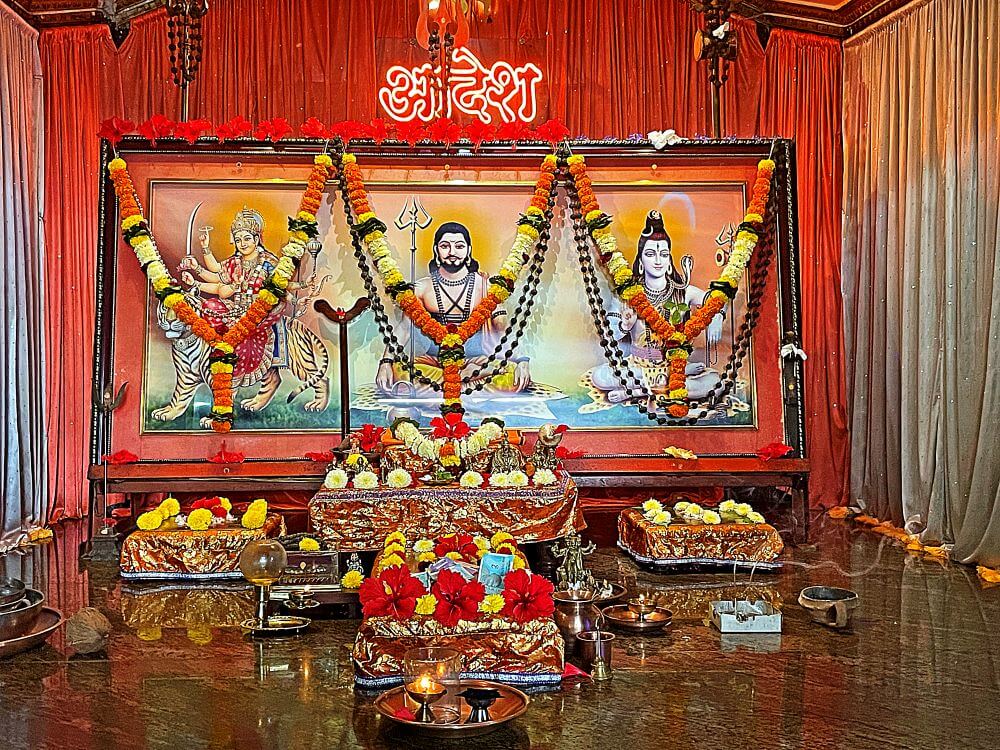
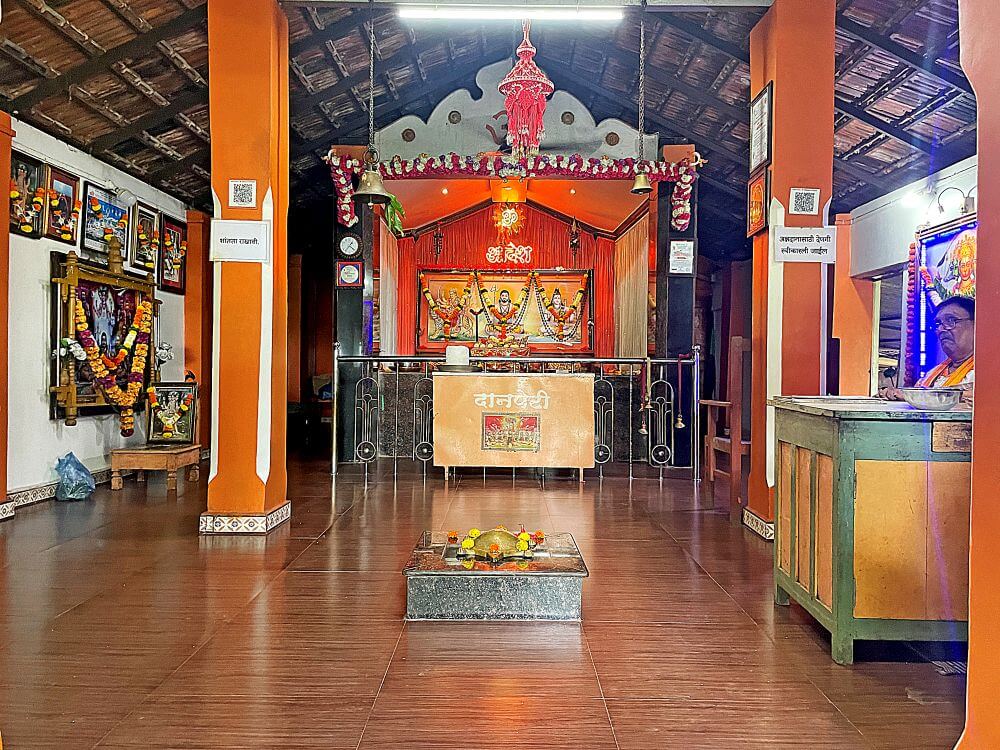
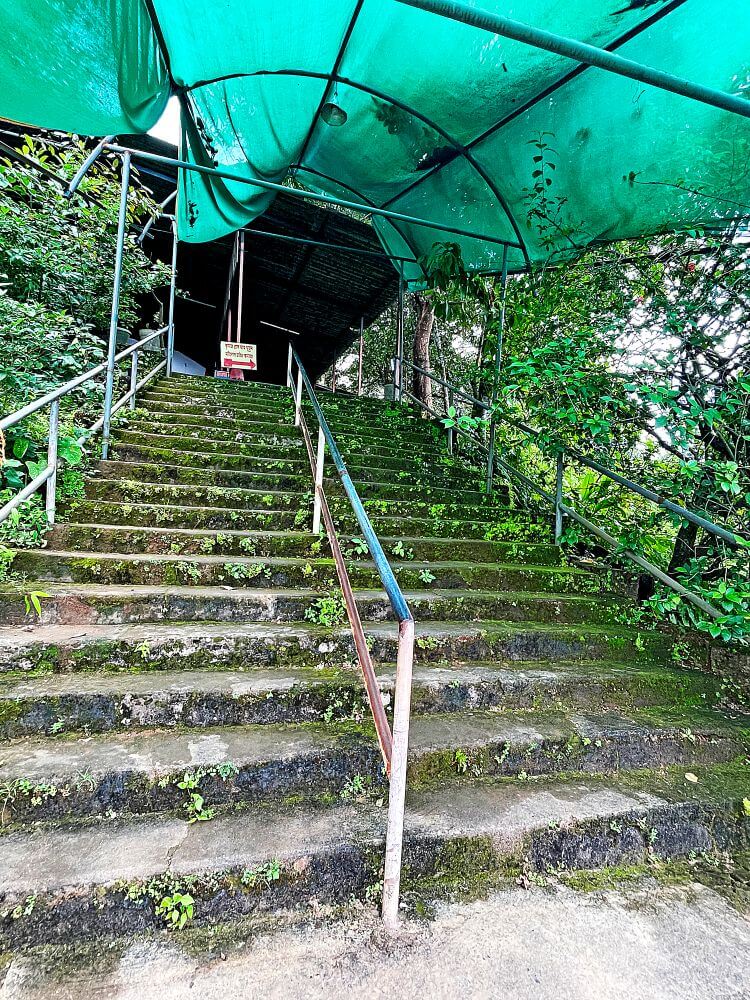
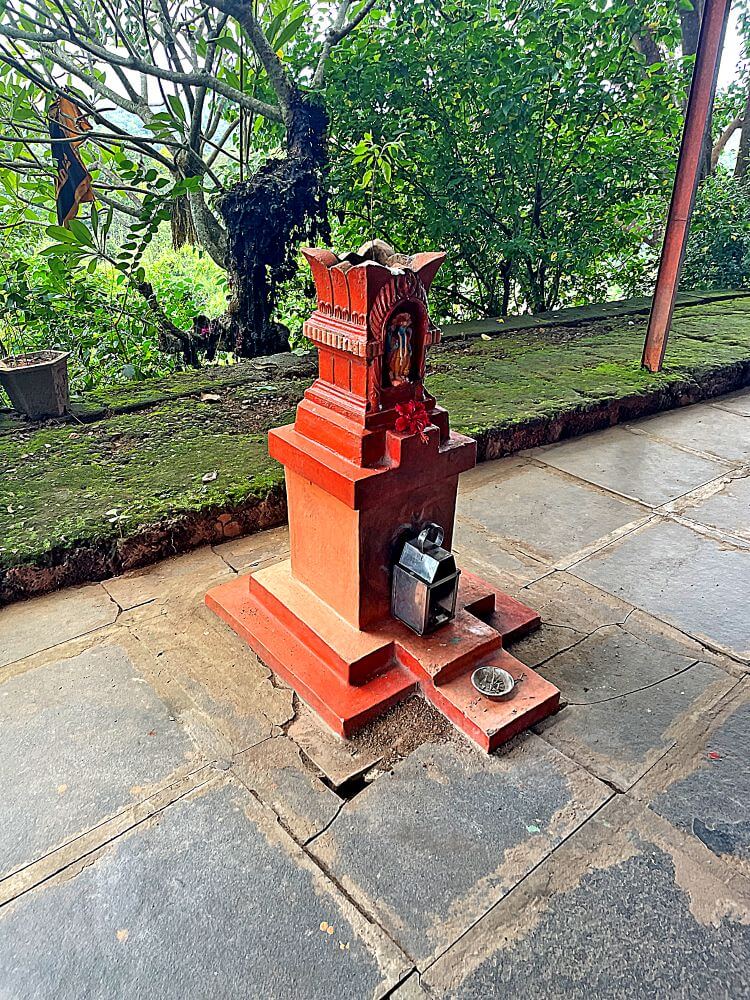
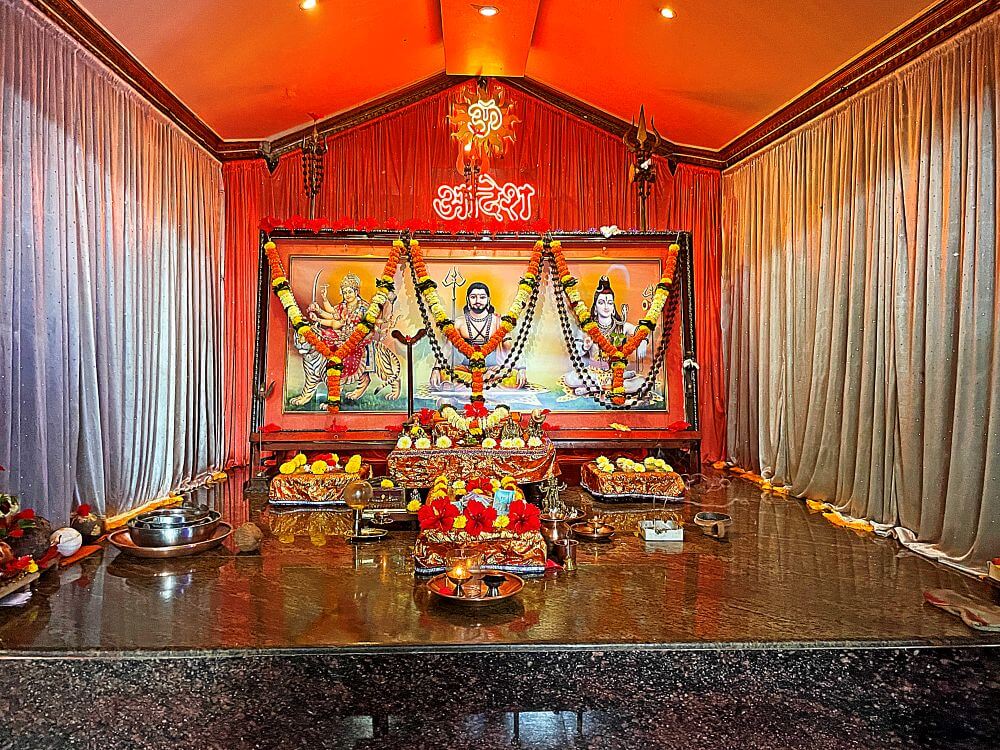
This temple has been recently renovated. This temple with a tiled roof architecture is situated at a slight elevation from the ground. One enters the temple courtyard by climbing about ۲۰ steps. This temple is located on a flat piece of land on a hill. A tin shed has been erected in the temple courtyard in the space in front of the temple for the convenience of devotees. There is a Tulsi Vrindavan and a Havan Kund in the courtyard. At a slight elevation within this courtyard is the temple of Machhindranath. The architecture of the temple consists of a Sabha Mandap and, leaving aside the circumambulation path (Pradakshina Marg) in front of it, the Garbhagriha (sanctum sanctorum). In the middle of the Sabha Mandap, on a small elevated platform, there is an idol of a tortoise. In the Garbhagriha, on a tall Vajrapitha in the center, are the portraits of Machhindranath, with Mahadev on his right side and Kalika Devi on his left side. In front of those portraits are their Padukas (footprints). Festivals like Maha Shivaratri, Dharmanath Beej, Datta Jayanti, and Guru Purnima are celebrated with great enthusiasm at this Tapobhumi temple of Matsyendranath or Machhindranath. On Maha Shivaratri, there is an ১১-day program here. For nine days, the recitation (Parayan) of the Navnath Pothi is performed. Following that, on Maha Shivaratri, a community recitation of Shivlilamrit is held, and on the next day, there is a Bhandara (community feast). During this period, bhajans and kirtans also take place here. A one-day Bhandara is also held here on Guru Purnima. Daily worship rituals are performed in this temple from morning ৬:০০ AM to ۸:০০ AM. The Aarti and Naivedya offering ceremony takes place from ۱۲:۳० PM to ۱:۰۰ PM. Thereafter, Haripath is held from ۷:۰۰ PM to ۸:۰۰ PM, followed by Aarti. Annadaan (feeding the needy) is performed here every Thursday. Homas and Havans such as Navnath Yag, Datta Yag, Mahakali Yag, and Vishnu Yag are performed in this temple. Apart from these, rituals like Kalsarp Shanti, Grahashanti, and Nakshatra Janan Shanti are also performed.
This sacred temple stands as a testament to deep spiritual devotion, ancient architectural grandeur, and rich local cultural traditions.
The sanctum sanctorum houses the divine idol consecrated according to ancient Vedic traditions, surrounded by serene courtyards and traditional temple architecture.
Navratri, Maha Shivratri, Annual Temple Jatra & Deepotsav
Compare and book flights, secure top-rated local hotels near the temple, hire reliable guides, and rent cars instantly.
Extend your pilgrimage by visiting other highly sacred temples located nearby.


Add ₹999 more to unlock FREE SHIPPING!
Your sacred cart is currently empty.
Shop Photo FramesFill in your delivery details below to place your order.
Add comment