
Add ₹999 more to unlock FREE SHIPPING!
Your sacred cart is currently empty.
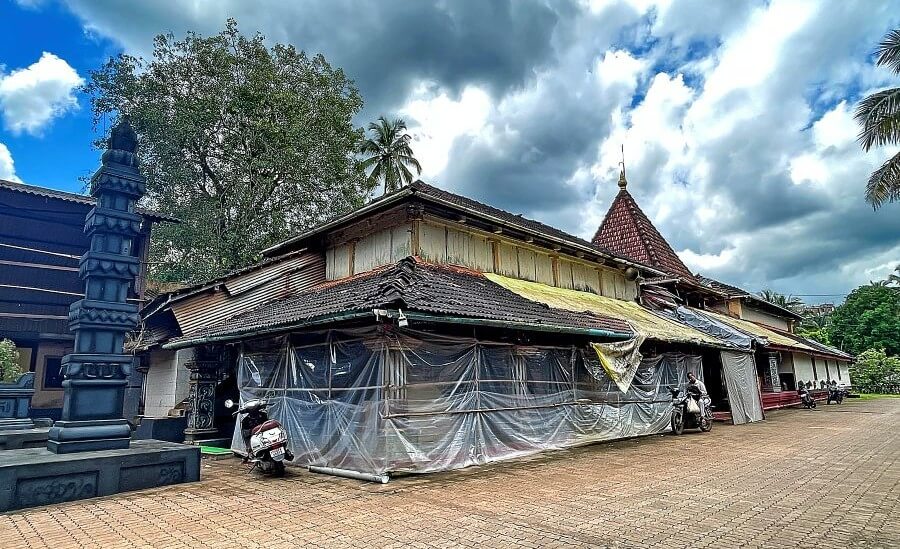
Shop Photo FramesDuring the sixth and seventh centuries of the Common Era, the Badami Chalukyas held sovereign power over Konkan and Goa. The Chalukya king Pulakeshin II appointed his eldest son Chandraditya as a feudatory in the Kudal province. However, later he began acting like a king and in the seventh century made Kudvalpattan, known as Kudal, the primary city of his capital. Imbued with such rich history, Sri Deva Kudaleshwar of Kudal is the presiding village deity (Gram Daivat). Situated in the heart of the town, the ancient and magnificent temple of Kudaleshwar is built primarily with wood and clay bricks.
It is said that the deity Kudaleshwar is originally Ravalnath. Ravalnath is a Shaivite deity, much like Bhairava, Malhari, Khandoba, and Jotiba. The deity is considered an attendant of Lord Shiva. Ravalnath is a fierce, martial deity of a Yaksha nature. It is widely believed that the deity is the guardian field-protector (Kshetrapal) of Southern Konkan. For this reason, an idol of Ravalnath is found in every village of Southern Konkan. Ravalnath is a principal deity in Gomantak (Goa). The original name of the deity is ‘Ravaloo’, a loving name passed down since ancient times. Upon the arrival of the Nath panthis in Goa, they changed the name of the deity to Sri Deva Ravalnath. Ravalnath is considered one of Lord Shiva’s divine attendants (Ganas). In the Konkan region, Ravalnath is also fondly called ‘Piso Ravalu’. According to Pandit Mahadevshastri Joshi, the compiler of the ‘Bharatiya Sanskriti Kosh’, neutralizing snake venom is regarded as a primary attribute of Ravalnath. Ravalnath’s sovereignty extends over the ocean. Fishermen community brethren bow before this deity before commencing their work.
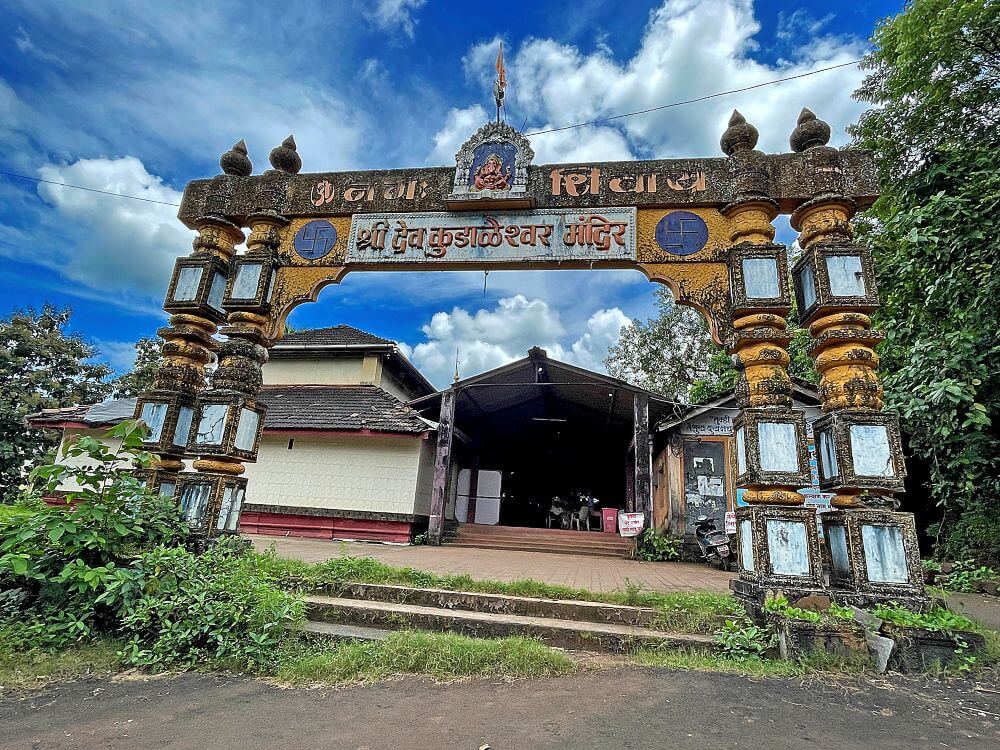
The sacred abode of Kudaleshwar is situated on a small hillock right in the middle of Kudal city. The temple has a large courtyard and features a grand entrance gate (Vesh) with joined pillars. Above this gateway, right in the center, is a small niche housing an idol of Lord Ganesha. Built in the traditional Konkan architectural style, a stone lamp pillar (Deepstambh) stands on a stone platform outside this ancient temple. This square-shaped lamp pillar is carved with lotus petal motifs as well as geometric patterns. Nearby, on another platform, stands a tall Tulsi Vrindavan. Representations of Nagaraja, considered sacred in the Shaivite family, can be seen on this Vrindavan.
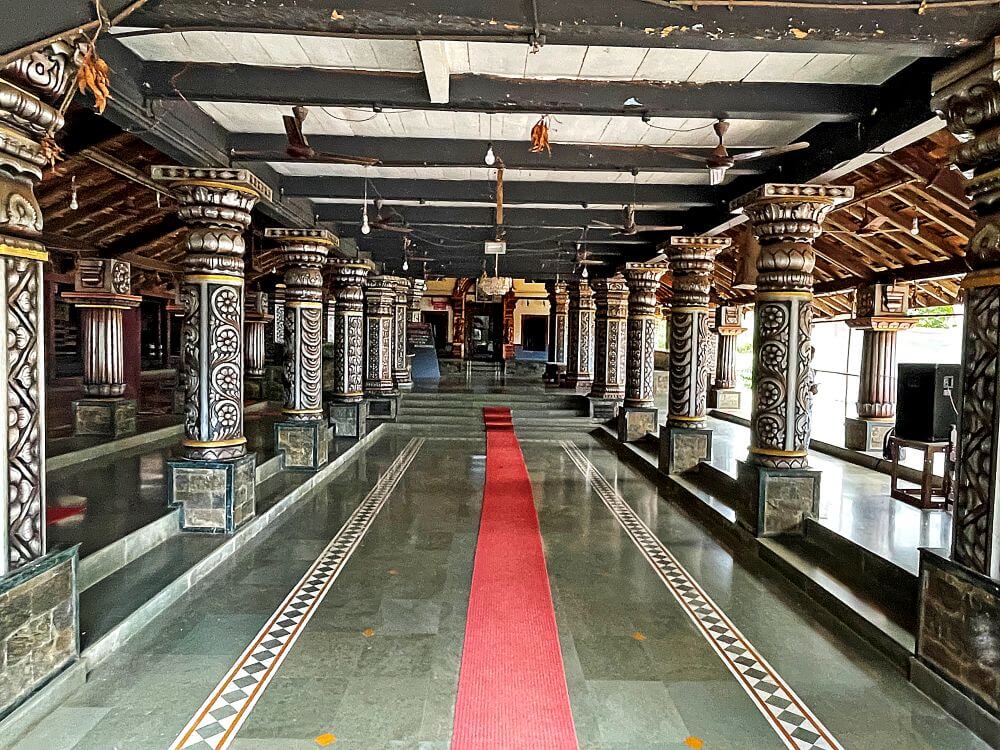
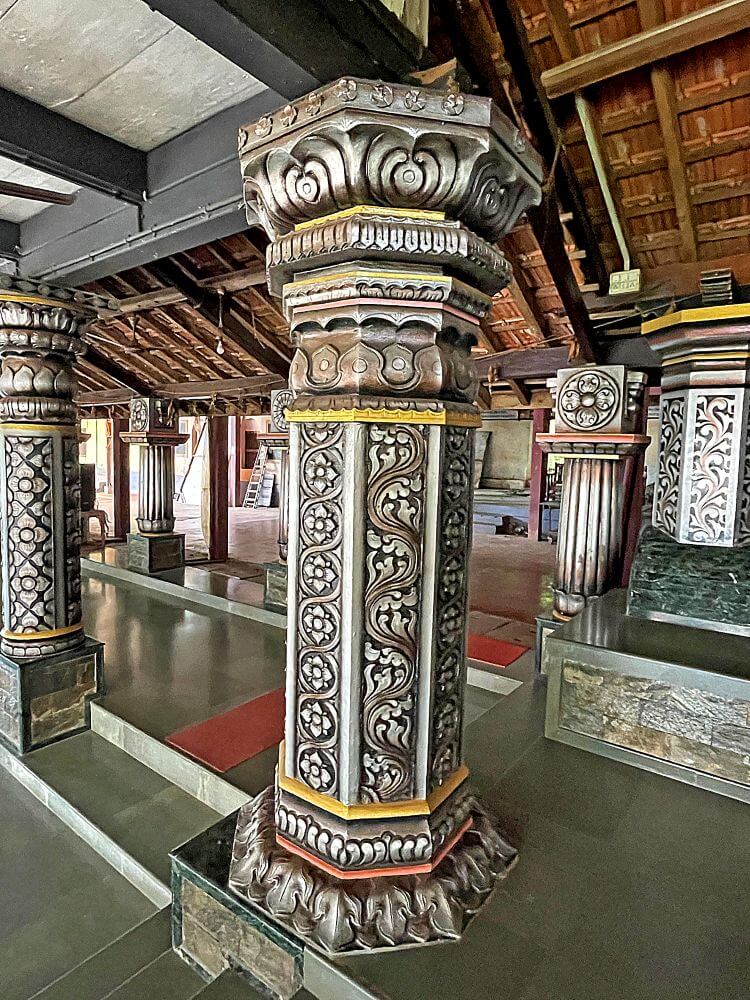
Upon entering the assembly hall (Sabhamandap), to the left is the shrine of Baracha Purvas. This shrine houses deities such as Bhootnath, Malekat, Karhade Brahmin, and Raul Vans. To the right is the shrine of the armed, horse-riding deity Barapachi Niti. In the main assembly hall, at some distance from the outer walls on both sides, runs a long row of carved pillars. Although the assembly hall here was renovated a few years ago, the distinct features of the temple’s Konkan architectural style have been carefully preserved. The pillars of the assembly hall are adorned with intricate floral and vine carvings, styled after the pillars of ancient Hemadpanti architectural style temples. Distinctive carvings are also executed on the bracket capitals (Taranghastas) installed where these pillars meet the upper beams. True to the Konkan architectural style, the floor of the assembly hall between these two pillars is slightly sunken. Ascending five steps from there leads into the upper section of the assembly hall. Here, on the upper walls on all four sides, various mythological episodes are beautifully depicted.
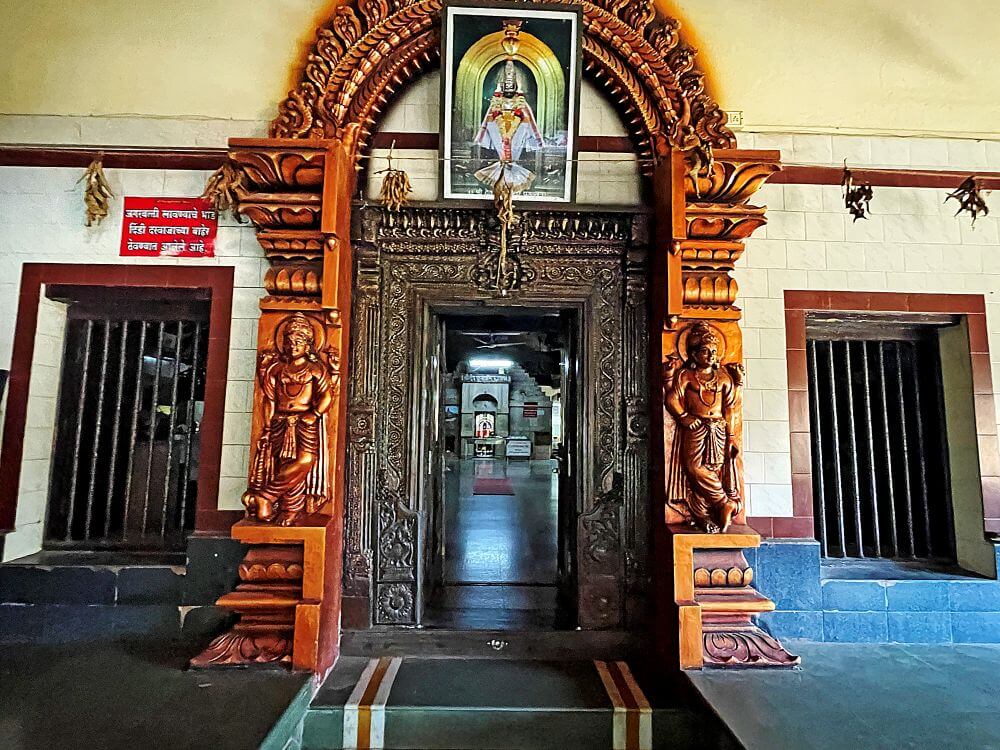
The vestibule (Antaral) of the temple has a magnificent entrance. The main frame of this doorway consists of four thin bands. Flanking it are wider doorjambs with pillars carved right alongside them. These doorframes are adorned with delicate floral carvings. A Ganesha idol is seated on the lintel (Lalatbimba). Above it, demonic figures (Vyala) and serpent figures (Naga) are carved on both sides. An additional ornate arch has been erected adjacent to this wooden doorway. The pillars of this arch feature tall statues of doorkeepers (Dwarpalas). At the very top center of this arch is an idol of Lord Ganesha. Right here, above the doorway frame, a portrait of Lord Ravalnath has been placed. The vestibule is enclosed with a tiled roof. Its stone pillars evoke a sense of the temple’s ancient antiquity and inspire awe at how magnificent it must have been in those times. These carved, circular pillars are just wide enough to be embraced. Bracket capitals (Taranghastas) can also be seen upon them. In one corner of the vestibule are kept the ceremonial processional staffs (Tarang Kathas) of deities including Mahalakshmi, Someshwar, Baracha Purvas, Kudaleshwar, Pavanai, and Bhairav Jogeshwari, alongside the divine palanquin (Palkhi).
From the vestibule, a circumambulation path (Pradakshina Marg) leads around the sanctum sanctorum. The sanctum sanctorum (Garbhagriha) is paved with marble tiles, and its shikhara is pyramid-shaped. In one corner of this circumambulation path sits the enthroned, four-armed processional idol (Utsav Murti) of Kudaleshwar. This idol is worshipped on the auspicious day of Ram Navami. The Shiva linga of Someshwar and an idol of Ganesha are also located here.
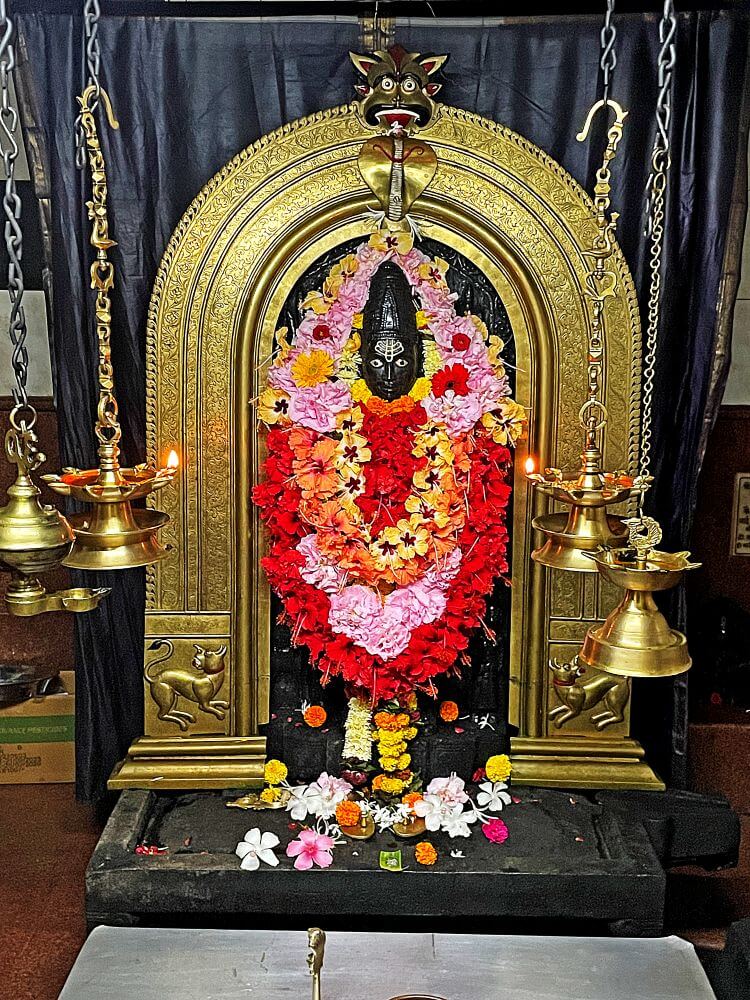
Inside the sanctum sanctorum stands the four-armed idol of Kudaleshwar made of black stone, approximately four feet in height. In the back hands of the deity are a trident (Trishul) and a hand drum (Damru), while the front right hand holds a sword (Khadga) and the left hand holds a vessel of nectar (Amritpatra). The idol wears a crown on its head, a sacred thread (Yajnopavita / Janve) and garlands around its neck, and a dhoti around its waist. The eyes of the idol are made of silver. At the feet of the idol, the carving of a horse is on one side, and an attendant waving a whisks (Chawri) is on the other side. Alongside the idol is a wide, cylindrical brass arch (Makhar). At its center is a serpent hood (Nagfhana), while fierce mythological figures (Vyala) are sculpted at the lower base on both pillars of the arch. Hanging oil lamps (Lamandive) are lit on both sides in front.
Ravalnath is traditionally believed to be a celibate deity (Brahmachari). However, according to another tradition, he is married, and Pavanai is his consort. Here, an idol of Pavanai is placed next to the idol of Kudaleshwar. Similarly, inside the sanctum are the deities Samadevi, Garuda Tattve, Chalyacha Adhikari, Pawar Vans, Purvecha Brahmin, and Mayecha Purvas.
Enormous crowds of devotees gather here during Maha Shivaratri, Nag Panchami, and Shravani Mondays. A grand procession of ceremonial staffs (Tarang Kathas) takes place at this temple on Vijayadashami (Dussehra). This festival is celebrated with great enthusiasm and jubilation.
This sacred temple stands as a testament to deep spiritual devotion, ancient architectural grandeur, and rich local cultural traditions.
The sanctum sanctorum houses the divine idol consecrated according to ancient Vedic traditions, surrounded by serene courtyards and traditional temple architecture.
Navratri, Maha Shivratri, Annual Temple Jatra & Deepotsav
Compare and book flights, secure top-rated local hotels near the temple, hire reliable guides, and rent cars instantly.
Extend your pilgrimage by visiting other highly sacred temples located nearby.


Add ₹999 more to unlock FREE SHIPPING!
Your sacred cart is currently empty.
Shop Photo FramesFill in your delivery details below to place your order.
Add comment