
Add ₹999 more to unlock FREE SHIPPING!
Your sacred cart is currently empty.
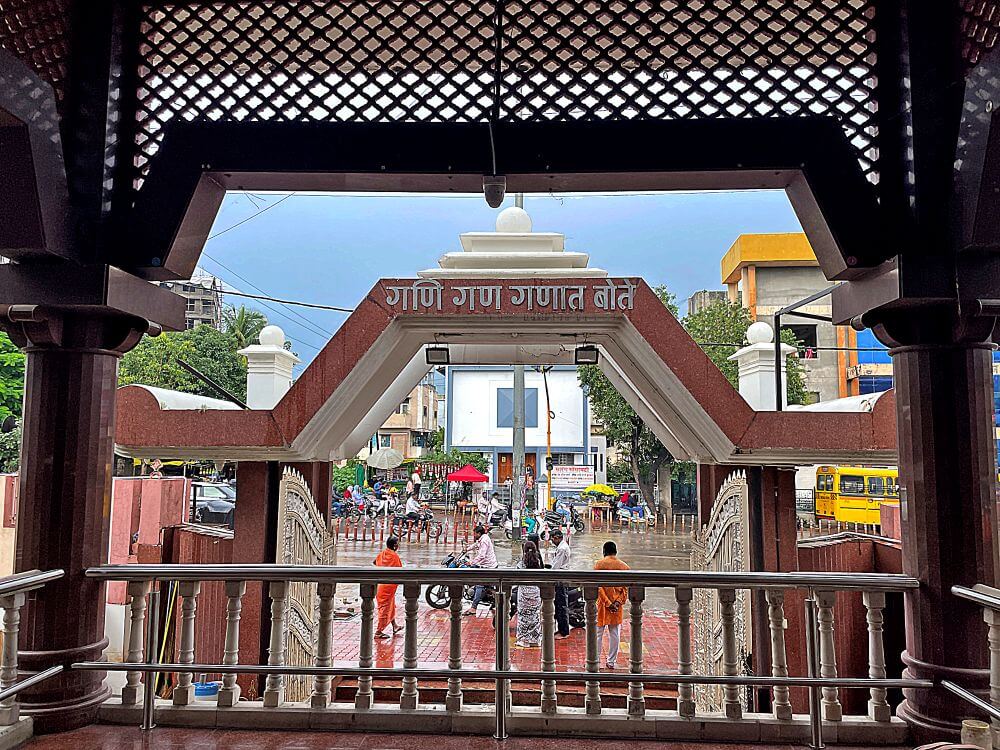
Shop Photo FramesIn the list of great saints who have graced Maharashtra in modern times, the name of Gajanan Maharaj of Shegaon is taken with utmost reverence. A beautiful temple dedicated to him is situated in the Garkheda area of Chhatrapati Sambhajinagar, a city known for its historical and religious significance. This temple, dedicated to the service of Gajanan Maharaj, who preached the path of devotion to reach the Divine, is a place of faith for thousands of devotees. Attractive architecture, cleanliness, and an atmosphere filled with devotional fervor are the hallmarks of this temple. On the days of Gajanan Maharaj’s manifestation and his attainment of Nirvana, the mantra ‘Gan Gan Ganaat Botey’ is chanted here continuously.
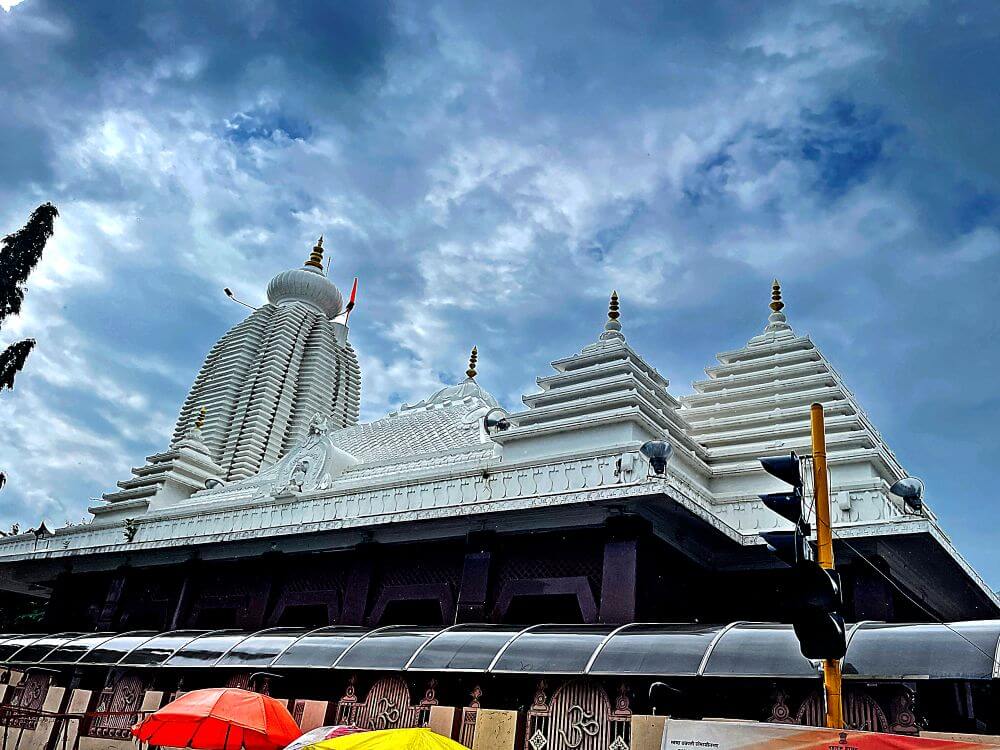
This magnificent temple is located near Hedgewar Hospital in Garkheda. The grand structure of the temple and its numerous white shikharas (spires) catch the eye from a distance. Previously, a dindi (pilgrimage procession) used to travel from Shri Kshetra Shegaon to Pandharpur. Since the year 1976, this dindi would halt every year at the grounds behind the Zilla Parishad building in Chhatrapati Sambhajinagar. At that time, a film based on the life of Gajanan Maharaj was screened there. Devotees in the area felt that there should be a grand temple of Gajanan Maharaj in Chhatrapati Sambhajinagar, just as there is in Shegaon. From this vision, and through the initiative of Professor Shridhar Vakte (Swami Divyanand Saraswati), the temple’s Board of Trustees was established in १९८१. Professor Vakte was the first president of this board. Subsequently, land for the temple was purchased by collecting donations through public participation. The construction of the temple began in १९८४. The Bhumi Pujan was performed by Shivshankar Patil, the then-trustee and manager of the Shegaon Sansthan.
As there was a shortage of funds for the construction of the temple, a musical night featuring R. D. Burman, Kishore Kumar, and Asha Bhosle was organized at the Marathwada Sanskrutik Mandal ground in the year 1987. A large amount of funds was collected through this program. While the temple work was underway, in the year 1989 The idol of Gajanan Maharaj was consecrated here. This consecration ceremony took place in the presence of Shankaracharya Swami Jayendra Saraswati Maharaj of the Karveer Peeth. Thousands of devotees of Gajanan Maharaj were present at the ceremony. On that occasion, a discourse by H. Bh. P. Vasudev Maharaj was also held here. The construction of this temple was completed in 1994, and the sanctum sanctorum of the temple was renovated in 2018.
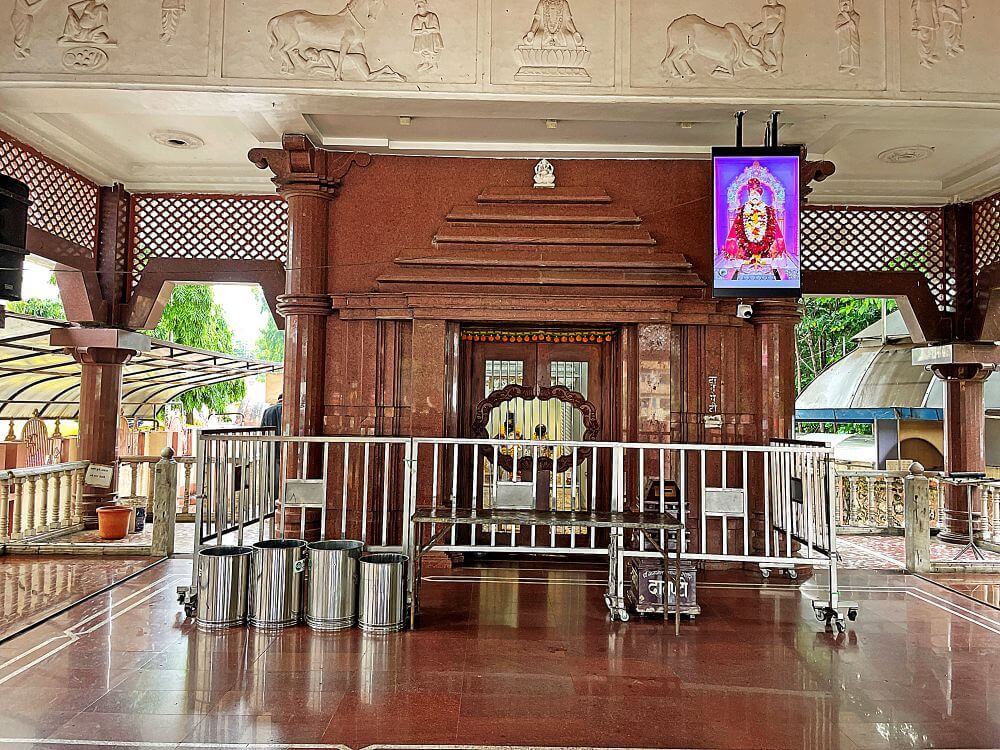
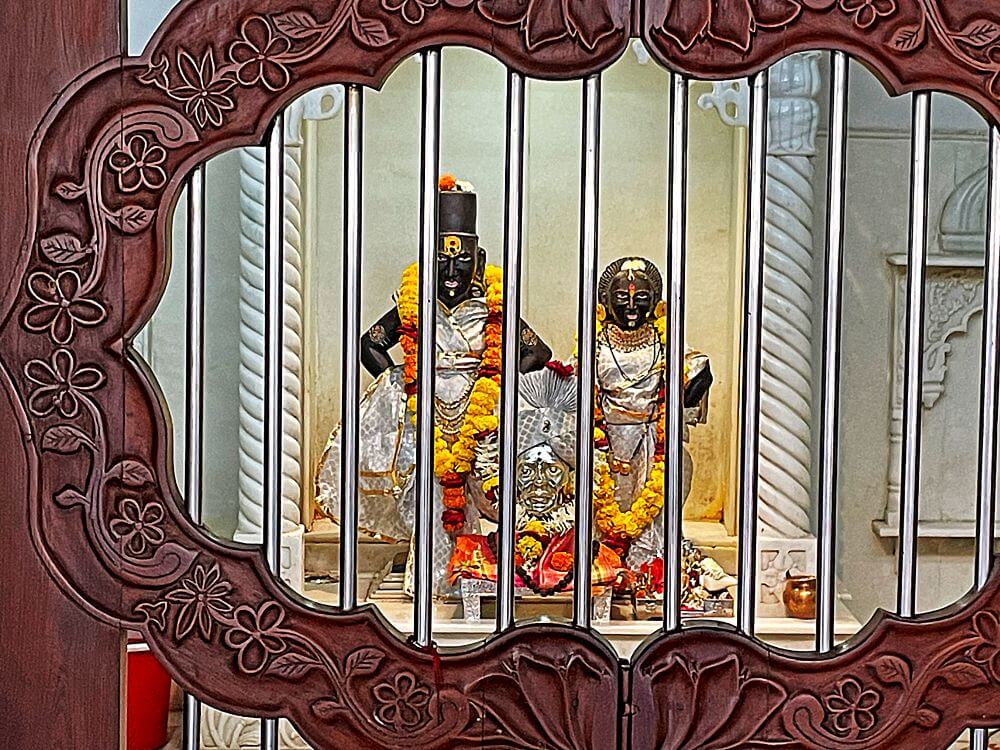
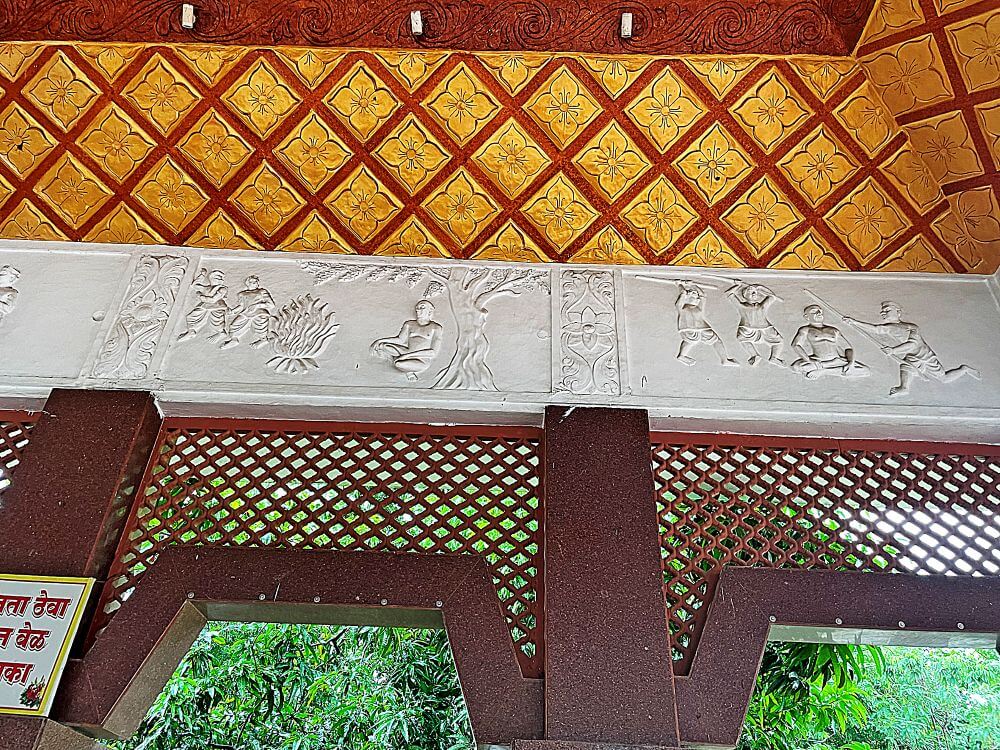
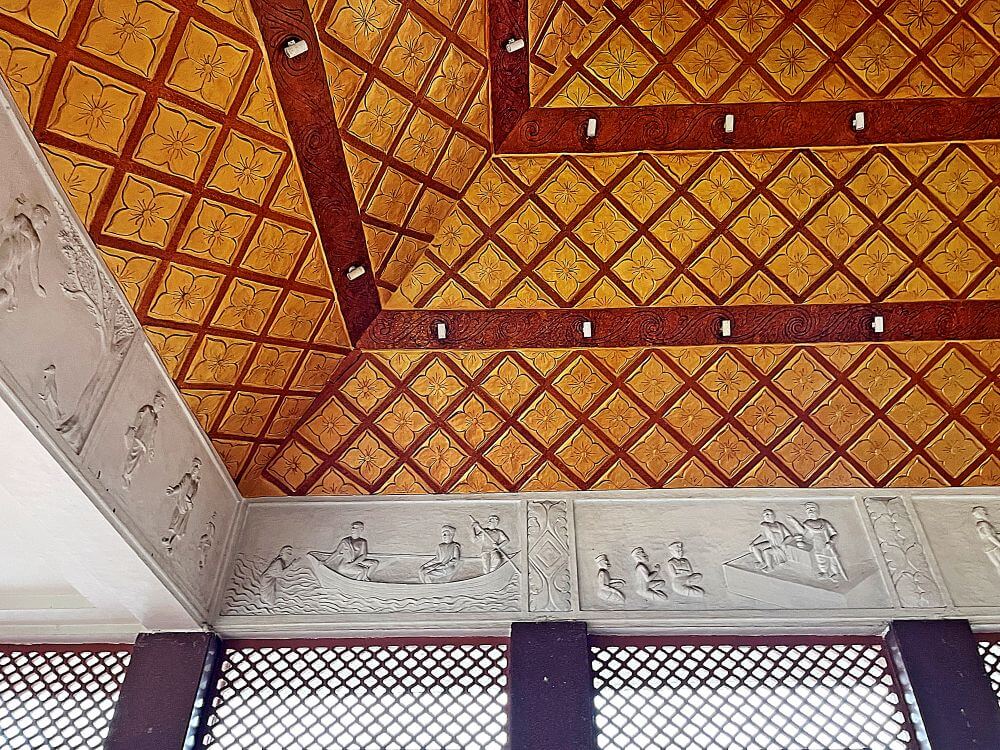
This temple of Gajanan Maharaj is built on a high plinth. One enters the temple’s assembly hall by climbing 10 steps. There are stairs on the right and left sides for entry and exit to the assembly hall, while the central area serves as the viewing pavilion. The temple’s structure further consists of an open assembly hall, the sanctum sanctorum, a circumambulation path around the sanctum, and a secondary sanctum located in the basement beneath it. The assembly hall is rectangular and features numerous circular pillars. On all four sides of the arches between the two pillars, there is a wide white band, and upon it The roof is pyramid-shaped. Various episodes from the life of Gajanan Maharaj are depicted through relief sculptures on the frieze above the arches. To the right, above the entrance to the sanctum sanctorum, there is a large image of Gajanan Maharaj. On the lintel above the square wooden entrance of the sanctum sanctorum, there is an idol of Lord Ganesha. This door, fitted with steel bars, has a large, circular, ornate arched window in the center. Through it, one can get a distant view of the faces of Vitthal-Rukmini. These idols of Vitthal-Rukmini, standing with their hands on their hips in a serene posture, are consecrated on a marble pedestal in the sanctum sanctorum. In front of these idols, in the center, a silver mask of Gajanan Maharaj is placed on a pedestal.
There are stairs behind the sanctum sanctorum here that lead down to the underground sanctum. In this sanctum, there is a Vajrapitha placed on a large marble platform. Upon it stands a three-foot-tall marble idol of Gajanan Maharaj. This idol has been specially crafted and brought from Rajasthan. Behind the idol, which is adorned with a turban on its head, is an intricately carved arch. In front of the idol are the Maharaj’s holy sandals. During festivals, attractive decorations are arranged here. Nearby, in a room, the wooden sandals of Gajanan Maharaj are kept. Behind them, in the center, is an image of the Maharaj. To the left of this image are the images of Ganesha, and to the right are the images of Tulja Bhavani. There is an ancient Ashvattha (Peepal) tree behind the Gajanan Maharaj Temple. This tree is considered extremely sacred. In a shloka of the Shrimad Bhagavad Gita, Lord Shri Krishna says, “Ashvatthah sarvavrikshanam devarshinam cha naradah | Gandharvanam chitrarathah siddhanam kapilo munih ||”, meaning that among all trees, I am the Peepal tree. The Ashvattha tree was also very dear to Gajanan Maharaj. In the year 1908, while staying at the mansion of Gopalrao Buti in Nagpur, Maharaj would often go and sit under a Peepal tree in that vicinity.
The architectural style of this temple is Dravidian. There are three spires in total: two smaller ones at the entrance of the assembly hall (Sabhamandapa) and one large spire above the viewing pavilion (Darshanmandapa). The spire above the viewing pavilion is broad and shaped like a pyramid, constructed by stacking squares that gradually decrease in size. It is crowned with a two-tiered Amalaka and a Kalasha at the top. Behind this, there is a shorter, square-shaped spire over the assembly hall. The spire situated above the sanctum sanctorum (Garbhagriha) is the main spire of the temple. It follows the Dravidian style and is adorned with a large Amalaka and a Kalasha. There are two additional smaller spires on either side of this main spire. Thus, there are a total of seven spires on this temple.
The temple celebrates the Pragat Din (Advent Day) of Gajanan Maharaj on Magh Vadya Saptami and the Nirvana Din (Day of Liberation) on Rishi Panchami. On both these days, the temple is crowded with spiritual seekers and devotees. On the day of the Pragat Din celebration, the darshan begins after the Amrutabhishek (nectar-like ritual bath) is performed on the idol of Maharaj. On this day, a Yaga (sacrificial ritual) and Mahaprasad (grand feast) are organized. On the occasion of the Pragat Din celebration, Harikirtan, recitation of Bhagavata Katha, Dnyaneshwari Parayan, and Gajanan Vijay Granth Parayan are held here. During this celebration, the temple is adorned with attractive lighting. A grand Deepotsav (festival of lights) is held here during Diwali. Attractive Rangoli is drawn in the temple premises. Lamps are lit in front of the Rangoli. The temple’s Board of Trustees organizes health lecture series and camps here from time to time.
This sacred temple stands as a testament to deep spiritual devotion, ancient architectural grandeur, and rich local cultural traditions.
The sanctum sanctorum houses the divine idol consecrated according to ancient Vedic traditions, surrounded by serene courtyards and traditional temple architecture.
Navratri, Maha Shivratri, Annual Temple Jatra & Deepotsav
Compare and book flights, secure top-rated local hotels near the temple, hire reliable guides, and rent cars instantly.
Extend your pilgrimage by visiting other highly sacred temples located nearby.

Add ₹999 more to unlock FREE SHIPPING!
Your sacred cart is currently empty.
Shop Photo FramesFill in your delivery details below to place your order.
Add comment