
Add ₹999 more to unlock FREE SHIPPING!
Your sacred cart is currently empty.
Shop Photo FramesThe Indragadhi Mata Temple in Ghatnandra, located in the Sillod taluka of Chhatrapati Sambhajinagar, serves as a sub-shrine (upa-peeth) of Mahurgad, which is one of the three-and-a-half Shakti Peethas of the primordial Mother Goddess, Adishakti. Situated within the Ajanta mountain ranges, this abode of Goddess Renuka is known as Indragadhi Devi. The Goddess is renowned for teaching a lesson to the arrogant and for fulfilling the vows (navas) of her devotees. The Goddess, who once granted a boon to Lord Indra, is celebrated annually during the Tripurari Purnima festival. On this occasion, thousands of devotees visit to seek her blessings, fulfill their vows, or make new ones.
The legend of this temple states that in ancient times, a sage lived in a cave here with his daughter. One day, while Lord Indra was passing through the area, he caught sight of the sage’s daughter. Accustomed to the company of celestial nymphs (apsaras), Indra approached her and mocked her beauty. Enraged, the sage’s daughter cursed Indra, saying, “Your power shall diminish.” When the curse came true, a repentant Indra sought her forgiveness and asked for a reversal of the curse. However, as the sage’s daughter lacked the power to undo the curse, a helpless Indra turned to Lord Vishnu. Vishnu advised him to worship Goddess Renuka. Following this, Indra worshipped the Goddess, and she liberated him from the curse. At that time, Indra expressed a desire for the Goddess to establish her presence here to provide refuge to devotees who repent for their misdeeds. Since then, the Goddess has resided on this hill. Because she granted a boon to Indra, she came to be known as Indravardhini. Over time, this name evolved into Indragadhi.
The village of Ghatnandra lies on the borders of the Kannad, Soygaon, and Pachora talukas. The Indragadhi Mata temple is located five kilometers north of the village. The hill becomes visible from a distance as one approaches. A road leads to the base of Indragadhi, and the temple trust has built a path through voluntary labor (shramdaan) to climb the rest of the hill. After climbing for some distance, one reaches a vast plateau. To the right of this plateau is a temple of Lord Maruti facing south. Directly ahead is the Indragadhi Mata temple, and to the left is the Matrutirth lake. Devotees believe that drinking the water from this lake can cure skin ailments.
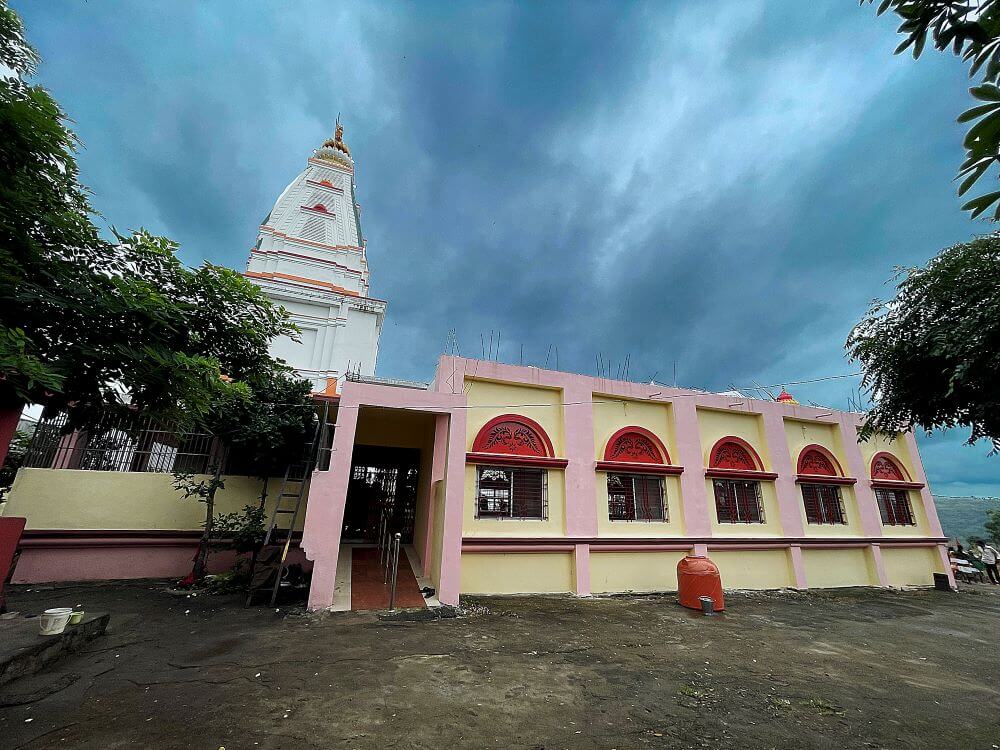
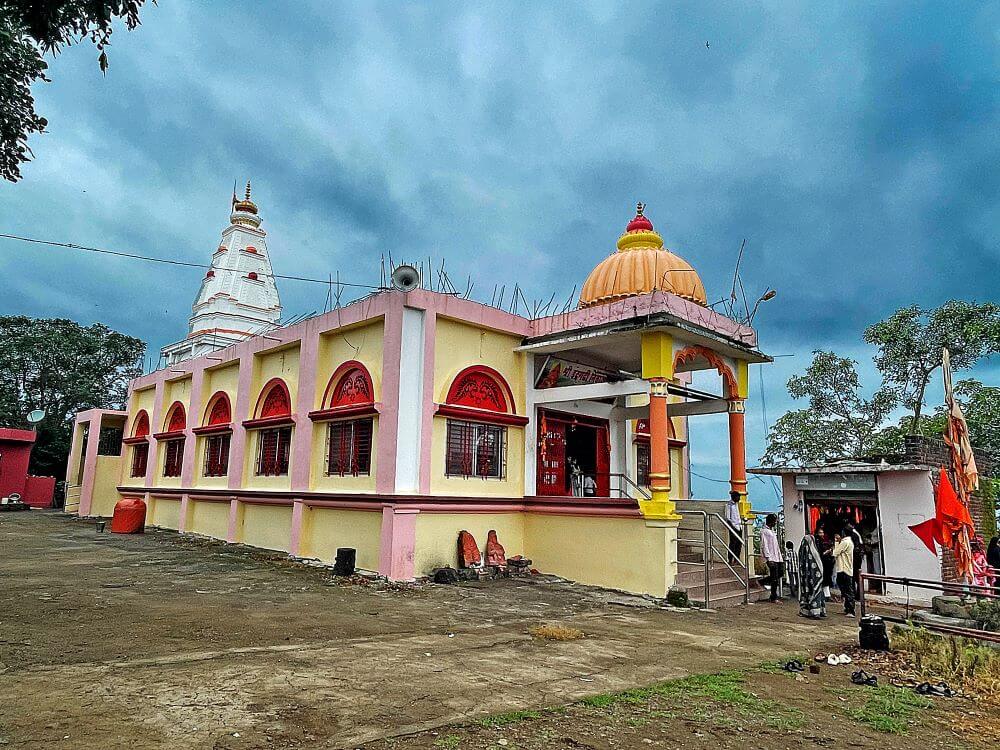
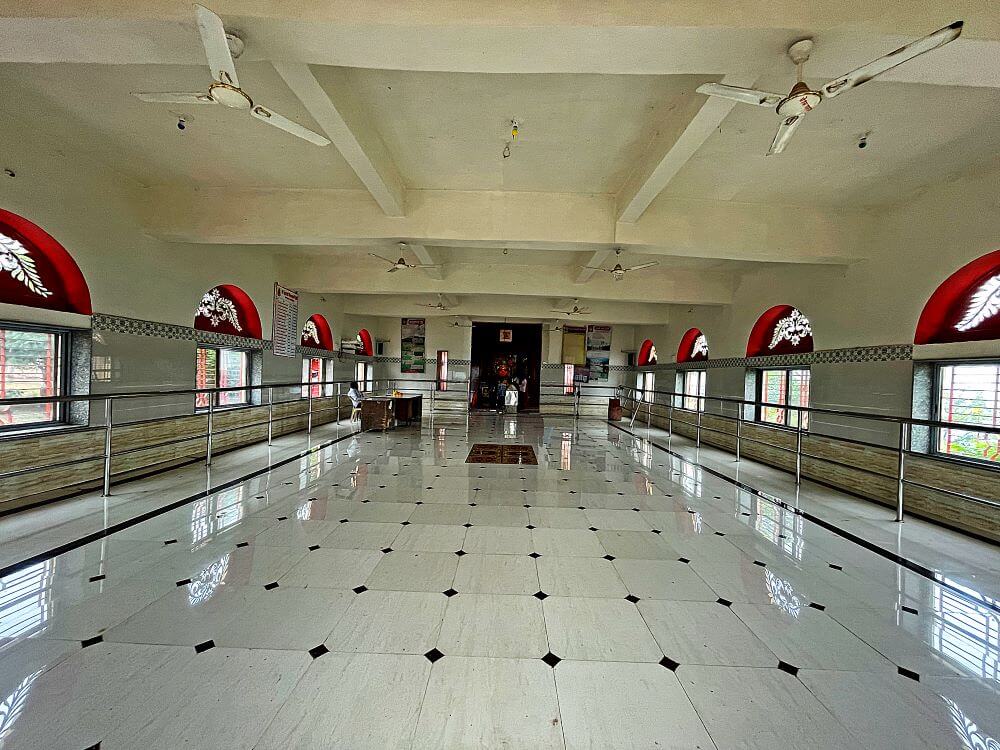
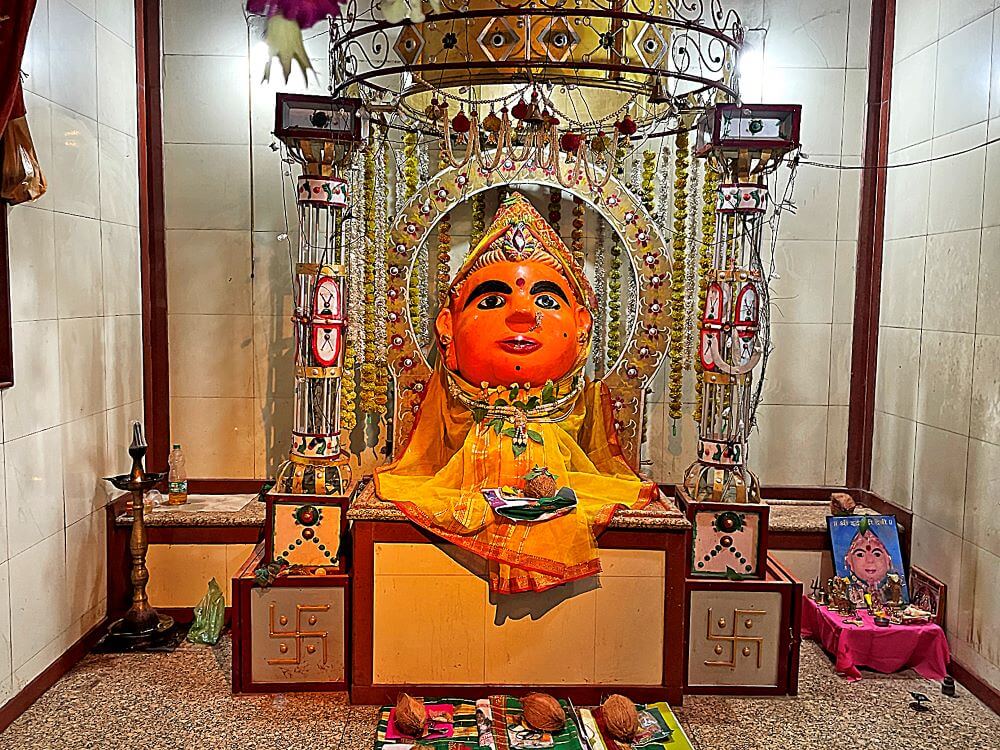
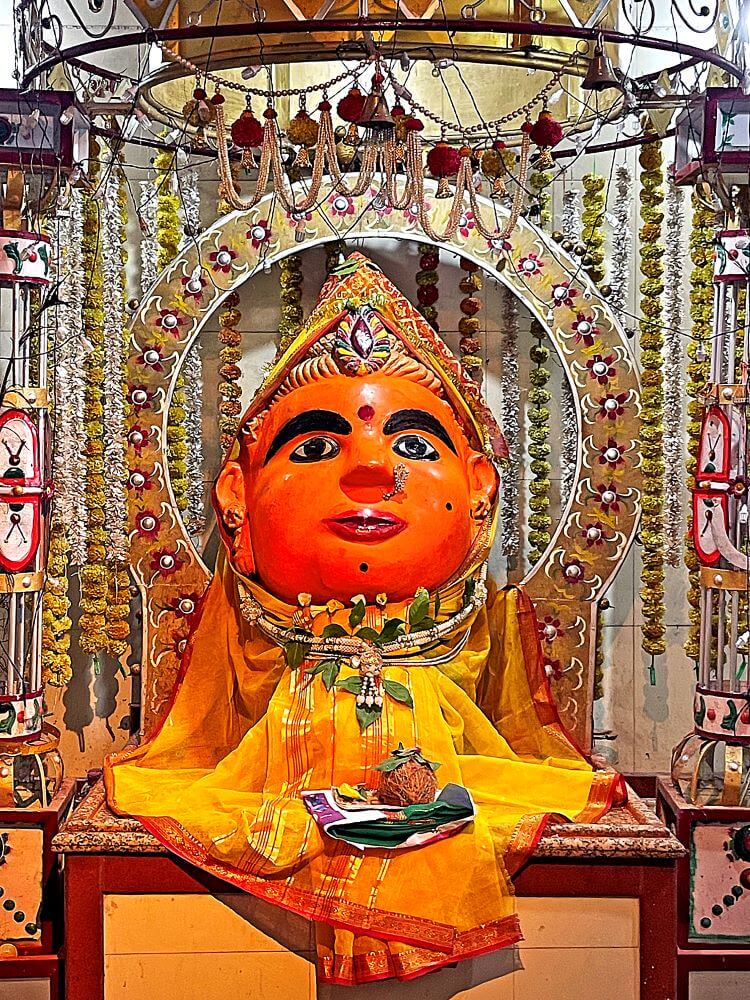
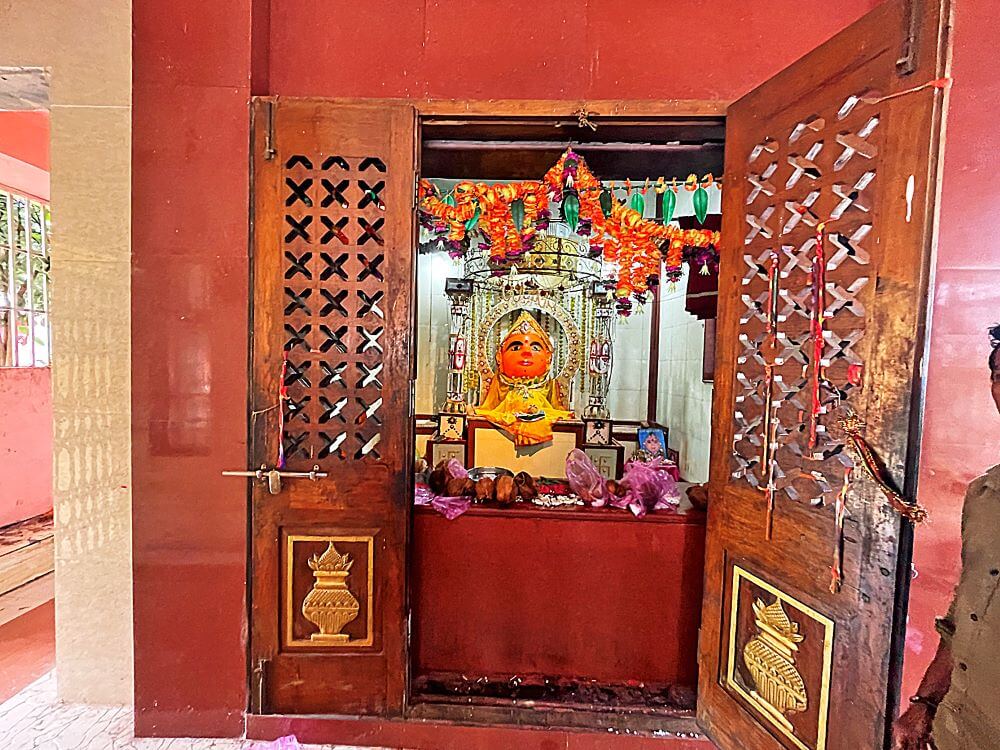
Remnants of carved stones and attractive craftsmanship suggest that an ancient stone temple of the Goddess once stood here. In 1990, the temple trust constructed a new structure. In front of the temple, on a small platform, stand a grand trident (trishul) and a flagstaff. As the temple is situated on elevated ground, one must climb eight steps to enter the darshan mandap. The temple complex includes the darshan mandap, sabha mandap (assembly hall), garbhagriha (sanctum sanctorum), and a circumambulation path (pradakshina marg). The sabha mandap is spacious, and for the convenience of devotees, railings have been installed on the left and right sides to manage queues for men and women. On the lintel above the entrance to the sanctum, there is an image of Lord Ganesha, and kalash (auspicious pots) are depicted on both sides of the doorway. Inside the sanctum, Indragadhi Mata is enshrined in the form of a ‘tandala’ (a naturally formed stone) within a decorative frame.
A grand fair is held on the hill during Tripurari Purnima. On this day, after the temple rituals, the Goddess is offered ‘rodga’ (a traditional bread) as naivedya in the afternoon. Thousands of devotees visit during this fair to seek her blessings. Women who were married off from this village make it a point to visit and offer a sari and coconut (oti) to the Goddess. During the fair, devotees fulfill their vows and make new ones. Many devotees perform ‘lotangan’ (prostrating themselves along the path) as they ascend the hill. Many devotees also visit during the Sharadiya Navratri festival. An ‘annachhatra’ (free food distribution) is organized during both the Navratri and Tripurari Purnima festivals.
The hill also houses a shrine to Indreshwar Mahadev. In a deep valley to the left of the hill lies a 10×12 foot cave known as ‘Rishicha Khora’ (The Sage’s Cave), which contains a Shiva Linga. In the past, many sages and saints meditated in this cave. Villagers believe that if cows that do not produce milk are brought here, they begin to lactate. Consequently, many people from the surrounding areas bring their cows to this spot. Three kilometers north of this cave, away from the temple, is the temple of Jogeshwari Devi, a sub-shrine of the Bhavani Devi of Tuljapur. From the left side of the Indragadhi temple, one can enjoy a panoramic view of the Khandesh region.
This sacred temple stands as a testament to deep spiritual devotion, ancient architectural grandeur, and rich local cultural traditions.
The sanctum sanctorum houses the divine idol consecrated according to ancient Vedic traditions, surrounded by serene courtyards and traditional temple architecture.
Navratri, Maha Shivratri, Annual Temple Jatra & Deepotsav
Compare and book flights, secure top-rated local hotels near the temple, hire reliable guides, and rent cars instantly.
Extend your pilgrimage by visiting other highly sacred temples located nearby.

Add ₹999 more to unlock FREE SHIPPING!
Your sacred cart is currently empty.
Shop Photo FramesFill in your delivery details below to place your order.
Add comment