
Add ₹999 more to unlock FREE SHIPPING!
Your sacred cart is currently empty.
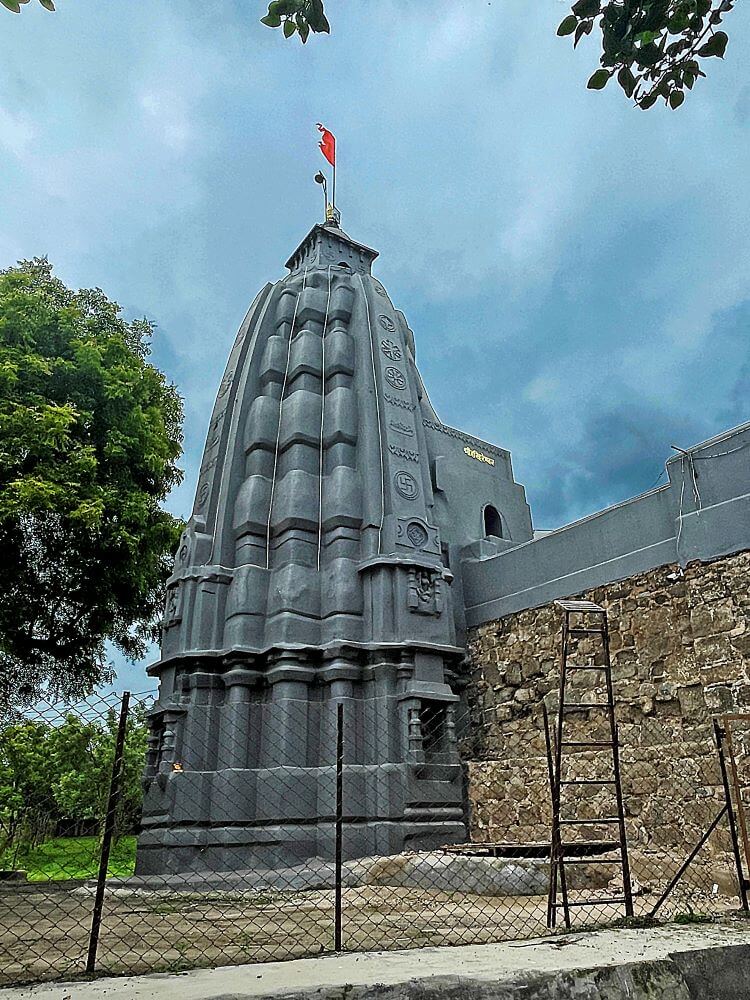
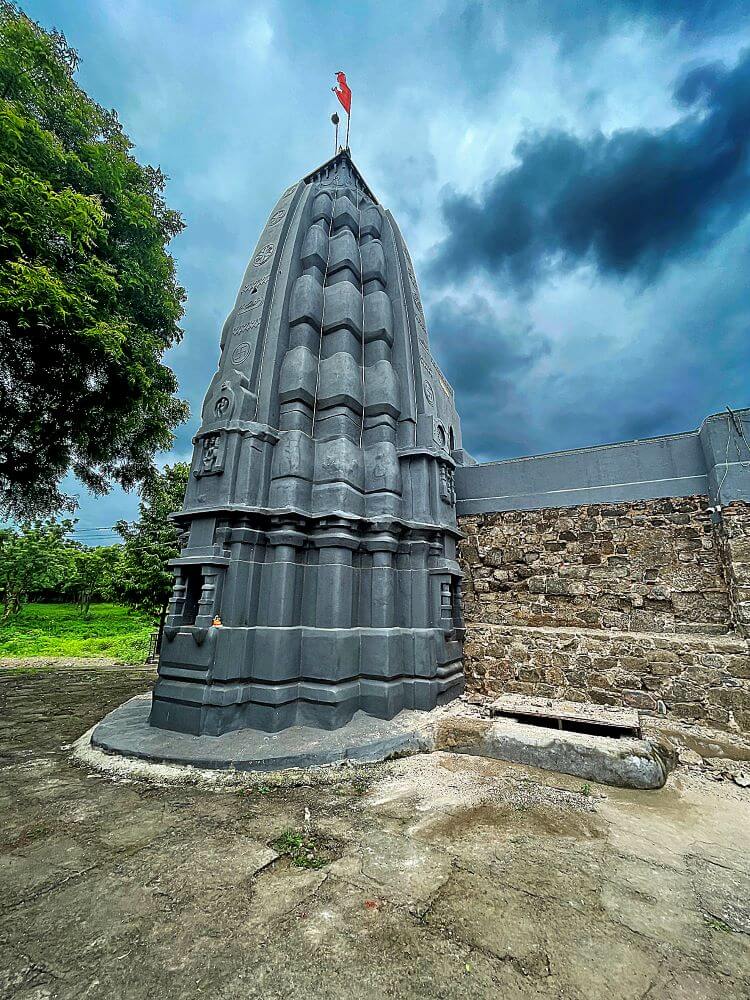
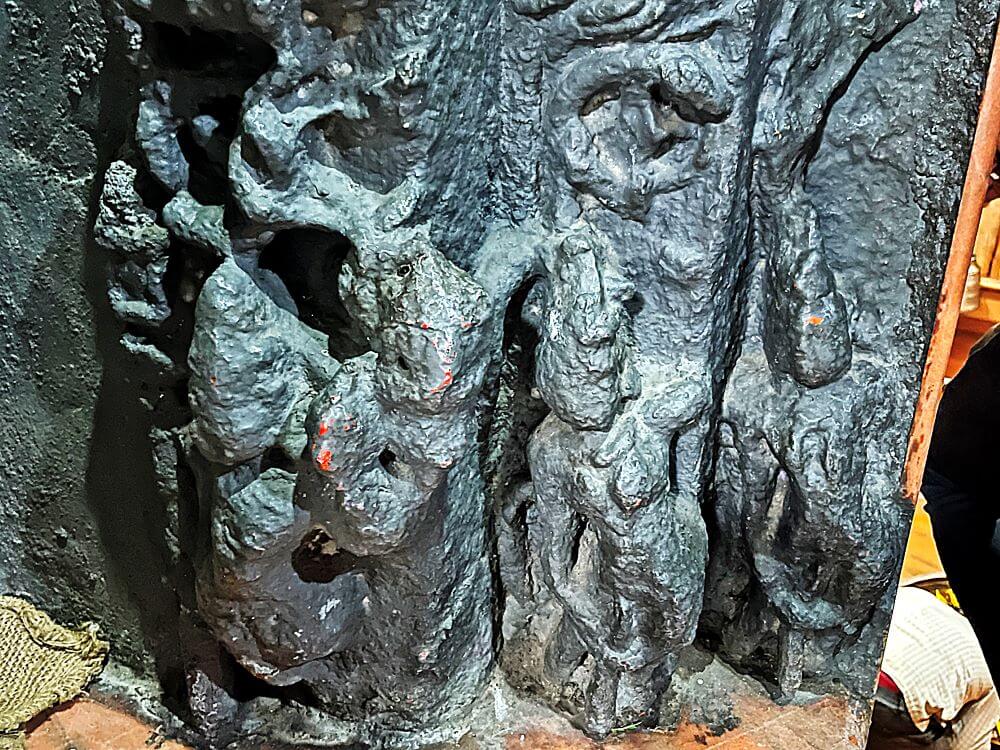
Shop Photo FramesThe ancient temple of Harihareshwar is located at Pimpalgaon Hareshwar in the Pachora taluka of Jalgaon district. Built in the 13th century in the Hemadpanti architectural style, the Puranas mention that Lord Vishnu assumed the form of Mohini in this temple complex to bring an end to Bhasmasura. As a symbol of this, the ‘Bhasmasura Shila’ (Bhasmasura’s stone) is present here. There is also a legend that Shiva and Vishnu embraced each other at this site. The stone line above the Shivling in the temple is considered a mark of this divine embrace. It is said that the place was named Harihareshwar because of the meeting of these two deities.
The legend regarding the slaying of Bhasmasura states that Lord Shiva once resided in this area. He had appointed a young boy to collect fresh ash from funeral pyres for his worship. One day, when fresh ash was unavailable, the boy brought embers from a pyre, which burned his hands. Impressed by his devotion, Shiva granted him a boon: “From now on, you will not have to wander in search of ash. Whatever you place your hand upon will turn to ash.” He also warned the boy not to misuse this power. However, after a few days, the boy became arrogant and began placing his hand on people’s heads, turning them to ash. Due to his demonic powers, he became known as ‘Bhasmasura’.
One day, he chased Lord Shiva himself to turn him into ash. To escape, Shiva fled from Kailash. Shiva and Bhasmasura crossed paths in the Pataleshwar area near Pachora, after which Shiva went to Rudreshwar. Bhasmasura, who was pursuing him, followed him there as well. While trying to escape, Shiva rested at the confluence of the Bahula and Duba rivers. However, Bhasmasura arrived there too. At that moment, Lord Vishnu assumed the form of Mohini and intercepted Bhasmasura. Meanwhile, Shiva traveled along the banks of the Bahula river to its source in the Ajanta mountain range. He turned back to see if Bhasmasura was still following him, and this place came to be known as Murdeshwar.
When Shiva turned back, he saw Mohini attempting to trap Bhasmasura in her spell. Enchanted by Mohini’s beauty, Bhasmasura proposed marriage. Mohini replied, “For that, you must dance exactly as I do.” Bhasmasura agreed to her proposal. While dancing, Mohini placed her hand on her head. Thinking it was part of the dance, Bhasmasura did the same and, according to the boon granted by Shiva, he was reduced to ash. It is said that Bhasmasura was destroyed on the day of Vaikuntha Chaturdashi. After Bhasmasura’s end, Lord Vishnu returned to his original form. At that moment, Shiva and Vishnu embraced each other here. Outside the main entrance of the temple, on the right side, lies the stone symbolizing Bhasmasura.
Situated at the confluence of the Bahula and Duba rivers, this temple is built in the Hemadpanti style. There are various opinions regarding the period of the temple’s construction. Henry Cousens, a British scientist working in the Archaeological Survey of India in the early 20th century, described the construction of this temple in his writings, where he analyzed its architectural style. The steps and the ghat outside the temple were built in Shaka 1841 (1919 AD). It is said that the inscription on the second step here is the longest in the world. This inscription is 15 meters and 9 inches long and 9 inches wide. It is written in the Devanagari script and the Marathi language. The inscription is carved across several stones of the step, arranged in a single line.
The natural surroundings of the temple are peaceful and pleasant. From the outside, the temple appears rectangular. After climbing the steps, one finds the stone symbolizing Bhasmasura on the right. A figure in a seated posture is carved onto this seven-foot-tall monolithic stone. Nearby, leaning against the trunk of a mango tree, is another stone. The outer wall of the temple begins from Bhasmasura’s stone. This wall, about 28 feet high, is enclosed on all four sides. There is a Nandi statue in front of the main entrance. The center of the entrance features floral carvings. Upon entering, one finds an open mandapa (hall).
In this mandapa, on the right side, there are some samadhis (tombs) carved into a stone arch. These are the samadhis of the great mathematician Bhaskaracharya, who discovered the concept of zero, and his daughter Lilavati. It is said that Bhaskaracharya of Patnadevi performed japa, penance, and sadhana here. His samadhi is on a five-by-five-foot platform, topped with a dome-shaped shikhara. Next to this samadhi, in the Nandi mandapa, is a white stone statue of Nandi. The garland of bells around Nandi’s neck extends from his back to his tail. The pillars of the Nandi mandapa feature exquisite carvings.
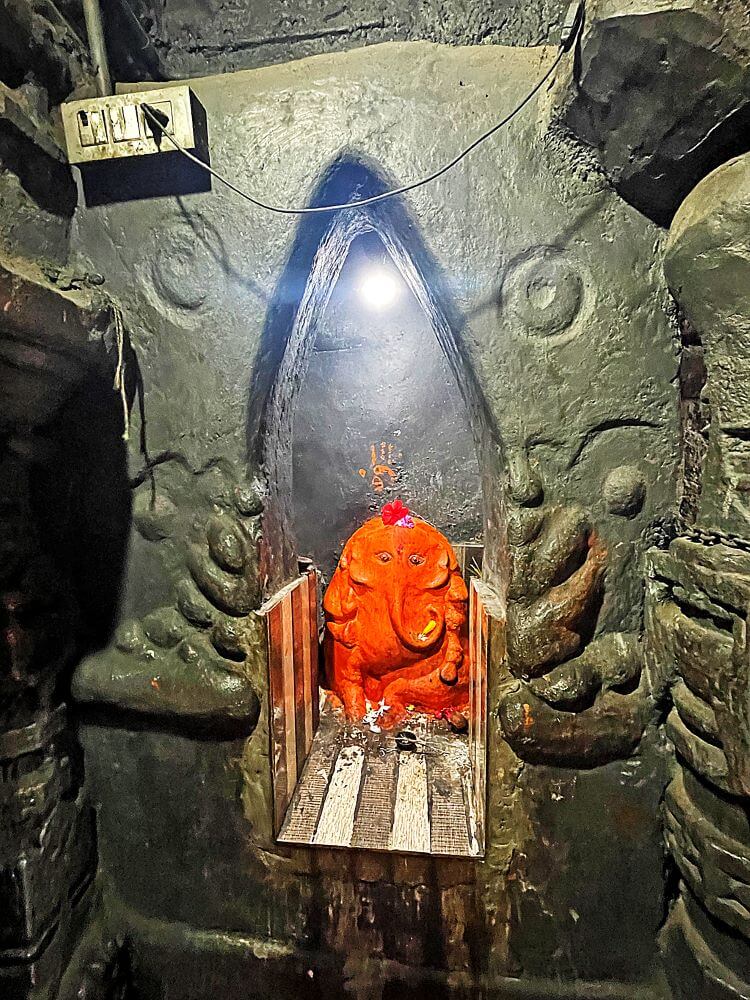
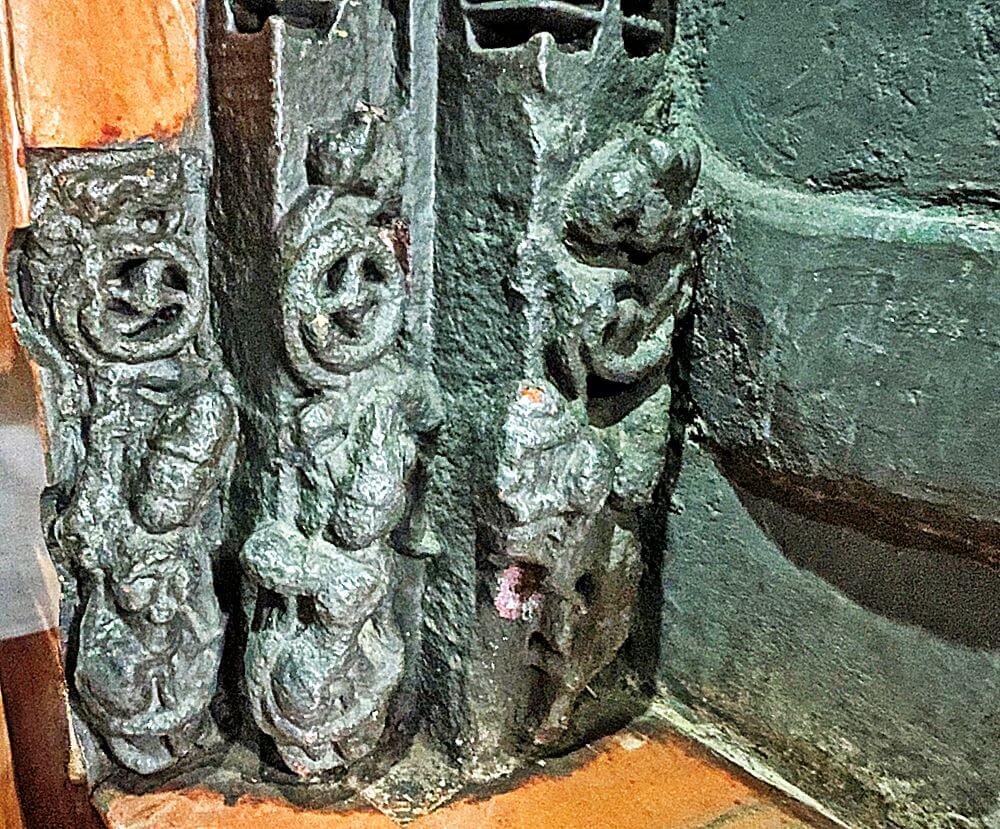
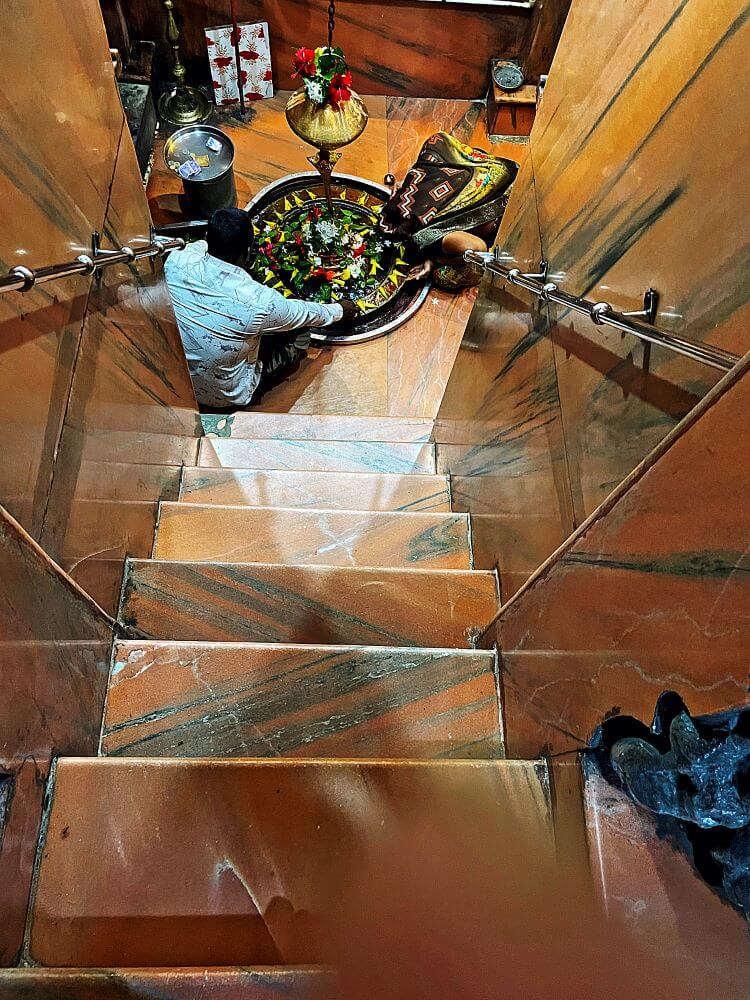
In front of Bhaskaracharya’s samadhi is a small temple of Ganpati, which houses a marble idol of Ganesha. The two stone pillars at the entrance of the assembly hall are carved with kalash (urns) and leaves. The assembly hall contains a tortoise statue and two niches near the antarala (vestibule). The antarala has eight intricately carved stone pillars. On the right side, there is a vermilion-smeared idol of Ganesha. The entrance to the sanctum sanctorum features floral carvings, with sculptures of Yakshas, Kinnaras, and Gandharvas at the base. The sanctum sanctorum is seven to eight feet below the assembly hall, requiring one to descend eight steps to reach it. In the center of this sanctum is a monolithic black stone Shivling. Two parts are clearly visible on the shalunka (base) of the Shivling; one half is considered to be the form of Vishnu and the other half the form of Shiva. Tulsi is offered on the Vishnu side, and Bel leaves are offered on the Shiva side. Windows have been built above the entrance of the sanctum for lighting. Twice a year, around 3:30 PM, the sun’s rays fall directly onto the Shivling through these windows.
Devotees flock to this temple throughout the year. A spacious assembly hall (sabhamandap) has been constructed in the temple premises, capable of accommodating about two thousand devotees. Auspicious ceremonies such as weddings and thread ceremonies (munj), as well as vow-fulfillment programs, are held here. Behind the temple, there are two sculptures depicting the manifestation of Lord Narasimha and the slaying of Hiranyakashipu, topped with a Kirtimukha. On the right side, there is an idol of Mahishasuramardini. The Pushkarani (sacred pond) located behind the temple is filled with colorful lotus flowers.
In the Puranas, Pimpalgaon Hareshwar is mentioned as ‘Pippalgram Harihareshwar’. This place is referenced in ancient texts such as the Skanda Purana, Navnath, Shiva Purana, Shivalilamrut, and Shrimad Bhagavata Purana.
This sacred temple stands as a testament to deep spiritual devotion, ancient architectural grandeur, and rich local cultural traditions.
The sanctum sanctorum houses the divine idol consecrated according to ancient Vedic traditions, surrounded by serene courtyards and traditional temple architecture.
Navratri, Maha Shivratri, Annual Temple Jatra & Deepotsav
Compare and book flights, secure top-rated local hotels near the temple, hire reliable guides, and rent cars instantly.
Extend your pilgrimage by visiting other highly sacred temples located nearby.


Add ₹999 more to unlock FREE SHIPPING!
Your sacred cart is currently empty.
Shop Photo FramesFill in your delivery details below to place your order.
Add comment