
Add ₹999 more to unlock FREE SHIPPING!
Your sacred cart is currently empty.
Shop Photo FramesSaint-poetess Bahinabai Pathak, who was blessed to be a disciple of the supreme saint Tukaram Maharaj—the composer of the famous abhang lines, “Tuka jhalase kalas, bhajan kara savakash” (Tuka has become the pinnacle, perform devotion with patience)—and who dedicated her entire life to Lord Vitthal, attained Samadhi at Shiur in the year 1700 AD at the age of 72. According to the abhangs she wrote regarding her departure, she became aware of her time of death 18 days in advance. Believing that self-realization is the ultimate pilgrimage, Bahinabai decided to take Samadhi at Shiur rather than visiting other pilgrimage sites. Her Samadhi temple is located here.
Marathi literature has a rich tradition of autobiographies and memoirs. In this tradition, the name of Saint Bahinabai is held in the highest regard. Due to the autobiography she wrote, she is considered the first female autobiographer. Her autobiography contains 116 abhangs. It records not only various events of her life but also memories of her previous births. According to her autobiography, she had memories of her past 12 births. All these births occurred within a span of 351 years, and all were as a woman. In her autobiography, Bahinabai also composed verses about many significant events in the life of Saint Tukaram Maharaj. Consequently, many historical events from Tukaram Maharaj’s life were brought to light.
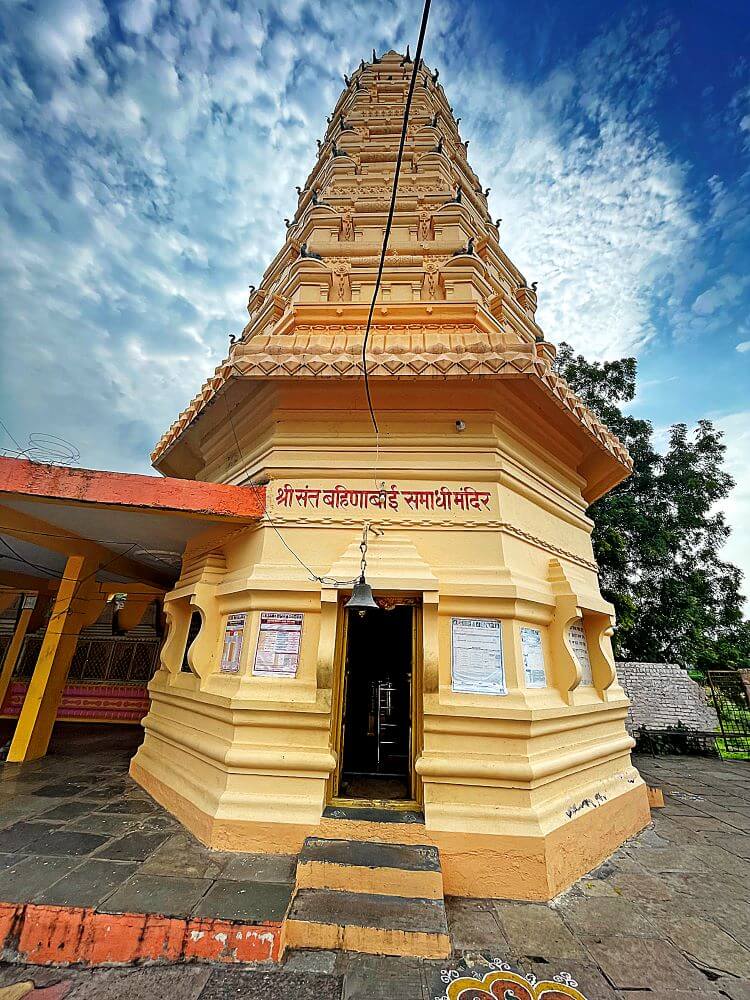
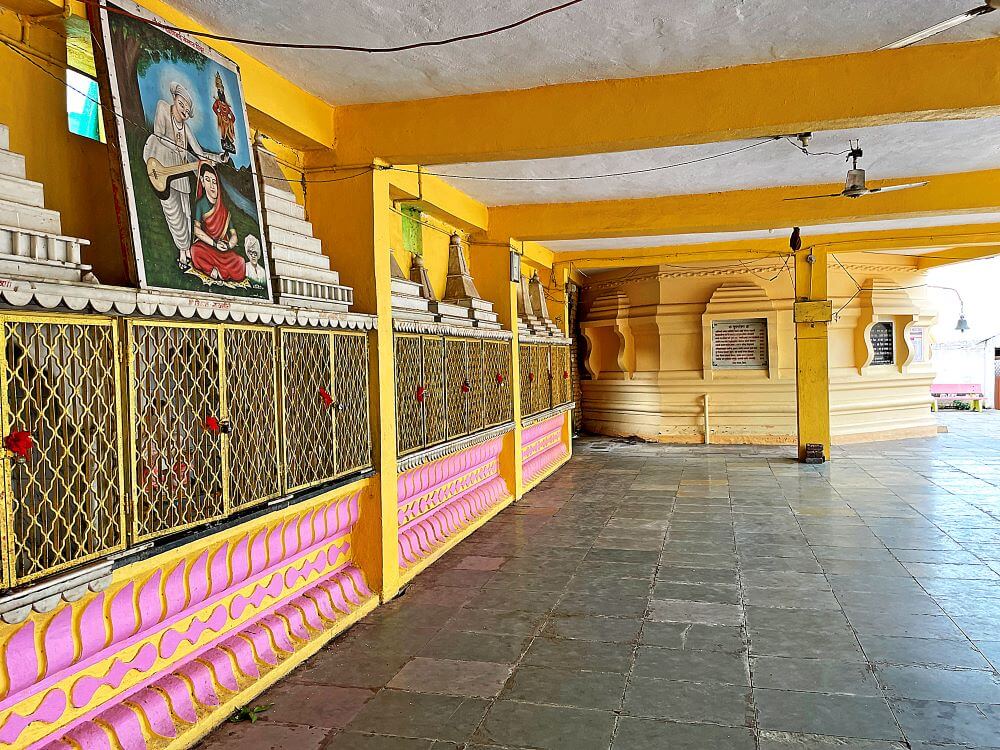
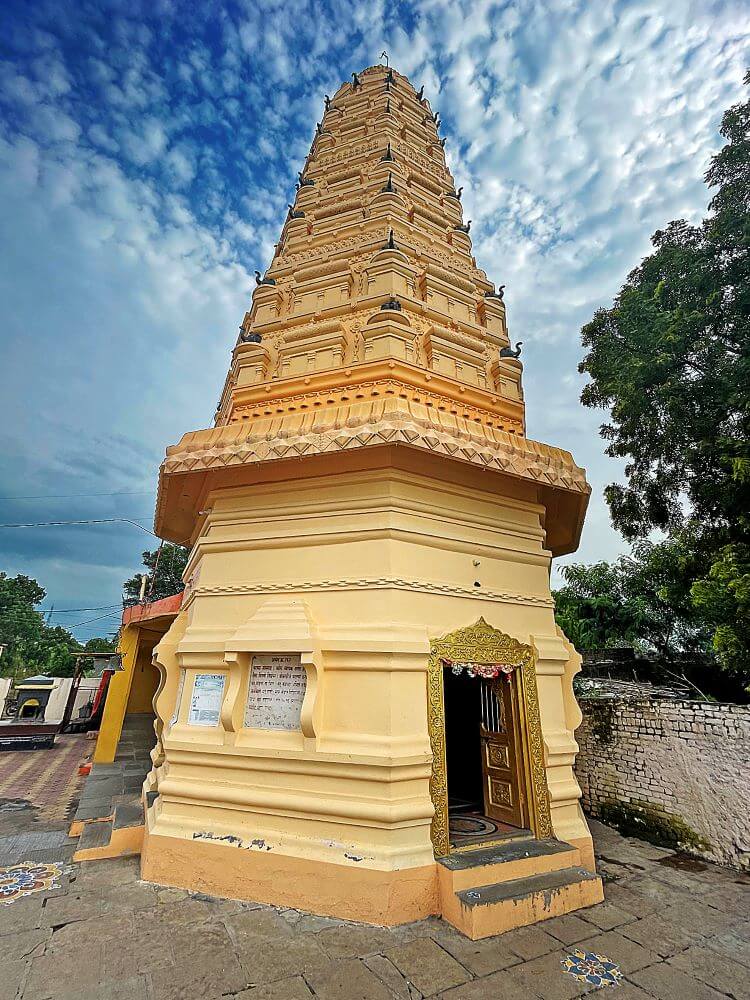
Her temple has been built exactly where she took Samadhi. Upon entering the temple premises, one is greeted by an idol of Lord Hanuman. Beside it are idols of Lord Ganpati and Shani Dev. The temple has an open assembly hall (sabhamandap). In the niches on its walls, idols of many saints and great souls have been installed. The main temple is hexagonal in shape and features a very tall, eight-tiered spire (shikhar). Elephant figures are installed at various places on it. The saffron flag of the Warkari sect flutters atop the temple’s high pinnacle.
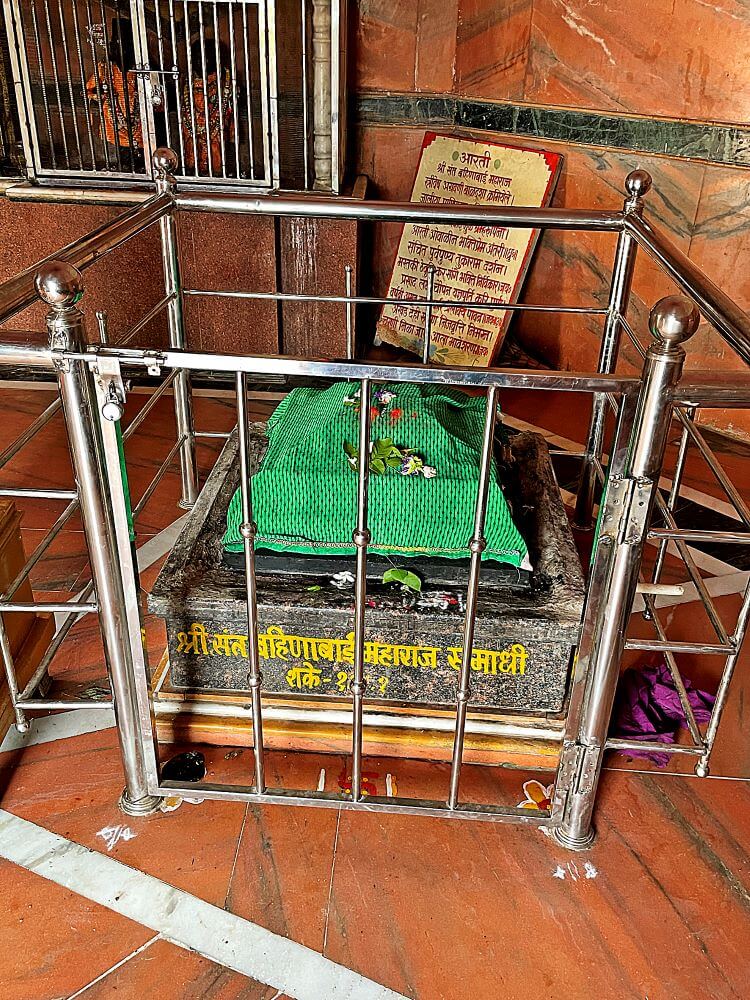
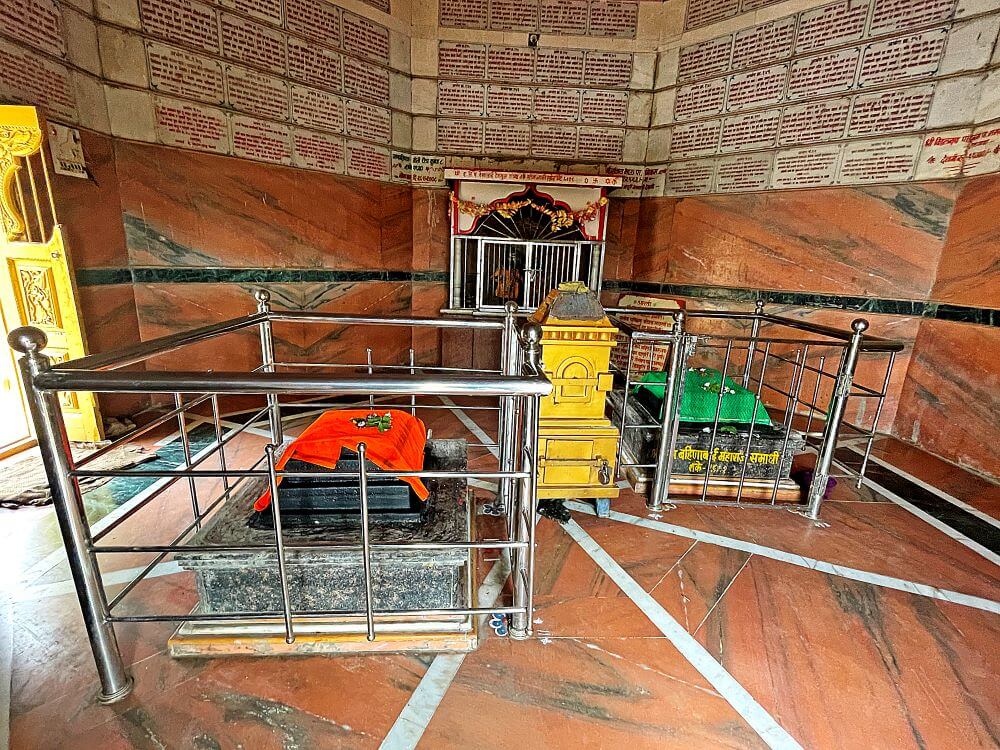
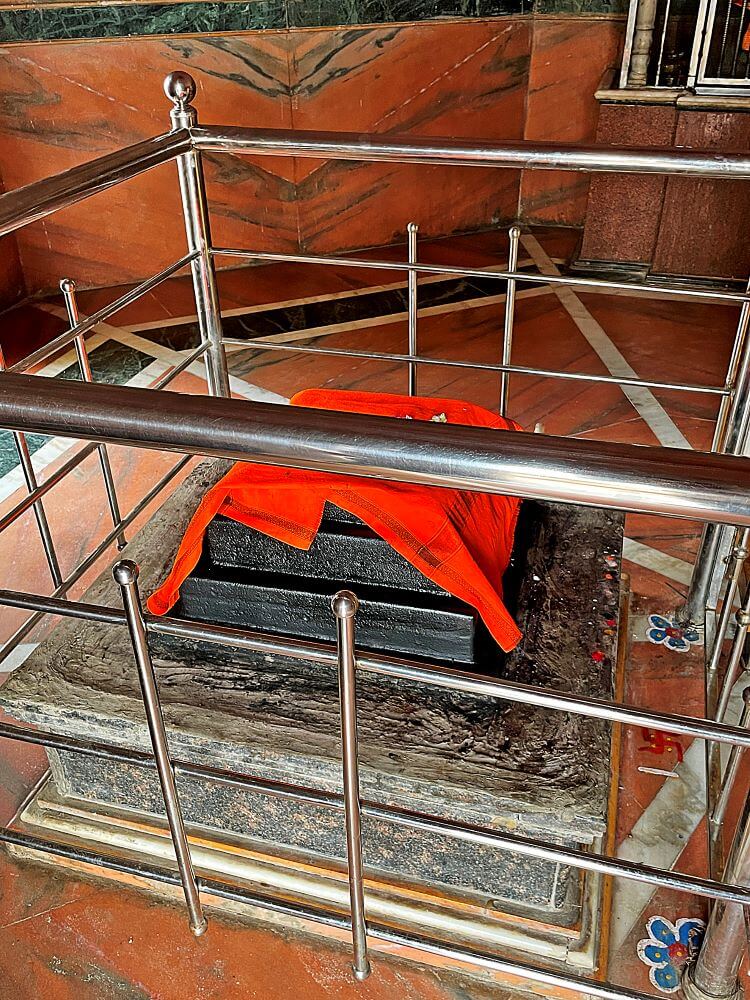
The temple has two entrances, and the door frames are adorned with intricate carvings of religious symbols. Directly in front is the Samadhi of Saint Bahinabai. In 1968, H. B. P. Kashinathbaba Mogal installed the padukas (footprints) of Bahinabai there. Nearby is the Samadhi of her son, Saint Vithoba Maharaj. Behind it, against the wall, are idols of Vitthal-Rukmini. Abhangs are inscribed on the temple walls, similar to the Gatha Mandir in Dehu.
Bahinabai was born in 1628 AD into a Brahmin family in Devgaon, in the Kannad taluka of Chhatrapati Sambhajinagar district. When she was three years old, she was married to Gangadharpant Pathak, a thirty-year-old widower. He was a priest and also practiced medicine. From childhood, Bahinabai had a deep longing for spirituality. She heard the abhangs of Tukaram Maharaj during a kirtan by Jayaramswami Vadgaonkar in Kolhapur. From then on, she longed to meet Tukaram Maharaj. Eventually, she came to Dehu and met Tukaram. At that time, Mambaji insisted that she accept him as her guru, but she ignored him and accepted Tukaram as her guru. Enraged, Mambaji began to harass Bahinabai. According to the story told by Bahinabai, Mambaji locked her cow in his house and beat it with a stick. It is said that whenever Mambaji beat the cow, the welts would appear on the back of Tukaram Maharaj. Finally, Tukaram Maharaj prayed to Lord Vitthal. The cow appeared in his dream and pleaded, “Save me.” Just then, Mambaji’s house caught fire. When people went to extinguish it, they found the cow there. Seeing the welts on the cow’s back and the corresponding welts on Tukaram’s back, everyone began to praise Tukaram Maharaj.
After Bahinabai accepted Tukaram Maharaj as her guru, her spiritual progress began. She composed abhangs just like Tukaram, and through these abhangs, she presented the philosophy of the Shrimad Bhagavad Gita in simple, easy-to-understand words. She had a son named Vithoba. Realizing her time of death was near, she told her son the story of her previous births. Later, she attained Samadhi by controlling her breath. Even today, Bahinabai Pathak is remembered with devotion and respect as a great female saint who reached the highest levels of spirituality through her devotion to Vitthal, taught the path of life through her inspired abhang compositions, and was the only female disciple of Tukaram Maharaj.
In this Samadhi temple of Bahinabai, the death anniversary (punyatithi) festival is celebrated from Bhadrapad Vadya Navami to Ashwin Shuddha Pratipada. It is said that this festival was started by H. B. P. Late Shivrambaba Gore in 1967. Since 1972, H. B. P. Late Kashinathbaba Mogal initiated activities here such as the punyatithi festival, Dindi processions, and Dnyaneshwari recitations. Every Ashadhi Ekadashi, a Dindi is taken from Shiur to Pandharpur. The Shri Sant Bahinabai Maharaj Sansthan also organizes the ‘Shri Sant Bahinabai Maharaj Phirta Narali Saptah’ every year. Since this Harinam Saptah is organized in a different village each year, it is called the Phirta (moving) Narali Saptah. Late Kashinathbaba Mogal’s son, H. B. P. Bhagavatacharya Madhusudan M. Mogal, as well as members of Bahinabai’s lineage, the Sansthan, and local Warkaris play a major role in this organization. A large number of Warkari bhajan groups and devotees gather for this celebration.
This sacred temple stands as a testament to deep spiritual devotion, ancient architectural grandeur, and rich local cultural traditions.
The sanctum sanctorum houses the divine idol consecrated according to ancient Vedic traditions, surrounded by serene courtyards and traditional temple architecture.
Navratri, Maha Shivratri, Annual Temple Jatra & Deepotsav
Compare and book flights, secure top-rated local hotels near the temple, hire reliable guides, and rent cars instantly.
Extend your pilgrimage by visiting other highly sacred temples located nearby.


Add ₹999 more to unlock FREE SHIPPING!
Your sacred cart is currently empty.
Shop Photo FramesFill in your delivery details below to place your order.
Add comment