
Add ₹999 more to unlock FREE SHIPPING!
Your sacred cart is currently empty.
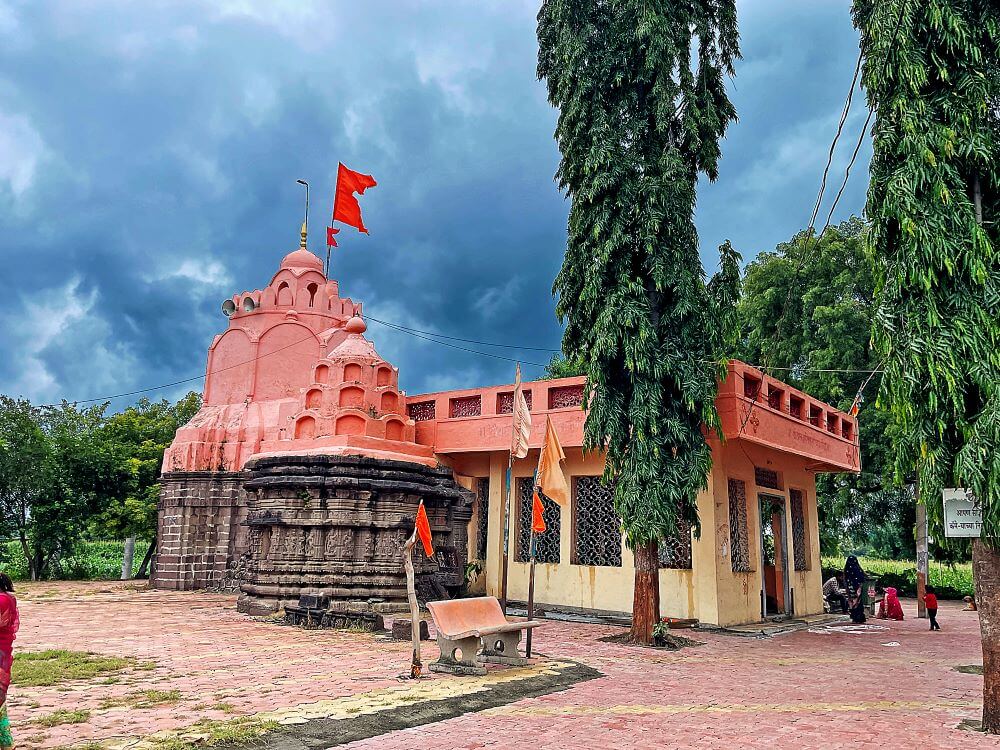
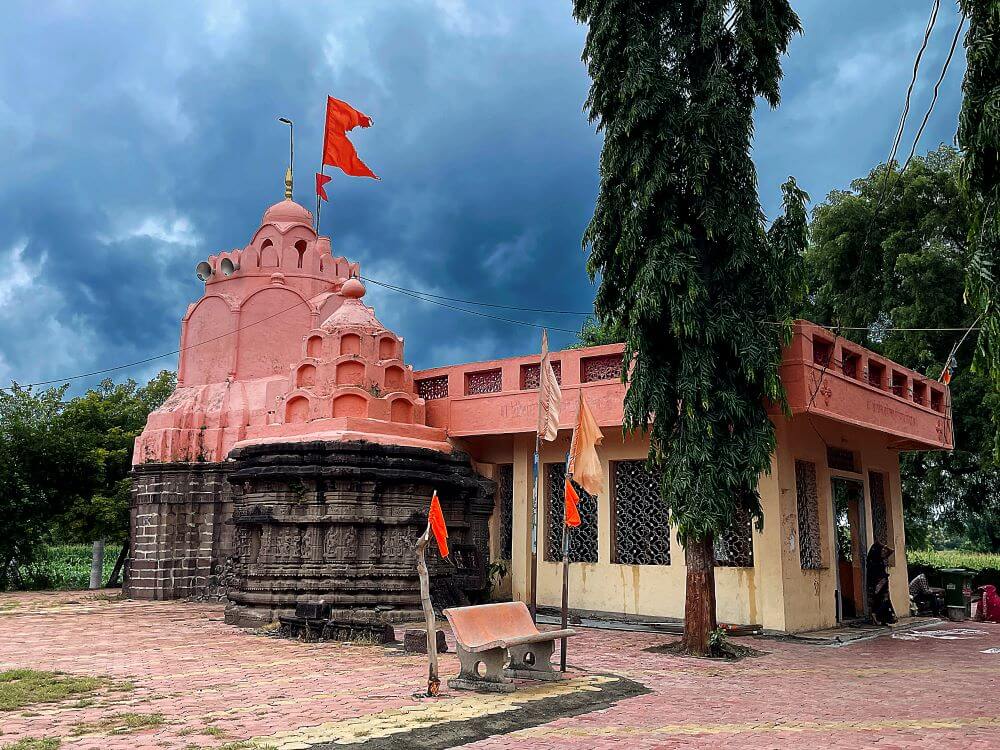
Shop Photo FramesThe ancient Vadeshwar Mahadev Temple in Ambhai Vadgaon, near Janjala Fort in Sillod Taluka, is considered a magnificent example of ancient architectural style. This temple is star-shaped and features a trilateral design with three sanctum sanctorums. Based on its sculptural composition, it is believed that this temple was constructed during the Chalukya period in the 12th century. Although it has suffered some damage over the passage of time, the temple still stands proudly today, showcasing the splendor of its unique ancient architecture and sculpture. A distinctive feature of this temple is that all three sanctum sanctorums house Shivalingas.
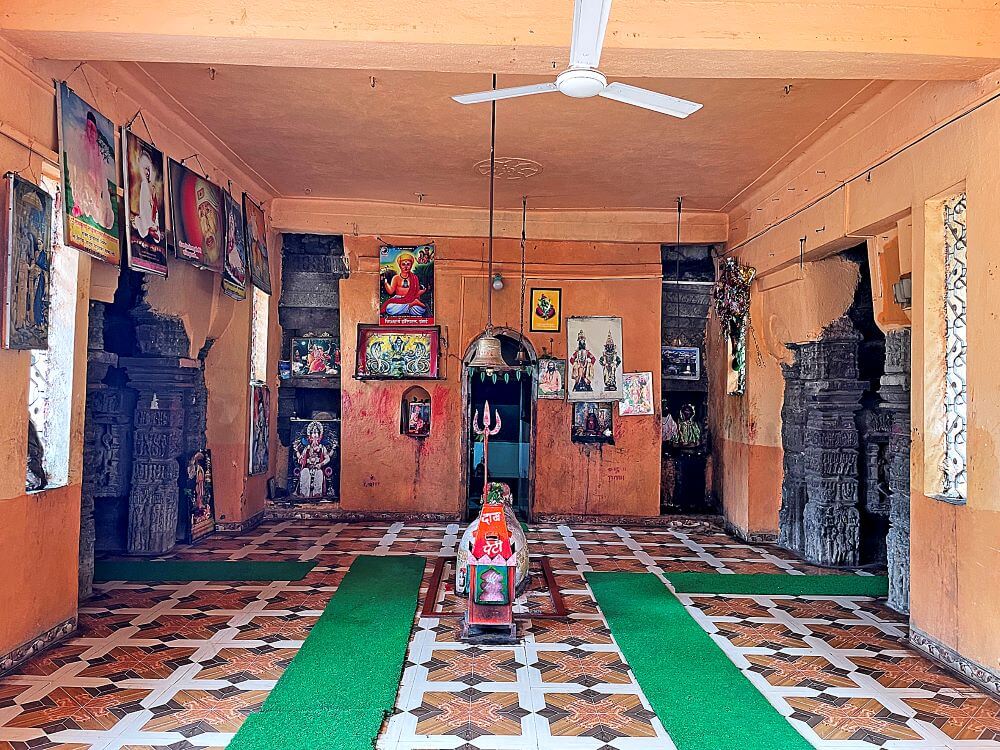
In the Ajanta mountain ranges of Marathwada, there are rock-cut caves as well as two very ancient temples that are significant in terms of architectural style. One of these is the ancient Shiva temple at Anwa, and the other is this Vadeshwar Mahadev Temple at Ambhai. To reach Ambhai, one must travel from Sillod via Golegaon-Undangaon. Located near the Ajanta mountain ranges in a nature-rich area, this Vadeshwar Mahadev Temple is built in the Chalukya style. The temple courtyard is spacious, and there is an ancient stepwell in front of the temple. The entrance of the temple is adorned with intricate carvings. A new assembly hall (Sabhamandap) has now been built in place of the original one. The idols and carved stones from the previous entrance hall and assembly hall have been preserved within the temple premises.
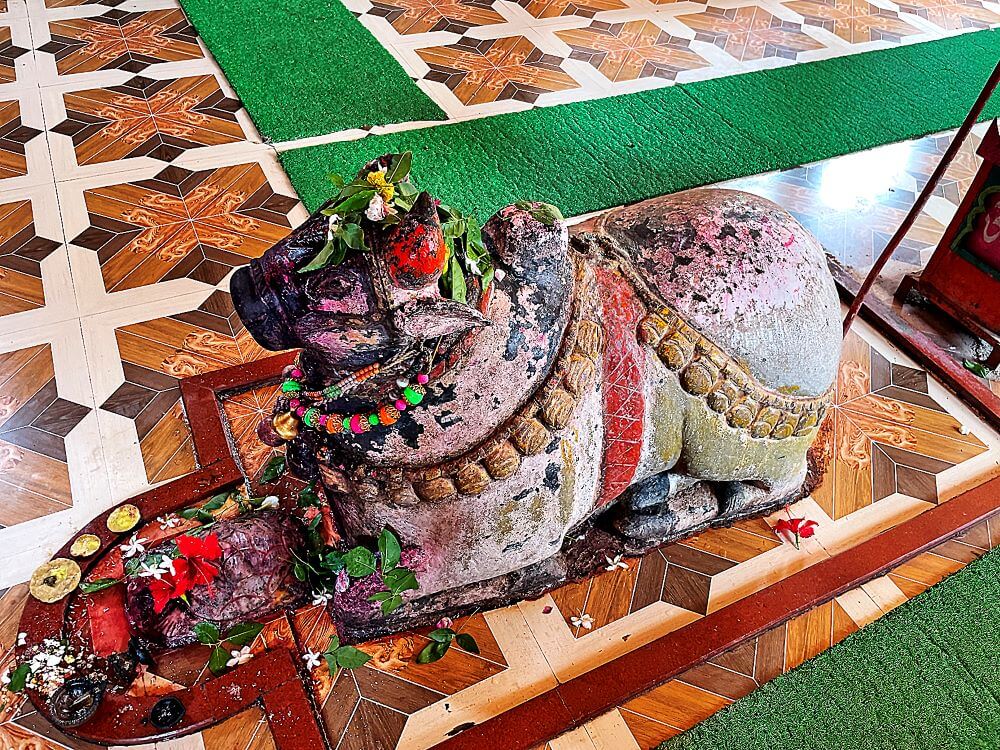
There is a large Nandi in the hall facing the main sanctum, with beautiful ornaments carved on its body. This east-facing temple has three sanctum sanctorums facing west, south, and north. All sanctums are connected to the same assembly hall through separate vestibules (Antarala). There are niches (Devakoshtas) in the vestibules of all three sanctums, containing idols of Brahmi, Saraswati, and Vaishnavi. Like the main entrance, the entrances to the sanctums are also intricately carved. There is a Kirtimukha on the threshold of the main sanctum. Four doorjambs can be seen carved there. Symbols such as musicians, Vyala (mythical creatures), pillars, and Kalash (sacred pots) are depicted on the doorjambs. If there are four branches on the sanctum door, it is called Gandhari or Madhyadwara. Near the main door of the sanctum, in the upper section, there are sculptures of men and women playing conch shells and cymbals, dancing, along with other decorative carvings. There is an idol of Lord Ganesha on the lintel of the entrance. One has to descend four to five steps to enter the main sanctum. Inside this square-shaped sanctum, there is a Shivalinga in the center. There are also Shivalingas in the left and right sanctums, and Kirtimukhas are placed at the top of each sanctum. On the arch walls of all three sanctums, there is a frieze of the Ashta Matrikas (eight mother goddesses). These Matrikas are depicted riding on a Rajahamsa, Airavata, bull, boar, and human. Similar sculptures of Matrikas can be seen in the Ellora caves.
There are more sculptures in the southern sanctum than in the main sanctum. The entrance to this sanctum has three branches. There is an idol of Ganesha on the lintel. In the upper middle section, there is Lord Vishnu, with Lord Shiva and Lord Brahma at the ends. Additionally, there are standing figures of the Navagrahas (nine planets). The entrance to the northern sanctum also has three branches. There is an idol of Ganesha on the lintel, and Matrikas are depicted on the upper door frame.
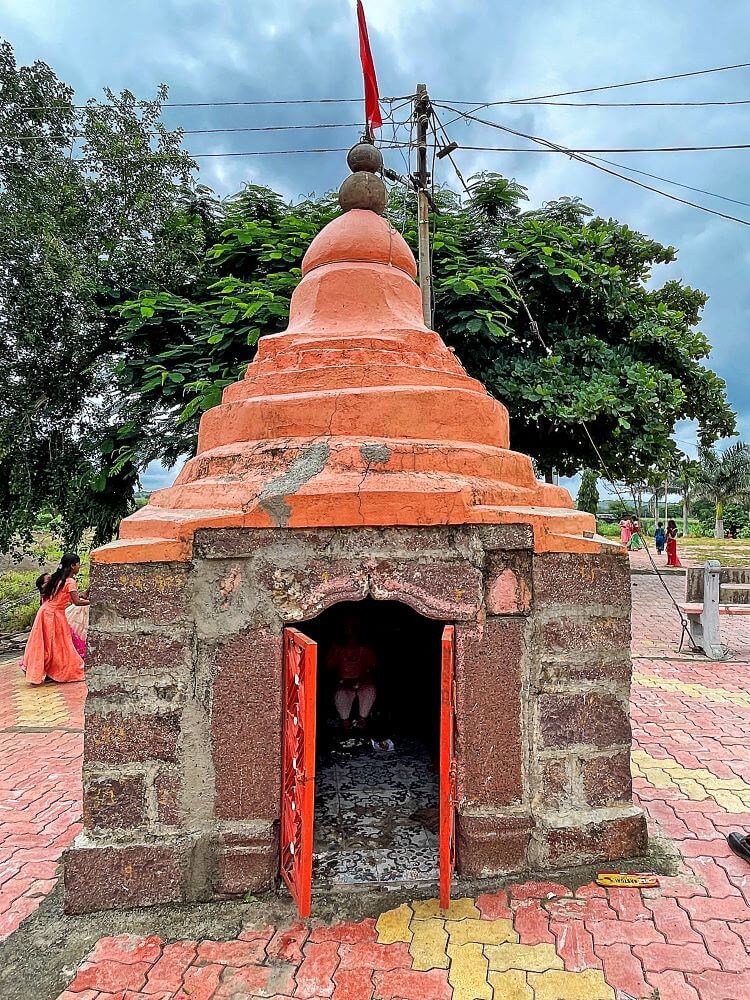
The temple spire has been recently plastered with cement. The temple is built on a high stone plinth (Jota). The plinth consists of several layers, including the Upaana, Antarapatta, Kumuda, another Kumuda with a saw-tooth-like projection, Kirtimukha, and a layer of swans. The niches on the corner projections (Karnaratha) feature sculptures of the Dikpalas (guardians of the directions). The niches on the side projections (Pratiratha) contain sculptures of Apsaras. The niches on the central projection (Bhadraratha) house idols of the Saptamatrikas, Chamunda, Kartikeya, Nataraja, Varaha, Narasimha, and Surya. Along with scenes of war, the temple also features carvings of animals like lions and elephants, as well as episodes from the Ramayana and Mahabharata. Auspicious symbols such as lotuses, pots (Kumbha), Makaras, and various leaves, flowers, and vines have been used to decorate the temple. On the exterior walls of the south and north sides of the temple, erotic sculptures similar to those in Khajuraho are carved. The Jangha (wall) of the temple is divided into two levels. The lower level has niches for placing idols, while the upper level contains several empty niches without sculptures. There are only a handful of such sculptural temples in Maharashtra, and this Vadeshwar Mahadev Temple in Marathwada is one of them.
This sacred temple stands as a testament to deep spiritual devotion, ancient architectural grandeur, and rich local cultural traditions.
The sanctum sanctorum houses the divine idol consecrated according to ancient Vedic traditions, surrounded by serene courtyards and traditional temple architecture.
Navratri, Maha Shivratri, Annual Temple Jatra & Deepotsav
Compare and book flights, secure top-rated local hotels near the temple, hire reliable guides, and rent cars instantly.
Extend your pilgrimage by visiting other highly sacred temples located nearby.


Add ₹999 more to unlock FREE SHIPPING!
Your sacred cart is currently empty.
Shop Photo FramesFill in your delivery details below to place your order.
Add comment