
Add ₹999 more to unlock FREE SHIPPING!
Your sacred cart is currently empty.
Shop Photo FramesThe Lakshavinayaka Temple located in Verul, within the Chhatrapati Sambhajinagar district, is renowned as the seventeenth among the twenty-one self-manifested (Swayambhu) Ganesha shrines in the country. Situated close to the world-famous Verul Caves (Ellora) and the Grishneshwar Temple—one of the twelve Jyotirlingas—this ancient temple is built in the Hemadpanthi architectural style. It is a traditional custom to have the darshan of Lakshavinayaka before offering prayers at Grishneshwar. This deity is famed for removing flaws, fulfilling one’s aspirations (Lakshapurti), and instantly granting the wishes of devotees who perform vows. Consequently, countless devotees from all over the country visit here for darshan.
To protect Dharma and destroy evil forces, upon the prayers of deities and devotees, Ganesha incarnated in various forms across different Yugas. Acceding to their prayers, He took up residence in those respective sacred realms. There are numerous such Ganesha shrines across the world, of which twenty-one self-manifested Ganesha shrines in India are considered most significant. Eight of these are in Maharashtra. Among the three such shrines located in Marathwada, the Skanda-established (Kartikswami) Lakshavinayaka shrine is prominent.
The legend associated with this sacred site is that at the dawn of creation, Swanand Prabhu had a son named Laksh, who possessed one hundred thousand (Laksha) arms. One day, at the very spot where the Ganesha temple stands today, he had the darshan of Ganesha in a luminous, divine state. Following this, he performed severe penance for one thousand years and propitiated Ganesha. At that time, Ganesha blessed him and granted a boon that in times to come, my name would be uttered alongside yours.
Later, in the Treta Yuga, a mighty demon named Tarakasura performed rigorous penance and pleased Lord Brahma. Consequently, Brahma granted Tarakasura all desired boons, immense power, and assurance of fearlessness from all deities, with the caveat that his death would come at the hands of a son of Shiva-Parvati. Armed with Brahma’s boon, Tarakasura began harassing everyone. He invaded the three worlds and triumphed over the deities. He became the ruler of the Triloka and demanded worship for himself.
Distressed by this, all the gods rushed to Lord Shiva and prayed for deliverance from Tarakasura. Thereupon, Shiva sent His son Skanda (Kartikeya) to wage war against Tarakasura. However, failing to achieve victory in battle, on the instructions of Lord Shiva, Kartikeya propitiated Ganesha in this Dandakaranya forest by daily chanting the mantra ‘Om Gam Ganapataye Namo Namah’ one hundred thousand times, offering one hundred thousand Durva blades, and presenting an offering of one hundred thousand Modakas. Ganesha blessed him and bestowed the divine weapons of Pashu (noose) and Ankusha (goad). Thereafter, mounted on his peacock, Kartikeya went forth once more to battle Tarakasura. With the weapons granted by Ganesha, he slew Tarakasura. Later, Kartikeya consecrated Ganesha here. Because this deity fulfilled the aspirations (Laksha) of Kartik Swami, this Ganesha came to be known as Lakshavinayaka. Lakshavinayaka is mentioned in the Shiva Purana, Ganesha Purana, and Skanda Purana.
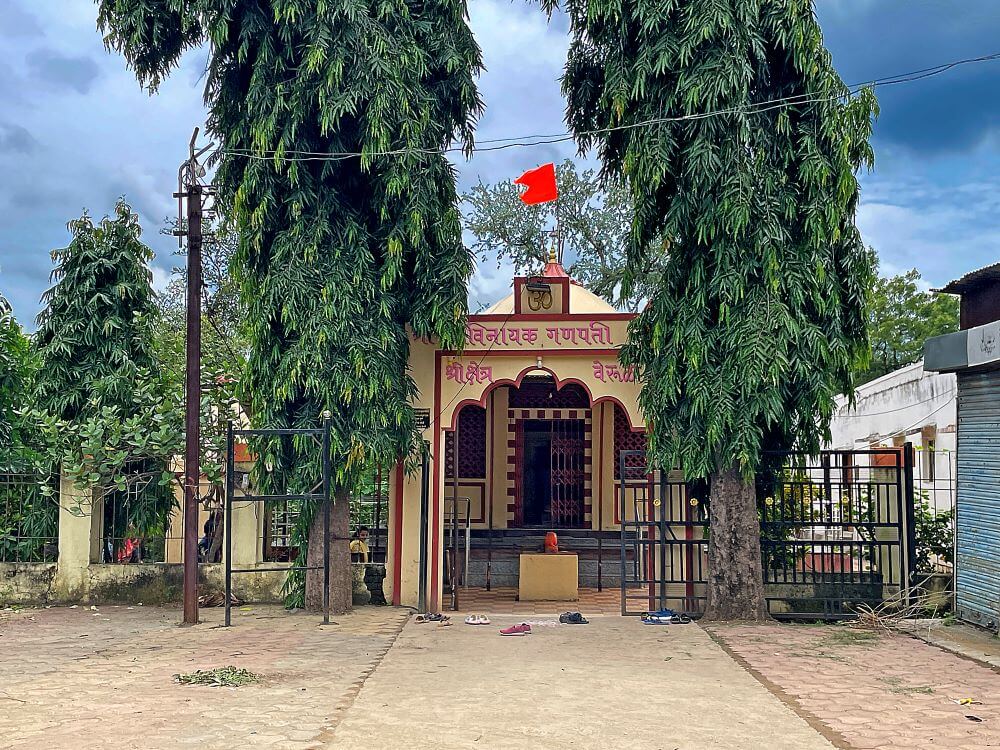
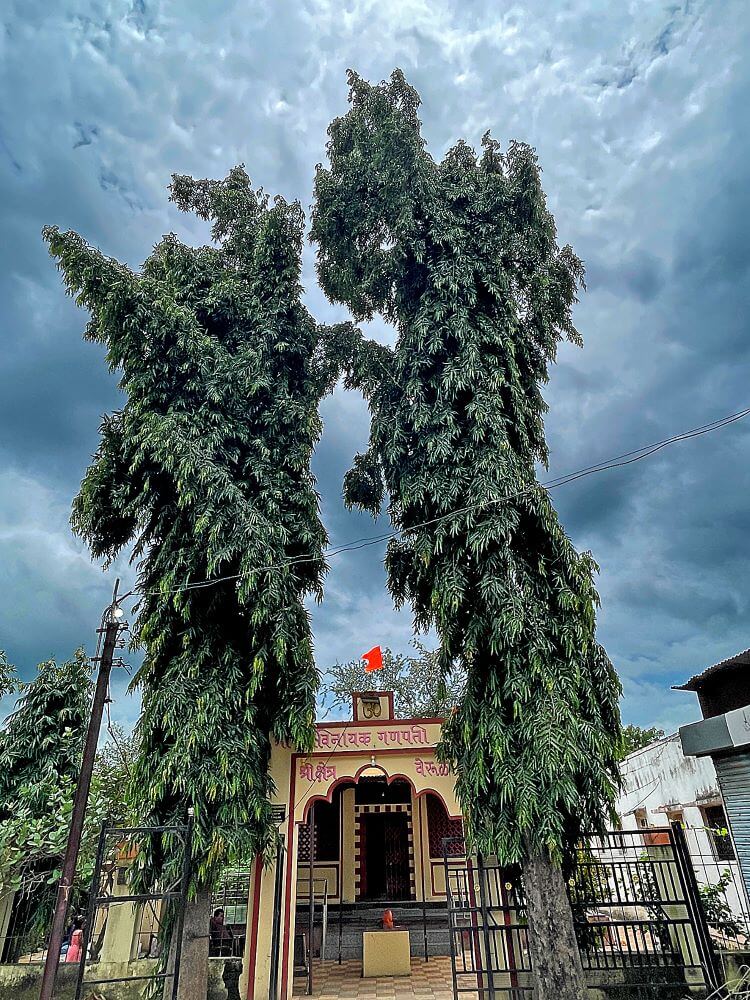
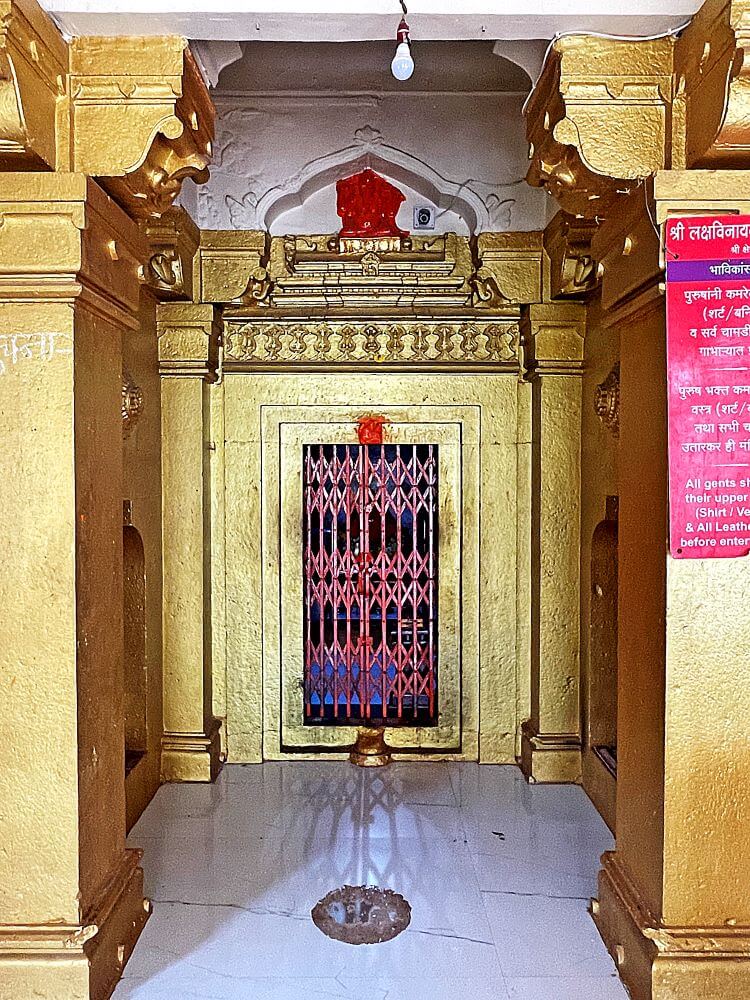
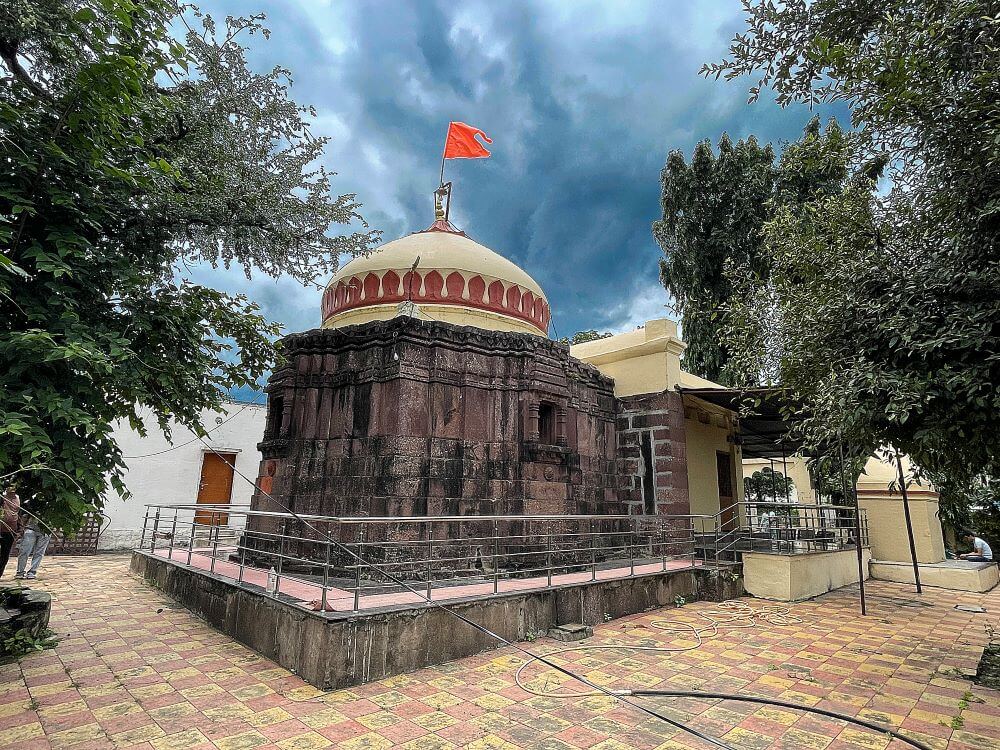
The Lakshavinayaka Temple is located at Talachi Wadi in Verul. Records indicate that in the year 1791 AD, the pious Queen Ahilyabai Holkar renovated this temple. The temple is situated on the banks of the El River, in a serene and nature-rich environment. As one enters the paved courtyard through the temple gateway, the idol of Ganesha’s mount, Mushaka (the mouse), is visible directly ahead on a stone. Smearing vermilion, this Mushaka holds a Modaka in its hands. Close to the idol of Mushaka is the Yajnakunda. The architectural layout of the Lakshavinayaka Temple consists of a Darshan Mandapa, Sabha Mandapa, and Garbhagriha (sanctum sanctorum). The spire of this temple is dome-shaped. On the walls of the sturdy Sabha Mandapa of this temple are portraits of several great saints (Satpurusha). There are also informative plaques detailing the 21 Ganesha Peethas from across the country. On the lintel (Lalatbimba) above the entrance of the sanctum is an idol of Ganesha, with another Ganesha idol positioned just above it.
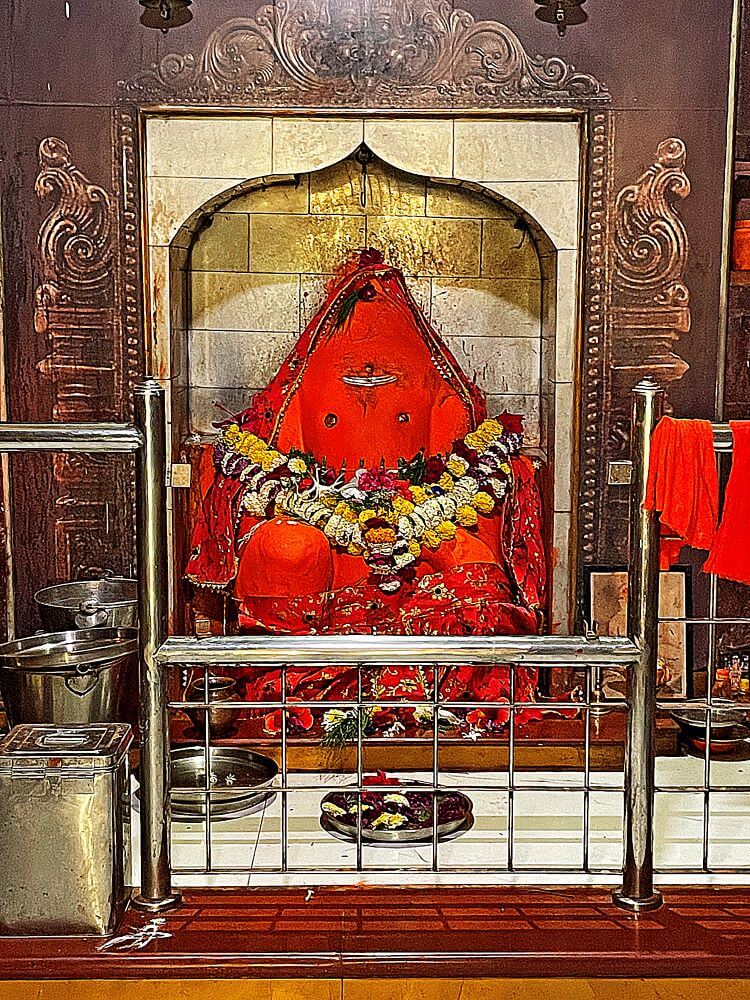
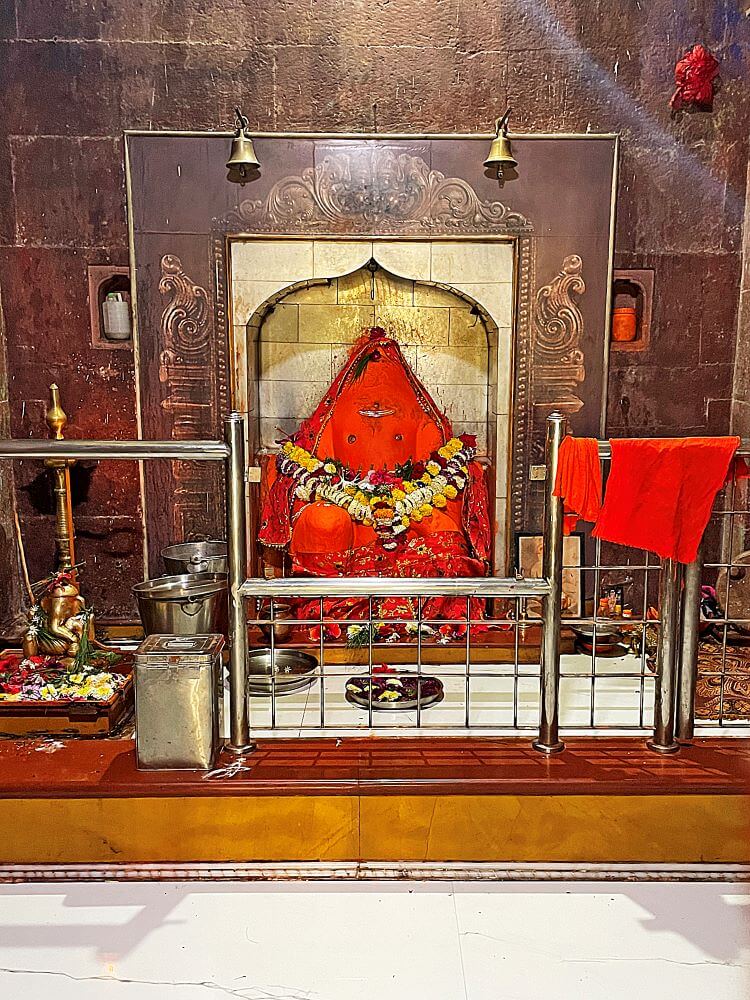
Inside the sanctum is a seated idol of Ganesha facing north. Made entirely of clay, this idol is smeared with vermilion. Standing three and a half feet tall, this four-armed idol has its trunk turned to the left; one hand rests on the thigh, another holds a Modaka, and the upper two hands hold divine weapons. There are double silver stripes on the forehead of the idol. For daily worship, Abhishek, and festivals, a Panchaloha (five-metal) idol of Ganesha has been placed to the right of this main idol. Inside this sanctum, male devotees are required to remove all clothing above the waist and enter bare-chested. It is believed that having the darshan of the deity with an uncovered torso allows the divine radiance of the deity to fall upon the body, bestowing sacred energy.
Within the temple premises, there is also a Shwetarka Ganesha Temple. Lakshavinayaka is offered rock sugar and jaggery daily, while Modakas are offered as Naivedya on Sankashti Chaturthi. Recitations of Sahasra Avartana and Ganesha Yagas continue year-round here. A grand festival is held here on Kartik Shukla Shashthi. On that occasion, Ganesha is worshipped amidst the resonant chanting of mantras, and all of Ganesha’s favorite culinary delicacies are offered as Naivedya. The Ganesha festival (Ganeshotsav) is also celebrated here with great enthusiasm. Devotees can visit the temple daily from 5 AM to 9 PM for the darshan of Lakshavinayaka.
In ancient times, a king named El ruled this region. He was a disciple of Rishi Gargya and a devotee of Ganesha. Since his capital was located right in this area, this region has been known since ancient times by the name Elapura, which later came to be recognized as Verul. According to historical records, Malojirao Bhosale, the grandfather of Chhatrapati Shivaji Maharaj, was the Patil of this place.
This sacred temple stands as a testament to deep spiritual devotion, ancient architectural grandeur, and rich local cultural traditions.
The sanctum sanctorum houses the divine idol consecrated according to ancient Vedic traditions, surrounded by serene courtyards and traditional temple architecture.
Navratri, Maha Shivratri, Annual Temple Jatra & Deepotsav
Compare and book flights, secure top-rated local hotels near the temple, hire reliable guides, and rent cars instantly.
Extend your pilgrimage by visiting other highly sacred temples located nearby.


Add ₹999 more to unlock FREE SHIPPING!
Your sacred cart is currently empty.
Shop Photo FramesFill in your delivery details below to place your order.
Add comment