
Add ₹999 more to unlock FREE SHIPPING!
Your sacred cart is currently empty.
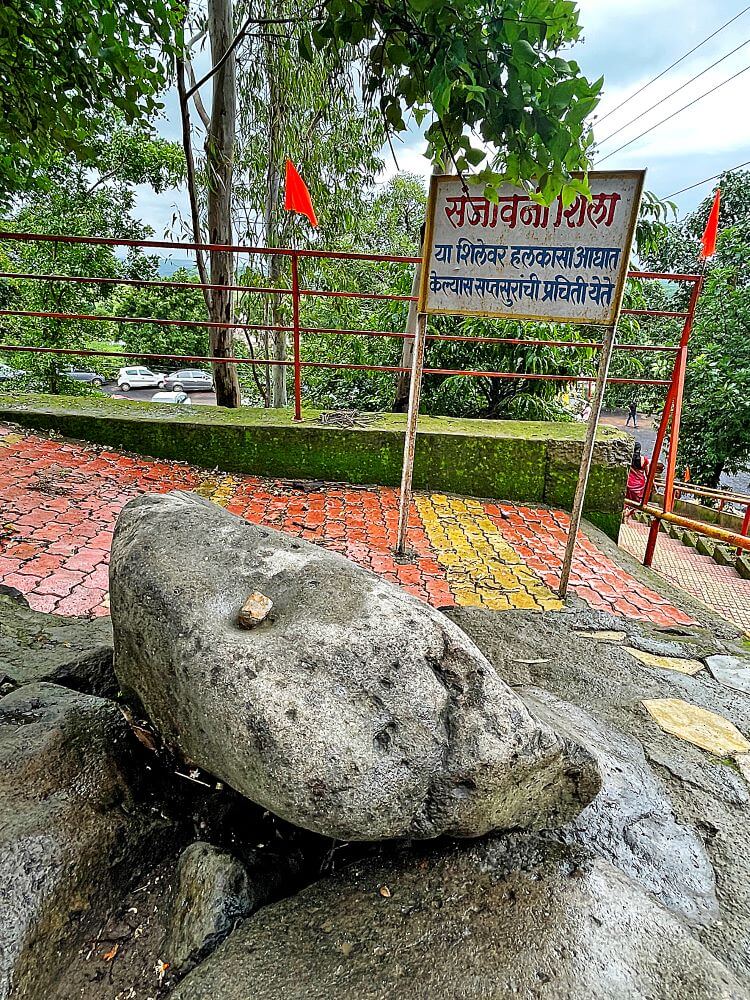
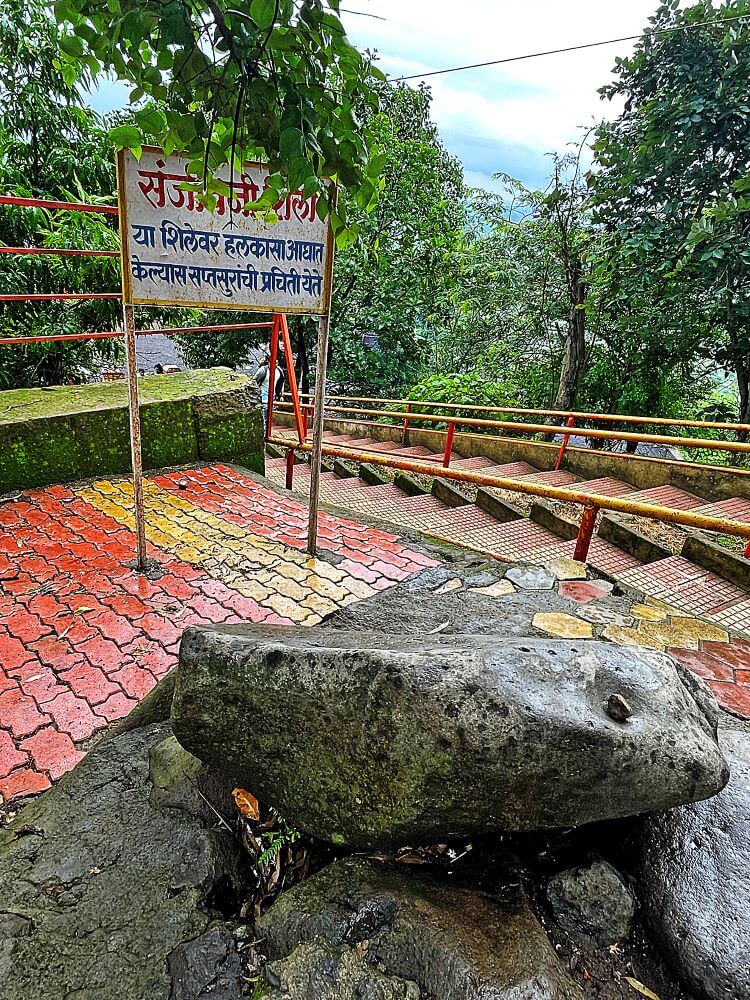
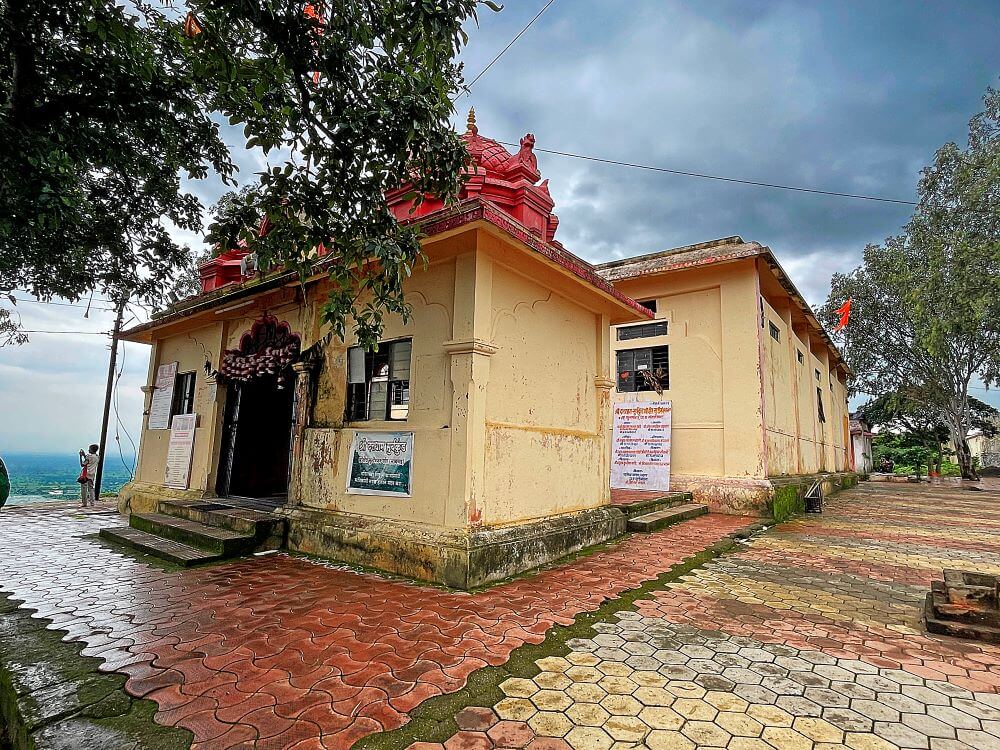
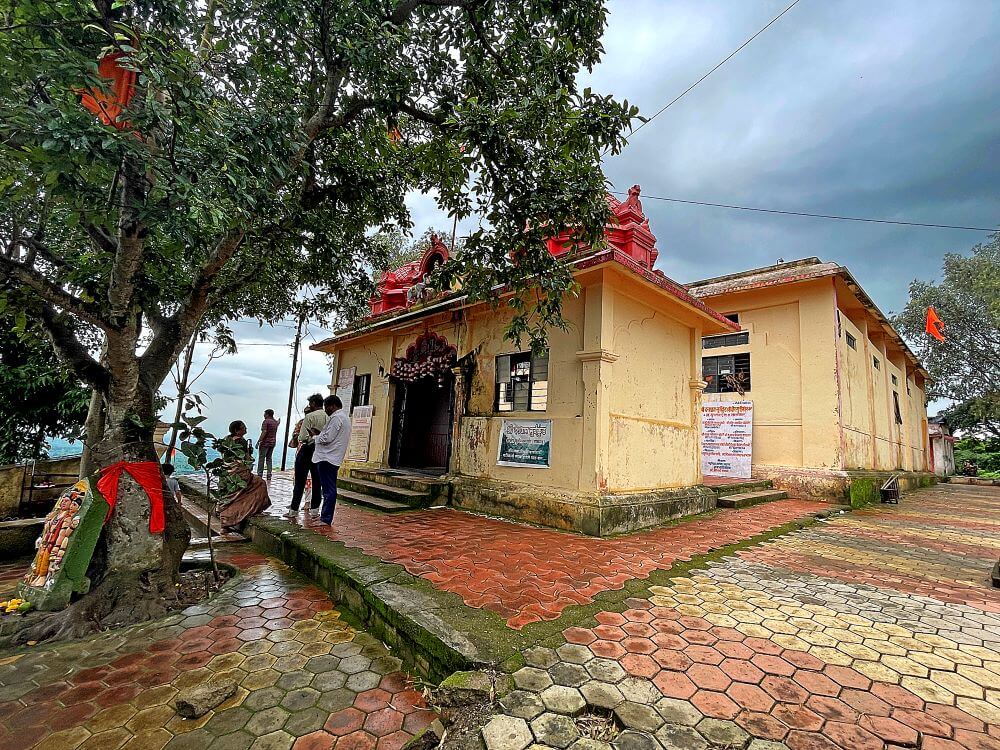
Shop Photo FramesThe Dattadham on the Sulibhanjan mountain in Khuldabad taluka is the sacred site where Shri Dattatreya appeared in the guise of a Malang (fakir) to grant darshan to Saint Eknath Maharaj. According to references in the Puranas, the stone upon which Saint Eknath sat to perform penance for twelve years after receiving initiation from Janardan Swami is also located here. Famous as both a scenic tourist destination and a religious site, Dattadham at Sulibhanjan is regularly visited by thousands of devotees of the Bhagavata tradition as well as tourists. It is said that if one strikes the Sanjivani stone located here lightly, the seven musical notes (Saptasur) emanate from it.
Saint Eknath was born in the year ۱۵۳۳ in Paithan into a Deshastha Brahmin family. Having lost the protection of his parents at a young age, he was raised by his grandfather, Chakrapani. Saint Eknath was brilliant from childhood. When he was six years old, his grandfather performed his Upanayana (thread ceremony) and appointed a learned scholar to educate him. From that scholar, Eknath mastered texts such as the Ramayana, Mahabharata, Dnyaneshwari, and Amritanubhava. In those days, Paithan was home to many sadhus, saints, bairagis, yogis, and ascetics. Bhajans, kirtans, and discourses were constantly held in the area. However, Eknath perceived a certain dryness, hypocrisy, and superstition in all of this. Believing that if one wishes to guide society, the guide must have a direct realization of God, otherwise it would be mere parrot-like repetition, he became determined to attain the grace of the Almighty. For this, he began his search for a Guru.
One day, while meditating in a Shiva temple, an elderly gentleman who arrived there told Eknath that if he wished to attain self-realization, he should go to Janardan Swami, the commander of the Devgiri fort. Driven by the thoughts of God-realization and the upliftment of society, Eknath walked ۵۰ miles from Paithan and reached Devgiri on the day of Phalguna Vadya Shashthi. At that time, he was ۱۲ years old. Upon meeting Saint Janardan Swami at Devgiri, Eknath explained the purpose of his visit. To this, Janardan Swami replied, “I know that you have come here from Paithan. I have understood all about you through a vision given to me by my Guru, Shri Dattatreya. I grant you my discipleship.” Thereafter, Eknath served Janardan Swami with complete devotion.
While serving his Guru, Eknath mastered the knowledge contained in texts such as the Gita, Dnyaneshwari, Brahma Sutras, Bhagavata, and the Upanishads. While studying the sciences of Nyaya and Mimamsa, he also studied Patanjala Yoga. While pursuing both spirituality and service to his Guru, he also learned swordsmanship. Seeing his ever-deepening devotion and his character, Saint Janardan Swami decided to grant Eknath a vision of Shri Dattatreya. Janardan Swami would often go to the Sulibhanjan mountain to converse with his Guru. One day, on a Thursday, he took Eknath along with him. After completing his morning ablutions and prayers, Janardan Swami sat for meditation. At that time, a Malang (fakir) arrived there. The eyes of that fakir, who was covered in animal skin, were reddish. He was accompanied by a dog and her puppies. However, Eknath had no idea that he was Dattatreya himself. After some time, Janardan Swami woke from his meditation and bowed his head at the feet of the fakir. After a while, the fakir asked Janardan Swami to milk the dog. After the Swami did so, the fakir took pieces of stale bread from his bag and soaked them in the bowl of milk. Then, the fakir and Janardan Swami began eating from the same bowl. After eating, Janardan Swami asked Eknath to wash the bowl. At that moment, Eknath realized that the fakir was none other than Shri Dattatreya. He drank the water poured into the bowl for washing, cleaned the bowl, handed it to the fakir, and prostrated before him. When he stood up and looked, he was blessed with the direct vision of the true form of Shri Dattatreya.
A few days after Shri Dattatreya granted him this vision, Janardan Swami instructed Eknath to go to the Sulibhanjan mountain, the penance ground of Sage Markandeya, to observe silence and perform self-realization. Following his Guru’s instructions, Eknath came to the Sulibhanjan mountain to perform penance. One day, while he was sitting in penance, a cobra held its hood over his head. However, Eknath was unaware of this. After some time, when Janardan Swami arrived there, he saw this scene. He ordered the cobra to leave and woke Eknath from his meditation. Thereafter, he ordered Eknath to return home and embrace the life of a householder. “You will attain the ultimate truth while living in the world. While removing the ignorance of innocent people, you will also compose invaluable literary works,” he said.
While going from Chhatrapati Sambhajinagar towards Khuldabad, there is an arch on the left side. The path to the Sulibhanjan fort begins from this arch. This place is also known by names such as Suryabhanjan, Shulibhanjan, and Nathgad. The glory of this place has been described in ancient texts like the Kashikhand, Padmapurana, Shridatta Prabodh, and Nathcharitra. Many texts mention that Sage Markandeya performed penance here. The Shulibhanjan text contains the story of how Lord Mahadeva, pleased with Sage Markandeya’s penance, averted the threat of death hanging over him.
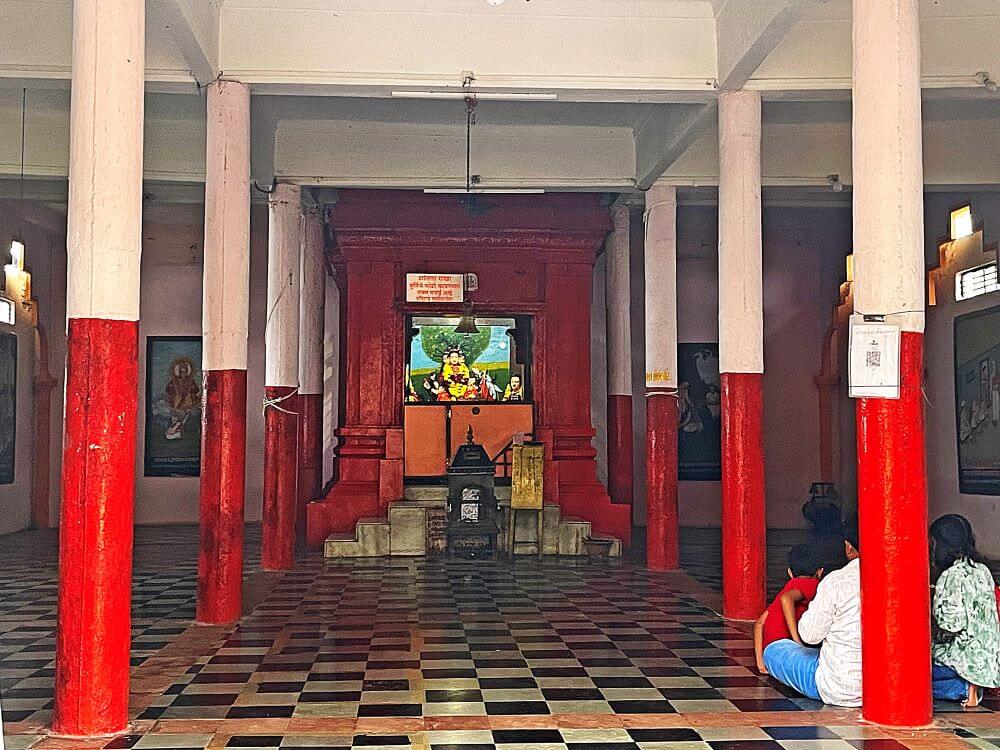
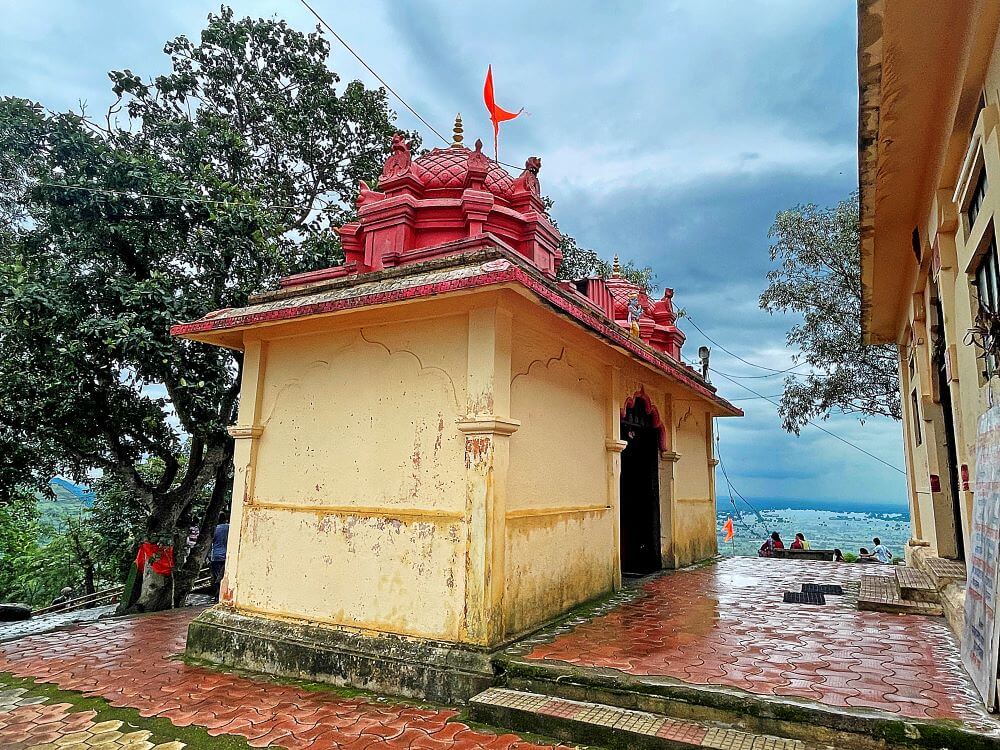
One has to climb stairs to reach the Sulibhanjan mountain. After admiring the natural beauty and reaching the mountaintop, the beautiful structure of Dattadham comes into view. In the temple courtyard, under a tree, there is a beautiful idol of Dattatreya. Before entering the main temple, one encounters the Nagarkhana. In the upper part of the entrance of the Nagarkhana, there is an idol of Lakshmi sitting on a lotus in the center, with elephants on both sides. Near this entrance is the stone upon which Saint Eknath performed penance. Behind the stone is a meditative idol of Eknath Maharaj, with a cobra holding a hood over it. Moving out from here and coming forward through the temple courtyard, one reaches the main temple’s assembly hall (Sabhamandap) after a few steps. On the walls of this assembly hall, various incidents from the lives of Saint Eknath and Janardan Swami are displayed in the form of pictures and information. In the sanctum sanctorum, on a high pedestal, is the idol of Shri Dattatreya, with the idol of Janardan Swami to the left and Saint Eknath to the right. On the pedestal in front of the idols are the Padukas (footprints) of Saint Eknath. Hundreds of devotees visit this temple daily for darshan. Major festivals are celebrated here on Dattajayanti and Gurupurnima.
On the exterior of this temple, there is a greyish-white stone. It is famous as the Sanjeevan Shila. It is said that if one takes a small stone and strikes it against this slab, a bell-like ‘tan-tan’ sound is produced. If this stone is gently tapped on different parts of the slab, one can experience the seven musical notes.
Near here, at Kaivalyeshwar, is an ancient Shiva temple built in the Hemadpanti architectural style. The temple consists of a grand Sabha Mandap and a Garbhagriha. There is a Nandi sculpture in the Sabha Mandap. In the niches on the walls near the entrance of the Garbhagriha, there are idols of Lord Ganesha and other deities. Inside the Garbhagriha, there is a Shiva Linga, and a ritualistic bathing (Abhishek) is performed on the Linga from a dripping vessel (Galantika) above it. There are also idols of Lord Ganesha and Mother Parvati here. In the upper part of the Garbhagriha, there is a circular window in the wall through which sunlight falls directly on the Linga on certain days of the year. Behind this temple are two sacred ponds, Suryakund and Chandrakund. Both these ponds are constructed with bricks. It is also said that there is a Sahastralinga Sarovar at this location.
This sacred temple stands as a testament to deep spiritual devotion, ancient architectural grandeur, and rich local cultural traditions.
The sanctum sanctorum houses the divine idol consecrated according to ancient Vedic traditions, surrounded by serene courtyards and traditional temple architecture.
Navratri, Maha Shivratri, Annual Temple Jatra & Deepotsav
Compare and book flights, secure top-rated local hotels near the temple, hire reliable guides, and rent cars instantly.
Extend your pilgrimage by visiting other highly sacred temples located nearby.


Add ₹999 more to unlock FREE SHIPPING!
Your sacred cart is currently empty.
Shop Photo FramesFill in your delivery details below to place your order.
Add comment