
Add ₹999 more to unlock FREE SHIPPING!
Your sacred cart is currently empty.
Shop Photo FramesNestled in the Shegaon taluka of Buldana district, the village of Janori has become an important place of pilgrimage for devotees due to the exceptionally peaceful and captivating form of Lord Narasimha known as ‘Laxminarasimha’. While the Narasimha avatar among the ten incarnations of Lord Vishnu is generally regarded as a symbol of supreme fierce intensity, at the temple in Janori one gets to witness His exceedingly gentle and affectionate form. This ancient four-armed deity, discovered in floodwaters many years ago, is seated upon Garuda, and this is considered one of the few important abodes of Lord Narasimha in the country. Devotees hold a deep faith that having the darshan of Narasimha here paves a way out of the life’s troubles and bestows peace upon the mind.
The mythological context behind this form is quite fascinating. According to the narrative in the Srimad Bhagavata Purana, when Lord Narasimha emerged from the pillar to vanquish Hiranyakashipu, the awe-inspiring terror of His half-lion and half-human form made the three worlds tremble. Even after the demon was slain, the flame of the Lord’s wrath would not subside, and gods like Brahma, Shiva, or Indra did not dare to approach Him. Eventually, when Mother Mahalakshmi, an embodiment of Adi Maya, stood before the Lord, the burning heat of the Lord’s anger was quenched by her mere darshan. The Lord seated the Mother on His left thigh, and this is that universally revered ‘Laxminarasimha’ form. Viewed from a spiritual perspective, Narasimha is a symbol of justice and protection, while Lakshmi is the presiding deity of creation and compassion. When Narasimha is alone, He is the destroyer, but when He is seated alongside Lakshmi, He becomes completely ‘Bhakta Vatsala’ (affectionate towards devotees). Describing this captivating form in the ‘Laxminarasimha Karavalamba Stotram’ composed by Adi Shankaracharya, it is stated that when a devotee drowning in the sorrowful ocean of worldly existence is left with no support, this divine couple extends their hand and rescues them.
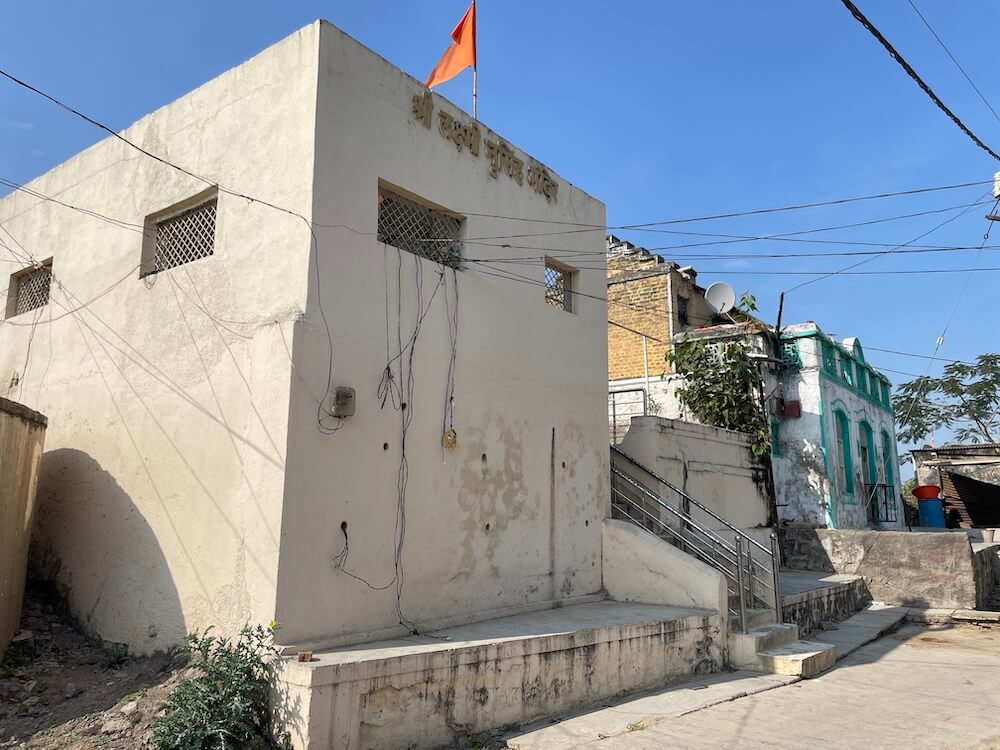
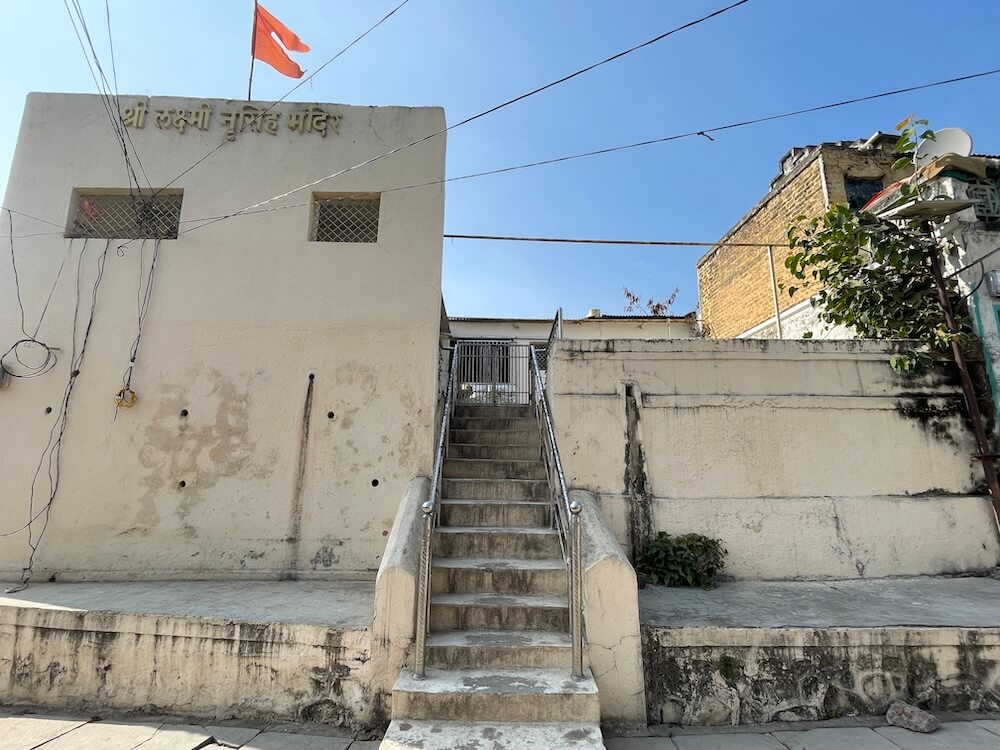
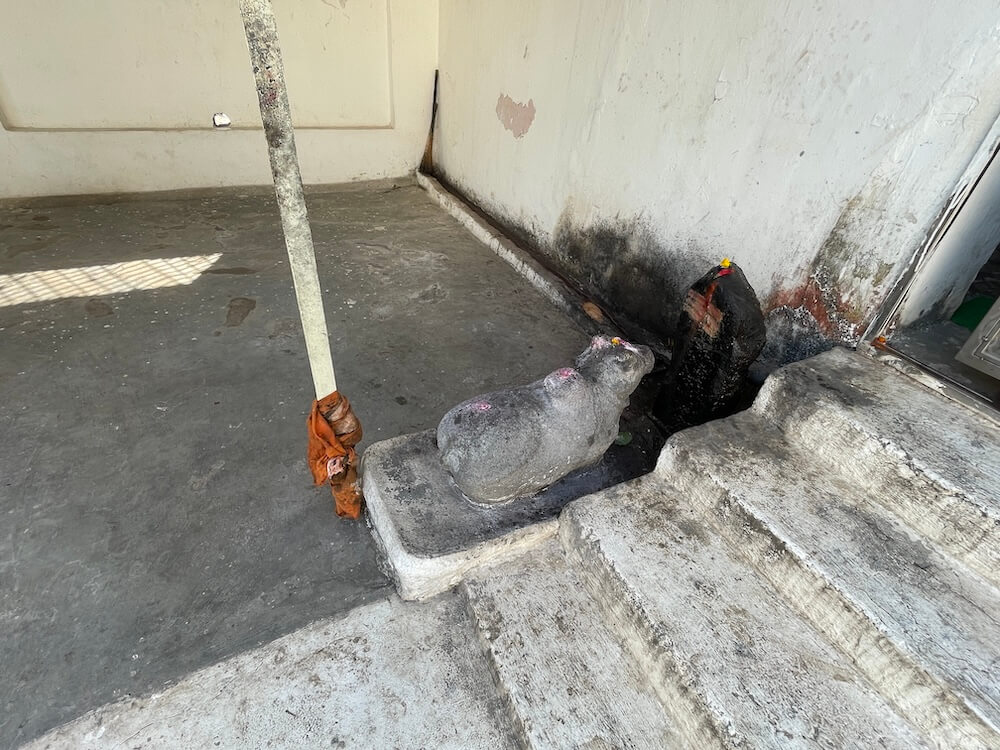
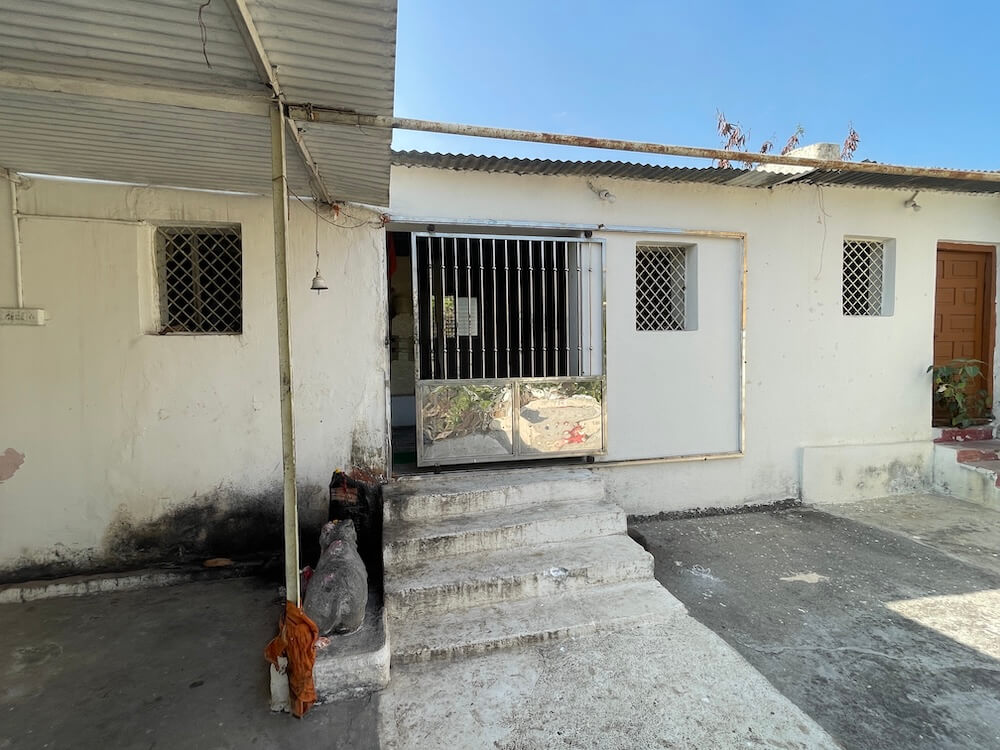
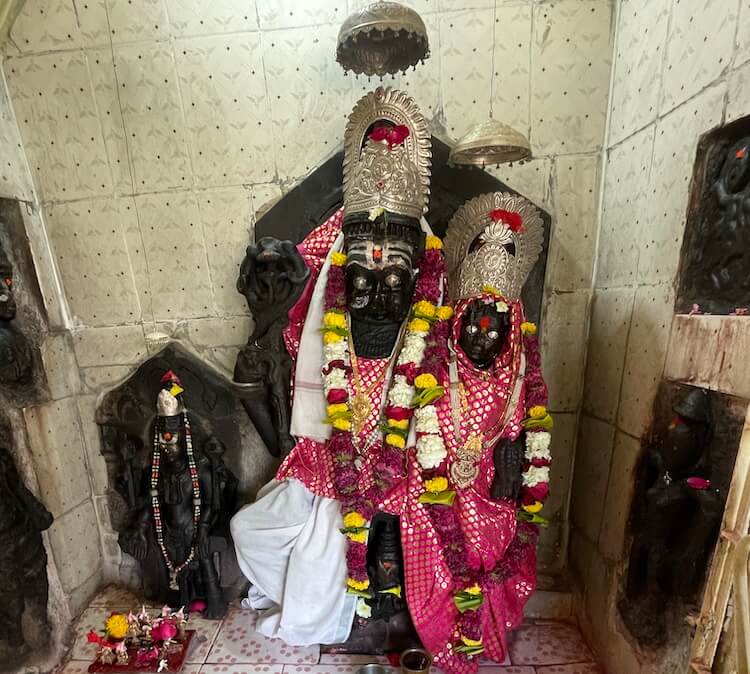
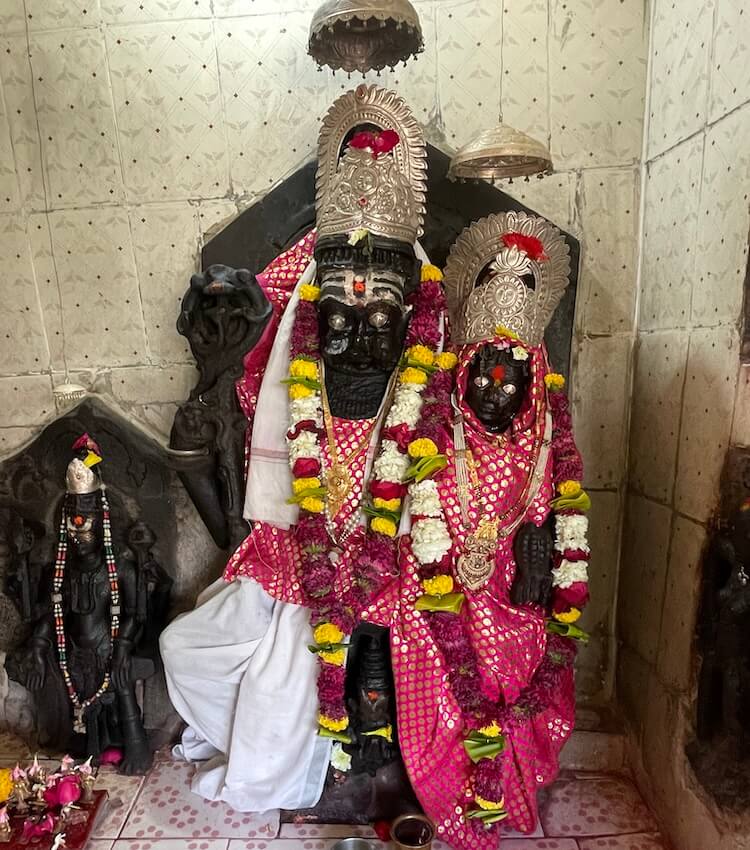
In Buldana district, Narasimha temples are also located at Chandol, Umard, and Mehkar; the deity at Mehkar is even mentioned in the Skanda Purana. The village of Janori was formerly known as ‘Janori Nipali’ or ‘Janori Ghavati’. The temple is situated on an elevated spot along the village road. Earlier, its entire structure was made of stone, which was renovated a few years ago. Upon entering the temple courtyard, to the left, one catches sight of the Shani shila, a small Shivling, and the statue of Nandi. Situated in the stone sanctum sanctorum on the left side of the assembly hall (sabhamandap) is the four-armed black stone idol of Laxminarasimha, approximately one meter in height. Mounted on Garuda, three hands of this idol hold the conch (shankh), lotus (padma), and mace (gada), while with the fourth hand He embraces Goddess Lakshmi. Since this idol is extremely gentle, the fierce form of Hiranyakashipu is not seen here. Goddess Lakshmi’s right hand is around Narasimha, and in her left hand is the fruit known as ‘Mahalunga’. In the same sanctum sanctorum, there are ancient idols of Lord Vishnu as well as Kayadhu and Sage Narada. Interestingly, it is said that there is a well beneath the sanctum sanctorum here, and if a coin is dropped into it, the sound of water can be heard.
The daily activities in the temple are also conducted in a deeply devotional atmosphere. Every day begins with early morning Kakad Aarti, and Haripath is recited along with aartis in the morning and evening. On festive occasions, a silver crown is adorned on the deity. Every year on Vaishakh Shudh Chaturdashi, a grand festival of Narasimha Jayanti is celebrated here. On that occasion, a seven-day ‘Saptah’ is organized. Believing that the worship of Narasimha increases inner strength, dispels negativity, and endows the devotee with valor and power, thousands of devotees from the district gather in Janori on the day of Narasimha Jayanti to have the darshan of this peaceful form.
This sacred temple stands as a testament to deep spiritual devotion, ancient architectural grandeur, and rich local cultural traditions.
The sanctum sanctorum houses the divine idol consecrated according to ancient Vedic traditions, surrounded by serene courtyards and traditional temple architecture.
Navratri, Maha Shivratri, Annual Temple Jatra & Deepotsav
Compare and book flights, secure top-rated local hotels near the temple, hire reliable guides, and rent cars instantly.
Extend your pilgrimage by visiting other highly sacred temples located nearby.


Add ₹999 more to unlock FREE SHIPPING!
Your sacred cart is currently empty.
Shop Photo FramesFill in your delivery details below to place your order.
Add comment